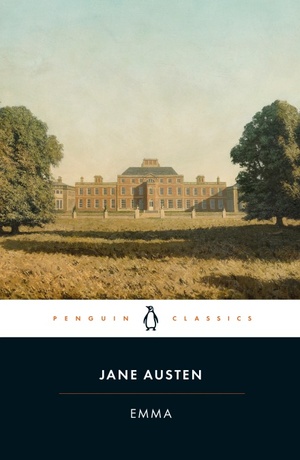
After rereading Emma, I can understand in a way why Austen called her her favorite heroine. She has a long way to go in self-awareness, and I think that’s something novelists enjoy.
Although Emma has been played as a sparkling beauty by such actresses as Gwyneth Paltrow, when I began this reread, I found a lot to dislike in her. Fortunately, she is also easy to come to like. Rich, charming, somewhat spoiled, and managing, she is also bored, because her beloved friend and ex-governess, Miss Taylor, has recently married Mr. Weston. Since she prides herself on having made the match and has recently befriended Harriet Smith, she decides to make a match for her.
Now, Emma’s biggest fault—besides trying to arrange the lives of other people—is that she decides something and then sees nothing that doesn’t support that decision (despite hints by her brother-in-law, Mr. Knightly). Harriet is a beautiful girl, but she is the illegitimate daughter of who-knows-who. Emma, based on no evidence, decides she is the daughter of someone important, and the first harm she does to the suggestible Harriet is convince her she’d be throwing herself away by marrying Robert Martin, a farmer who has proposed to her. Emma intends her for the vicar, Mr. Elton, ignoring Mr. Knightly’s warning that Elton is looking for a marriage that will advance him. In fact, Emma, having decided for the match, takes his attentions to point at Harriet when in fact he is courting Emma herself. Harriet would never consider Mr. Elton without Emma’s management, so she develops affections where there will be no return.
Then there is Jane Fairfax, a lovely young woman who has recently returned from years of living with friends to the home of her impoverished aunt and grandmother. Jane Fairfax’s friend being recently married, Jane has returned home for a few months before seeking a position as governess. Although Jane is the only young woman of Emma’s age and birth in the neighborhood, Emma says she finds her too reserved to like. Emma is jealous of Jane’s accomplishments but doesn’t know it.
Mr. Weston has a son who was adopted by his wife’s family after she died. Although Frank Churchill is now a young man, he has never visited his father, having many times promised to come. He finally arrives, and Emma, who has not taken a hint about his character from his continual nonarrivals, finds she likes him very much.
As usual with Austen, there are lots of comic characters who echo people we know in real life. Mr. Woodhouse, Emma’s father, worries continually about his and everyone else’s health, and if Emma isn’t around when they entertain, he’ll have guests eating gruel instead of their dinners. Mr. Weston is so open and sanguine that if he knows something is a secret, he’ll only tell five or six particular friends. Mrs. Elton, once there is one, is full of self-importance, despite coming from an inferior background, and tries to patronize people, especially poor Jane Fairfax.
Of course, class difference is important in this novel, maybe more so than in much of Austen (except maybe Persuasion). So, some of the problems may not be obvious to modern readers.
Even if you don’t like Emma’s managing at first, she is such a sparkling and witty creation, fond and gentle with her silly father, and she is truly repentant of her faults once she comes to see them. This is a great book.
Related Posts
Pride and Prejudice
Mansfield Park
Sense and Sensibility



 What? Me Read?