Review 2659: Study for Obedience

The unnamed narrator moves to another country, one she describes as a northern country of her family’s ancestors, to live with and be housekeeper to her recently divorced brother. She has been raised, she says, to curb her natural inclinations and be obedient. Certainly, her relationship with her brother looks more and more disturbing as the book progresses. For example, a point that comes out early on, she bathes and dresses her brother, who is not an invalid. Later, we learn that he insists she watch TV with both the sound and the subtitles off.

But how trustworthy a narrator is she? Her whole existence seems colored by a twisted view of life. For example, early on, she says that when she quit her job, her coworkers were so pleased to get rid of her that they gave her a big party. Well, isn’t that a tradition for a long-serving employee?

Her attitude is entirely negative—taking everything on herself. Despite being fluent in several languages, she is unable to learn the language of her new home. Almost immediately after her arrival, her brother departs for an unexplained reason, so she finds herself cut off, unable to make herself understood, with only a three-legged dog for company. She begins to sense that she’s being blamed for a series of agricultural disasters, as if she’s a witch. Since her Jewish ancestors were forced to leave this area during the war, she reads a lot into this.

Actually, she reads a lot into everything, tortuously examining every glance, every event. The book doesn’t really have a plot; it’s more about her exhaustive examinations of everything. If it hadn’t been so short, I would have quit reading it, because as another StoryGraph reader said, I felt like I was being psychologically tortured.

There is a turn to the book, but it just becomes more perverse. I read it for my Booker Project.
Related Posts

The Safekeep

The Weight of Ink

The Gustav Sonata

Review 2641: #1925 Club! #HYH25! Bread Givers

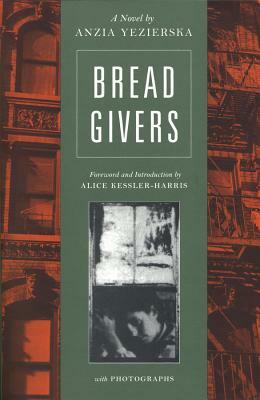
The last book I selected for the 1925 Club is Bread Givers. It is the mostly autobiographical novel about poor Jewish immigrants living in New York.

The novel opens with the Smolinsky family not having enough money for the rent. Reb Smolinsky spends all of his time studying the Torah and depends on his wife and daughters to support him. Bessie, the oldest daughter, earns the most and willingly hands over every penny to her family, but she is getting a little old to attract a husband. Mashah, the beautiful next sister, takes all her money to spend on finery, buying a new trinket when her family doesn’t have enough money to eat. Fania, the third sister, is still fairly young. Sara, the narrator, is only ten, but she goes out to buy some herring and then sells it on the street for twice as much, coming back with the rent and enough for some food. The father, of course, gets all the good parts of the food and any meat. After this incident, the family takes in lodgers and begins to do better.

Sara begins to form her own opinion of her father and their lives through the experiences of her mother and sisters. Her father takes any extra money for his charities and clubs, so her mother never has anything nice.

Bessie gets a boyfriend. Berel Bernstein is a hard-working tailor who plans to open his own shop and wants to marry Bessie because she is a hard worker and will make a good wife. So, he is willing to overlook the absence of a dowry. But their father tells Berel he wants money from him to make up for losing Bessie’s wages. He says he must have new clothes for the wedding, never mentioning a dress for Bessie. Berel doesn’t accept this or their father’s hostile attitude and leaves angrily. Weeks later, Bessie hears he is engaged to another girl. The light goes out of her.

Then Mashah begins to behave in a less selfish way. It turns out she is in love, with concert pianist Jacob Novak. Jacob is supported by a wealthy father, and when Mr. Novak comes to meet the family, it’s clear that he views them like dirt under his feet. Jacob doesn’t have the courage to stand up to him. He eventually returns, but Mashah has lost her faith in him and in love, so she sends him away.

Then Fania falls in love with Morris Lipkin, a journalist and poet. But the holy Reb Smolinsky thinks Lipkin isn’t good enough. After a big argument with his family about how he’s been driving off his daughters’ suitors, he claims he can find them better husbands. He brings home a flashy diamond merchant on the night Lipkin comes to ask for Fania in marriage and ignores Lipkin, who then leaves.

Like everything her father does, his matches end in unhappiness for his daughters. Sara begins to hate him and decides her life will not depend on a man. She is working in a box factory, but she decides she is going to college to become a teacher. And at every step she has to navigate a different foreign culture.

Written in the vernacular, this novel is a personal story of struggle against poverty and ignorance. Of course, Sara’s family think that education isn’t for women, but only submission to a husband is. I found this work really gripping. I read it in one day. My Persea Books edition is illustrated by photos from a film based on Yezierska’s short stories.

Related Posts

Brooklyn

Americanah

The Weight of Ink

Review 2487: The Heaven and Earth Grocery Store

In 1930s Pottstown, Pennsylvania, the Jewish residents are beginning to move away from the Chicken Hill neighborhood where they’ve always lived with their Black neighbors. But Chona Ludlow refuses to leave the Heaven and Earth Grocery Store that her father established even though her husband Moshe would like to live in a neighborhood where the streets aren’t muddy and there is running water and sewage.

Chona is beloved by most of her neighbors for her kindness. She runs a tab for anyone who needs it and hands out marbles and small toys to the neighborhood children.

There is always some kind of trouble on Chicken Hill. Chona herself constantly writes letters to city officials complaining of unfairness to various Jewish or Black residents. But trouble from higher up arrives when Moshe’s trusted friend and employee, Nate Timblin, and his wife Addie take in his 12-year-old deaf nephew Dodo, whose parents have died. The trouble starts when Dodo stays out of school because he can’t hear the instruction and is being mocked. Officials decide to institutionalize him by placing him in a horrible insane asylum called Pennhurst under the assumption that since he can’t hear, he’s an idiot.

Nate, who is Black, asks Moshe if he will hide Dodo at the store. So Dodo moves in and helps out at the store and hides in the cellar if the authorities come by. But word gets out that Chona is hiding Dodo.

A combination of criminal and tragic events result in Dodo being caught. Can he be rescued from forces against him, including the racist Doc Roberts, a prominent member of society and also of the Ku Klux Klan?

McBride tells a great story, peopled with lots of colorful characters. There’s a lot going on in Chicken Hill, and it makes for fun and sometimes touching reading.

Related Posts

The Good Lord Bird

Kill ‘Em and Leave: Searching for James Brown and the American Soul

All Aunt Hagar’s Children

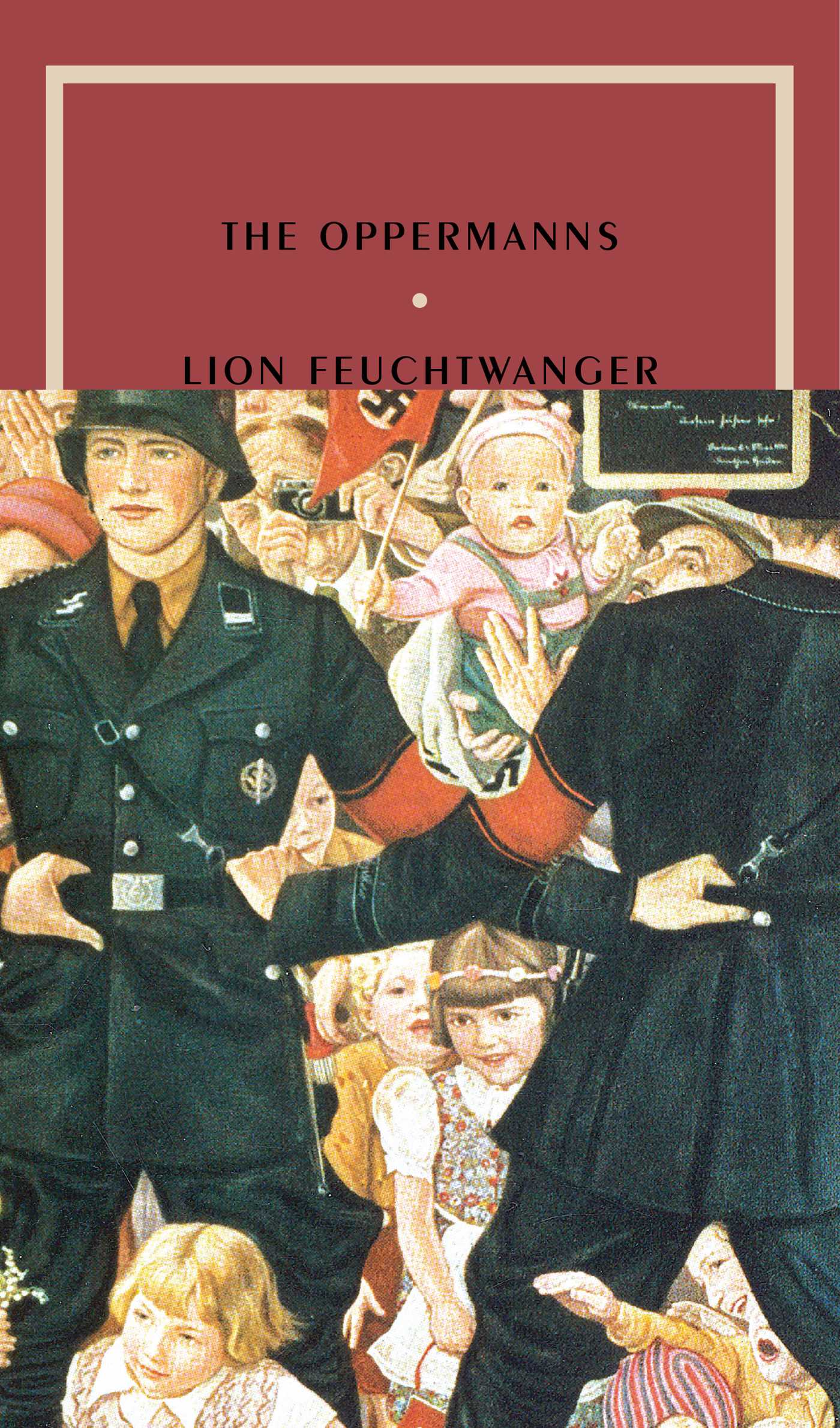
Review 2242: The Oppermanns

One of my brothers and I have gotten into the habit of buying each other books that we think are excellent. The Oppermanns was his Christmas present to me, and I just got around to reading it.

The novel is astounding because it was written concurrently with the events it describes, That is, it begins late in 1932 and ends in the summer of 1933 and was written during that time period. It tells the story of a wealthy German Jewish family. It’s considered the last masterpiece of the German-Jewish literary movement.

The Oppermanns are wealthy well-known residents of Berlin whose family owns a chain of furniture stores. Martin runs the stores. Gustav is an intellectual who spends most of his time enjoying art, literature, and music. Edgar is a world-famous scientist and surgeon. At the beginning of the novel, all three are happy with their lives, and although Martin has half-heartedly sought a merger with a competitor to mask the Jewish ownership of the family store, he has muffed it and doesn’t much care. The Nationalists, as the Nazis are referred to throughout the novel, seem to be on the wane.

However, within weeks the Leader (his name is never mentioned) has been made Chancellor because foolish landowners and big business, having drained the country dry, think they can use the Nationalists. Things begin to turn bad. One of Gustav’s friends emigrates to Palestine, but Gustav thinks he is being alarmist. After all, this kind of thing has happened before, and it always dies down.

This novel documents the slow horror of the Nationalist take-over (not so slow, really) and shows how easy it is to fool oneself and stay in one’s comfort zone even when it becomes uncomfortable.

The novel is all the more chilling because of how early it is written, because readers today know more about what will happen than Feuchtwanger did. It has a slightly optimistic ending, implying that the German people—whom he always differentiates from the Nazis—would not put up with brutality forever, but of course we know the German people didn’t stop anything.

Related Posts

The Postcard

The Invisible Bridge

Night

Review 1314: The Paris Architect

Cover for The Paris ArchitectLucien Bernard is an architect in 1942 Paris who is eager to prove his abilities as a modernist designer. He has an opportunity to design a factory for Auguste Manet, a wealthy businessman, and is undeterred by the knowledge that it will be used to manufacture arms for the Germans. All he wants is the opportunity to advance his career.

But first, Manet wants his help in designing an undetectable place to hide a person. He has been helping Jews hide from the Gestapo until they can leave the country. Lucien has no love for Jews and is terrified he’ll be caught. But he takes on the challenge.

This is an interesting premise for a novel, but Belfoure’s writing ability isn’t up to the task. The writing, especially the dialogue, is crude and obvious. Most of the Germans are cartoonish as villains, and other characters are flat as pancakes. Lucien’s secret is threatened from several directions, which is supposed to heighten the tension but almost makes it ridiculous. Lucien’s assistant hates him and is involved in helping his own uncle finds Jews, while Lucien’s mistress is two-timing him with a Gestapo officer.

Most problematically, Lucien is a jerk. He is supposed to evolve into a good guy during the novel, but there is a fairly late scene where his reaction to thinking his girlfriend is cheating on him is brutal. Of course, he is rewarded by falling in love with a beautiful model in Paris.

As you can probably tell, I disliked this novel.

Related Posts

Half-Blood Blues

A Country Road, A Tree

The Zookeeper’s Wife: A War Story

Day 1297: The Weight of Ink

Cover for The Weight of InkThe Weight of Ink is a dual time-frame novel set in the current time and the 17th century. At first, I wasn’t as captured by the present-day sections as I was by the past, but eventually the entire novel absorbed me. There is a big revelation at the end that I anticipated, but that did not lessen the power of the novel.

In the present day, Helen Watt is an English university professor of Jewish history who is elderly and ill. Requested by a previous student to examine a cache of papers he found in a wall of his 17th century house, Helen does not expect any great finds. What she discovers is a genutza, the hidden papers of a 17th century rabbi, and on one page, a mention of Spinoza. Understanding that this could be a major discovery, she requests help and gets that of Aaron Levy, an American graduate student.

One of their first, startling discoveries is that Rabbi HaCoen Mendes’s scribe, identified only by the Hebrew letter aleph, is a woman. Having reported her initial findings to Jonathan Martin, the head of the History Department, so that he could buy the papers from the owners, Helen is dismayed to find her place on the investigation usurped. She can continue working with the papers, but Martin has also given Brian Wilton access. He arrives with four graduate students to beat Helen and Aaron to any discoveries and immediately publishes an article about one of the topics in the letters.

In 1657, Ester Velasquez is a young Jewish woman who has been allowed an unusual education. In these dangerous days of the Inquisition, her family fled Portugal for Amsterdam, where her parents were killed in a fire. She and her brother Isaac are part of the household of Rabbi HaCoen Mendes, who travels to England to educate the British Jews in their heritage, these people having been hiding there pretending to be Protestants during hundreds of years when Jews were not allowed in England. Rabbi Mendes’s difficult job is made harder when Isaac, his scribe, leaves. But the rabbi lets Ester take his place.

Offered an opportunity of knowledge, Ester comes to know that she does not want to return to a woman’s life. So, she sets about a daring deception.

Aside from covering some key events of its time—the Inquisition, the return of Jews to England, the plague, and the Great Fire—The Weight of Ink offers us an intrepid, determined heroine in Ester as well as an interesting modern story. I was really touched by this novel. It’s terrific—the kind of novel I look for in historical fiction.

Related Posts

The People of the Book

The Bookman’s Tale

The Last Painting of Sarah de Vos

Day 1111: The Gustav Sonata

Cover for The Gustav SonataUntil the very end of The Gustav Sonata I wondered what its point was. It is a novel detached from its characters even as it puts them through events that should make us sympathetic. Further, although it is set in a specific time and place, there is little feel for what it was like then and there. This effect is in strong contrast to Tremain’s two novels about Merivel, set in Restoration England.

The novel begins in 1947, when its main character, Gustav Perle, is five years old. Although Gustav is Rose Tremain’s exact contemporary, parts of the novel are set earlier, before Gustav was born.

Gustav’s father died when he was a baby. He was a member of the police force for their small town in Switzerland, but he lost his job before Gustav was born, under circumstances that Gustav’s mother does not fully understand. All she knows is that Erich died “helping the Jews.”

Gustav’s mother Emilie has raised him without a shred of affection but only with criticism. The lack of affection is tempered somewhat by his lifelong friendship with Anton, whom he meets the first day of Kindergarten. Emilie does not like Gustav’s friendship with Anton, because Anton is Jewish. But Anton and Anton’s family are all Gustav has, really.

Anton is always a self-absorbed person. He is nervous and highly strung, a musical prodigy. Anton’s mother thinks he will become a famous musician, but he is terrified in competition and performs badly.

An important theme in this novel is Swiss neutrality and its correspondence with personal neutrality. Gustav, although faithful to his friends, is always concerned with self-mastery and holds back from his own life events. But so does this novel hold back from its characters, as if observing them through a glass.

I found this novel interesting but not involving. I think it took too long to get to its point. It is another novel for my Walter Scott prize project.

Related Posts

Merivel: A Man of His Time

The Glass Room

A View of the Harbor

Day 659: The Prague Cemetery

Cover for The Prague CemeteryThe Prague Cemetery opens in 1897 with a monologue that is so vile and bigoted against just about everyone—the French, the Germans, the Italians, Jesuits, Masons, women, and especially Jews—that I almost put it down at that point. That monologue is the ranting of the main character, Simonini, as learned at his grandfather’s knee. Simonini is an absolutely repellent person who makes his living forging wills and other documents but who also works for the French secret police, and the German secret police, and the Okhrana, making up lies and creating international incidents.

Simonini has a problem. He has gaps in his memory. Further, when he explores a passage in his house, it leads to the rooms of someone who wears a cassock. Following the advice of an Austrian Jew (whom he calls Froïde), he begins writing down what he can remember of his life. The next time he awakens, he finds his diary annotated by the Abbe Della Piccola, who seems to remember the time periods he cannot but doesn’t remember the others. It is soon obvious that these are two personas of the same man.

Simonini is already a forger when he begins his first employment in espionage, spying on the leadership of Garibaldi’s army for the Piedmontese secret police. He always ends up exceeding his orders, though, so when he blows up the ship containing Ippolito Nievo, who is in charge of Garibaldi’s finances, instead of simply assuring the books go to the government and nowhere else, he is shipped off to Paris.

Simonini is most concerned with the fate of what he considers his life work, a document that is supposed to be a true account of a meeting of eminent rabbis—and one Jesuit—in the Prague cemetery, where they plot against the Gentiles and scheme for world domination. Although Simonini has plagiarized some of this document from other sources, he has fabricated most of it, including the setting. Over the course of 40 years, he perfects this document, eliminating the Jesuit and changing it to a series of protocols, all the while trying to sell it to different governments. It is this document that becomes the infamous Protocols of the Elders of Zion, used by the Nazis and other hate-mongers through the years to justify anti-Semitism, even though everyone involved in its creation knew the document was apocryphal.

Although this tale is supposed to be some sort of answer to Dan Brown’s The Da Vinci Code, being based on actual instead of made-up events, and though it is told with proper postmodern irony, it left a bad taste in my mouth. As Simonini and his abettors make up more and more ridiculous stories linking, say, the Masons to Satanic rites, with the public gleefully believing everything, I felt disgusted. Almost every character in the novel except Simonini was an actual person, and all the events the novel is based on are true, which makes it even more disturbing. Eco even has Simonini responsible for framing Dreyfus. Simonini also murders people and dumps their bodies in the sewer beneath his house.

Maybe I agree with one reviewer that some readers may not understand irony. I’m not sure. The construction of a truly dark and repellent protagonist reminded me of the novel Perfume, except that I enjoyed Perfume. I just know that although I have a dark sense of humor myself, this novel made me want to take a bath.

Related Posts

Great House

In the Garden of the Beasts

The Bones of Paris