
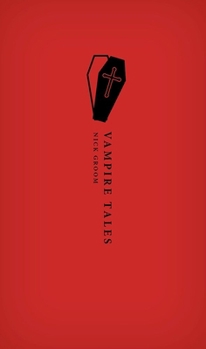
For both Short Story September and RIPXXI, I decided to read something out of Vampire Tales, first reviewed by Kaggsy. This selection consists of a fragment of a story, a poem, a letter, an introduction, and a short story that are all related, according to editor Nick Groom.
The fragment is the beginning of a novel by Lord Byron. The theory is that on the famous stormy night when Mary Shelley was inspired to write Frankenstein, Lord.Byron told the party his idea for his story, for which he had only written a few pages. Present besides Percy Shelley, Mary, and her sister was John William Polidori, Lord Byron’s doctor.
Byron died leaving “A Fragment” with his publisher, who asked Polidori to turn it into a full-length story, we assume using Byron’s plot. But the publisher released the story with no credit to Polidori and no rights to the material. The subsequent dispute ruined Polodori’s literary career.
So, I’m looking at “A Fragment,” a poem by Goethe that awakened the punisher’s interest in releasing a vampire tale, a letter, the introduction to “The Vampyre,” the work by Polidori, and “The Vampyre” itself.
“A Fragment” (1819) is just a few pages long, in which a young man travels with Augustus Darvell, a man of great reticence whom he tries to befriend but fails. Arriving in a Turkish cemetery, Darvell says that he is going to die and starts setting conditions for his burial. That’s as far as it gets, and no vampire appears, but I presume Darrell proves to be one.
The poem that piqued an interest in vampire literature is “The Bride of Corinth” (1798 in German, 1819 in English) by Johann Wolfgang Goethe. It’s about a man who travels to Corinth to meet his intended. At his bedside, a beautiful woman appears and he falls in love. But she is not his bride. She was supposed to be, but she is dead, and he’s supposed to marry her sister. Tragedy ensues. I’m not much of a poetry reader, and 19th century narrative poetry is not very interesting to me. But it tells the story, not in a particularly scary way.
Next is a letter called “Extract of a Letter from Geneva, with Anecdotes of Lord Byron, &C.” (Gotta love those 19th century titles.) I personally don’t see a big reason for including it, since it doesn’t talk about the story but relates some gossip and refers to the famous night of inspiration.
Next is the Introduction to “The Vampyre,” by Alaric Watts (1819), which recounts some incidents of vampirism and includes a short history of vampire literature.
Finally comes the story, “The Vampyre.” Aubrey, a young man, becomes acquainted with Lord Ruthven, a handsome but pale older man who never shows an expression. The two agree to travel together, and Aubrey observes that Ruthven breaks young men and married men with children at gambling but is generous to scoundrels. Their ways part in Rome after Aubrey finds him apparently trying to seduce the innocent daughter of their landlady.
Going to Greece to look for antiquities, Aubrey falls in love with his host’s daughter, Ianthe. He is told not to go into a forest at night, but he does—
None of these are the most scary vampire tales, but the poem and the story end in doom and disaster. And probably at the time the notion was new enough to give a thrill just thinking about it.

