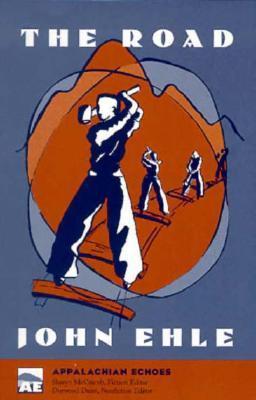
Review 2170: The Road

When I briefly researched to find out what the second book in John Ehle’s Mountain series was, I came up with The Road. However, the end of the novel indicates that one other book precedes it, and Goodreads lists it as #4, the last one. (Looking back, I see I found a site that recommended they be read in that order, with the last one second.) In any case, the novels don’t seem to be closely linked, only featuring the same families.

The Road begins 100 years after The Land Breakers, in 1876. Weatherby Wright, an engineer born and raised in the mountains, has been tasked with building a railroad from the eastern part of North Carolina up the mountains to the Swannanoa Gap. This railroad will help the mountain dwellers take their crops to market and make medical and other kinds of help available to them. However, no one knows if the effort can be successful.

Most of the novel focuses on Wright and the details of this difficult project. He is dependent mostly on convict labor and hires as the project accountant Hal Cumberland. Another plot is the romance between Cumberland and a mountain girl, Henry Anna Plover.

The novel is powerful at times but at other times reads like a series of anecdotes passed down in the family that don’t really link up into a coherent story. The character of Weatherby is not always involved because of health reasons.
Related Posts

The Land Breakers

Giants in the Earth

Days Without End

Review 2075: The Land Breakers

John Ehle grew up in North Carolina and can trace his ancestry back to one of the first three families to settle the remote western North Carolinian mountains (the Appalachians) in the 18th century. The Land Breakers is the first of a series of seven novels about the families who settled in that area.

It’s 1779: Mooney Wright and his wife Imy have been released from their indentures and are traveling around trying to buy land for a farm. However, no one will sell them land in the more settled areas. They find a store owner who offers them land in the remote western mountains, which have not yet been settled, and almost inadvertently they end up buying 600+ acres.

It is a hard journey to get there, but at last they end up in a pretty valley with soil that has never been cultivated. They are both hard workers, and they set about building a cabin and clearing land for planting the next spring. However, during the winter Imy dies of a sickness, and Mooney sinks into a depression.

Tinker Harrison, a comparatively wealthy man, arrives with his family and slaves the next spring. He wants to establish the valley as a settlement he can control. They arrive shortly after Mooney buries Imy. Following them are Ernest Plover and his family. The Plovers are in-laws to Harrison, because Ernest’s oldest daughter, Belle, married Tinker, although she is younger than Tinker’s son, Grover. Ernest is a shiftless man with seven daughters, the next oldest to Belle being Mina.

Once Mooney starts to come out of his depression, he becomes interested in Mina, who is beautiful but very young. However he has also noticed Lorry, Harrison’s daughter and the mother of two young boys. She married Lacey Pollard, but he left to look for a home in Kentucky four years earlier, and she never heard from him again. Mooney needs a wife to work for and make his plans succeed, and he is torn between the two women.

This novel is a sparely written story of the difficulties faced by those early settlers. These do not so much involve people as problems with wild animals and weather and the sheer remoteness of the area from anywhere else. Occasionally, when describing the landscape, the prose becomes lyrical. With its details of work, it reminded me a bit of the trilogy I read by Tim Pears, although that was set 150 years later. I was interested enough in this novel to order the second in the series.

Related Posts

Giants in the Earth

The Horseman

Harvest