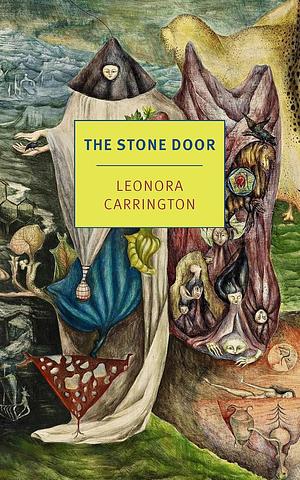
Review 2616: The Stone Door

Leonora Carrington was a surrealist painter (that’s her work on the cover) and obviously also a surrealist writer. I first encountered her when I read Down Below, her memoir about her escape from Nazi-occupied France across the Pyrenees to Spain while she was hallucinating from mental illness. That book was hallucinatory for certain, but The Stone Door is even more so.

I don’t think I can describe the plot, if there is one, but it involves several groups of people, a lot of symbolism, a series of bizarre fairy-tale-like stories, and attempts to open a stone door. Gabriel Weisz Carrington, the author’s son, doesn’t attempt to provide a synopsis in the introduction, just mentions scenes in it and quotes from it. There is an afterword by Anna Watz that analyzes it, but trying to read that analysis made me tired.

Frankly, if this hadn’t been a very short book, I wouldn’t have finished. It was difficult to follow and meant very little to me.
Related Posts

Down Below

Owls Do Cry

Giving Up the Ghost

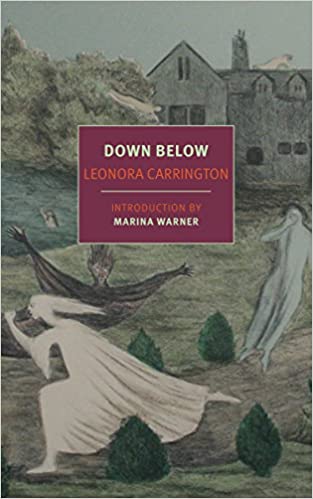
Review 2030: Down Below

Leonora Carrington was a Surrealist artist who for years had an affair with the much-older Max Ernst. During World War II, Ernst kept being imprisoned as an enemy alien in France, and the resultant tribulations broke Carrington’s mental health. As she and some friends traveled to Spain to escape the German invasion, she became disassociated from reality. Down Below is her recollection of her state of mind and thoughts during her break from reality.

Reading this very short work is an odd experience, as Carrington’s delusions seem as surrealistic as any artwork. It also feels elliptical, reticent about the events that brought on her insanity and really about anything personal except her state of mind. It would have been almost impossible to understand without the background provided in the Introduction to my NYRB edition.

It’s pretty crazy. Unfortunately, this breakdown made her a heroine of Surrealism, which must have been personally difficult for her.

Just as a coincidence, shortly after I read this book, I read Julie Orringer’s The Flight Portfolio, about Varian Fry, the man who helped many writers and artists, including Ernst, I think, escape the Nazis. Review coming in a few months.

Related Posts

Suite Française

Grand Days

Warlight