Day 815: No Ordinary Time

Cover for No Ordinary TimeNo Ordinary Time tells of the contributions of Franklin and Eleanor Roosevelt to the conduct of the United States before and during its participation in World War II. The book relates how Franklin Roosevelt exercised his acute political awareness of public opinion to nudge the U.S. out of isolationism during the war, foreseeing as he did how the world would be changed if Germany succeeded and how assisting England against the Axis powers allowed the U.S. to ramp up for war. While Roosevelt was concentrating on the war, Eleanor remained his social conscience, attempting to hold on to the social advances of the New Deal, taking up the causes of women and their right to work and of African-Americans and their right to equal treatment.

The book also treats of the relationship between Franklin and Eleanor. Although they were always friends and companions, Eleanor had been devastated much earlier in their marriage to find out that Franklin had been having an affair with her own secretary, Lucy Mercer. This discovery ended certain aspects of their marital relationship. Eleanor’s relationship with her mother-in-law was difficult, too. In many ways, Eleanor was never at home in her own house. When she had to find a way to be of use as First Lady, since the traditional role of hostess didn’t suit her, she began to make a life for herself as Franklin’s eyes and ears around the country. So successful was she at this that when Franklin wanted to rekindle their relationship later in life and asked her to stay home more, she didn’t want to give up her active life.

These were two remarkable people, although they had their faults. At times, Eleanor’s zeal for a cause made her oblivious to Franklin’s need at the end of the day for relaxation. She found it difficult to unbend, always wanting to be active. Franklin, although charming and seemingly affectionate, was occasionally selfish and seemed sometimes to have no care for people who had given him unstinting care and friendship.

Reading this book made me feel as if I really knew these people, a feeling I seldom get from nonfiction. This is a fascinating story, sometimes thrilling, sometimes sad, about an important period in our history.

Related Posts

The Bully Pulpit: Theodore Roosevelt, William Howard Taft, and the Golden Age of Journalism

Team of Rivals: The Political Genius of Abraham Lincoln

Unbroken: A World War II Story of Survival, Resilience, and Redemption

Day 810: The Round House

Cover for The Round HouseThe Round House looks back to 1988, to traumatic events in the life of 13-year-old Joe Coutts and his family. Joe has had a comfortable life for a kid living on the reservation. His father is a tribal judge, and his mother is a social worker. They live in a homey, not fancy house, and his mother keeps a beautiful flower and vegetable garden.

Joe is enjoying the summer as any 13-year-old might, sometimes running around with his friends, sometimes helping out at home. One Sunday he is digging out saplings that have worked their way into the foundation of their house. His mother has run out to the office to pick up a file. She is usually very punctual, but he and his father realize she has not returned at her usual time. The two decide to go get her.

They pass her coming home, but it is not until they arrive home that they discover something horrible has happened. Joe’s mother has been raped and brutally beaten. They rush her to the hospital.

When the police come, she will not talk about what happened except for the broadest outlines. She was kidnapped from the old ceremonial Round House and taken somewhere else to be assaulted. She escaped after her attacker doused her with gasoline and went for matches. After she returns from the hospital, she retreats to her room.

Because of complicated laws related to who has jurisdiction over what type of crimes and where they are committed, Joe’s father begins trying to sort out how a prosecution could be pursued when they find the rapist. This task is made more difficult by the insistence of Joe’s mother that she doesn’t know where she was when she was raped. Joe himself starts looking for evidence of who could have committed the crime.

Like most of Erdrich’s novels set on the reservation, this novel is as much about heartbreaking experiences as anything else. Erdrich points out in the Afterword that up to 1/3 of Native American women are raped on the reservation, mostly by men who are not Native American. She says that this number is almost certainly an understatement, because Native American women don’t want to report rape. Many of these incidents cannot be prosecuted because of jurisdictional problems.

There were a few things that bothered me about this story, particularly that Joe doesn’t connect some money he finds near the scene of the crime with the crime or that he and his friends drink some beer they find even though they think it is connected with the crime and could be a clue. Even at 13 and in 1988, they had to have watched more crime shows than that.

In general, though, this is compelling reading, about the change in Joe’s family, about how fast he is forced to grow up, about the limitations of justice on the reservation.

Related Posts

Shadow Tag

Once Upon a River

Swamplandia!


Day 809: The Warmth of Other Suns: The Epic Story of America’s Great Migration

Cover for The Warmth of Other SunsBest Book of the Week!
The Warmth of Other Suns is Pulitzer Prize-winning journalist Isabel Wilkerson’s remarkable book about the migration of nearly 6 million rural African-American southerners to northern and western cities from 1915 to 1970. Wilkerson began her research because of her perceptions that the migration was largely unrecognized and that when recognized was misunderstood.

What makes this book so remarkable is how she manages to humanize it. Although she presents us with facts and figures and results of studies as well as examples of experiences taken from newspapers and the like, the bulk of the book is taken up with three representative case histories. She identified and interviewed three people who ended up in three of the cities usually targeted for migration. Their stories are both representative and extraordinarily interesting.

Ida Mae Brandon Gladney was the wife of George Gladney, a sharecropper in Mississippi. The state of sharecroppers was deplorable. After a solid year of work, the sharecropper would hand over half the crop to his landlord and then settle up accounts, the plantation owner subtracting the cost of the seed and supplies from the sharecropper’s share. The records were the landlord’s, and even if the sharecropper kept his own books, he didn’t dare oppose his landlord. Many of the plantation owners routinely added extra goods onto their tenants’ accounts and otherwise cheated them. George’s plantation owner was considered a good one simply because George ended up with a couple of bucks for the year instead of breaking even or ending up in the red.

Still, it was not because of the unrewarding grind of sharecropping that George decided to leave but because his cousin was beaten nearly to death for stealing turkeys that had just gone to roost some way away. Though George felt safe enough to tell the plantation owner he was leaving, he and Ida Mae still had to sneak away from home, taking the train to Chicago in 1937.

George Starling also had to sneak away from his job picking oranges in Florida but because he was in peril for his life. During World War II, oranges were at a premium and so many laborers had gone north already that the growers had difficulty finding pickers. Still, they wanted to pay the pre-war wage of 10 cents a basket to the pickers. George and two of his friends who had worked briefly in Detroit talked the pickers into letting him bargain for them and got their pay more than doubled. But some of the pickers were terrified and informed the growers what was going on. George heard that he and his friends were going to be lynched, so he had to smuggle himself out of his home county before he could take the train to Harlem in 1945.

Robert Foster was a surgeon from Louisiana in 1953 with a need to succeed. He had married Alice Clement, the daughter of a prominent African-American family in Atlanta. The Clements made it clear that they thought Foster was inferior and did their best to control Alice during the early years of their marriage. After serving as a surgeon in the army, Foster found he couldn’t get admitting privileges to any southern hospitals unless he accepted his father-in-law’s help and settled in Atlanta. Knowing that his family would always be under Clement’s domination, he decided to go to California, where he had always wanted to live. He set off for Los Angeles in 1953, driving in his car.

Wilkinson’s contention is that the causes and the results of the migration have been misunderstood. For example, some studies posited that mechanization in the cotton industry was a major cause. But Wilkinson shows that the industry was forced to mechanize as a result of losing the bulk of its laborers, not the other way around.

Similarly, she shows that contrary to belief, the families who migrated were in general better educated than white emigrants, less likely to divorce, and more likely to have a work ethic than African Americans born in the north, putting to shame the idea that the migrating families ruined their host cities. In fact, many of those who failed did so because of the conditions that already existed in their new home cities.

This history is an amazing book that will keep your interest from beginning until end. I became totally involved in the stories of these three people and wanted to know if they would succeed.

Related Posts

All Aunt Hagar’s Children

This Side of the Sky

The Tilted World

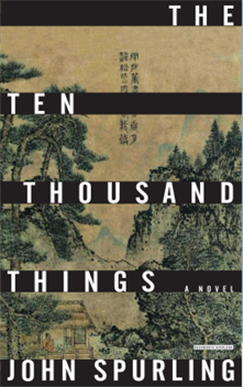
Day 758: The Ten Thousand Things

Cover for The Ten Thousand ThingsIn keeping with my goal to read all of the finalists and winners of the Walter Scott Prize, here is my review of the winner for 2015. The Ten Thousand Things is John Spurling’s novel about a turbulent period in Chinese history. It is written from the point of view of Wang Meng, an actual artist of the time, and inspired by Wang’s paintings of the ten thousand things, all of creation.

This novel is related by Wang from his prison cell, where he chooses to tell about his past in the third person. He has been arrested on charges of conspiracy because he accepted an invitation to view the art collection of the disgraced Chancellor Hu.

Wang’s story begins in a mountain retreat when he is already a grown man. He has resigned his minor government post to pursue his art, although strictly as an amateur. This action has disappointed his more ambitious wife, but she is barely a character in the novel.

China is uneasy under the Yuan dynasty, which is dominated by the Mongols. The Chinese upper class resent the fact that the powerful jobs go to Mongols. Taxes are heavy, and men are restricted to following the professions of their fathers. Wang’s own grandfather, General Meng, was controversial because of having decided to support the Yuan government instead of retiring from his government post as many of his peers did. In Wang’s time, revolts are underway under several different war lords and groups of bandits.

When Wang withdraws to his retreat, he has three fateful encounters. He meets Ni on the way there when he is forced to share a room in an inn. Ni is a great artist whose work affects how Wang views his own. Next, when Wang’s cousin Tao asks him to a nearby village to meet a woman he is thinking of marrying, Wang and Tao are just in time to witness a demand from the Red Scarf Bandits that she marry their chief. When her father asks Wang’s advice, he suggests that she choose for herself. She decides to marry the bandit, and soon becomes a bandit queen named the White Tiger. Finally, Wang meets Zhu, a would-be monk from a nearby monastery who asks Wang to take him as his servant. Wang politely explains he can’t afford to and advises him to join the bandits if he wants to learn about the world. Later, Zhu becomes a powerful war lord and then an emperor.

This novel documents the turbulent period of the overthrow of the Yuan dynasty and the establishment of the even more repressive, but Chinese-lead, Ming dynasty under the paranoid Emperor Hongwu. It moves a little slowly and is told in a detached way from the point of view of an artist who attempts to stay away from the seats of power. It also spends a good deal of time describing Wang’s paintings. The novel reflects a sophisticated and intellectual culture, although it certainly concentrates its story in the upper realms of this society.

link to NetgalleyI think it was this detached viewpoint that kept me from enjoying the novel more. The subject matter is interesting, as I know little of Chinese history and have long thought it was a ridiculous bias that we didn’t learn any history of the Far East in school except when it intersected with Western history. Yet most of the characters seem only sketchily drawn, and I didn’t fully engage. The novel is said to illustrate the principles of Daoism, but since my brief reading on that subject left me completely clueless, I did not understand in what way the philosophy is reflected, except perhaps in the perceptions of the narrator.

Related Posts

River of Smoke

The Blazing World

The Thousand Autumns of Jacob de Zoet

Day 749: Charlotte’s Web

Cover for Charlotte's WebBelieve it or not, I’ve never read Charlotte’s Web before. I bought it for my niece’s birthday and read it quickly before I wrapped it. It’s a charming story with the bit of pathos that all children’s books should have.

Fern is devastated to learn that the runt from the latest litter of pigs is to be killed, so she begs her father to keep him. He allows her to hand-raise the piglet, and she names him Wilbur.

When Wilbur is a month old, he goes to live in a nearby farmer’s barn. After spending most of his time during the previous month playing with Fern, he is lonely, although Fern visits him often. No one in the barn seems interested in being his friend, though. After he asks each animal to be his friend, someone he has not even noticed says she will. She is Charlotte, a spider whose web is right in the doorway above his sty.

This is a delightful tale full of the smells and sights of rural life. Although the story starts with Fern, it is soon about how Charlotte and the barnyard animals try to figure a way to save Wilbur from being Christmas dinner. Although it doesn’t shy away from the basic truths of farm life, it is calm and gentle in tone and has lessons about friendship. It’s a wonderful book for reading to smaller children or one that slightly older children can read themselves. I think many modern children may envy the freedom eight-year-old Fern and her older brother Avery find in their rural life.

Related Posts

The Secret Garden

Anne of Green Gables

Doll Bones


Day 722: The Narrow Road to the Deep North

Cover for The Narrow Road to the Deep NorthDon’t expect good cheer and humor from The Narrow Road to the Deep North. It is the often harrowing novel based on the experiences of Richard Flanagan’s father as a POW during World War II, one of the hundreds of thousands of Australian soldiers forced to build a railroad through Burma with not much more than their bare hands. A much-sanitized version of this story was the basis for The Bridge on the River Kwai.

Dorrigo Evans is the main character of the novel, a surgeon who ends up being in charge of the prisoners simply by virtue of not having died. We meet him first as an older man, one of Australia’s greatest war heroes, feeling no self-worth, unhappily married, and unfaithful to his wife. The novel moves back and forth in time between the days when he is waiting to be shipped overseas at the beginning of the war until his death years later. In the summer before he went to war, we learn, he fell madly in love and had an affair with his uncle’s young wife Amy.

I think it is interesting that the New York Times reviewer thought this affair was a huge flaw in the novel while the Washington Post reviewer thought it was beautiful. I agree with neither of them (although I lean more toward the Times reviewer’s opinion) but think the Times reviewer was off base in blaming the affair for keeping Dorrigo from pulling his life together after the war. It wasn’t the affair at all but the memory of the decisions Evans was forced to make during the war. At one point, he must decide whether to try to save Darky Gardiner an undeserved beating or try to save another man’s leg. Both die, and the later revelation of Darky’s true identity makes this more painful. At another point Dorrigo is made to decide which of his starving, disease-ridden men must march 100 miles north of the camp. He picks the men with boots, reasoning they might have a chance of making it alive.

Occasionally, we see the thoughts of the men’s captors, the Japanese officers or Korean guards. In all his life after, only for a moment does the Japanese Major Nakamura have the slightest doubt of his behavior during the war. To him, the Australian soldiers had shamed themselves by surrendering and were being given a chance to redeem themselves by serving the Emperor. We occasionally also get glimpses of the brutality of mind that characterizes the Japanese military.

Whether you like this book or not, it is not one you will soon forget. This novel won the Booker Prize last year. Although I preferred several of the other short- and long-listed books for the prize, I still found it compelling reading.

Related Posts

Unbroken: A World War II Story of Survival, Resilience, and Redemption

Life After Life

A God in Ruins

Day 709: Family Furnishings

Cover for Family FurnishingsBest Book of the Week!
I felt it was about time I read something by Alice Munro, having only ever encountered a story or two in a magazine. Now, I only wish I’d read her earlier. A note in Family Furnishings explains that the stories were selected to cover the entire time of Munro’s writing career, although it also refers to two volumes. So, I assume this volume is from the latter half.

I am usually more a long fiction person, because I like to get thoroughly involved in what I’m reading, and short fiction doesn’t usually accomplish that. But in this case, I found myself completely absorbed in story after story.

Early on in the volume, I thought I detected a pattern of Munro telling how the different characters formed their families, sometimes in unusual ways. Later, I thought I might have imagined this pattern, or it may not fit all the stories. In any case, the stories are spell-binding, often toward the end revealing something that happened earlier than the timeframe of the story and illuminating some truth. Some of the stories appear to be autobiographical and some may be about Munro’s ancestors.

“The Love of a Good Woman” at first seems to be two unconnected stories, one about three boys discovering a car in the river with a body in it, the other about a nurse discovering tender feelings for a man she knew in high school while she is nursing his dying wife. Yet, it turns suddenly into a murder mystery. But Munro somehow makes this a banal and everyday event.

In “Hateship, Friendship, Courtship, Loveship, Marriage,” we seem to be reading about a swindle. An old man’s servant suddenly runs off with his dead daughter’s furniture to live with his ex-son-in-law. But halfway through the story, we meet two adolescent girls, Edith and Sabitha, who are actually controlling this situation through a prank.

“The Bear Came Over the Mountain” is the touching but even more complex source of the wonderful movie Away from Her, about a man helplessly observing his wife’s growing loss of memory from Alzheimer’s. In “The Children Stay,” a young woman walks away from her family during a vacation on Vancouver Island to leave with her lover.

Several of the stories are about Munro’s own childhood—how her father began raising animals for fur too late to make a success of it and had to go work in a foundry, how her mother suffered for years from Parkinson’s, how the truth of a story long told about a crazy neighbor’s behavior when Munro was a baby suddenly was revealed years later when she saw a poem in a newspaper.

All of these stories show us the complexities and depths of human interactions. They are minutely observed and beautifully written. I’ll soon be looking for more to read by Alice Munro.

Related Posts

The Empty Family

Unaccustomed Earth

Stone Mattress

Day 705: The Spinning Heart

Cover for The Spinning HeartDonal Ryan achieves a remarkable feat in The Spinning Heart. In this very short novel, he manages to depict the effects of the recent Irish financial collapse from the viewpoints of 21 different small town residents. (My caveat: I didn’t actually count them. I am relying for the number on an article about the novel.)

First we hear from Bobby Mahon, who is absorbed in his contempt for his father Frank and his betrayal by his employer. Frank drank away his own inheritance, his father’s farm, and as soon as it was gone, stopped drinking. This all because Bobby’s grandfather said that at least Frank, at that time a teetotaler, wouldn’t drink away the farm. Frank himself was so verbally abusive that Bobby and his beloved mother stopped talking to each other to avert his wrath. That pretense eventually grew into an actual estrangement.

Bobby was the foreman of a crew for a successful construction company until the downturn, when the company folded and the boss, Pokey, disappeared. Now, Bobby and the other men have found out that Pokey did not pay in for their government benefits, instead pocketing the money, so none of them will get unemployment or their pensions.

Josie, Pokey’s father, laments his decision to turn his company over to Pokey and feels sorry for the men left without an income. He blames himself for loving Pokey’s other brother more than Pokey.

Vasya, a contract construction worker from the Caucasus, has even fewer options than Bobby and his men. He relates how Pokey gave him a ride and lied to him about work the last time he saw him, on Pokey’s way out of town.

And so the novel goes, written in many different voices in Irish slang. As the novel moves forward, tensions rise, finally ending in violence. A well-regarded young man is accused of murder. A small child is kidnapped.

Using an unusual technique, this novel conveys the perspective of an entire small community and the impact the economic calamity has had on all their lives. Surprisingly, considering the subject matter, the book is rough and funny, as well as poignant.

Related Posts

Broken Harbor

We, the Drowned

The Gathering

Day 688: The Age of Innocence

Cover for The Age of InnocenceI have certainly read The Age of Innocence before, but it was not until this rereading that I gained a full appreciation for its subtlety and complexity. I may have read it years ago, but I became really interested in it after an interview with Martin Scorsese about his movie adaptation (my favorite film ever) where he commented on “the brutality under the manners” of the upper class New Yorkers in the novel, set in the 1870’s, and likened them to gangsters.

This novel is about the tension between individual desires and the expectations of a rigid society. However, it is also about the two main characters trying to do the right thing in the face of yearning and passion.

Newland Archer is an intellectually inclined young man interested in art and travel who thinks he understands but sometimes is a little impatient of the rigid and insular customs of his time and social class. He has just become engaged to May Welland during a difficult time for the Welland family. May’s cousin, the Countess Ellen Olenska, has returned to New York to her family, having left her husband, and society is shocked to see them bringing her to parties and the theatre. Archer decides to show solidarity with the Wellands and soon finds himself drawn into the Countess’ affairs in his professional capacity as a lawyer. Countess Olenska wants to divorce her husband, and the family is horrified, asking Newland to convince her not to.

Newland succeeds, but he soon realizes that he is in love with Ellen Olenska himself. Ellen is determined not to betray her cousin.  When she admits she loves Newland, she comments that by getting her to drop her divorce, he has assured that they can never be together. A disappointed Newland marries May.

Within a short time, Newland regrets his marriage and foresees a gray existence of doing the same things with the same people year after year. The innocence and purity he saw in May is actually an incuriosity and inability to grow or change. Although Newland doesn’t see Ellen, who has moved to Washington, he has begun to think of her as the only real corner of his life. All these feelings are brought to a climax when the Countess returns to New York and her family decides she should reunite with her husband.

This novel is vivid with carefully observed descriptions. Underlying it all is an understated yet savage critique of petty and provincial New York society of the time. Almost every sentence is double-edged, such as when Wharton describes a soprano’s solo in the first chapter:

She sang, of course “M’ama!” not “he loves me,” since an unalterable and unquestioned law of the musical world required that the German text of French operas sung by Swedish artists should be translated into Italian for the clearer understanding of English-speaking audiences.

Nice! I understand that when this book was published, nearly 50 years after its setting, members of New York society were still able to match most of the characters in the novel with their real counterparts.

Related Posts

The Master

Persuasion

Miss Marjoribanks


Day 685: A Thousand Acres

Cover of A Thousand AcresBest Book of the Week!
A Thousand Acres is a powerful novel set mostly in 1979 rural Iowa. It evokes a completely realized world that is complex and secret.

Ginny Smith has lived on the family farm all her life. Her husband Ty farms alongside her father, Larry Cook, and she and Ty live on what used to be their neighbor’s property, which Larry has bought to make his thousand acres of land. Ginny’s sister Rose also lives on the farm, and her husband Pete works with Larry as well, a bit less comfortably. The women’s youngest sister Caroline is a lawyer in Des Moines.

Ginny is proud of her family’s accomplishment in creating a fine, well-run farm out of the swampland her great-grandparents bought sight unseen. It soon becomes clear that the farm and the relationship to the land is the most important thing to her family—to all of the families in the area.

At a local barbecue, Larry makes an unexpected announcement. He will create a corporation of the farm and hand it over to his three daughters. Ginny, who is mild-mannered, is taken aback and has doubts, but she does not say anything. Rose seems to be enthusiastic. Caroline simply says “I don’t know,” at which point, Larry petulantly cuts her out. When she tries to approach him later, he slams the door in her face.

Harold Clark, another older farmer, has his prodigal son Jess return after an absence of many years. Almost immediately, he begins to favor Jess over his more loyal and hard-working son Loren.

If this all is beginning to sound familiar, it should, for A Thousand Acres is a modern re-imagining of King Lear. This novel, however, turns the original on its head, for we see it from the point of view of the two “greedy” sisters. In fact, Smiley accomplishes a rather clever trick, because while the neighbors and townspeople see events occur that, from their points of view, seem parallel to those of the play, the readers of the novel are conscious of a whole new layer of information, about how two old men lie and exaggerate when they don’t get their way, and how family secrets fuel Ginny’s timidity and Rose’s rage.

This novel presents complicated, flawed characters in a fully realized setting. It is really excellent and thought-provoking.

Related Posts

The All-True Travels and Adventures of Lidie Newton

King Lear

Home