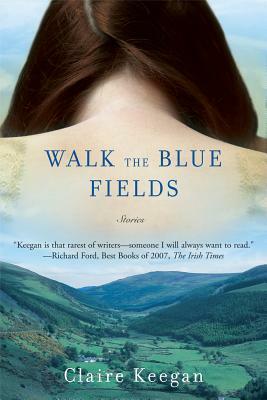
Review 2584: Walk the Blue Fields

Walk the Blue Fields is a collection of short stories by Claire Keegan that I think was published earlier than another collection I read. It contains seven stories, one of which I already read.

In “The Parting Gift,” a girl is leaving home for the first time, headed to New York. She is leaving an unhappy life with dark secrets, but she wishes for some indication of affection.

In “Walk the Blue Fields,” a priest presides at a wedding and goes through his daily business. But the bride was a girl he loved.

Brady’s behavior has caused a split with his wife in “Dark Horses.” Still, he tries to believe she will come back.

In “The Forester’s Daughter,” Deegan cares more for the lands and his old house than he does for his family. Before he married, he talked about the house to Martha as if it were a castle, but it is dark, crumbling, and damp. She considers leaving but stays, even after he does an unforgivable thing to her daughter—gives away her dog for money.

“The Long and Painful Death” is the story I read before, about a writer whose stay in a revered writer’s home is interrupted by an unwelcome visitor.

“Surrender” is about an IRA man, a sergeant, a man who other men fear. He receives a letter from his girlfriend calling it off because of his delays in marrying her.

“Night of Quicken Trees” starts out realistically enough, about an older woman who has inherited a cottage on the west coast of Ireland from her cousin, a priest. She is entirely alone, and her story is a sad one, but then it slowly becomes a mythic one.

I liked most of these stories very much. Keegan is a fluid writer. Her stories are spare without being bone bare. You never quite know where they are going.

Related Posts

Antarctica

Small Things Like These

So Late in the Day

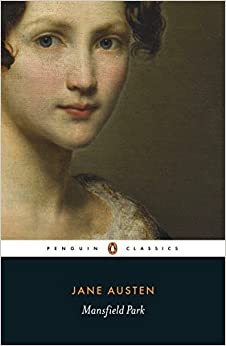
Review 2582: #ReadingAusten25! Mansfield Park

I decided to reread all of Austen for Reading Austen 25, even the books I had already reviewed. That said, I looked at my original review of Mansfield Park and thought it was still valid, so I thought I’d write about something else—the modern perception of Fanny Price.

The Introduction to my Folio Society edition by Richard Church asserts that the novel was written as a “self-disciplinary work imposed by Jane to exorcise grief and rebellion” after a promising courtship was cut off by the death of the suitor. Church himself rates Mansfield Park either 2nd or 3rd of Austen’s books, depending on where you put Emma (with Pride and Prejudice first).

A brief glance at Goodreads, however, tells me exactly what I expected to see—that of the six books counted as Austen’s oeuvre, (Sanditon isn’t usually included) Mansfield Park is the lowest rated. I suspect that’s because of Fanny Price, who is not at all a modern heroine. In fact, a few years ago someone made an “updated” movie that depicted Fanny as more of an Elizabeth Bennett- or Emma Woodhouse-like character, full of wit and energy. That movie missed the point. We have to view Fanny with early 19-century eyes, not 21st-century ones.

First of all, think how Fanny was raised. She is brought from her poor family to a wealthy one when she is only 10. She probably already has a retiring and timid disposition. Then for seven years she is treated with no regard for her feelings or wants except from her cousin Edmund. In fact, she is purposefully meant to feel the difference between herself and her cousins and is largely treated as a hanger-on, especially by horrible Mrs. Norris. In fact, it’s shocking to me that such a close relation is so treated, but we’re looking at money and class distinctions that may have been common in families. Think of Jane Eyre in exactly the same position.

But more difficult for the modern mind to deal with are the principles she’s been brought up with. To us, some of the distinctions that Fanny makes seem finicky, to say the least. (Others, like her reaction to Mary Crawford’s remark about the fate of Edmund’s very sick older brother, are not.) But to most of the early 19th century population, at least among the middle class or well-born (excepting, probably, the fashionable), they were not. As far as Henry and Mary Crawford are concerned, they have revealed too much of themselves, Henry in his dalliances with both the Bertram sisters and Mary in her remarks.

Fanny is growing up in this novel, learning to become herself. Much of her improvement comes from being able to develop a sense of self-worth after Sir Bertram returns from his travels and is happy to see her, and Lady Bertram discovers how useful and comforting she is, and different characters suddenly turn to her for advice. She may have learned her principles from Sir Bertram and Edmund, but by the middle of the novel, she is the one who recognizes principled behavior and speech, as Edmund becomes more in love with Mary Crawford and not only makes excuses for Mary’s remarks but is convinced to break his own principles.

Of course, the ultimate behavior of the Crawfords shows that Fanny was right all along, but before that, when Crawford decides he’s in love with her, she has the difficult task of sticking to her principles when everyone else disagrees with her. She may be gentle and retiring, but she resists all pressure. Think how much more difficult that would be for a person of her nature than for Emma or Elizabeth.

This has been rather a wandering post, but I hope that readers will look at Fanny differently.

Soon, we’ll be reading a book with a heroine much more like Fanny than the others, in Persuasion.

Oh, and I just have to say one more thing about the book in general. Edmund takes orders and has a parish, and then we never see him paying any attention to his job. He doesn’t stay in his parish; we don’t see him working on sermons. It’s like he’s completely forgotten about his work. I don’t think I ever noticed that before. There might be something about that which I don’t understand, though.

Related Posts

Mansfield Park

Pride and Prejudice

Persuasion

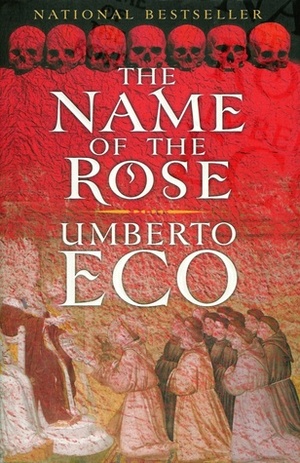
Review 2573: The Name of the Rose

Adso of Melk, an elderly monk, feeling he is nearing his death, leaves this manuscript that tells, for the first time, the events of 1327 in an Italian abbey.

It’s been a long time since I read this book, so I remembered more vividly the movie version, which concentrates on the mystery aspects of the novel. But the novel is more about the religious and political upheavals of the time.

As a Benedictine novice, Adso travels into Italy with a learned Franciscan monk, William of Baskerville from Hibernia. William has been asked to mediate an important meeting between two factions of monks—the Franciscans and other Minorite sects who believe in the vow of poverty and are aligned with the French King, and other sects who think the vow is heretical and follow the Pope in Avignon.

Once they arrive at the magnificent abbey high on a mountaintop, the Abbott, Abo, asks William to look into another issue that has recently occurred. Adelmo of Otranto, an illuminator from the scriptorium, has been found dead on the slope below the abbey’s Aedificium, a fortified building that contains the kitchen, the scriptorium above it, and the library above that. It’s not clear whether Adelmo jumped or had help, and Abo wants William to figure out what happened, preferably before others arrive for the meeting. William quickly ascertains that Adelmo must have fallen from the library, but he learns that only the librarian is allowed in the library, a man named Malachy.

Although William has been denied access to the library by Abo, he soon figures out that there is a way to get into it besides the locked entrance. After a visit to the scriptorium, where William and Adso inspect Adelmo’s work area and meet some of the monks, another monk is found dead, Venantius, a Greek scholar. This makes William surer that the deaths have something to do with the library.

He and Adso sneak into the library at night. It is a labyrinth. Moreover, they disturb someone who runs away and are almost poisoned by the air in one of the rooms.

More monks associated with the library die, and William becomes convinced that they are dying because of a secret book. He and Adso must learn the secrets of the library, and William comes to believe that the murders are related to the history of the monastery.

I have concentrated on the mystery, too, but there’s a lot more going on in this book. It is concerned with the conflict between Louis of France and the illegitimate Holy Roman Emperor, between two popes, and the then recent history of the Inquisition against certain heretical religious groups. It has several learned debates, in which the monks disagree about what seem, to the modern eye, to be obscure and trivial issues. And it fully shows the superstitions of even the most learned of men (except William) and the pit of fear that was life in this monastery.

Although the novel seems straightforward, there is a lot more going on. To me, Eco seems to be mocking the beliefs of the church at times—some of the learned disputes make such ridiculous statements (believed at the time) that I couldn’t help laughing. And I couldn’t help noticing that at least two of the characters’ names, William of Baskerville and Adelmo of Otranto, hearken back to previous mystery and gothic fiction.

A New York Times reviewer from 1980 asserts that the entire novel refers to the time when it was written (the 1970s, I assume), so obviously he also found second meanings and playfulness in the novel.

The novel moves you along despite several learned discourses. The medieval mind also seems to like lists, and I have to admit skipping through several of those. This is at once a challenging and compelling read.

Related Posts

Mistress of the Art of Death

Dissolution

A Morbid Taste for Bones

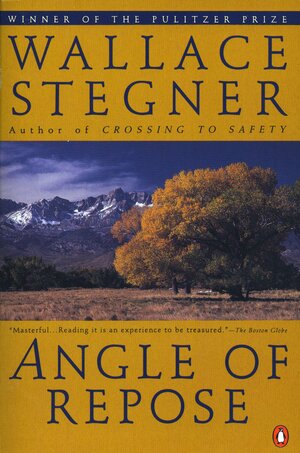
Review 2555: Angle of Repose

Again, when I finished reading this book, which was supposed to be for my A Century of Books project, I found the year already occupied. I have been using Goodreads and often Wikipedia to find books for each year, but Goodreads seems particularly inaccurate. I suspect that what happened here was that it listed the novel for, say, 1981, where I still have a hole (as of this writing in February), because of a 10-year anniversary reprint. I often check the dates if they seem suspicious, but this one didn’t. It’s especially bad now because it took eight days to read, and I am way behind on my reading. I only have a few more books to go, but from now on, I’m double-checking the publication date before I start reading.

Lyman Ward, a former academic just in his 50s, has contracted a bone disease that has frozen his neck so that he can’t turn it, confined him to a wheelchair, and resulted in the amputation of one of his legs. He is almost completely helpless, so his son wants to move him into care, but he stubbornly remains in his grandparents’ home in Grass Valley, California, being taken care of by Ada, a local woman.

His wife, Ellen, left him abruptly for his surgeon when he was helpless in the hospital. Although her partner died soon after and she has shown signs of wanting to return, he stubbornly refuses to see her.

Lyman can read, though, and do other sedentary activities. He was raised by his grandparents, and his grandmother was in her time a famous illustrator and writer, Susan Burling Ward. He has come across newspaper clippings and letters she wrote to her best friend, so he decides to write a biography of her, partly to answer questions for himself about events in his family he doesn’t understand.

Angle of Repose combines Lymon’s current experience and thoughts as he does this work with the events in the biography he is writing. The historical arc of the novel predominates, so much so that I occasionally wondered why Lyman’s story was there at all. However, by the end I understood how his grandparents’ history informs his own.

It’s a mismatch. Susan Barling as a young woman is from Upstate New York, a gifted artist just beginning to become known. She yearns for a life of culture. Her best friend, Augusta, comes from a prominent, cultured New York City family, and as young women, Susan and Augusta make a threesome of friends with Thomas Hudson, a poet and editor who goes on to become famous himself. She meets Oliver Ward, a young mining engineer, when she is very young. Unlike her other friends, he is taciturn and maybe too respectful of them all. He goes away on a job in the West for five years.

Thomas, sensitive, intelligent, and delicate, is Susan’s idea of a perfect man. He picks Augusta, though, and Oliver returns around the same time. Despite her friends’ misgivings, Susan decides to marry Oliver. Her idea is that Oliver can get some experience in the West and then move back East to live a more cultured life. She doesn’t seem to realize that to do his work, he must be in the West, and he is suited for that life.

As far as his career is concerned, Oliver seems too prone to consult Susan’s convenience, and she has unrealistic ideas. He turns down some opportunities because they don’t seem suitable to Susan. He takes a short-term job and they live apart. (She is too genteel for these rough mining camps.) She finally joins him near a mining town named New Almaden, southeast of San Jose. He has taken a house away from town, which anyway she removes herself from, as she does everywhere they live, thinking herself too good for the company. As Lyman says, his grandmother is a snob. Here she begins a pattern of not joining into society and their life but enduring it.

The couple doesn’t thrive financially. At this time, there are lots of qualified engineers available and most of them aren’t as fussy about where they’ll go. Susan’s work writing articles about the West and illustrating other writers’ work is helping support them, despite Oliver’s dislike of the situation and Susan’s complaints about it. They move to Leadville, Colorado, which although it is primitive, allows her to open her home to some intelligent visitors and have lively, informed discussions, which she loves. But the Leadville mine eventually grinds to a halt because of a lawsuit brought by would-be claim jumpers.

The couple goes to Mexico, which Susan loves, but the mine doesn’t prove promising. Their projects gain and then lose funding, and so on.

Susan writes to Augusta constantly, but Augusta never acknowledges Oliver as a fit husband. I fear that much of Susan’s growing disappointment has to do with wanting to justify her choice to her friends.

In the novel’s current time (the late 1960s and early 70s), Lyman expresses some irritating views on the times and young people. I wasn’t sure whether they were Stegner’s own views or more delineation of Lyman’s character, but Lyman eventually forms a sort of friendship with a young woman who acts as his secretary for a time.

This is ultimately a fascinating and absorbing story, but this time through (I apparently read it in the mists of time but didn’t remember anything about it) I kept getting distracted from it. I’m not sure why. I think, though, that it deserved more attention from me. Although I was bothered by Lyman seeming to blame all his grandparents’ problems on his grandmother (and after unfortunate events, his grandfather’s intransigence), the novel is considered Stegner’s masterpiece and won him the Pulitzer.

Related Posts

Obscure Destinies

The Town

North Woods

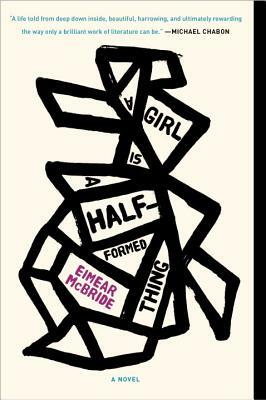
Review 2551: #ReadingIrelandMonth25! A Girl Is a Half-Formed Thing

I was going to review this book in February, but then I decided to hold it a few weeks so it could be part of #ReadingIrelandMonth25 hosted by 746 Books. This may be my only contribution, because I’m busy finishing my A Century of Books project. And now for my review.

When he was two, the unnamed narrator’s brother had brain cancer. To her mother’s mind, her praying rather than the surgery saved him, and she became extremely religious. Her father left, saying he couldn’t take it. So, she, the younger child, her brother, and her mother grew up in a sort of microcosm.

When she isn’t praying, their mother is full of anger, which is expressed at them, particularly at her. Their classmates think they are weird—he because he is slow and has a scar across his head, she because she scorns them and is intelligent. She doesn’t care, but he wants to fit in.

Then at 13, she begins a sexual relationship with an older relative that forms her later relationships with men around violence and mistreatment.

This book isn’t for everyone. For one thing, it is written in an experimental, half-incoherent style. It takes a while to get used to it. However, it is bold and bleak and ultimately it made me cry, which to me means it’s very good. It’s ground-breaking.

It contains scenes of verbal and physical abuse, sexual violence, and rape. Also, suicide and death. So be warned.

Related Posts

The Lesser Bohemians

Milkman

The Virgin Suicides

Review 2544: Island

Alastair MacLeod is considered a master of the short story. Island collects all 14 of his stories into one volume. Most of them are set on Cape Breton in Nova Scotia, where he was raised. Almost all of the stories are concerned with the lives of the working-class, often Gaelic-speaking descendants of Scots who immigrated to Canada during the 18th century clearances.

The stories are arranged by date from 1968 to 1999. Many of the early ones are about young men dreaming of or actually leaving the island. Later, they become more about older men who stayed.

The difficult and sometimes bleak lives of the islanders were interesting to read about. Since childhood memories would have been set in the 1940s, and some of the stories are about fathers or grandfathers, the life is often fairly primitive.

All of stories are well written and hold the attention, but I found several deeply touching. In “In the Fall,” a man’s wife makes arrangements to sell an old horse behind her husband’s back. The horse had been her husband’s faithful companion and co-worker but is no longer able to work. Of course, he’s being sold to the knackers.

In “The Road to Rankin’s Point,” a young man’s family gathers to try to convince his 90-some grandmother to move from her isolated farmhouse to assisted living. He himself has found out he only has a few months to live.

In “Winter Dog,” a man looks back to when he was a boy, to a dog who saved his life. And another one about a man and his dog, “As Birds Bring Forth the Sun.” And one about the results of a brief love affair, “Island.”

MacLeod only wrote one novel, which I’ll be looking for.

Related Posts

The Berry Pickers

Sweetland

The Islandman

Review 2536: The Trees

The Trees is not a book for everyone. It is black satire, very dark, and it covers shameful events in American history that took place over centuries.

In Money, Mississippi, a dismal small town, a brutal murder occurs, or maybe two. A White man is found bound in barbed wire, his testicles removed. With him is the body of a Black man unknown to anyone in town, his hand wrapped around the testicles.

Shortly, the Black man’s body is stolen from the morgue and ends up at the scene of another murder, holding another White man’s testicles. Both White men are descendants of Granny C, an old lady who turns out to be the woman who claimed Emmett Till disrespected her, resulting in the famous lynching. Then Granny C is found dead.

And this is what the novel is about, in its sly, sometimes stereotyped (at least in the case of the White redneck characters), brutal way. It’s about the history of lynchings that continued in this country up until not that long ago (Wikipedia says, shockingly, 1981), thousands of them, mostly Black males, but also some women, as well as Chinese, Native Americans, and even one Japanese man.

The novel has a strange, sort of overdone anti-Southern humor that leads to additional gruesome scenes as two Black detectives from the Mississippi Bureau of Investigation come to investigate.

I read this novel for my Booker Prize project.

Related Posts

Chenneville

The Tilted World

The Warmth of Other Suns: The Epic Story of America’s Great Migration

Review 2531: The Bell Jar

I’ve meant to read The Bell Jar for years, so when I saw it would fill a hole in my A Century of Books project, I got it from the library. I was also interested in it after reading the biographical fiction Euphoria, about Sylvia Plath and her husband, Ted Hughes.

In 1953, Esther Greenwood has earned an opportunity from a major fashion magazine, an internship with a group of other girls in New York. At first, she studiously applies herself to her assignments, but she becomes distracted by her fascination with Doreen, who seems more worldly than the other girls. She is tempted out by endless partying until Doreen gets a boyfriend and Esther has several unfortunate encounters with men.

She returns home from her internship suddenly adrift. She has not been accepted into a writing program, she doesn’t want to live with her mother, and none of the careers she can think of are appealing. Everything seems gray and uninteresting.

Of course, this is the story of Esther’s fall into mental illness, wrapped up in her inability to see a path for herself aside from marriage, which she clearly fears.

The novel is clearly based on Plath’s own experiences. It is clearly and vividly written and looks deep into the psyche.

Related Posts

Euphoria

Song of a Captive Bird

My Brilliant Career

Review 2474: North Woods

In early colonial days, a couple flees one of the colonies into the wilderness of Massachusetts. There, they settle in a valley.

A settler with a baby is kidnapped by natives. When she becomes ill with fever, they leave her with an old white woman, who cares for her. But when white men come after her and plan to kill the natives—the old woman’s friends—she murders them. Before this happens, one of the men gives the captured woman an apple, and she drops the seeds on the ground.

An apple tree grows.

After the French and Indian Wars, Major Charles Osgood gives up his uniform and decides to grow apples. His friends think he has lost his mind. He searches all over until a child leads him to an apple tree near a ruined cabin in the wilderness. The apple is marvelous. He builds a house and takes cuttings from the tree to make an orchard, producing an apple called Osgood’s Wonder.

So Daniel Mason goes on relating the history of this plot of ground, from one owner to another. People die, are murdered, are conned, become ghosts, run mad, the wilderness recedes and then returns, the house is ruined and rebuilt, added to, ruined, rebuilt. Each section is linked to others by characters, coincidences, and place. Some of the incidents are funny, some fates are sad, some characters get what they deserve. Tales are punctuated by songs written from the grave.

I can’t really convey how much I enjoyed reading this unusual novel. It’s steeped in the beauty of the forest. It somehow manages to involve you despite some quite short (some longer) stories of its characters. You get worried about the fates of apple and chestnut trees! I loved this one. It did exactly what a book is supposed to do, pulled me into a different world and made me reluctant to leave it.

Related Posts

The Overstory

The Orchardist

Ulverton

Review 2471: Literary Wives! Their Eyes Were Watching God

Today is another review for the Literary Wives blogging club, in which we discuss the depiction of wives in fiction. If you have read the book, please participate by leaving comments on any of our blogs.

Be sure to read the reviews and comments of the other wives!

My Review

Their Eyes Were Watching God is another reread for me. I looked over my original review and still agree with it. I can make one more comment. This time around I really tired of the dialect and was happy that it became less as the work went on. Writing novels in dialect was popular between the late 19th century and the early 20th, but it is sure hard on the reader. You can find my original review here.

What does this book say about wives or about the experience of being a wife?

Janie’s journey is a search for both love and selfhood, and it involves three marriages.

When she is a naïve 16, Janie’s grandmother arranges a marriage for her with Logan Killick, a much older farmer. Janie believes those that say married people learn to love each other, but very soon she finds this isn’t always so. Keeping house isn’t enough for him. He wants her to do heavy work around the farm. The last straw is when he announces his intention to buy a second mule so that Janie can plow, too. For Logan, a wife seems to be someone who can save him from hiring a farmhand. Janie puts up with a few months of this and then walks off with flashy Joe Stark.

Joe is a guy fall of ideas and ambition who becomes a powerful force in the all-black town of Eatonville. (On a side note, I didn’t understand until I read Dust Tracks on a Road what a big deal this town was.) Unfortunately, a trait Joe shares with Logan is that a wife should do as she’s told, so he doesn’t allow Janie to take part in any of the pleasures of living there. She must bind up her beautiful hair, mind the store but not take part in the conversations in it, and act stately, because she is the mayor’s wife. Both these husbands treat Janie more like a symbol of what they want than a person. There is also the issue of Joe’s verbal and sometimes physical abuse of her.

After Joe dies and she’s been a widow for nine months, she takes off with the much younger Tea Cake. She’s in love. When he takes her $200 and loses it gambling, she is only worried that he left her. He does consult her on plans and lets her do what she wants, and certainly he provides opportunities for fun, but he is also jealous and beats her once just for show. It’s a different culture and time, but I was fairly appalled at everyone’s reaction to the beating.

In the Afterword, Henry Louis Gates, Jr., points out that Hurston wanted to show characters who are real, not all good, not all bad. I guess that’s my way to understanding why Janie remains so in love with Tea Cake. And he does treat her as a person. But it seems to me that in the search of love and selfhood, Janie only gains selfhood once Tea Cake is gone.

Related Posts

Dust Tracks on a Road

Go Tell It on the Mountain

Red Island House