Day 1041: Enon

Cover for EnonEnon is the second novel by Paul Harding and it follows the story of the same family as in his first novel, Tinkers. That novel was about George Crosby and his memories of his epileptic father. Enon is about George’s grandson, Charlie Crosby, and his life in the village of Enon.

At the beginning of Enon, Charlie’s beloved 13-year-old daughter Kate is killed when her bicycle is hit by a car. Soon after, without much attempt to work anything out, Charlie’s wife Susan returns to her parents’ home and he never hears from her again. Charlie begins a downward spiral into grief, anger, and an addiction to pain killers.

In some respects, Enon is a little more accessible than Tinkers. It is characterized by the same beautiful prose, especially in the descriptions of nature. Further, the setting in the old New England village with its sense of history is fully imagined.

Yet, I wasn’t so interested in watching Charlie fall apart, nor did I enjoy his hallucinogenic dreams about Kate, where she turns to obsidian, for example. I’m starting to realize I don’t enjoy reading about dreams in fiction.

I was also nonplussed by Charlie’s relationship to Susan. No wonder their marriage fell apart. Although they seem to be a happy family at the beginning of the novel, Susan is always somewhere folding clothes while Charlie and Kate go off on adventures. I was surprised when she left just a few days after Kate’s death, but it became clear she wasn’t important to her own family.

So, if this subject matter attracts you, you might enjoy this book more than I did.

Related Posts

Tinkers

The Snow Queen

Pastoral

Day 1039: The Home-Maker

Cover for The Home-MakerBest Book of the Week!
The Home-Maker, which was published in 1924, was certainly a radical novel for its time. It has themes that resonate even today, although in some ways it is dated.

Evangeline Knapp is one of those super housekeepers whose home is always immaculate. When we first meet her, she has spent hours scrubbing a grease stain on the floor. But she does not love her work, and her unhappiness creates an atmosphere of tension in the house. She continually picks at her children for not meeting her standards, and everyone is afraid to upset her.

Lester Knapp works as an accounting clerk at a department store and hates every minute of it. He is not earning points with the new management for his dreamy demeanor or love of poetry. Although he is a good husband and father, he is perceived by his community as ineffective and a poor provider. Early on, we learn that he did not get a promotion he was hoping for, and his family will continue to be poor.

A terrible incident forces the two Knapps to swap responsibilities after Lester is injured. Lester takes over the household and child-rearing while Evangeline gets a job in the department store. Her new employers are struck by her energy and dedication to her work, while Lester’s patience with the children makes everyone’s temper and health improve. Everyone learns to adjust to a certain level of messiness.

The idea of swapping roles was much more controversial at this time, so much so that the novel is forced into a shocking conclusion. That was the only thing I didn’t like about this novel, which is touching and compassionate in its view of its characters. However, there probably wasn’t a better way to resolve the situation at the time.

This is a fascinating novel for its time, exploring the ideas of roles for the sexes and how well they actually apply, what happens when a person has no challenging life’s work, and so on. The novel’s themes are applicable to today, even if the times would not require such a resolution.

Related Posts

Fidelity

The Squire

The Wife

Day 1034: Ulverton

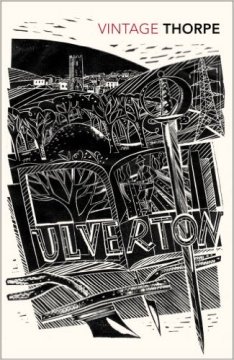
Cover for UlvertonBest Book of the Week!
We’re now more familiar with novels written as related short stories, but Ulverton was written in 1992 and may be the first novel of this kind. The novel covers 300 years of English history and is set in one place, the fictional village of Ulverton. Other hallmarks of this unusual novel are that each chapter is written in a distinctly different voice and the chapters are written in different formats, from a tale told in an inn to the captions from a photographic display to the script of a documentary.

In 1650, the novel opens with the return of Gabby Cobbold from the Cromwellian wars. He meets the narrator, a shepherd named William, on his way home, but William does not have the courage to tell him that his wife, Anne, thinking he was dead, has remarried Thomas Walters. Gabby explains that he was away earning money to support the farm. Gabby disappears, and William is sure that Thomas and Anne killed him. But three hundred years later, Gabby gets his own back against a descendent of Thomas.

In 1689, the foolish Reverend Brazier tells the story of a strange night out on the downs, when he, William Scablehorne, and Simon Kistle were making their way through a snowstorm. As related in his sermon, they were apparently attacked by the devil and Mr. Kistle went mad.

Diary entries made in 1717 reveal a farmer’s preoccupation with improvements to his property and begetting an heir. Since his wife is ill, he does not touch her but begins trying to impregnate the maid.

In 1743, Mrs. Chalmers writes letters to her lover while shut away after childbed. Apparently having read her letters, her husband gets his doctor to keep her isolated longer.

And so it goes, stopping in about every 30 years, so that we sometimes hear of characters again. Through time, names are repeated and the story of incidents changes.

On occasion I had problems with the vernacular, although I tried to stick with it. The most difficult stories for me were the 1775 letters of Sarah Shail to her son and one side of the 1887 conversation between a man plowing and two boys. Sarah Shail is illiterate and is dictating her letters to John Pounds. However, this chapter has its own humor as Sarah is writing to her son Francis, who apparently answers her abusively, to the indignation of Pounds, who begins adding threats to the letters. Pounds’ spelling is so bad, though, that the letters are sometimes incomprehensible. In the case of the plowman, his dialect is so thick that I kept rereading parts of it but was unable to understand very much.

This was just one chapter, though. Overall, I found this novel deeply original and interesting. The countryside is so integral to the story that it features almost as a character. The writing is lovely, and the novel contains a great deal of drama and humor.

Related Posts

The Wake

Harvest

The Quickening Maze


Day 1030: Outline

Cover for OutlineIt was hard for me to decide what I thought of Rachel Cusk’s novel, Outline. It is a difficult novel to describe and seems to be an experiment in fiction. It consists of a series of dialogues where most of the time only one side of the conversation is reported.

The almost unnamed narrator, Faye, is a writer on her way to Athens to teach a writing class. Something about her encourages the people she meets to tell her their stories. The narrator herself seems to be exploring the possibilities of passivity so that she doesn’t herself do or say much; instead, things happen to her. But not much, and that isn’t the point.

The characters’ monologues are written as little gems—sparely expressed and containing interesting intellectual ideas. But there are too many of them for me now to remember which concepts struck me. The overall effect is very cerebral, even though some of the characters express strong emotions.

I am not generally fond of monologues. It was hard for me to tell whether we are to assume that the narrator seldom speaks or whether, as one reviewer assumed, her part of the dialogue has been excised. In addition, the monologues are not written as speech but mostly as narrative, lending even more inertness to the work. I remember going to a play called “Danton’s Death” where instead of talking to each other, the characters took turns declaiming. The effect to me was a series of rants. This novel doesn’t have that effect because of the narrative. I was interested in the characters’ stories, but I wasn’t moved by them.

Related Posts

The Sunken Cathedral

Great House

My Name is Lucy Barton

Day 1021: Mariana

marianaAt the opening of Mariana, Mary hears that her husband’s ship has struck a mine and that there were many casualties. Her phone is dead and it is nighttime, so she must spend the night convinced her husband is dead. She goes back in her memory to her childhood, adolescence, and young adulthood to consider how her life began.

As a young girl, Mary lives for her summer vacations at Charbury, her grandparents’ home, and it is Charbury she first remembers. Charbury means her wonderful room at the top of the house, her pony, and lots of running around with her cousins. In particular, this means Denys, with whom she is infatuated. Dickens’s descriptions of Charbury are delightful.

In the fall, Mary reluctantly returns home to the small flat where she lives with her mother and uncle, a largely unemployed actor. Her father married beneath him, but since his death Mrs. Shannon has insisted on her independence, and the small family struggles along. Certainly, her upbringing is unusual, because her mother and her brother are on the Bohemian side, although certainly affectionate guardians.

This novel follows Mary as she grows up and through her various relationships in her youth. We are pulled along by our interest in her and our curiosity about who she marries rather than by the plot. This novel is romantic without being a romance novel as such. Monica Dickens was Charles Dickens’s great-granddaughter, and she certainly inherited his ability to tell a tale.

Related Posts

Family Roundabout

Greenbanks

One Fine Day

Day 1012: Phoebe Junior

phoebe-juniorBest Book of the Week!
Rich but insolent Mr. Copperhead is hosting a ball. He has invited Lord and Lady Dorset and the Misses Dorset along with their cousin, Ursula May. It is Ursula’s first ball, and she is happy to dance three times with Clarence Copperhead. She also admires from afar the popular girl dressed in black.

That girl is Phoebe Beecham. Phoebe is the daughter of Reverend Beecham, the dissenting pastor of Crescent Chapel, outside London. Her mother was Phoebe Tozer, daughter of the butterman who featured heavily in Salem Chapel. After Phoebe Tozer married the pastor, she was thought by her peers in Carlingford to be putting on airs, so the Beechams moved to London and brought up Phoebe Junior as a fashionable and proper young woman.

Phoebe Junior has met her Tozer relatives only occasionally, because the Beechams have kept her away, so she does not know what to expect when she travels to Carlingford to care for her ailing grandmother. She is shocked and dismayed at her grandparents’ vulgarity but determined to do her duty.

Ursula also lives in Carlingford. She is the oldest of motherless children, the daughter of Mr. May, the incumbent of St. Roque’s. When we meet the Mays, Mr. May is trying to force his son Reginald to take a position at the College, caring for the welfare of poor old men. Reginald is high minded and doesn’t want to take what he sees as a sinecure with no duties. But Mr. May is extravagant with money and sees the position as an expense off his hands.

At a meeting, Mr. Northcote speaks against the established church and uses Reginald’s sinecure as an example of its abuses, naming the Mays. Knowing that Reginald will refuse the position if he hears, Mr. May forces him to make a decision. Oddly, Reginald and Mr. Northcote meet as enemies but become friends.

Ursula also befriends Phoebe when she meets her on Grange Lane. Grange Lane is no longer what it was. Now it is peopled mostly by old folks, and the location is not as desirable. So, both girls are happy to have a neighbor of the same age.

When Clarence Copperhead arrives to be Mr. May’s pupil, a cheerful set of unlikely young friends develops. But underneath the gaiety, Mr. May’s mishandling of money is brewing a disaster.

I really enjoyed this last novel in the Carlingford Chronicles, about how good and generous feelings can overcome prejudices in class and religion. Phoebe Junior is a redoubtable heroine and Ursula a naive and good one. I have finished the Carlingford novels but will continue to read Oliphant.

Related Posts

Salem Chapel

The Perpetual Curate

Miss Marjoribanks

Day 1007: Perfume River

Cover for Perfume RiverYears ago I greatly enjoyed Robert Olen Butler’s A Good Scent from a Strange Mountain. This set of short stories about Vietnam and its aftermath was beautifully written.

It’s 24 years later, and Butler is still thinking about Vietnam. His newest novel is about how a family and a homeless man are all affected in their own ways by the war.

Robert Quinlan is a Vietnam veteran who at 70 is now a university history professor. All his life, he’s tried to please his father, and his military service was part of that effort. Despite his administrative position, he had to kill a man during the Tet offensive. He is still affected by the incident and has never spoken about it at home.

Shortly before he shipped out, Robert’s younger brother Jimmy fled to Canada as a draft dodger. Their father disowned him. Now their father has broken his hip, and their mother asks Robert to try to talk Jimmy into coming home.

The homeless man Bob is also affected by Vietnam because his father was a veteran. Growing up with his father’s PTSD has affected his mental health.

link to NetgalleyI read more than half of this novel, but I grew increasingly impatient with it. The novel is closely observed but maybe too closely. All of the characters seemed to be obsessively evaluating each other’s every little action. It moves excruciatingly slowly. I felt like this novel was bogged down in detail. So, I didn’t finish it, even though the writing was beautiful.

Related Posts

In the Lake of the Woods

Early Warning

& Sons

Day 1003: Classics Club Spin! Look at the Harlequins!

Cover for Look at the HarlequinsI was supposed to read Vladimir Nabokov’s Ada for the latest Classics Club spin, but after attempting to read it, I substituted Look at the Harlequins!, the last novel published before Nabokov’s death. Sometimes I encounter a novel that really makes me feel stupid, or perhaps intellectually lazy, and such was the case with Ada. It was so full of literary allusions and wordplay that I felt I didn’t know what was going on half the time. In addition, it focuses on some of the same themes as Lolita, and while I found Lolita fascinating, the delights of prepubescent girls are not really what I want to read about.

Look at the Harlequins! is a more straightforward fictional autobiography. Many critics consider it a parodic biography, in which Nabokov twists the events of his life to make them meet public expectations of his character. For example, his family’s exit from Russia after the Revolution was relatively uneventful, while Nabokov has his alter ego, V. V., shoot a Red soldier on the way out. Similarly, although in life Nabokov was monogamous, he gives V. V. four wives and a salacious extra-marital career.

His literary career, however, is reflected in the novel, as is, to some extent, his academic career. I believe he transfers events involving his wife Véra to characters such as his fictional daughter Bel and a briefly mentioned assistant. In any event, he addresses his novel to an unnamed “you,” who we may assume is Véra’s alter ego.

We still don’t avoid the theme of prepubescent girls, though, as V. V. fondles an 11-year-old daughter of friends (whom he has an affair with when she is in her 20’s and he is in his 70’s), has such a questionable relationship with his daughter Bel that friends advise him to send her away to school (he fatefully decides to remarry instead), and ultimately marries a woman his daughter’s age. Obviously, this sexual focus on girls was a motif for Nabokov, but I find it disturbing.

It’s hard to evaluate this novel on a literary level. It has none of the beautiful language of Lolita. It is told in a facetious manner and focuses several times on what the narrator considers a mental aberration. Each time we have to endure a description of the problem, which actually seems like a silly one that obsesses the narrator more than it should. V. V. opens the subject each time he decides to marry but describes the problem over and over. I’m not sure what the point of it was.

Because of its facetious tone, however, the novel lacks highs and lows. Instead, it is full of puzzles, anagrams, and self-references. It is entertaining enough but ultimately unsatisfying.

Related Posts

Véra (Mrs. Vladimir Nabokov)

The Gathering

A Heartbreaking Work of Staggering Genius

Day 1002: The Crowded Street

Cover for The Crowded StreetThe Crowded Street was Winifred Holtby’s second book, and like her others, one of its themes is a woman’s duty to herself and to a larger society than her local community. The novel’s main character is Muriel, who always tries to do what is right and good.

We first meet Muriel when she is nine and follow her for the next twenty years. In the first scenes of the novel, Muriel is excited to be attending a party. But her desire to enjoy the party by watching the others conflicts with the ideas of her mother, who thinks she should be dancing and socializing.

During the party, she dances with Godfrey Neale, who becomes important to her later in the novel. But in trying to escape her mother, Muriel falls into a situation where her behavior is misunderstood and the party is ruined for her.

Muriel begins a pattern of always trying to please her mother. Mrs. Hammond, though, has married beneath her and has spent her career social climbing to make up for it. Although Muriel would like to learn about astronomy and is interested in math, the only way she can please her mother is by marrying well. Unfortunately, she is shy and only moderately attractive. Still she decides fairly early on to devote herself to her mother.

Only one friend, Delia, urges her to do more. She tries to get Muriel to go to college, but Muriel is naive and for a long time believes what her mother tells her, which is that men do and women wait for them to act.

It took me a while to relate to Muriel, probably because she is so naive. But eventually I became engrossed in her story, as she learns to view her world and her mother with a more skeptical eye. Having grown up in the 50’s and 60’s, I remember my own mother coming out with some of the things implied or said in Holtby’s novel, only my own reaction was one of indignation. But that was 30 years after the setting of this novel.

I very much enjoyed this novel about Muriel and her slow turning toward a more feminist outlook.

Related Posts

The Land of Green Ginger

Anderby Wold

South Riding

Day 999: Beloved

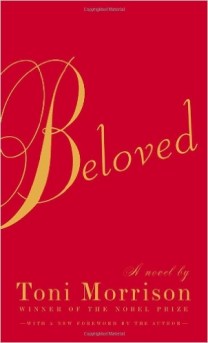
Cover for BelovedOn some occasions after reading a novel, I find my thoughts about it are not clear. Did I enjoy it? Did I completely understand it? Did I think it was powerful or overpowering? This doesn’t happen very often, but these are my thoughts after reading Beloved.

The novel, when looked at straightforwardly, is a ghost story. Sethe escaped from slavery with her children, although the plan went wrong. Most of the other escaping slaves were killed or captured, including her husband, and Sethe had to come later, giving birth to her daughter Denver on the way.

These events happened 16 years ago, but shortly after Sethe made it across the Ohio River, Schoolteacher, the despotic overseer, came after her. To keep her children from being dragged back into slavery, Sethe decided to kill them. She was stopped, but not before she slit the throat of her daughter, Beloved. (Her name isn’t really Beloved, but that’s what’s on her tombstone; we don’t know her name.)

Sixteen years later, Sethe’s house in Cincinnati, referred to as 124, is haunted. Sethe lives there with Denver, her mother-in-law having died and her sons having left. Denver is a sulky, needy young woman who craves her mother’s attention, but that is all for the ghost of her baby.

The action begins when Paul D. arrives. Paul D. had been one of the young male slaves at Sweet Home, where Sethe was a slave. He has been wandering since the war. When he realizes the house is haunted, he drives the ghost out and lives with Sethe as her lover.

But Beloved comes back, now embodied as a girl the age she would have been if she’d lived. Denver and then Sethe become enslaved to her.

But is Beloved a ghost or just a young girl damaged by slavery? Someone in the text makes a reference to a lost girl enslaved since a child, and I think that’s who Beloved is meant to be. Denver and Sethe have just mistaken her from their own needs. There is only one chapter where we see things from Beloved’s point of view, and it is incoherent.

That is what I think, but I was confused because everyone else seems to take the novel as a straight ghost story and of course, an indictment of slavery. I finally ran across a reference to an article by an academic who believes the same thing, but I never found the original paper.

In any case, Beloved is an unusual work. It uses an unusual combination of storytelling techniques, some of which I enjoyed and some I did not. It is powerful, depicting emotions and events that we can barely comprehend. Did I like it? I don’t know. Does it make me think? Yes. Do I understand it? Not completely.

Related Posts

The Known World

The Good Lord Bird

I Know Why the Caged Bird Sings