Review 2467: The Birds of the Innocent Wood

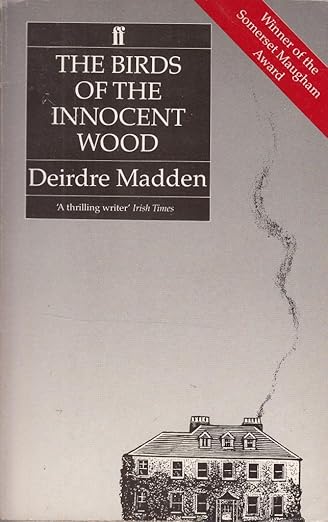
Jane has grown up with no one to love or to love her, which has made her have difficulties relating to others even though she is lonely. Her parents died when she was very young, leaving her to an unloving aunt, who put her in convent school when she was five. When she left school, her aunt only wanted her to take care of her in her old age. But Jane meets James, a young farmer, and hopes to make her own family.

Years later, Jane has died and her twin daughters, Sarah and Catherine, each have a secret that involves the other. They live with their bereft father on the farm, Sarah doing most of the work because Catherine is ill.

This is a beautifully written novel about people’s essential loneliness and unknowability. Madden is not a revealing writer. Rather, she offers glimpses into her character’s minds. This is a novel to ponder.

Related Posts

The Wren, The Wren

Faith Fox

Sight

Review 2433: Prophet Song

When I’m reading books for my projects, I don’t really look to see what they’re about, I just find them and read them. Prophet Song was for my Booker project, and I was dismayed when I realized it is a dystopian novel, since that is not my thing and I had recently read another one.

However, I soon realized I had read another novel by Lynch, Grace, a historical novel about the Irish famine, and I had forgotten how much I liked it. When you think of it, the famine was dystopian in its own way.

This novel rings lots of bells. It makes you think not only of Nazi Germany, but of Putin’s Russia, the Ukraine, and our own refugee crisis. Actually, refugee crises around the world.

The novel starts with a knock on the door. Ireland has recently voted in an ultra-right party, and the government has declared a sort of martial law, against what, it is not clear. A newly formed department, the GSNB, has sent officers to investigate a complaint about Larry Stack’s role as a union representative for the Irish Teacher’s Union. Larry answers that there is nothing wrong with him helping the union bargain for better pay and conditions, but it’s clear they’re trying to head off a planned strike with threats.

When Larry attends the strike, he doesn’t return. Nor can his wife Eilish find out what happened to him. Nor can the union solicitor. Normal rights have been suspended.

Eilish is left to care for her father, who is slowly succumbing to dementia, and her four children—Mark 16, Molly 15, Bailey 13, and Ben, a baby. Eilish goes on planning her Easter visit to her sister Áine in Canada, hoping that Larry will be free by then, but then Mark and Ben are denied passports.

Things go from bad to worse: Larry’s name is published in a list of subversives in the paper, and their house and car are vandalized. Mark receives a call-up to the military on his 17th birthday. Eilish’s sister keeps urging her to leave, but she won’t leave Larry and Mark, after Mark disappears to join the rebels.

This is an absolutely gripping story that keeps building and building. It is written in Lynch’s poetic prose, with long paragraphs that pull you along and create a sense of urgency.

Dystopian or not, this novel is excellent.

Related Posts

Grace

The Memory of Animals

American War

Review 2428: The Green Road

The Madigan family centers its activities around Rosaleen, the mother. At the beginning of the novel, she takes to her bed, assuming the horizontal, after she learns her favorite son Dan is planning to become a priest. The family has to run itself around her until youngest daughter Hanna, the narrator of this chapter, returns from a visit to her brother with information that gets Rosaleen out of bed and on the attack.

In that chapter we learn of the tangled history of the village. The Considines, Rosalee’s family, always looked down on the Madigans, Rosaleen mocks other families for their pretentions, but it’s true that she married below her, and the Madigans have never made very much money. But Rosaleen doesn’t care about money. She would like her husband to fix a few things around the house, but he generally doesn’t.

The next chapter picks up eleven years later in 1991 New York City. This chapter is narrated by Greg Savalas, a gay man deeply in love with a man named Billy. Dan Madigan comes on the scene, and although he is not out, he begins an affair with Billy. This is the time when men are dying of AIDS, and Billy is suddenly stricken. Dan is not helpful.

Eleven years later we encounter oldest son Emmett, who is an aid worker in Mali. This chapter details his insufficiencies in his relationship with his girlfriend Alice.

The Madigans all seem to reserve themselves from deep attachments. The second half of the novel is set in 2005, when they all gather together for Christmas for the first time in years because Rosaleen decides to sell the house. It’s clear that everything is still revolving around her. We get more insight into Constance, the oldest daughter, who has her own family but is the only one left in the area to meet Rosaleen’s demands. Finally, there is Hanna, an actress who is not coping well with motherhood.

I always feel that Enright’s characters are absolutely believable and her families fraught with realistic complications. Her descriptions, too, of the Western Ireland scenery are gorgeous.

Related Posts

The Gathering

Small Things Like These

This Is Happiness

Review 2330: Somebody’s Fool

Somebody’s Fool is the third of Richard Russo’s North Bath novels. The first two (Nobody’s Fool and Everybody’s Fool) centered around the character of Donald “Sully” Sullivan. Sully is now dead, but he is certainly not forgotten, and in a way, you could say that this novel also centers around him.

These books of Russo’s are equivalent to ensemble cast programs. There are lots of characters, and the novel moves among them.

Peter Sullivan, Sully’s son, is one of the main characters. He is a college professor who spends his weekends fixing up, first, the house his grandmother left him and now, the one Sully left him. He enjoys this work, but his plan is to leave North Bath as soon as he finishes and sells the second house. On the other hand, he’s always planned to leave but doesn’t seem to do it.

Peter is surprised to receive a visit from his son, Thomas, whom he hasn’t seen since he and his wife split up when Thomas was a boy. Thomas doesn’t seem to mean well, even though he is friendly, and we learn later that he has a plan but not right away what it is. Thomas, we learn from letters to his brother, is eaten up with resentment against Peter for deserting them (even though his mother didn’t want to have anything to do with Peter) and with jealousy against Will, the oldest brother, for getting to go with Peter.

(Just as a side note, I can’t be sure, but I think this is the first time we ever hear that Peter has two other sons besides Will. They are certainly convenient for this plot but make Peter’s lingering resentment against Sully for deserting him and his mother even harder to understand.)

Another important character is Doug Raymer, the ex-Chief of Police of North Bath. North Bath has recently been dissolved as a political entity and absorbed by nearby Schuyler. Raymer was offered the job of Chief of Police there but decided to retire. He is mostly missing Clarice, his girlfriend and ex-officer, who wanted to take a break and has accepted the Chief of Police job. When he meets up with Clarice, he finds she is dealing with a breakdown on the part of her twin brother, Jerome, and the misogyny and bigotry (she is Black) of her new staff, led by Lieutenant Delgado.

Raymer gets involved with a case of identifying a badly decomposed suicide at an abandoned estate when his old officer, Miller, calls him for help. Clarice hires him as a consultant and asks him to take Jerome as a housemate.

Another main character is Janey, a woman with a history of poor choices in men. Although a lot of her space is occupied with her relationships with her mother (whom she resented for years for carrying on with Sully outside her marriage) and her daughter, she ends up being key because of her relationship with Delgado.

Russo’s characters tend to be self-doubting and over-think things. Usually I enjoy him, but in this novel some of these tropes became a little repetitive. And at times they slowed the action to a halt. For example, Peter hears someone moving around in his supposedly vacant house. He grabs a baseball bat but then Russo takes two pages to have him wonder who it is (including Sully’s ghost) before going up to see. Eventually, the plot gets going but before that, there were times that I got impatient.

Russo is a really good writer, though, who creates complicated and mostly likable characters. It seems like he wanted to use this novel to wind up the fates of his sometimes comic North Bath characters. If that was his intent, he succeeded.

Related Posts

Everybody’s Fool

Empire Falls

Mohawk

Review 2314: Bolla

Arsim is an Albanian literature student in Pristina, Kosovo, in 1995 when he meets Miloš, a Serbian medical student. They are immediately attracted to each other and soon begin a torrid affair. Although he is young, Arsim has already been married for four years to Ajshe, and on the day he consummates his relations with Miloš, she tells him she is pregnant.

The affair continues through Miloš’s graduation, but shortly thereafter, it becomes too dangerous for Albanians to stay in Kosovo, and Ajshe and her brother arrange for the family to leave the country. As soon as he learns Arsim is leaving, Miloš joins the Serbian army.

Arsim’s relatively linear narrative is broken by short sections narrated by Miloš that are harder to understand and move back and forth through time. He is the more fragile of the two and becomes damaged by his war experience.

This novel, which I read for my James Tait Black project, is beautifully written and ultimately haunting. However, I so disliked Arsim that it was hard for me to read. He is absolutely vile in his behavior to almost everyone in the book but especially to his wife and children, whom he periodically deserts and beats when he is there. When he thinks later that he did his best by them, he defines this as financial support. Really, he deserts anyone who poses any difficulties.

Related Posts

The Tiger’s Wife

The Great Fortune

Trespasses

Review 2300: So Late in the Day

So Late in the Day is a collection of three of Claire Keegan’s short stories. Unfortunately for me, I had already read one of them, “Antarctica,” in her collection Antarctica. All three stories focus on relationships between men and women.

In “So Late in the Day,” we get to know Cathal. We follow him in the course of what was to be an important day for him, as he considers his relationship with his fiancée, referred to only as “she.”

In “The Long and Painful Death,” an unnamed writer starts a residency in the home once owned by a revered Nobel-Prize-winning author. On her first day, however, she has to deal with a visit from a man who claims he has permission to view the house but turns out to have a different agenda.

The story “Antarctica” was a reread for me. It’s about what happens when a married woman decides one time to have a fling.

As always with Keegan, the stories are written in lucid, precise prose. They reflect a good deal of cynicism about relations between the sexes.

Related Posts

Antarctica

Foster

Small Things Like These

Review 2278: The Romantic

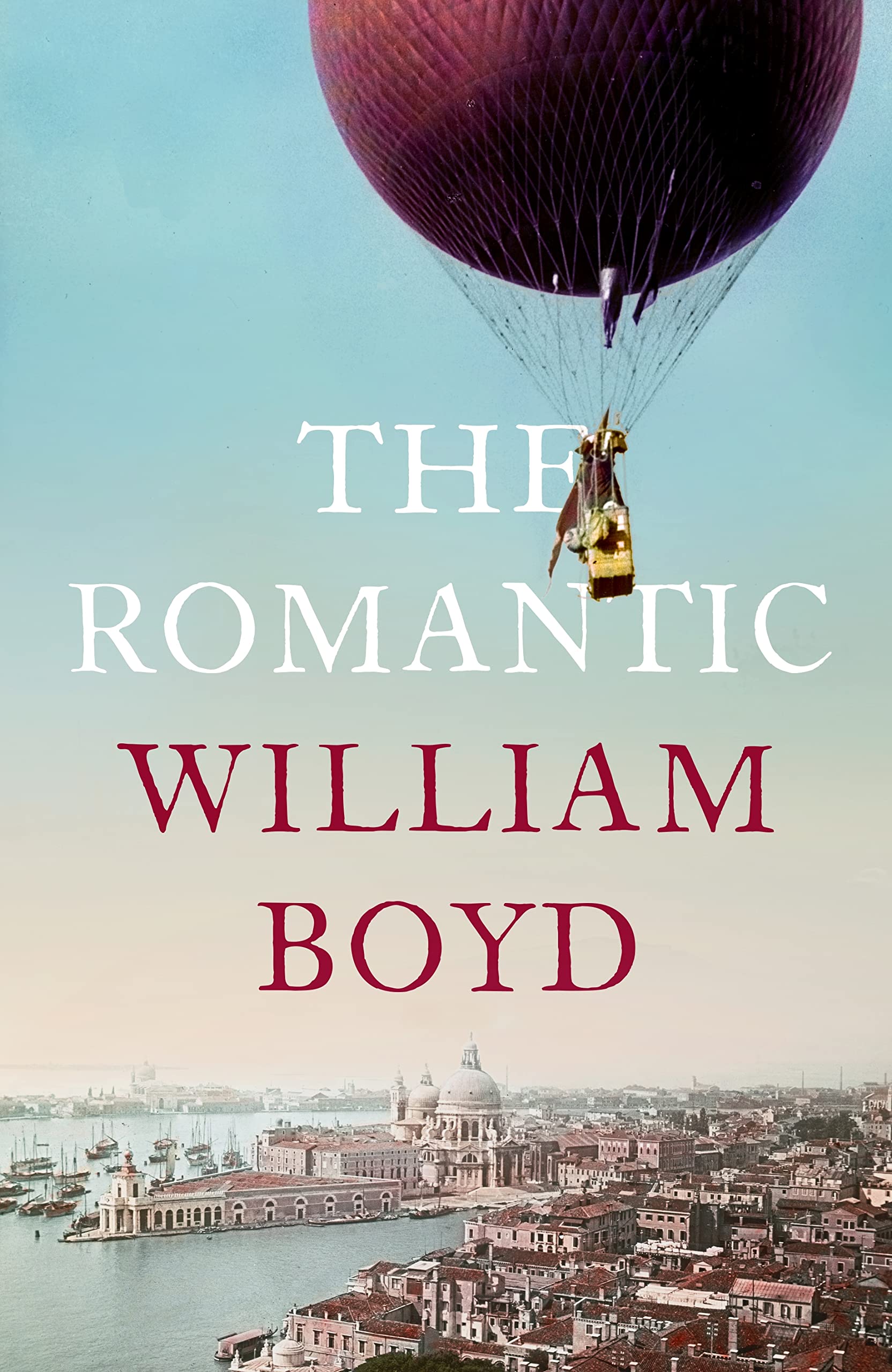
In the 19th century, Cashel Greville grows up in Ireland under the care of his aunt, who is governess to Sir Guy Stillwell’s family. But it’s clear to the reader, if not to Cashel, that all is not what it seems. Sure enough Cashel’s aunt moves them to Oxford, where they take up residence with Sir Guy under the name of Ross, and Cashel’s aunt Elspeth gives birth to twins, Hogan and Buckley. It is not until Cashel is 15 that Elspeth reveals she is his mother and Sir Guy his father.

Outraged, Cashel runs away from home and joins the army as a drummer boy. If you think I’m giving too much away, this all happens within the first 50 pages of this 450-page book, in which Cashel is on the field at Waterloo, hangs out with the Shelleys and Lord Byron, writes a best-selling novel but is cheated by his publisher and ends up in the Marshalsea, attempts to form a commune in Massachusetts, and so on. Oh yes, he also meets the love of his life in Ravenna, Italy, but she is married to a rich old man.

Cashel’s eventful and perhaps not altogether believable life (he claims to have discovered the source of the Nile before Speke and to have thwarted an antiquities smuggling scheme with the help of Sir Richard Burton) is supposedly documented by an autobiography and other papers that came into Boyd’s possession. With this claim, Boyd begins another of his “whole life” novels, maybe the most picaresque and least believable.

I usually like Boyd’s novels—in fact, some of them I have loved—but I had trouble connecting with this one. I’m not sure why, especially since it received uniformly positive reviews. It is fast moving despite its length. Maybe too fast. I didn’t feel like I got to know Cashel or really any of the characters. All of the women are ciphers, even Cashels’ great love. Boyd spends more pages on a sexual encounter with her than on Cashel’s marriage and its subsequent breakup.

Given Boyd’s plans for the adventures in this novel, maybe he needed to make it a lot longer.

Related Posts

Love Is Blind

Sweet Caress

Passion: A Novel of the Romantic Poets

Review 2275: The Books of Jacob

The Swedish Academy that awarded Olga Tokarczuk the Nobel Prize for Literature called The Books of Jacob her magnum opus. It is certainly a stupendous novel at almost 1000 pages, carefully researched, minute in detail, taking on such subjects as the nature of religion, forgiveness, the interconnectedness of things. It is a dense historical novel about a real figure in history, Jacob Frank, the head of an odd religion, a Jewish heresy.

Frank emerges from another Jewish heresy, a group called the Shabbatians, who believe the Messiah has already come and therefore according to teachings, the Mosaic law is broken. The new law, according to Frank, is whatever he says to do. This story is told from multiple perspectives, notably that of Nahman, one of his earlier followers, who attempts to document his life and beliefs.

The movement, which begins in the mid-18th century, is formed mostly of Shabbatians, some of whom are merchants but others of whom are very poor. Frank’s teachings seem to consist mostly of story telling, but as with other cult leaders, one big feature is the sexual exploitation of women, first by all of them sucking a woman’s breast and later by Jacob assigning men partners even from the unmarried girls. You can guess that Frank is charismatic.

This fantastic story follows this group of people, which gets larger and larger, first from southeastern Poland down to Turkey, where Jacob briefly converts to Islam, then back to Lwow in Poland. There, they are attacked by the Talmudic Jews until from revenge they tell the authorities that it’s true that Jews use Christian blood in their rites, a lie that ends in the execution of 14 Jews, including rabbis.

After fleeing Poland again, Jacob decides that their route lies with conversion to Christianity, an act that he can justify with teachings but that also has the end goal of the members being allowed to own land and gain other honors denied them as Jews. Although the path is not always smooth and a lot more traveling ensues, the upward mobility of the group after that decision is phenomenal. Ultimately, Jacob becomes an intimate of the King of the Habsburg Empire.

The research that this novel reflects is phenomenal. As a reader, I was often enthralled but reluctantly had to put up with some deep philosophical discussions, including deeply confusing ones about numbers, since some of the members are kabbalists. The most difficult part of it, though, was the sheer number of characters, especially Frank’s followers. I was keeping up okay until they converted and all changed their names. Then I was usually lost.

I wouldn’t recommend this book as the first you read by Tokarczuk, and it’s certainly not an easy read, but it’s a fascinating story.

Related Posts

Drive Your Plow over the Bones of the Dead

Flights

Zealot: The Life and Times of Jesus of Nazareth

Review 2271: The Child and the River

Here is my lone contribution for Novellas in November, but it’s a great one!

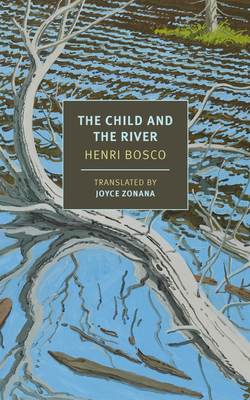
Pascalet grows up free on a farm in southern France, but his parents always tell him to stay away from the river. Of course, that means he is drawn to it, so while his parents are away and he’s in the charge of his aunt, he sneaks down to the river early in the morning.

There, he scrambles into a boat at the edge of the water and listens and looks, going into a sort of enraptured trance. Next thing he knows, his boat has drifted into the current. He is helpless, with no oars, until the boat comes aground on a small island.

On the island he spies on a gypsy camp, and there he sees a boy brought in and tied up. He waits for night, and when everyone is asleep, he cuts the boy free and they run away, stealing the gypsy’s boat. Pascalet and his new friend, Gatzo, begin living along the river.

This is a gorgeous, dreamy novella that fills your mind with the sights and even smells of the river. It is so evocative and beautifully written. The life along the river is minutely observed. It’s a lovely book.

I received this book from the publishers in exchange for a free and fair review.

Related Posts

Once Upon a River

The World My Wilderness

Dark Enchantment

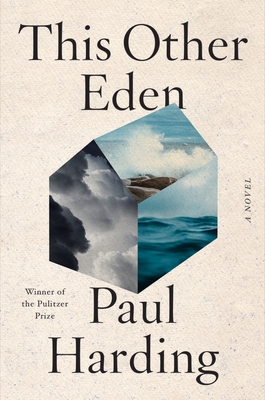
Review 2258: This Other Eden

This Other Eden is based on a true event, when the State of Maine evicted the entire mixed-race community of Malaga Island, people whose forefathers had lived there since the 18th century, and placed 11 of them in a home for the feeble-minded.

It’s no coincidence that a conference on Eugenics takes place just before the committee of the Governor’s Council of the State of Maine begins considering the fate of the occupants of Apple Island, a fate the occupants have no say in. It’s the turn of the 20th century, but Benjamin Honey arrived on the island in 1793 with his pockets full of apple seeds, bringing his wife Patience.

Now four small families live on the island, the Honeys, the McDermotts, the Proverbs, and the Larks, along with the abandoned Sockalexis children, all guilty only of being dirt poor and mixed race. They live by subsistence fishing and gathering the fruits of the forest. The winters are brutal. In the spring, the schoolteacher/preacher Matthew Diamond settles in his house across the bay and rows over daily to teach the children. The mainlanders consider the islanders inbred and sub-intelligent, but Matthew Diamond knows that Esther Honey, the matriarch, can recite Shakespeare from memory, that he has to teach himself algebra to stay ahead of Emily Sockalexis, that Tabitha Honey has a gift for Latin, and Ethan Honey is a talented artist.

The fate of the islanders is already decided when the Governor’s Council arrives and starts measuring their heads with calipers and asking them idiotic “intelligence” questions. Matthew Diamond decides to try to save Ethan, so he writes a letter to his friend Thomas Hale in Enon, Massachusetts, asking him to sponsor Ethan at an art school. Soon, Ethan leaves the island.

Harding’s writing is sometimes poetic, and he likes to pursue extended metaphors. Sometimes I liked this, and other times I didn’t have the patience for it. However, I found this novel less obscure than the other two of his I have read, touching, and ultimately with a more positive ending than was probably the case with the actual inhabitants of Malaga Island.

I read this book for my Booker Prize project.

Related Posts

Enon

Tinkers

The Stars Are Fire