Review 2248: Road Ends

Mary Lawson’s subject is always dysfunctional families in distress living in the far north of Ontario. That sounds deadly, but her novels are absorbing and touching, and Road Ends is no exception.

The novel is told from three different perspectives at slightly different times. Megan Cartwright begins it in 1966, although there is a prologue set in 1967. In the prologue, the best friend of her brother Tom commits suicide where Tom will find him. This doesn’t at first seem to have much to do with Megan’s earlier section but informs Tom’s behavior throughout.

The Cartwrights is a large household of boys with only Megan and her mother the females. Megan’s mother Emily keeps having babies, and Megan is the only one keeping the household organized. Emily retreats to the bedroom with the baby, and Edward, her father, to his study after work. In 1967, baby Adam is a toddler, and Mary has overheard the doctor telling her parents he must be the last child, so she feels free to leave, having realized she will never have a life if she stays. She makes plans to go to Toronto in order to save money to go to London and stay with a friend, but when her father learns her plans, he pays for her to go to London.

Edward has withdrawn himself from the family. One reason is that he is terrified of becoming like his father, a drunkard who used to beat him. He has felt an overpowering anger at times, especially against his sons Peter and Corey, who are always fighting and breaking things. His section of the novel is set in 1969 in roughly the same timeframe as Tom’s, but because of his withdrawal, he hasn’t noticed the household descending into chaos.

For Tom, his friend’s suicide has sent him into a tailspin. He thinks he could have saved him if he had paid more attention. Tom was graduated from college and had job offers in engineering from two aircraft companies, but six months later, he is driving the snow plow at night and spending the day reading the newspaper. He can’t stand to be around people. But he starts noticing that Adam, now four, isn’t being cared for. His mother has had another baby and seems to only care for it. The house is filthy, the child is filthy, and there is no food in the house.

Mary, after a very rough start, has found her dream job in London running a small hotel. She was furious to hear her mother was pregnant again, and she is still homesick but determined not to go back.

I was extremely touched by the ending of this novel. Another really good book from Lawson. I can’t seem to go wrong with her.
Related Posts

Crow Lake

A Town Called Solace

The Other Side of the Bridge

Review 2245: LOTE

This is a very unusual book, and von Reinhold has created an unusual protagonist in Mathilda.

Mathilda worships beauty, a particular baroque, florid kind of beauty. Black, gay, and from a poor background, she is trying to work her way into higher echelons of society to live an opulent life. She periodically becomes obsessed with different figures from the 20s and 30s, Black artists in the periphery of the Bloomsbury Circle, and doesn’t so much research them as immerse herself in them. She calls them her Transfixions. The latest is a Black poet named Hermia Druitt.

Because Mathilda does not always earn her money honestly, she has to sometimes change her identity. She’s been staying in a vacant flat of a friend who is away when her host returns and meets neighbors who know her as Sadie. She has just lost a job at an archive because it wasn’t an official position. She needs somewhere to live and some money, so she thoughtlessly applies for an artists residency that she sees is located in Dun, a town in Europe where Hermia lived. To her surprise, she gets it.

When she arrives in Dun, she finds the town enchanting but the residency dire. The other residents seem to be uniformly drab, so much so that at first she fears she has unwittingly applied for a business residency. They always carry around textbooks written in incomprehensible jargon and speak in that jargon. Mathilda continues her search for evidence of Hermia while pretending to do her work on the residency.

Behind the bemusing and sometimes funny portrait, von Reinhold has a serious theme—the erasure of Black European culture from the public consciousness. A good deal of Hermia’s story is told by excerpts from Mathilda’s Bible, a book called Black Modernisms. Sometimes this novel was a bit esoteric for me, but it was always interesting. I read it for my James Tait Black project.

Related Posts

Heads of the Colored People

The Hours

How to Be Both

Review 2222: Bitter Orange Tree

As Omani university student Zuhour pursues studies and friendships in England, she is haunted by thoughts about the woman she considered her grandmother, whom she neglected and avoided before her death. She revisits her family history, from the time when Bint Aamir, an impoverished relative taken in by her grandfather, was ejected, along with her young brother, from their father’s house at the urging of his new wife.

Back in England, Zuhour befriends Suvoor, a wealthy girl of Pakistani heritage brought up in England. Suvoor is devastated because her sister, Kuhl, has chosen a young man who she deems socially unworthy of their family. But Zuhour grows closer to Kuhl instead of Suvoor.

This novel is a poetic examination of the past and future of this character, where her contemplation of Bint Aamir’s life—in which her father did not permit the only marriage she was asked for—seems to predetermine her own—in which she is in love with her friend’s husband. The most interesting parts for me were the historical ones. The novel refers often to Zuhour’s dreams and sometimes seems dreamlike itself, but I didn’t feel touched by it. I read this book for my James Tait Black project.

Related Posts

A Thousand Splendid Suns

And the Mountains Echoed

In the Shadow of the Crescent Moon

Review 2207: Birnam Wood

Well, this is quite a novel. Unfortunately, I don’t know how to explain what it is like without giving too much away. But I’ll try. Let me say that I don’t know whether I liked it, but it certainly is effective.

First of all, you’re not going to find a character in this novel to outright like. Catton has fully realized her characters as flawed people, and she keeps turning back to them and showing another side. There is definitely a villain, though.

Mira is the founder of Birnam Wood, a gardening collective that plants vegetables in unused spaces. Mira is not picky about whether they do this with permission from owners or even steal water or tools to do their work. However, most of the members believe their activities are legal.

Shelley is Mira’s roommate and best friend but also the person in Birnam Wood who does most of the management and publicity work. She is tired of not being listened to or having her contributions unacknowledged.

Mira reads that a landslide near Korowai National Park has cut off one of the accesses to the park, leaving only one road to a nearby town. A prominent businessman, Owen Darvish, who has property in the area that he had been planning to subdivide, took the property off the market because after the landslide it will not sell. Mira decides that this large, unoccupied property in a remote area would be perfect for a major planting operation, so she drives there to check it out.

On the property, though, she is apprehended by Robert Lemoine, an American billionaire who has been in the news because of a deal with Darvish. Eventually, he explains that he is buying the property from Darvish and is interested in donating a large sum of money to Birnam Wood to help ramp up their organization.

Tony, a radical Birnam Wood member who has been away teaching in Mexico, comes back to a meeting. When Mira presents Robert Lemoine’s proposition, he is very much against it but is outvoted. He walks out but decides to go to the area, thinking an article on what Lemoine is doing there would help his attempts to become a journalist.

Lemoine has a secret agenda that none of these characters know about. The novel moves from seeming to be a combination of a study of characters and somewhat of a sendup to a plot full of suspense.

Related Posts

The Rehearsal

The Luminaries

The Bone People

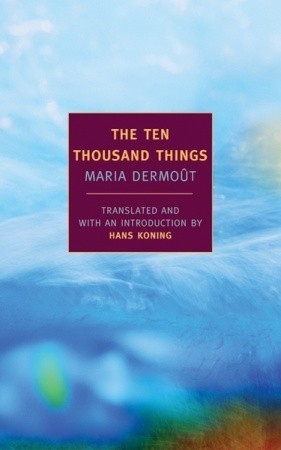
Review 2206: The Ten Thousand Things

I picked out The Ten Thousand Things from a list of the New York Review of Books publications for my Classics Club list without knowing anything about it. It is an unusual book, but beautiful.

It begins with an extended vivid description of an island in the Moluccas, referring along the way to the island’s stories and myths. It does this for so long that you begin to wonder where it is going, but finally it comes to the story of Felicia. Felicia spends her childhood on the island, visiting her grandmother in the Small Garden, hearing stories about objects and ghosts on the property, and examining her grandmother’s box of treasures, many of them stones with properties or unusual or valuable shells. However, eventually there is a dispute between her grandmother and her mother, so her mother insists her immediate family move to Holland. Felicia’s grandmother gives her some valuable jewelry so she can afford to come back.

She returns a young mother, her husband, who married her for money, having taken all her money and jewels and disappeared when he learned she was pregnant. She has had to take out a loan to return.

Most of the bulk of the novel is the story of her life on the island raising her son Himpies. Although this is not a novel in the magical realism genre, the island, with its tales of ghosts and monsters and its extreme beauty, seems magical. Dermoût spent her childhood on such an island and clearly loved it.

About 2/3 of the way through the novel, which is only about 200 pages long, it abruptly moves to some other characters on the island, then does it again. This is at first surprising, but Dermoût returns to the Small Garden and wraps everything up beautifully.

I think I can fairly describe this novel as haunting—sad and just lovely.

Related Posts

My Family and Other Animals

The Signature of All Things

Enchanted Islands

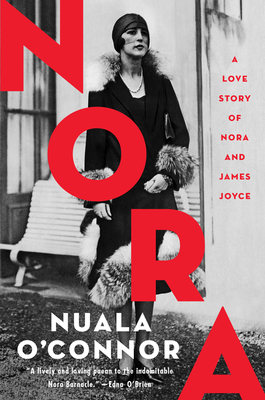
Review 2203: Nora

Nora is based on the movements of Nora Barnacle and James Joyce and on their letters, many of which, apparently, were quite explicit.

On an acquaintance of only a few, heated months, Nora Barnacle goes off with James Joyce to live in Europe despite his not believing in marriage. In 1904, she is 20 and has been working in a Dublin hotel after fleeing her family in Galway.

The life she takes on is difficult. Not only are they very poor and have no permanent abode after the job Joyce was promised at the Berlitz school in Zürich turns out to be a scam, but Joyce himself is difficult. He is a drinker and a spendthrift who buys gifts with the rent money. He is a jealous man who may not be faithful himself and likes to hear about the men Nora knew before him. He is selfish and superstitious, usually certain of his own abilities but not always.

As their life continues, Joyce gets work but never stays satisfied with it. He quits gainful employment to pursue fanciful projects. They have to borrow from his friends and family and move from place to place. Although he is gaining literary fame, he has trouble getting his books published without censorship. He leaves Nora home alone with the children to go drinking with friends and sycophants. Then there is the war, and his failing eyesight.

This is a fascinating depiction of a complex relationship. Aside from the difficulties of living with Joyce and a peripatetic life, Nora has to deal with family pressures and a mentally ill child. Yet her relationship with Joyce is one of fierce passion and love. Although I am not comfortable with explicit sex, I was otherwise wrapped up in this story.

Related Posts

Miss Emily

A Country Road, A Tree

Ghost Light

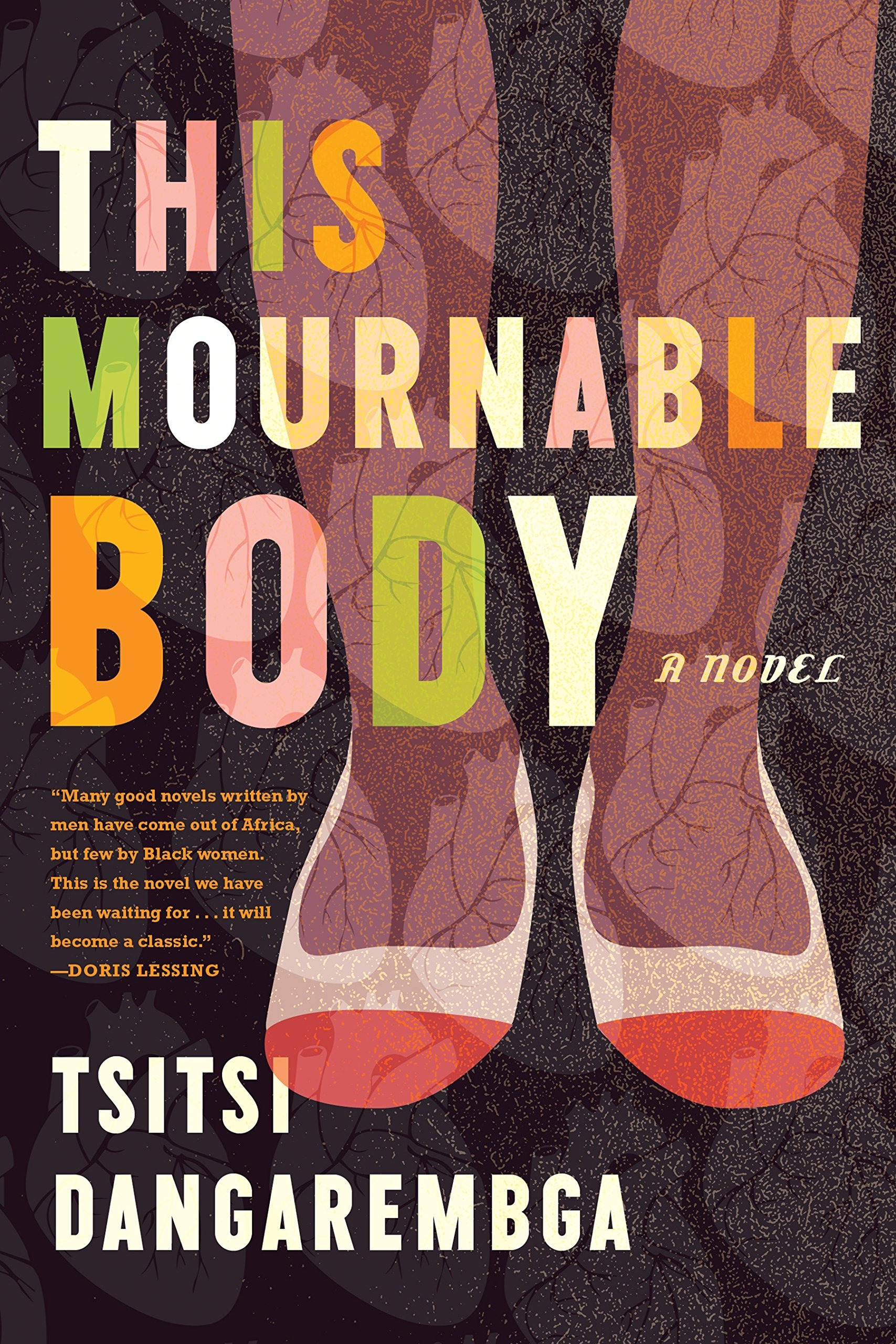
Review 2199: This Mournable Body

I have already complained about the tendency of Walter Scott Prize judges to pick novels for their shortlist that are in the middle of a series. Now I find the Booker Prize judges selecting the third book in a series. I understand that reading the first two books would have helped me understand this one, but I am not sure my spirit could stand up to two more.

Set in 1990s Zimbabwe during the Mugabe dictatorship, This Mournable Body follows the struggles of Tambudzai, an embittered and sometimes unstable woman. At the beginning of the novel, she is unemployed and living in a youth hostel that she’s too old for, having quit her job as a copywriter for an advertizing agency because credit for her work was going to white employees. Right away, after a disturbing incident where she is turned away from an interview for lodging by a servant, we see an unpleasant side of her when she joins a mob attacking one of her hostel mates because of her short skirt.

Tambodzai makes two moves hoping to improve her lot. She takes a room in the crumbling compound of a rich widow, and she takes a job as a teacher in a girls’ school. Because of her education, she feels she deserves a better position in life, and that’s all she thinks about. She is embarrassed and depressed by her surroundings and sees her teaching job as a comedown. Finally, she has a breakdown in class.

Permeating this novel are references to the recent war, with war veterans complaining that the country, which is poor and struggling, and of course led by a corrupt government, is not what they fought for. But to me many things just seemed vicious. Women are assaulted by strangers, mobs, their husbands and basically told to get over it. The success of one businesswoman who opens a popular store is rewarded by a mob trying to threaten her. Later, when our heroine gets a new opportunity and is enjoying her work in ecotourism, the farm where they lodge tourists is taken over by war veterans with government approval, presumably because it is owned by a white family but perhaps not.

Tambudzai herself is not a nice person for most of the novel, until she experiences some self-revelation. More, though, is that there is a lot of this book I didn’t understand, about people’s attitudes and about the oblique references to the government. The ending provides a small lift; otherwise, I found the novel depressing and hard to stick with.

Related Posts

In the Shadow of 10,000 Hills

When Rain Clouds Gather

Travelers

Review 2196: Lucy by the Sea

Lucy by the Sea is the latest in Elizabeth Strout’s Lucy Barton novels. As usual, it references all the others, including her books that are not about Lucy. It is also a Covid chronicle.

The beginning recaps a bit of her previous novel, Oh, William! Lucy is still grieving the death of her second husband, David, when her first husband, William, calls to tell her the virus is coming and he’s taking her away from New York City. Lucy is oddly oblivious to what’s happening and only packs for a few days. William has to take her laptop himself.

Lucy finds them in a house in Maine all by itself at the end of a point above the sea. Bob Burgess (of The Burgess Boys) has arranged this home for them. William has also talked their daughters, Chrissy and Becka, into leaving Brooklyn for Connecticut.

From this distance, William and Lucy experience all of the dislocating effects of the pandemic—the worry about others, the isolation, the shock of hearing about friends’ deaths, the yearning for contact. Lucy is as always naïve but wise, full of anxiety and affection. She finds she cannot write.

I always love the Lucy books, which have a deepness to them that lies beneath an almost childlike storytelling style, but this one seems even more lovely.

Related Posts

My Name Is Lucy Barton

The Burgess Boys

Oh William!

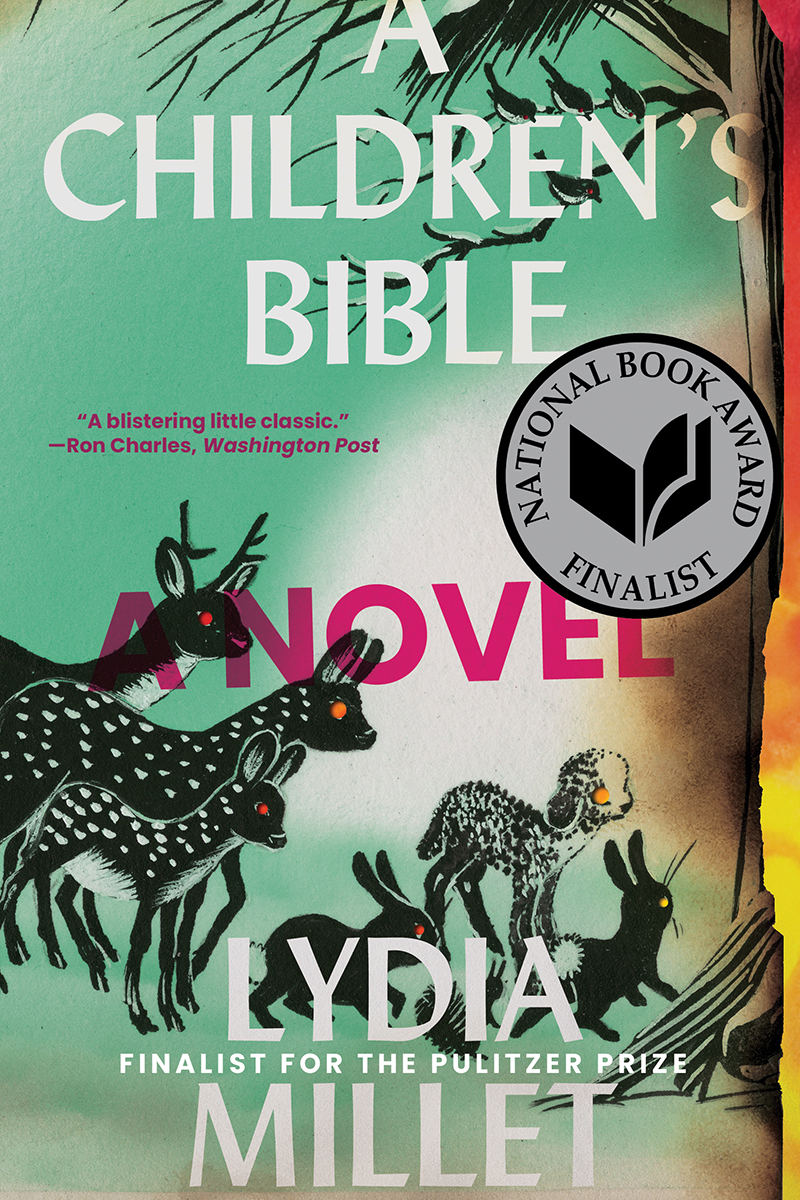
Review 2193: A Children’s Bible

The children are a group of mostly young teenagers, but they are aged from nine to seventeen. They have been brought along by their parents on a reunion vacation to a mansion on a lake by the seashore, but they are mostly let alone while their parents drink, do drugs, and generally misbehave. Evie, the narrator, does her best to take care of her brother Jack, a sensitive nine-year-old.

The children, who have never met before, disdain their parents, and they have a game going in which the winner is the last child to be matched with a parent. The kids all sleep together in an attic and at first their vacation is idyllic because they can do what they want.

Things begin to go wrong, though, when a huge storm rolls in that wreaks a lot of damage and disrupts services. The story begins to move away from reality after the house is partially destroyed and the parents insist that they can’t leave because they signed a lease. The kids do leave, though. Burl, the caretaker for the property, is worried about possible disease from the mosquitos on the now unsanitary property, so he takes them to a compound that has clearly been prepared for Armageddon.

From here, the novel slides in dystopia, fantasy, and even fable as civilization begins to break down.

This novel is fast moving and well written. Although I certainly found it interesting, it ultimately evolved into something that was not quite my thing, especially the religious overtones injected when one of the parents gives Jack a book of Bible stories, which he, having no religious upbringing at all, struggles to understand.

I read this book for my James Tait Black Prize project.

Related Posts

The Children’s Crusade

The New Wilderness

The Year of the Flood

Review 2189: Faith Fox

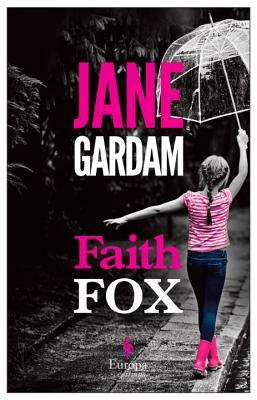
The cover of my Europa edition of Faith Fox is a little misleading, because although the plot of the novel revolves around a child, the child is a baby, not the young girl shown on the cover. You have to wonder sometimes if the artist ever reads the book or even knows what it is about.

When Holly Fox dies in childbirth, her mother Thomasina can’t bear to see the baby, Faith. The baby’s father, Andrew Braithwaite, seems oddly uninterested in her and anyway works brutal hours in the hospital. So, he decides to take her to his brother Jack, an Anglican priest who runs any experimental farm up in Yorkshire.

Jack is a sort of living saint, whose work barely supports a small community made up of ex-cons and Tibetans. The down side of this is his lack of sense. He trusts everyone, has no concept of a feasible project, and tends to forget the practical aspects of life. His little community lives in extreme discomfort and doesn’t accomplish much. He forgets Faith almost as soon as she arrives and his wife Jocasta has her reasons for avoiding Faith—she has been in love with Andrew since they met, but he could not afford to marry. So, he dropped her and her son off at Jack’s and later got engaged to Holly.

In fact, the only people yearning to see and care for Holly are Andrew’s parents, Toots and Dolly. But they are elderly and Andrew avoids bringing her to visit. Philip, Jocasta’s ten-year-old son, also cares about Faith and worries about her at school, but her care is basically left up to the Tibetans.

In the meantime, Thomasina scandalizes her friends by missing her daughter’s funeral to go to Egypt with Giles, an elderly colonel she just met. And Andrew and Jocasta have revived their affair after he brought Faith up to Yorkshire.

Gardam certainly has a gift for depicting dotty upper-class characters, selfish people, and hopeless charitable projects in the novel, as well as some peculiar lower-class characters. She also clearly understands the workings of grief, both bereavement and the lovesick kind. I’ve discovered Gardam late, but I’m really enjoying her.

Related Posts

Old Filth

The Man in the Wooden Hat

Last Friends