Day 218: Sea of Poppies

Cover for Sea of PoppiesSea of Poppies is an absolutely enthralling historical novel, the first of a trilogy. Set in India in the 1830’s, it is centered around the opium trade, which the British East India Company forced upon both India and China. The novel is an ensemble piece, following the fates of several characters who all find themselves by the end of the book on the Ibis, an old slave ship bound for Mauritius.

The novel begins with Deeti. Like the other Indian farmers in her area of eastern India north of Calcutta, she has been forced to replace her food crops with poppies, destined for the Ghazipur Opium Factory. Now she can barely grow enough to feed her family, while the price for poppies sinks. As a girl, she was tricked by her husband’s family into marrying a hopeless opium addict. Soon fate will cause her to leave her home and flee down the Ganges.

Zachary Reid is a mulatto sailor who ships out from Baltimore on the Ibis as an ordinary seaman. A series of misfortunes onboard leave him without officers to sail the ship to Calcutta from Africa with only the help of Serang Ali and his fellow lascars. Once in Calcutta, his employer Benjamin Burnham hires him to help refit the ship and take the third mate position for the voyage to Mauritius.

Raja Neel Rattan Halder, the zemindar of Rashkali, is deeply in debt because of poorly timed investments in the opium trade. Although Neel is careful of the welfare of his hundreds of dependents, he is careless of business and expects to go on in his pleasure-loving ways. But the self-righteous Burnham wants the Raja’s estates for himself.

Paulette Lambert, the daughter of an eccentric French naturalist, has been left destitute by his death. Burnham has taken her into his family out of charity, but she is having a hard time adapting to his household. She is expected to behave like a proper young English lady, but she was primarily raised by an Indian woman, treats her son Jodu like a brother, and prefers to dress in a sari. Jodu has recently returned to Calcutta after his mother’s death and wants to be taken on as a hand on a sailing ship.

The fates of all these characters, and others, converge aboard the Ibis, which is scheduled to journey across the Indian Ocean to Mauritius with a load of indentured workers and then to sail to China to participate in the impending Opium Wars.

The novel is filled with entertaining characters and the colors, smells, and languages of India. It is beautifully written and crammed full of unusual words–Bengali words, sailor and lascar jargon, ornate oriental English, and various patois. The book has a glossary, but it is ironically intended. Comic, cruel, vivid, and deeply engrossing, the novel is rich and teeming with life. Amitav Ghosh’s novel, which was shortlisted for the Man Booker Prize, is wonderful.
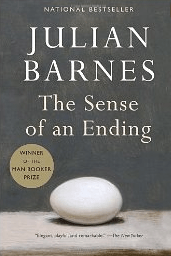
Day 214: The Sense of an Ending

Cover for The Sense of an EndingBest Book of the Week!

The Sense of an Ending is a quiet novel that made me stop and consider. It is a meditation on memory–how we reinterpret past events. It is also about the lost opportunities of life.

Tony Webster begins the novel by considering his past, particularly his relationships with his pals from school. He and two other close friends chose to enlarge their circle to include a new boy, Adrian Finn, who was extremely intelligent and analytical. Adrian’s indifference to seeming cool made him very cool indeed. The four friends remained close throughout college and for awhile after, until Adrian committed suicide.

Tony also remembers his first serious relationship, with Veronica Ford, particularly an unpleasant weekend he spent with Veronica’s family. After they broke up, Adrian went on to date Veronica. He wrote Tony a letter apprising him of this as if he were asking permission to date her, and Tony’s recollection is that he ironically assented.

Tony has lead a comfortable life avoiding too much effort in his relationships. He sees himself as a “peaceable man.” He believes he understands the events from the past until he receives a legacy from Sarah Ford, Veronica’s mother–the only member of her family who seemed sympathetic during that long-ago visit. In addition to a small bequest, she has left him Adrian’s diary. This legacy confuses him. Why would a person he only met once leave him anything, and why would she possess Adrian’s diary? When Tony asks for it, he finds that Veronica has taken it.

In Tony’s attempts to gain the diary and his subsequent inquiries, he learns things that force him to re-examine and reinterpret his memories of long ago events and to reconsider the consequences of his own actions. He ends up also contemplating where his own life has gone and how he has evolved into this “peaceable man” from a boy full of curiosity and promise.

This very short novel is crammed with thoughtful observations, often wittily and wryly expressed. I found myself turning back to re-read and reconsider certain passages, which is something I seldom do. Sparely and beautifully written, the novel is an excellent illustration of the use of an unreliable narrator.

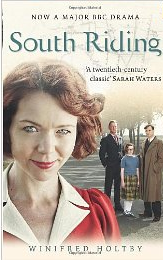
Day 199: South Riding

Cover for South RidingI had never heard of Winifred Holtby until I watched the excellent Masterpiece series South Riding. I enjoyed it so much that I picked up several of Holtby’s books. Holtby published 12 novels in the 1920’s and 1930’s, as well as pursuing a successful career as a journalist and nonfiction writer. She is known for regional fiction about Yorkshire and has a prize for regional fiction named after her.

Set post-World War I, South Riding is the story of the conflict between the landed gentry and social progressives in a Yorkshire town. Sarah Burton comes to town as the headmistress of a girl’s school. She has many progressive ideas and wants to improve the school and the quality of education provided to the girls. To accomplish her goals, she asks the town to invest more money in the school.

She immediately runs afoul of Robert Carne, a local landowner. He has very conservative ideas about the town and school, but he also has some heavy concerns. Previously prosperous, he has spent all his money on care for his mentally ill wife. He also has the care of a young daughter who is having her own problems.

Unlike the television series, the novel has a huge sweep and does not concentrate on Sarah, but presents the stories of about fifteen other major characters. It deals with issues like education, poverty, and governmental corruption as well as family relationships. The characters are all carefully delineated so that you feel that you know each one.

The novel is beautifully written, although it gets just a little preachy at the end. Some reviewers have compared Holtby to George Eliot because of her interest in local social issues and her breadth of scope.

Day 192: Home

Cover for HomeBest Book of the Week!

The beautifully written, subtle novel Home by Marilynne Robinson makes me thoughtful. It is 1957. After a failed ten-year engagement, thirty-eight-year-old Glory Boughton has moved home to Gilead, Iowa, to care for her elderly father, a retired Presbyterian minister.

Her father has been waiting 20 years for the return of his best-loved son, Jack. Finally, they hear that Jack is coming home. Always unreliable and setting himself apart from the family, he arrives late, and Glory feels ambivalent about his return. Soon, though, she sees that he is tired and having difficulty being there, and she tries to help him.

The novel carefully explores the relationships between the three of them–Glory loving but distrustful of the pain Jack has caused and protective of her father, Jack trying to make a new life in painful and distressed conditions, and their father forgiving and unforgiving at the same time. In the background are the events of the civil rights movement, toward which Jack and his father have radically different views.

Jack is delicate and fragile. He tells Glory he lived as a vagrant, drunk, and cheat until he met a woman named Della, and now Della has gone back to her parents. He tries to find work in town and writes countless letters to Della.

This novel is apparently related to a previous one, Gilead. I do not know whether it could be considered a sequel, although I know it shares some characters.

To modern readers the manners and dress of this devout Iowa family seem very old-fashioned, and some readers may find the novel slow, but I found it engrossing. It is, of course, a retelling of the tale of the prodigal son.

This is a simple story on the surface, but it depicts complex characters and relationships. It is a novel about family relationships and love, written with a delicate touch. I find it difficult to express how fine I felt it to be.

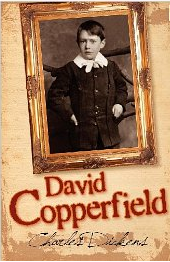
Day 173: David Copperfield

Cover for David CopperfieldBest Book of the Week!

I believe that David Copperfield was the very first book I ever received as a young girl that was not a children’s book. My dad brought it home for me one day when I was sick (beginning my collection of Modern Classics back when they were hardcover), and it transported me to another world.

People have differing opinions about which Charles Dickens book is best. For example, author Nick Hornby blogged that Great Expectations was one of the greatest books ever written. I myself have never fallen under the spell of Great Expectations, though. David Copperfield is my favorite. Tolstoy thought Dickens was the best of all English novelists and considered this book Dickens’s finest work.

David is the narrator of his own story, and he begins it on the night of his birth. David is a posthumous baby, and the novel begins with the first appearance of Aunt Betsey Trotwood, who comes to greet the appearance of her niece and terrifies David’s gentle, foolish mother. When David turns out to be a boy, Aunt Trotwood is mightily offended and departs.

Although David’s early childhood is idyllic, worshipped as he is by his mother and Peggoty the maid, it soon takes a turn for the worse. David’s mother is courted and won by the stern, apparently upright (and ultimately cruel and hypocritical) Mr. Murdstone, and the house is taken over by his cold and fault-finding sister Jane. David is a true innocent with only good intentions, but at every turn he is found to be in the wrong. He is soon shipped off to a typically horrible (if you know Dickens) boarding school.

After a bit of a rocky start, David finds himself made a pet of the popular Steerforth and also befriends Tommy Traddles. However, his mediocre education is interrupted when his mother and baby brother die. Mr. Murdstone sends him to London to lodge with the feckless Micawber family and work in a factory. When the well-meaning but impecunious Micawber is sent to debtor’s prison, David tires of his degrading life and runs off to find the only family he has left, Aunt Betsey Trotwood.

Although Aunt Trotwood is still disappointed that he isn’t a girl, she is kind, and from here, David’s life improves. The story continues with his education, marriage, and young adulthood. It is loaded with some of Dickens’s most delightful characters and a few villainous ones. Alternately turning from comedy to pathos, Dickens expertly drives the story along.

I believe one reason I find David Copperfield so touching is that David’s early life is taken from Dickens’s own. Dickens’s father was sent to debtor’s prison and Dickens went to work in a factory at an early age. This connection translates into a moving experience for the reader.

When innocent and loving David is punished by his stepfather because he is so terrified he can’t recite his lessons or when he is sent off to work in a factory, who remains untouched? When Barkis is willin’ or Mr. Micawber appears on the scene, who doesn’t laugh out loud? When steadfast and valiant Ham dies trying to rescue his rival, who isn’t tearful? When the slimy Uriah Heep finally gets his comeuppance, who isn’t delighted?

If you are not used to reading Victorian literature, you may find the writing old-fashioned, but you will almost certainly be carried along by the story.

Day 166: We, The Drowned

Cover for We, The DrownedBest Book of the Week!

We, The Drowned is an unusual novel by Danish writer Carsten Jensen that has become an international best seller. It relates the history of the author’s home town, the port of Marstal, Denmark, from 1848 to 1945. Although it picks principal characters to follow during these times, large portions of the novel are written in the first person plural, as though the entire town is the Greek chorus in a play. The novel follows the fate of the town as it rises to become a major shipping port to its near demise just before and during World War II.

The narrative style of the novel feels like a series of seafaring tales. Ships sink, sailors are never seen again, but the townsmen of Marstal continue to be lured out to sea. We follow them as the Danes go to war with Germany in the mid-19th century and the men of Marstal wonder why they are fighting men they traded with the week before. In this conflict, Laurids Madsen is shot upward from an exploding ship and lands again on his feet, unharmed, creating a legend about his boots.

Years later, his son Albert travels the South Pacific looking for his father, who went to sea when Albert was four and never returned. He finds him with a second family in Samoa.

As an old man retired from a prosperous career as a sea captain, Albert befriends a young boy, Knut Erik Friis, whose widowed young mother does everything she can to keep her son from going to sea. When she gains some economic power in the community, she undercuts the town’s shipping industry in an attempt to keep all the young men home.

These stories and many more, ending with Knut Erik’s experiences during World War II, tell the rich tales of the lives in this seafaring town. Although I was initially a little put off by the narrative style, I found myself barely able to put down this book.

Day 157: Empire Falls

Cover for Empire FallsBest Book of the Week!

I’ve been picking up Richard Russo novels at the bookstore for years and putting them back down because I wasn’t sure I’d like the subject matter, but now that I’ve read Empire Falls, I wish I’d been reading them all along.

Miles Roby’s life hasn’t been going too well. He quit college to run a diner in his dying home town in Maine when his mother was ill, and 20 years later he’s still flipping burgers. His wife Janine has left him for her dim-witted personal trainer. He has been in love with one of his waitresses, Charlene, since high school but sees no sign that she returns his feelings. He has an uneasy relationship with the owner of the diner, Mrs. Whiting. The only thing that seems right in his life is his teenage daughter Tick, and she is having problems at school.

Miles’s father is an alcoholic ne’er-do-well who was hardly ever around when he was a child. He comes around when he wants to earn a few dollars or hit up Miles for money. The mill has been shut down for years, and most of the townspeople don’t feel like they have much of a future.

Miles’s brother David is recovering from a drug habit, but his cooking and new ideas have recently been responsible for an increase in the diner’s business, and he wants Miles to move the business to a larger restaurant. Miles has been avoiding a decision. He has only been hanging on because he doesn’t know what else to do and because Mrs. Whiting long ago promised to leave him the diner in her will. She owns most of the town and behaves as if she owns him, too.

Miles doesn’t realize it, but his fortunes have been stymied for years because of events in the past. His only clue to these events is his recollection of a summer spent with his mother on Martha’s Vineyard when he was a small boy.

A pleasure of this book is its myriad of small-town characters and the warm, witty way that Russo depicts them. Russo is skilled at involving you in the fortunes of Miles, his friends, his family, and even his town. This novel is delightful.

Day 152: The Master

Cover for The MasterThe Master, Colm Tóibín’s engrossing novel about Henry James, is virtually plotless. Over the course of five years, James works, visit friends, and remembers significant events in his life and people who are important to him. At the same time he muses on how the people, tales they tell, or incidents he has observed have informed or will inform his writing.

I have often found James’s work perplexing, feeling as if there is a lot going on under the surface that I don’t understand. A novel about him, therefore, is not an intuitive choice for me. Nevertheless, I found myself extremely involved in this story about a man who appears to have always stood back and watched. In Tóibín’s view, James lived a life of “pure coldness.”

The book delicately depicts a complex man, social on the surface but always at an emotional remove from others, homosexual but so concerned about propriety and public opinion that he never acts on it (perhaps–that is not entirely clear) and avoids situations where he may be tempted. He is sometimes very cold in his inaction, such as when he deserts his best friend, Constance Fenimore Woolson, because she has been too open for his taste about their completely innocent relationship, causing some friends to blame him for her subsequent suicide.

The most fascinating part of the novel, in my opinion, is how it illuminates the way that a writer may take a situation, a sentence, thoughts about how a pair of people interact, and turn them into a complete work of fiction. For example, a tale told to him about two children alone on an estate reminds him of his relationship with his sister Alice. As children, both of them had been abandoned as their family toured Europe and have never been fully included in the events and emotions of the family. These memories finally emerge in the ghost story “The Turn of the Screw.” Similarly, his memories of his intelligent, vivacious cousin Minny Temple are brought back to life in first The Portrait of a Lady and then The Wings of a Dove.

Meticulously researched and beautifully written, The Master is an evocative novel about the inner life of an emotionally crippled writer.

Day 84: Bring Up the Bodies

Cover for Bring Up the BodiesBest Book of the Week! Year!

If Wolf Hall was a wonderful historical novel, Bring Up the Bodies is masterly. In this second of a trilogy, Hilary Mantel continues the story of Thomas Cromwell. Bring Up the Bodies is more focused than the last book, because it deals with a much shorter time period and defined subject–the downfall of Anne Boleyn.

The writing is elegant and impeccable. I have read a few comments that Wolf Hall was sometimes difficult to follow because the readers could not always tell who was meant by “him” or “he.” Mantel has written both books using a strict third person limited point of view, from that of Cromwell, and people don’t think of themselves by their first names. Hence, the difficulty, which I did not notice as a problem in Bring Up the Bodies. This technique is very difficult to employ successfully–we are much more used to a third person that changes from character to character or even to third person omniscient. But Mantel uses it effortlessly to create a memorable character in Cromwell–kind but implacable, one who fosters the growth of others but does not forget the crimes and indignities committed against Cardinal Wolsey, whom he loved as as a father.

Henry VIII has already decided he wants to rid himself of Anne Boleyn and marry Jane Seymour, but Anne has one more chance. She is carrying a child, and if it is born alive and is a boy, she is safe. Henry must have an heir, and he has decided that if he hasn’t been given one, God must have found some fault with his marriage to Anne just as there was one for his marriage to Katherine of Aragon. Thomas Cromwell must find him some way out of his difficulties.

Of course, Cromwell helped Anne to her position in the first place, but the Boleyns have made many enemies in their enjoyment of power, and they have treated him with disdain. More importantly, Anne Boleyn destroyed the Cardinal, and her brother mocked him in his downfall.

From the moment you begin reading, you find yourself plunged into the Tudor world of shifting politics and intrigue. Of course, we know what happens to Anne Boleyn, yet the novel maintains its suspense. The Boleyn and Howard families are going to suffer a huge defeat, but they will go down fighting.

Day 81: A Whistling Woman

Cover for A Whistling WomanI may have been less bemused by A Whistling Woman if I had known that it was the fourth in a series by A.S. Byatt, of which I have only read Babel Tower, and that long ago. Instead, I kept having the feeling that there was something I just wasn’t understanding. My impression was that it was about too many things, so I was relieved to find a review in The Guardian that criticizes it for having “too many ideas” and being an “over-ambitious jumble.” The intent of the series, says The Guardian, is to depict the social and imaginative life of Britain in the 1950’s and 60’s. Well, that is quite a job.

The title refers to a story published by a peripheral character about people on a perilous journey. On the way they meet creatures who are half woman and half bird and whose whistling cries are unbearable. The prince in the story has learned many languages and finds he can understand the creatures, so they tell him their tale. I don’t want to go into it further, but it is clearly a statement about feminism, which is logical since A Whistling Woman is set in 1968 and features several women who are struggling with their place in society.

The action focuses (if focuses is the word) around Frederica Potter, the host of a fashionable TV talk show; a protest movement against a university; a conference on body and mind; and the growth of a cult. Frederica is planning a show around the conference, where the scientists’ rationalism is pitted against the results of their experiments, which show that the brain is not built for reason but to make the body work. At an alternative therapy clinic, the psychoanalyst Elvet Gander is falling under the influence of his patient Joshua Ramsden, a schizophreniac, around whom a messianic cult is forming. Ramsden’s essential goodness is being muddied by his increasing psychotic episodes. Some outsiders are encouraging the students at the university to form an Anti-University, the sole purpose of which is apparently to protest.

In addition to being almost confusingly full of ideas and plots going in every direction, the book does not really echo my own experience of the times. Surely student demonstrations, at least in the States, were more meaningful and actually about something. Most of the ones I remember were about the war in Vietnam.

The book includes deep discussions of science and religion. It is interesting while offering almost too much to think about.