
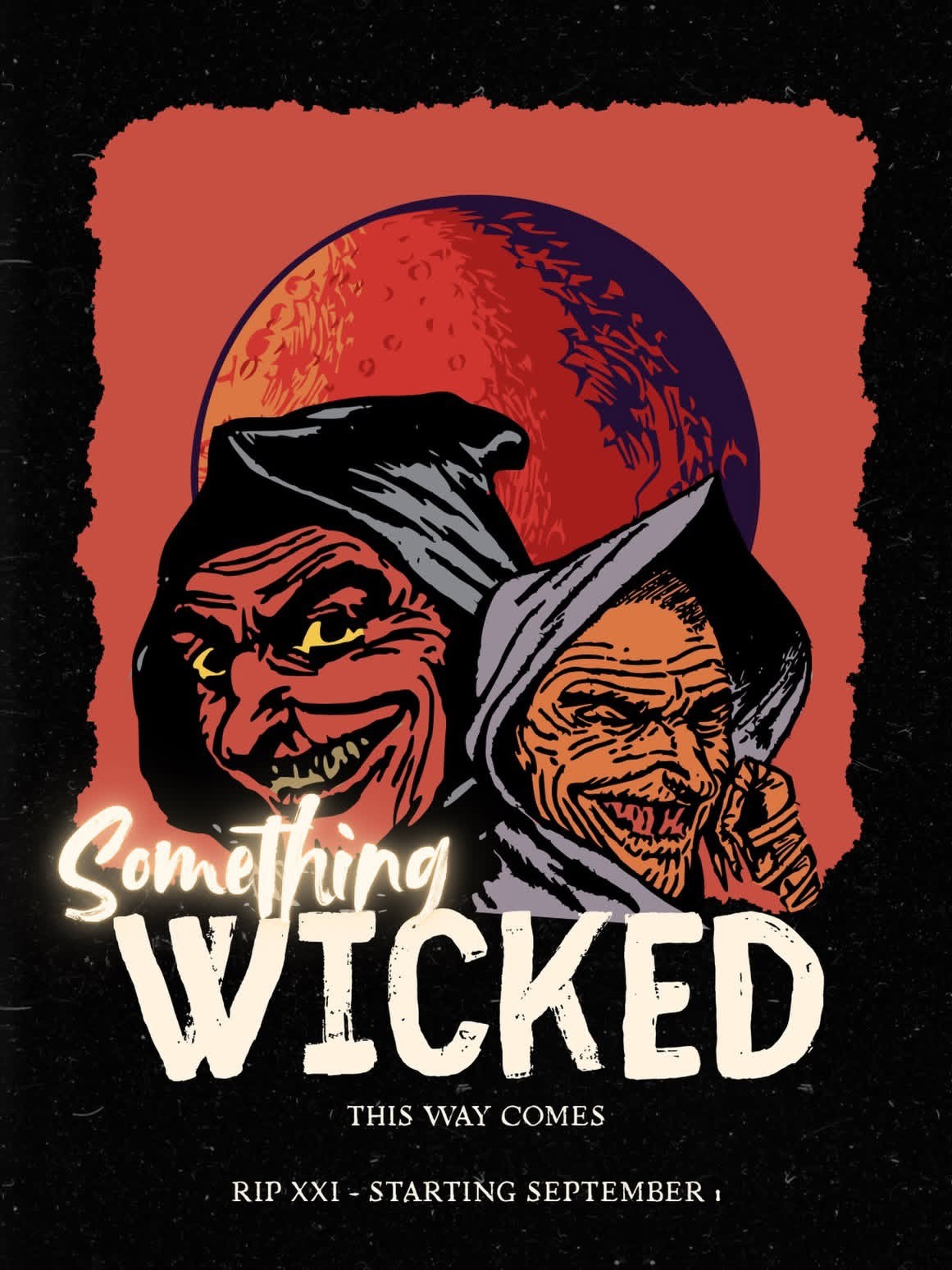
Review 2777: Short Story September! #RIPXXI! Excerpts from Vampire Tales

For both Short Story September and RIPXXI, I decided to read something out of Vampire Tales, first reviewed by Kaggsy. This selection consists of a fragment of a story, a poem, a letter, an introduction, and a short story that are all related, according to editor Nick Groom.

The fragment is the beginning of a novel by Lord Byron. The theory is that on the famous stormy night when Mary Shelley was inspired to write Frankenstein, Lord.Byron told the party his idea for his story, for which he had only written a few pages. Present besides Percy Shelley, Mary, and her sister was John William Polidori, Lord Byron’s doctor.

Byron died leaving “A Fragment” with his publisher, who asked Polidori to turn it into a full-length story, we assume using Byron’s plot. But the publisher released the story with no credit to Polidori and no rights to the material. The subsequent dispute ruined Polodori’s literary career.

So, I’m looking at “A Fragment,” a poem by Goethe that awakened the punisher’s interest in releasing a vampire tale, a letter, the introduction to “The Vampyre,” the work by Polidori, and “The Vampyre” itself.

“A Fragment” (1819) is just a few pages long, in which a young man travels with Augustus Darvell, a man of great reticence whom he tries to befriend but fails. Arriving in a Turkish cemetery, Darvell says that he is going to die and starts setting conditions for his burial. That’s as far as it gets, and no vampire appears, but I presume Darrell proves to be one.

The poem that piqued an interest in vampire literature is “The Bride of Corinth” (1798 in German, 1819 in English) by Johann Wolfgang Goethe. It’s about a man who travels to Corinth to meet his intended. At his bedside, a beautiful woman appears and he falls in love. But she is not his bride. She was supposed to be, but she is dead, and he’s supposed to marry her sister. Tragedy ensues. I’m not much of a poetry reader, and 19th century narrative poetry is not very interesting to me. But it tells the story, not in a particularly scary way.

Next is a letter called “Extract of a Letter from Geneva, with Anecdotes of Lord Byron, &C.” (Gotta love those 19th century titles.) I personally don’t see a big reason for including it, since it doesn’t talk about the story but relates some gossip and refers to the famous night of inspiration.

Next is the Introduction to “The Vampyre,” by Alaric Watts (1819), which recounts some incidents of vampirism and includes a short history of vampire literature.

Finally comes the story, “The Vampyre.” Aubrey, a young man, becomes acquainted with Lord Ruthven, a handsome but pale older man who never shows an expression. The two agree to travel together, and Aubrey observes that Ruthven breaks young men and married men with children at gambling but is generous to scoundrels. Their ways part in Rome after Aubrey finds him apparently trying to seduce the innocent daughter of their landlady.
Going to Greece to look for antiquities, Aubrey falls in love with his host’s daughter, Ianthe. He is told not to go into a forest at night, but he does—

None of these are the most scary vampire tales, but the poem and the story end in doom and disaster. And probably at the time the notion was new enough to give a thrill just thinking about it.
Related Links

Dracula

A Discovery of Witches

The Oxford Book of Victorian Ghost Stories

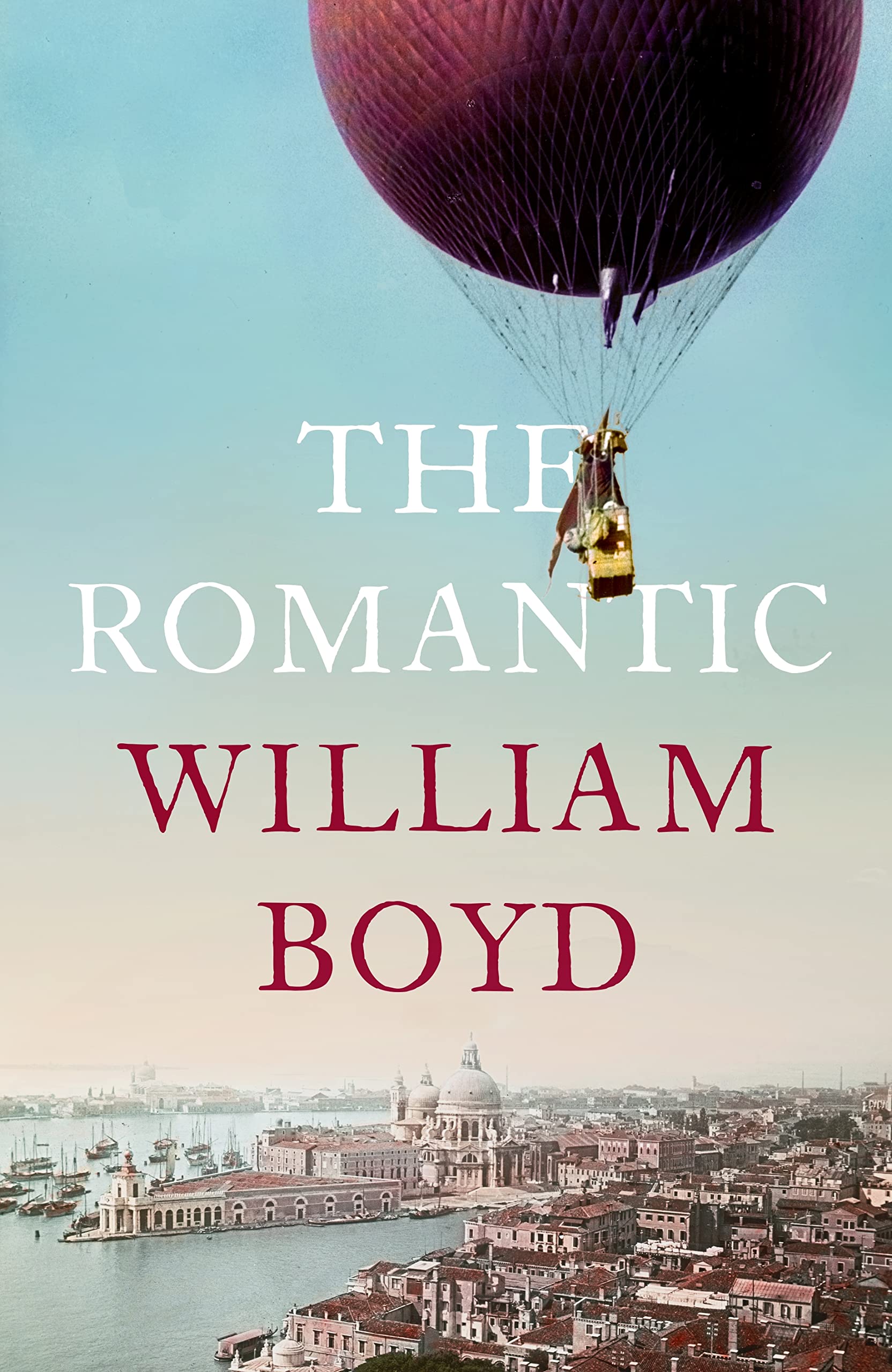
Review 2278: The Romantic

In the 19th century, Cashel Greville grows up in Ireland under the care of his aunt, who is governess to Sir Guy Stillwell’s family. But it’s clear to the reader, if not to Cashel, that all is not what it seems. Sure enough Cashel’s aunt moves them to Oxford, where they take up residence with Sir Guy under the name of Ross, and Cashel’s aunt Elspeth gives birth to twins, Hogan and Buckley. It is not until Cashel is 15 that Elspeth reveals she is his mother and Sir Guy his father.

Outraged, Cashel runs away from home and joins the army as a drummer boy. If you think I’m giving too much away, this all happens within the first 50 pages of this 450-page book, in which Cashel is on the field at Waterloo, hangs out with the Shelleys and Lord Byron, writes a best-selling novel but is cheated by his publisher and ends up in the Marshalsea, attempts to form a commune in Massachusetts, and so on. Oh yes, he also meets the love of his life in Ravenna, Italy, but she is married to a rich old man.

Cashel’s eventful and perhaps not altogether believable life (he claims to have discovered the source of the Nile before Speke and to have thwarted an antiquities smuggling scheme with the help of Sir Richard Burton) is supposedly documented by an autobiography and other papers that came into Boyd’s possession. With this claim, Boyd begins another of his “whole life” novels, maybe the most picaresque and least believable.

I usually like Boyd’s novels—in fact, some of them I have loved—but I had trouble connecting with this one. I’m not sure why, especially since it received uniformly positive reviews. It is fast moving despite its length. Maybe too fast. I didn’t feel like I got to know Cashel or really any of the characters. All of the women are ciphers, even Cashels’ great love. Boyd spends more pages on a sexual encounter with her than on Cashel’s marriage and its subsequent breakup.

Given Boyd’s plans for the adventures in this novel, maybe he needed to make it a lot longer.

Related Posts

Love Is Blind

Sweet Caress

Passion: A Novel of the Romantic Poets

Day 814: Passion

Cover for PassionPassion tells the stories of the Romantic poets from the points of view of their women. It begins with each as a young girl, starting before Romanticism with the broad strokes of the life of Mary Wollstonecraft, Mary Godwin Shelley’s mother, a famous early feminist, writer, and philosopher.

Mary Wollstonecraft dies shortly after childbirth. Her daughter, Mary Godwin, grows up worshipping her mother and taking seriously the ideals of her father, William Godwin. However, he compromises his principles (he doesn’t believe in marriage) by marrying Mrs. Clairmont, a woman Mary detests. Her ideals and the poisonous atmosphere at home make her open to the advances of Percy Byssche Shelley, even though he is already married. She runs off with him at the age of sixteen, unfortunately accompanied by her stepsister Jane (who later calls herself Claire).

Lady Caroline Lamb loves her husband, but she is prone to a certain instability that her husband’s family deplores. When she sets eyes upon the famous Lord Byron, she is entranced and is soon engaged in a flagrant affair. When he breaks with her, she stalks him, sneaking into his rooms, following him around dressed as a boy. Her behavior is a scandal.

The only woman George Byron really loves is his half-sister Augusta. Even she succumbs to his charms. After he makes the mistake of marrying a self-righteous and vengeful woman, his worst secrets come out and he must leave the country.

Fanny Brawne comes late to the novel. She falls in love with a neighbor, John Keats, but he is a victim to a family weakness, consumption.

This material could be sensationally or romantically told, but it remains at a distance from us, more like biographical writing. We do feel sympathy for some of these women, especially for Mary Shelley, but I was not drawn right in. Although the book is named Passion and we know that this emotion was an important force for the Romantics, we don’t really see much of it in the novel, nor truly understand just what the attraction is to this group of neurotic young men. Sometimes I could catch a glimmer of the attractions of Byron, the only one who did not seem permanently deluded about the virtues of humanity. Still, for firmly setting a background for bits and pieces of information I picked up over time, I mildly enjoyed this novel. Although I admire the intent of Morgan’s more serious depictions of figures from literature, I have so far enjoyed most his romance novel, Indiscretion.

Related Posts

Indiscretion

The Secret Life of William Shakespeare

Miss Emily