Day 913: The Unforgotten

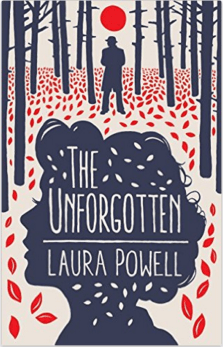
Cover for The UnforgottenA novel set in two time periods, The Unforgotten is a thriller and a mystery. But it is more than that—a story with deep-running themes offering its characters difficult choices.

In 1956 Cornwall, Betty Broadbent is an innocent, naive 15-year-old. She helps her unstable mother run a hotel and sometimes has to run it herself when her mother is in the throes of depression or alcoholism. The small fishing village has been invaded by reporters after the murders of several young women.

In 2006, Mary reads that the man who served time for the murders back in 1956 still insists he is innocent. Mary remembers him as the man her mother used to date and believes he is innocent. She thinks she knows who the actual killer is and is torn between telling what she knows and keeping a long-held secret. Although we don’t know why she is living under another name, we are soon sure that Mary is Betty.

This novel is about the painful choices two people must make under difficult circumstances. It is also about a sad and doomed love affair.

At first I thought that some of the dialogue and situations were unlikely, but I soon forgot those thoughts, driven forward by the sheer power of the story. It is one that has many more levels than first expected. This is a great first novel by Powell.

Full disclosure: I received a copy of this novel from the publisher in exchange for an honest review.

Related Posts

The Lace Reader

Sharp Objects

The Last Summer of the Camperdowns

Day 873: Fidelity

Cover for FidelityBest Book of the Week!
Fidelity begins in 1913 with the return of Ruth Holland to her home town in Iowa after an absence of ten years. As a naive young woman from a privileged background, Ruth fell in love with a married man. When he was diagnosed with tuberculosis a few years later, Ruth left town to join him in Arizona.

Ruth’s good friend, Dr. Deane Franklin, would like to see Ruth’s old friends welcome her back as she returns to her father’s deathbed. He knows that Ruth’s life has been difficult, both emotionally and economically, and would like people to show some sympathy. He wants to introduce Ruth to his new wife Amy. But Amy thinks this suggestion is shocking and can’t imagine why Deane would want her to know this scandalous woman.

Eventually, the novel returns in time to show how the affair started and progressed. It is not until Ruth returns that she learns how difficult things also were for her family after she left.

The plot of Fidelity, which was written in 1915, closely mirrors a situation in Glaspell’s own life, in which she ran off with a married man and later married him. She wrote the novel to answer the question “Was it worth it?”

During Ruth’s visit back home, she meets a woman who teaches her to recognize another type of fidelity—to herself. Although we don’t know where this fidelity will take her, we know that she will keep to it.

Of course, the novel is also meant as a condemnation of the small minds in Ruth’s home town. Even though they have known her from a child, most of her former friends misinterpret her actions in terms of her new reputation. Only her youngest brother Ted and a few friends see her for the person she has always been.

I found this novel completely fascinating from beginning to end, even though I’m not sure I would answer the question the same way Ruth did. The novel is particularly insightful about its characters, making readers understand and sympathize with even some of its unlikable ones.

Related Posts

A View of the Harbour

Someone at a Distance

Greenbanks


Day 849: Our Souls at Night

Cover for Our Souls at NightBest Book of the Week!
Since this is my post before Valentine’s Day, I’m trying to observe the day with a book about love. Kent Haruf, who passed away in 2014, was a great stylist. His prose is unbelievably spare, his tales about ordinary small-town people in eastern Colorado. When it was my turn to make a book club selection for the anniversary of his death, I picked Our Souls at Night, his last book.

Louis Waters is a lonely widower in Holt, the town where most of Haruf’s books are set. One day his neighbor Addie Moore stops by with a proposal. She would like Louis to come over and sleep with her at night, sleep and talk. She misses this intimacy since her husband died. He decides to agree.

Although Louis and Addie are not having a romantic relationship, at least not at first, that’s what the town thinks. Instead, they are simply lying together and talking over their lives. We learn, for example, that once Louis fell in love with another woman and briefly left his wife for her. Everyone in the town knows this, but Louis explains to Addie how he felt and why he returned to his wife.

Addie’s son Gene is having marital problems, so he asks Addie to take his young son Jamie for the summer. Soon Jamie grows to care for Louis, who adopts a dog for the boy to play with.

This is a quiet novel about loneliness, friendship, and love. Haruf said it has its roots in the conversations he had at night with his wife. Our Souls at Night is a lovely novel.

Related Posts

Black River

Major Pettigrew’s Last Stand

Beautiful Ruins

Day 826: The Unlikely Pilgrimage of Harold Fry

Cover for The Unlikely Pilgrimage of Harold FryI know that many people enjoyed reading The Unlikely Pilgrimage of Harold Fry. Unfortunately, I’m not one of them. The reason? I think that this novel is manipulative, pulling out all the stops to make you feel for its characters. What it didn’t do is make them convincing.

Harold Fry is retired, but since his retirement he’s done virtually nothing. He and his wife are estranged over a series of misunderstandings followed by a tragedy. He is an ineffective person who blames himself for lack of action at important times during his life.

One morning Harold receives a letter from a former coworker, Queenie Hennessy. Harold feels guilty about Queenie because he wronged her in some way, but we don’t find out why for some time. Queenie tells him she is in a hospice in Berwick-upon-Tweed, dying of cancer.

Harold, who is not good at self-expression, writes her a stiff letter and sets off to the post office to mail it. But he feels reluctant to return home and makes an excuse to walk to the next post office. Soon, Harold finds himself walking from Kingsbridge in far southern England to Berwick-upon-Tweed on the Scottish border.

This novel is about Harold’s self-redemption through the accomplishment of a difficult goal. It is a feel-good novel that uses all kinds of tricks, including a dead child, to make us feel sorry for Harold and sympathetic to his wife Maureen. But I did not find Harold’s journey very involving, and all along I felt manipulated, probably because, as I said before, the characters in the novel don’t seem to be real. They are instead types. This novel just doesn’t have much depth. It seems to be catering to the audience for “quirky,” saccharine, feel-good stories, which I am not a part of, and I didn’t find it very interesting.

Related Posts

My Wish List

Pastoral

This Is Your Life, Harriet Chance!

Day 818: The Making of a Marchioness

Cover for The Making of a MarchionessBest book of the week!
Although The Secret Garden was one of my favorite childhood books, I had no idea that Frances Hodgson Burnett also wrote novels for adults until I read a review of The Making of a Marchioness. The Preface points out that Polly references it in Love in a Cold Climate, but there Burnett’s name isn’t mentioned. In any case, I’m happy to report that it is a delightful novel.

The Making of a Marchioness combines a Cinderella story with a realistic description of an evolving marriage. It has been called “a romance between two unromantic people.” It also has a bit of peril mixed in.

Emily Fox-Seton is a woman in her 30’s of good birth but very poor. When her parents died, her more fortunate relatives made it clear they couldn’t be bothered with her. So, she has created a business of doing small tasks and running errands for her wealthy clients. She has the happy characteristic, though, of being a positive person who perceives kindness everywhere.

Lady Maria Bayne enjoys both Emily’s company and her utility, so she invites her to Mallowe for a house party in August, thinking Emily can help with the arrangements for her annual féte. Emily is delighted to leave the city in summer and soon becomes interested in the competition among three guests to snare Lord Walderhurst, a 50-year-old widower who is also a marquis. She finds herself rooting for Lady Agatha, a beautiful girl from a poor family that has several daughters to marry off.

Lord Walderhurst, though, likes the open expression in Emily’s eyes and her happy, busy ways. To Emily’s astonishment, he proposes, and she gladly accepts.

But that is only the beginning of the novel, about how gratitude and love can provoke love in its turn. Some piquancy is added by a plot development that puts Emily in danger from her husband’s heir, who has always considered Walderhurst’s vast estates as almost his.

This is a lovely novel that brought tears to my eyes. Its characters are prosaic but nice (except the heir). Even selfish Lady Maria is quite lovable. The writing is beautiful, and Emily’s story is touching.

By the way, a recent television adaptation of this novel, titled The Making of a Lady, follows the plot with some changes, but it wildly miscasts the two main characters, making them both younger and more attractive than they’re supposed to be in the novel. Still, I marginally enjoyed it.

Related Posts

Persuasion

Love in a Cold Climate

Major Pettigrew’s Last Stand

Day 711: Mother of Pearl

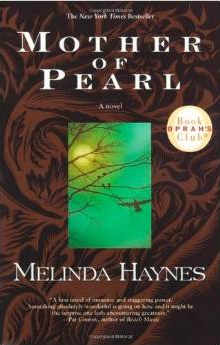
Cover for Mother of PearlSet in the 1960’s but seeming more appropriate to decades before that, Mother of Pearl is a sort of Southern Gothic mashup. It features a love affair between near relations, a half-Indian seeress, the town slut, a self-educated African-American man, and some other stereotypes. It is energetically written but sometimes so floridly that I wanted to put it down. Still, it captured my attention enough to give it a mild recommendation. For a novel that starts out dark and unusual, it ends up being surprisingly sentimental and unlikely.

Even Grade is an African-American factory worker. He recently helped his older neighbor Canaan after a teenage white boy hit him in the head with a bottle. His deepest sadness comes from the knowledge that his mother abandoned him as a baby and he was raised in an orphanage.

Valuable Korner, a white teenager, was also left by her mother, the town slut. Her mother disappeared after her birth and left her to be raised by her grandmother Luvenia, returning just before Luvenia died. Since then, Valuable has shared the house with her mother and whichever man she is with.

Barely in puberty, Valuable is about to turn her life-long friendship with neighbor Jackson into a full-blown love affair. What neither of them knows is that they are half brother and sister. The adults who are aware of this seem criminally oblivious, except one.

That one is Joody Two Sun, a half-Indian healer and seeress who lives in a hut by the creek. She and Even are lovers. When Valuable and Jackson come to consult her, she can immediately see their relationship and fate but chooses to say nothing.

Joleb, a friend of Jackson, lives with his father, who is as dumb as a post, and his older brother Burris, who tries to see God by standing on a railway trestle as the train approaches. Their mother also lives with them, but she has been in a vegetative state since Joleb was born. He feels closer to Grace, an African-American woman who cares for his mother and nursed him when he was a baby, than he does to his own family.

I had some problems with this novel, mostly involving the unlikelihood that Valuable, with her attitude toward her mother’s affairs, would plunge into her own love affair as soon as she hits puberty, especially as naive as she is. But then again, if she didn’t, there would be no novel. In addition, I can say no more, but the ending of the novel is very unlikely, ignoring legalities, for one.

Still, I enjoyed this book, especially liking the African-American characters, who seem better defined than the white ones. Valuable’s Aunt Bea, who with her lesbian lover Neva takes her in when her mother finally leaves town, seems to have no personality at all. Neva definitely has one but it is mostly destructive. Joleb, although he gets more interesting, seems like a cartoon character at times. And frankly, the two star-crossed lovers are pretty much cardboard figures.

I was interested particularly in Even and Grace. Joody is too much over the top at times, and Canaan only seems to be there to anchor Grace.

Readers commented that they were not taken with the book until about 100 pages in. That was my experience as well. In fact, if I hadn’t read those comments, I may not have kept reading the book.

Related Posts

This Side of the Sky

Queen Sugar

A Good Hard Look

Day 693: Fallout

Cover for FalloutMost of Fallout is told as a flashback, but the opening section is very short, so we can say we really encounter Luke Kanowski in 1961, when he is 14. He has busted his mother out of the mental asylum where she’s lived since he was five to take her to visit the art museum in London. The expedition is not a success, but while they are being questioned by a security guard, Nina Hollings notices them.

Nina is with her mother Marianne, a selfish woman who hands her off to her sister Mat when Nina is in her way but reclaims her before she can gain any stability. Later, she does other things to sabotage Nina’s self-confidence. Marianne works sporadically as an actress.

Luke is a young adult when he meets Paul Driscoll and Leigh Radley. He has been working at a mill, but shortly after he meets the two, he decides his life is harmful to him. Luke feels immediate friendship for Leigh and Paul and has soon moved to London. There the three of them work together with a few others to open a new theater.

Leigh has fallen immediately in love with Luke, but Luke is busy seducing practically every woman he meets, so Leigh becomes Paul’s girlfriend. Leigh’s father was unfaithful to her mother, so Leigh decides to stick with the man she feels is safe.

Then Luke meets Nina, who her mother has essentially pimped out to Tony Moore, a theatrical producer. Tony and Nina are soon married, Nina naively not realizing that Tony is using her as his beard. That is, she doesn’t realize until she finds him with two waiters during a party.

Luke’s first play is being produced as he and Nina begin an affair. This affair and the things Luke is willing to do to try to “save” Nina have repercussions for several people.

This novel is completely different from Jones’ The Uninvited Guests, which I enjoyed more. Although I was compelled to read the novel, I really don’t enjoy fiction where men betray themselves for a woman, or vice versa. Usually, the woman in these novels is bad. Nina isn’t, but she is weak and selfish and eventually asks Luke to betray his friends and his art.

Finally, I feel as if the ending of the novel is unrealistically hopeful and pat, when I think of the wreckage that has gone before. The background of the theater and play production with a bit about the politics of theatre is very interesting, though.

Related Posts

The Uninvited Guests

A Visit from the Goon Squad

The Cuckoo’s Calling

Day 592: Literary Wives! Wife 22

Cover for Wife 22Today is another meeting of Literary Wives, where a group of bloggers read and discuss depictions of wives in fiction.

* * *

I guess by definition chick lit is predictable, so perhaps it is unfair to criticize Wife 22 because I could tell where it was going before it got there. Still, I do criticize it for that, although it is well written, has funny, believable dialogue, and is quite enjoyable to read.

Alice Buckle is feeling a little dissatisfied with life. She has a handsome husband, but he has seemed withdrawn of late. She is often at loggerheads with her fifteen-year-old daughter, although she is very close with her younger son. She enjoys her work as a drama teacher at an elementary school. Still, the spark is gone between her and her husband.

She is invited by email to take part in a survey about marriage. To maintain anonymity, she is assigned a login of Wife 22 and a caseworker, Researcher 101. She finds it exciting to have a harmless secret and cathartic to answer the questions.

But it isn’t too long before the two are emailing each other outside the survey. Alice feels as if Researcher 101 really listens to her and understands her. Soon, she is fighting to keep herself out of an emotional affair. The situation is made more difficult because her husband William has abruptly lost his job.

I liked all the characters in this novel except the one I wasn’t supposed to like. However, I seldom read chick lit and again, I felt that this novel was predictable.

Literary Wives logoWhat does the book say about wives or about the experience of being a wife? In what way does this woman define “wife”—or in what way is she defined by “wife”?

I have to admit this portrait of a modern wife is more well rounded than we have seen in some other books. Alice is a failed playwright—her one produced play was a flop—but she really enjoys her job working with children. As a mother, she is actively engaged with her children, although inclined to worry unnecessarily and feel inadequate. Her relationship with her husband is friendly but a bit distant. When she tries to feel him out about emotional issues, he is abrupt and dismissive. In this regard, she is needy, letting a feeling of being unloved and inadequate prevent her from dealing honestly with her husband. I’m not sure, though, that any of this says something about being a wife. I feel as if this novel comments more on marriage itself and what can happen to it if it’s allowed to grow stale. There are problems between Alice and her husband, but her husband also has his own troubles that Alice is too preoccupied to pay attention to.

The Wives

Be sure to read the reviews and comments of the other wives!

Day 537: The Jane Austen Book Club

Cover for The Jane Austen Book ClubI am sometimes rather contrary about bestsellers. I assume that I’m not going to like them and avoid reading them. This attitude isn’t entirely irrational as I am familiar with the writing of many consistently bestselling authors that I do not like at all. The idea behind The Jane Austen Book Club also seemed like something I wouldn’t enjoy, as I am a little tired of all the Jane Austen spin-offs and other hoopla (although never tired of Austen herself). So, it wasn’t until I picked up the book at a used book sale that I decided to try it.

I found the novel extremely light reading but enjoyable and sometimes witty. Of course, it is about a book club of Austen lovers who get together to read all of Austen. Only one member is male, and Grigg is also the only one who has never read Austen.

The novel does not have much of a plot. There are some romances and a banquet. That’s about it. As in Austen novels, it is more about the characters and their relationships.

Jocelyn, the founder of the club, is a dog breeder in her 50’s who likes to arrange things and make matches. Sylvia is her best friend from high school whose husband Daniel recently left her for a younger woman. Allegra is a strong, adventurous lesbian. She isn’t so much an Austen fan but is in the club because she’s Sylvia’s daughter. Bernadette, a kind older woman with a colorful past, talks a lot and repeats herself. Prudie, the married French teacher, annoys everyone by speaking French during the club meetings. Grigg is a little more of an enigma, a science fiction reader in his 40’s who just moved to town.

Each section of the novel focuses on a book club meeting and tells us more about the character who hosts the meeting. Throughout the novel, quotes from Austen and other sources appear appropriately, or maybe with an angle we need to figure out. Strikingly, the novel is narrated in the second person plural, apparently by the entire book club, and in omniscient viewpoint.

I found myself liking the characters and drawn into their dramas. Early on, we feel Grigg is interested in one of the women, but I don’t think we’re supposed to guess which one. I thought it was obvious.

If you are looking for some light, amusing reading with just a hint of romance, you may enjoy this novel. I did.

Day 530: Literary Wives! The Crane Wife

Cover for The Crane WifeToday is another Literary Wives review, where the wives explore the depiction of wives in contemporary fiction. Please be sure to check out the reviews of all the Literary Wives.

Also, you can join in by adding comments on any of our pages or on our Facebook page!

***

George is awakened in the middle of the night by a strange cry. When he looks out the window, he is astonished to see a wounded crane in his garden. He removes an arrow from the crane’s wing, and the crane flies away.

The next day he is doodling at work when he gets the urge to cut up an old book. He makes a paper crane. When a woman named Kumiko arrives at the shop, she takes away his crane and unites it with a tile of feathers she has made, creating a wonderful sculpture.

Women have always left George, deeming him to be too nice. Kumiko, though, quickly becomes his lover and promises to be his wife.

George’s daughter Amanda is feeling lonely. Because of her anger and acerbic wit, she has never kept her friends. It is beginning to look like her friendship with coworkers Rachel and Mei is going south. She loves her ex-husband Henri, but her anger drove him away. Only her four-year-old son JP and her father seem to stay.

The stories of these characters are periodically interrupted by a fable about the love/hate relationship between a goddess and a volcano. Eventually, these two threads intersect, overlaying the everyday story with mythic and magical overtones.

I was much more interested in the everyday story of George, Amanda, and Kumiko than I was in the mythic elements, which at times seemed to be trying too hard to be profound. The everyday story was touching and sometimes funny, the character Mehmet being particularly amusing.

What does this book say about wives or the experience of being a wife? In what way does this woman define “wife”—or in what way is she defined by “wife”?

There are two wives in the story. One is Amanda, who loves Henri. But her self-hatred is so strong that she feels something must be wrong with Henri for him to love her back. So, she fights with him until he leaves her. Eventually, she has to settle for being his friend.

Although she and George never actually marry, the other wife is Kumiko, the crane wife. She is a self-sacrificing figure. To stay with George and make their works of art, she tears the feathers from her own body. In her mythic self, though, she offers forgiveness at a terrible price, by ripping out a person’s heart and blinding him, then turning him to stone.

Is Ness saying that we’re only forgiven if we are blind, heartless, and turned to stone? Or are we only free of pain in that condition? Ness’ vision of love, that it is greedy, angry, or self-sacrificing, is a strange one. The goddess’s love is harrowing while Kumiko’s makes her give up everything. All of these ideas seem at once confused and simplistic. Literary Wives logo

I think Ness is saying more about love than about being a wife—that true love is more self-denying than greedy. George becomes obsessed with learning everything he can about Kumiko instead of accepting what she can give—and that leads to unhappiness.

But my question is, is either view of love a true one? Is it healthy or even right to be so self-denying that you literally mutilate yourself for love?