Review 2086: Beyond the Rice Fields

I was looking forward to reading Beyond the Rice Fields as the second book set in Madagascar that I’ve recently read (the other was Red Island House) but even more so as the first book ever translated from Malagasy into English. It is set during a fascinating period in the 19th century.

The child Tsito has been a slave since his family were killed or sold into slavery, but his luck changes when he is bought by Rado, a trader in zebu who travels all over the country. He purchases Tsito more as a companion for his young daughter Fara, the product of an unmarried union with Bao, a very beautiful dancer. So, Tsito grows up in a family unit with Fara, Bao, and Bebe, Bao’s mother.

When he is older, Tsito learns to read from foreign missionaries, and this makes him valuable to Andriantsitoha, the provincial lord. He takes Tsito to the City of Thousands to work for him. Tsito is hoping to earn his freedom, because he is in love with Fara. However, the political situation is looking more uncertain since rule of the kingdom was forcibly seized by the Sovereign Queen after the death of the Sovereign King. Powerful lords are taking land away from others who seem to have no judicial recourse, and Andriantsitoha has very little power in the city. The country becomes more chaotic, as a backlash against Christianity leads to large-scale denunciations and slaughter.

I know nothing about the history of Madagascar, so I probably would have found this novel fascinating except for issues that may or may not be cultural. It was hard for me to know. I often found myself confused about the larger picture because except for the final dramatic scenes in the last 50 pages of the book, Naivo doesn’t explain what’s going on very clearly. He tends to only bring in information or characters when he needs them, and if then, doesn’t really give them much dimension. For example, some of the children that Fara and Tsito play with become important later in the book, but he hardly mentions them as children and doesn’t show you what they are like, except the bully.

The narrative point of view switches between Tsito and Fara, and Fara spends a lot of time recounting stories and thinking about some family curse that is never fully explained. So, during the first half or so of the novel, I wasn’t always sure whether we were in the past or the present.

In general, I felt that Naivo had a problem knowing what to tell and when.
Related Posts

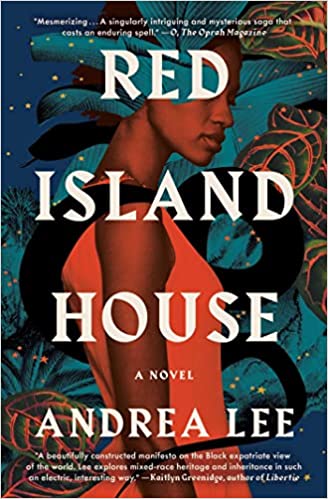
Red Island House

Things Fall Apart

When Rain Clouds Gather

Review 2022: Literary Wives! Red Island House

Today is another review for the Literary Wives blogging club, in which we discuss the depiction of wives in fiction. If you have read the book, please participate by leaving comments on any of our blogs.

Be sure to read the reviews and comments of the other wives!

My Review

It seems I’ve been reading books set on islands lately—Greenland, Manhattan, and now Madagascar. Like Madagascar, Red Island House is lush and mysterious, the story of a disintegrating marriage.

Shay comes to the Red House newly married to Senna. They seem an inexplicable couple. She is an American of mixed race, educated, thoughtful, tall, and beautiful. He is much older, short, white, Italian, uneducated, and self-made wealthy, also loud and impulsive. On impulse, he has bought this oceanfront property on a small island off Madagascar. He has built an overpowering but beautiful house, which will be the Senna’s summer home.

In this novel constructed of short stories, Lee tells the story of the Sennas’ marriage in terms of their relationship to the house. Shay feels sympathy for the Malagasy people, and is torn by the feeling that her situation in this huge house waited on by many servants in one of the poorest nations in the world is not very far from colonialism. Thus, from the first, she has an ambivalent relationship with her own role as mistress of the house.

The novel begins with Shay’s understanding that the man Senna has hired to manage the house, Kristos, is her enemy. When the Sennas are in the house, her husband spends a lot of time with Kristos, off fishing and probably carousing, and after Senna has been around Kristos for a while, he snaps and shouts at Shay. Shay is conscious of disappearing goods and money, but when she tries to talk to Senna, he is rude and dismissive. On the surface polite, Kristos undercuts her.

Shay learns from the housekeeper, Bertine, that Kristos, who has contacts in bad places, is using magic against her. So, Bertine takes Shay to see the Neighbor.

As in each story Lee explores some colorful character or incident, the novel covers 30 years in the Sennas’ marriage. Shay’s relationship with the island gains ambivalence after the couple converts the Red House into a bed and breakfast, and it slowly becomes the haunt of Senna’s male friends, who shift their focus from fishing to teenage sex workers as they age.

The novel is gorgeously exotic, serious, and eloquent. It’s about race, class, hope, betrayal, and the couple’s finally divisive approaches to moral problems.

What does this book say about wives or about the experience of being a wife?

Lee uses Shay’s relationship to the Red House as a symbol for the Sennas’ marriage. In the beginning of the novel, the couple goes to see its foundation on their honeymoon, and at the end of the novel, she makes a last visit to it to say goodbye to it and her marriage, and I think to meet its inheritor, her husband’s illegitimate son by a Malagasy prostitute.

I find Shay and Senna an inexplicable couple from the beginning. They are such opposites that it’s hard to believe they would even like each other, let alone love each other, but we are informed that they do. And they remain married quite a long time, although Shay has to overlook a lot.

Lee tracks the relationship to the house in one insightful chapter at the end, where she takes it through the newness of the honeymoon period through the burgeoning of having children and farther until it becomes a fantasy playhouse for a bunch of pathetic, randy old men—Senna being one of them.

Literary Wives logo

Shay’s relationship to Senna also varies as she considers the role she has taken at the Red House. She is too informed about her family’s and race’s past heritage in slavery to feel comfortable in what she sees as a colonial role in Madagascar. Although she feels she can’t understand the country, she understands it much better than Senna, who views it as a place of fantasy. As he spends more time there, she spends less.

Shay is an independent woman, so it beats me why she doesn’t leave Senna earlier. We are told she has been coached by her Italian friends to accept his infidelities, but it isn’t until she has that burst of hurt and jealousy toward the end of the novel that we understand there is still a lot of feeling there.

Related Posts

On Beauty

Alternate Side

The Amateur Marriage