If I Gave the Award

With my review of No One Is Talking about This, I have finished reading the Booker Prize shortlist for 2021. So, it is time for my feature where I decide whether the judges got it right. This one is going to be difficult for me because I didn’t absolutely admire any of the books on the shortlist.

Sometimes I start this feature with the book I liked least, but in this case, even that is difficult. It’s not that I disliked any of them, it’s more as if I felt detached from several of them and found things that I didn’t admire in others.

So, maybe I’ll have to choose by the book that made the most impression on me, and start with the least. I read No One Is Talking About This by Patricia Lockwood several months ago, although more recently than any of the others, yet when I went to post the review, I couldn’t remember a thing about it. I find from my notes that I didn’t relate to anything about the first half of the novel, the thoughts of a media influencer, but was touched by the second half, about a family member with a rare disease. Usually, if I am touched, I remember, but in this case I did not.

On the other hand, I vividly remember Bewilderment by Richard Powers, which is about a single father whose young son experiences fits of rage. It roams into science fiction with an experimental treatment that the desperate father signs his son up for, which sometimes seems a little like child abuse, but the novel has some beautiful moments. This was the novel I read first, and I remember it very well, although I was uncomfortable with it at times.

In terms of novels I felt detached from, there is The Fortune Men by Nafida Mohamed, about the last man sentenced to death in England, an innocent man who just happened to be Somali. This should have been powerful stuff, but I felt disconnected from it and the flashbacks to the protagonist’s life didn’t help.

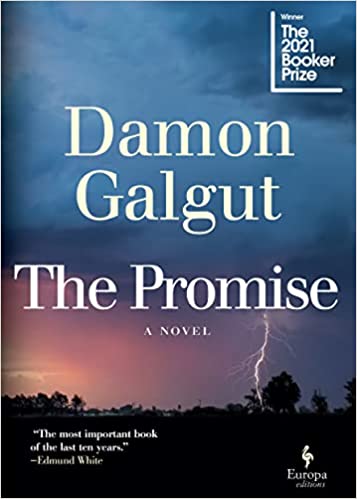
I also felt detached from the characters in The Promise by Damon Galgut, although I usually like him. This novel was the winner that year, about a promise made to a dying family member, but I felt a lot of distance from its characters. I also thought it was interesting that the two female characters who were the most sympathetic were barely in the novel. It was all about the men.

I found A Passage North by Anuk Arudpragasam interesting in some respects, about a Sri Lankan man who goes to attend the funeral of his grandmother’s nurse. I liked the background about the recent war, even though it assumed a level of knowledge about it, but the novel was too contemplative for me. And even if that was not the case, Arudpragasam’s long, involved sentences and paragraphs and meandering prose were not something I enjoyed.

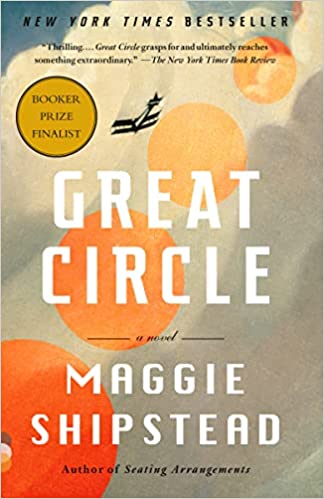
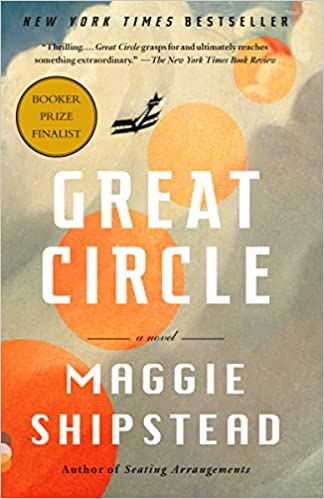
The book I was most engaged with was Great Circle by Maggie Shipstead, a historical novel about the life of a woman aviator. However, as engaging as I found it, there was something about it that didn’t seem like prize material. I can’t be much more definite than that. For one thing, it was a split-time story, and the current-time story about the actress playing the role of the aviator in a movie wasn’t very interesting. When I judge it by what I remember, though, it does well, as I read it some time ago.

I think I’m going to have to go with Bewilderment. It wasn’t the best Richard Powers book I ever read (that was The Overstory), but it was compelling and sometimes beautiful, and Powers always seems so intelligent to me.
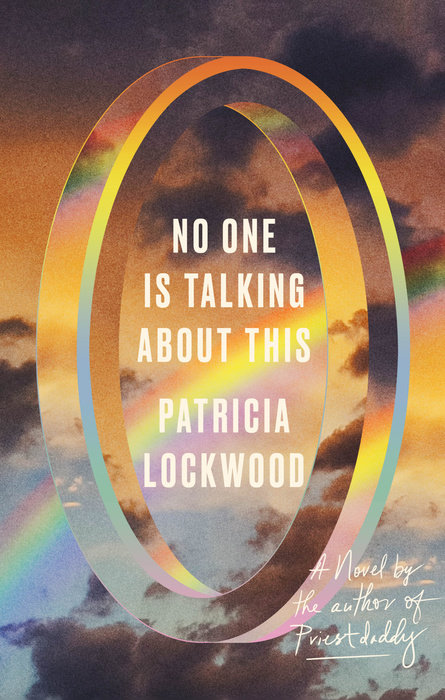
Review 2151: No One Is Talking About This

The unnamed narrator (possibly Lockwood herself) is a media influencer made famous by such utterances as “Can a dog be twins?” She seems to spend all her time online that she isn’t lecturing to her fans. She calls the Portal her information, and although she has a broad sense of irony, doesn’t seem to understand that most of it isn’t.

When I was reading this portion of the book, which is related in a sort of stream of consciousness, I realized that I was officially a geezer, because I didn’t understand a lot of what she was talking about, didn’t like her sense of humor, didn’t get her world view or sensibility. The book didn’t seem to have a plot and was mostly made up of her musings on a vast array of subjects, particularly the Internet.

Then a family crisis occurs. The second half of the book suddenly gains a plot and becomes meaningful in a way the first half wasn’t. I was deeply touched by it.

I read this novel for my Booker project.

Related Posts

Flights

Crudo

Still Alice

Review 2142: A Passage North

Readers looking for a fast-paced novel will not find one in Anuk Arudpragasam’s A Passage North. Instead, they’ll experience a novel that’s meditative and introspective.

Krishan returned several years ago to his native Sri Lanka after living away in India during his education. He returned when his relationship with Anjum ended determined to help his people in northeastern Sri Lanka after the end of the Tamil rebellion. However, after two years, he has retreated to the city of Colombo, where he lives with his mother and grandmother.

At the beginning of the novel, he learns of the death of Rani, a woman who had been caring for his grandmother and had helped her come back from a mental and physical breakdown. Rani herself had been severely depressed after the death of both her sons as a result of the war, and the work with his grandmother had begun as a help to her state of mind as well as his grandmother’s comfort. However, after Rani returned for family business to her village in the northeast, she kept delaying her return and finally died by falling into a well.

Krishan decides to attend Rani’s funeral, and this long trip into the northeast of his country gives him ample opportunity to dissect his relationship with Anjum, his own motives in returning to Sri Lanka, the possibility of Rani’s suicide, and many other issues.

Arudpragasam likes long, involved sentences with many clauses, embedded in paragraphs that sometimes continue for pages. His prose is dreamy and meandering. Krishan spends so much of his energy considering all the ramifications of everything that even though he acts, he seems oddly inert.

I found the sections about the recent history of Sri Lanka very interesting, but Arudpragasam assumes a knowledge of the situation there that I do not have.

I read this book for my Booker Prize project.

Related Posts

Burnt Sugar

The Lives of Others

The Sapphire Widow

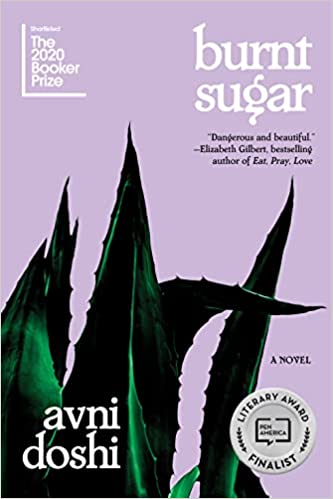
Review 2087: Burnt Sugar

When Antara was three, her mother Tara took her and left her home out of boredom to join an ashram, becoming the guru’s lover. In the ashram, Antara hardly ever saw her mother, and when she did, Tara alternated between effusive love and abuse.

Now Antara notices her mother is losing her memory. Although she tries to help her with diet and memory exercises, she still bears her a lot of resentment for events in the past. But this novel reveals its secrets slowly, and its secrets include betrayal. This novel, which I read for my Booker project, is mostly a character study about a woman who felt unloved as a child and is still suffering.

Antara is an artist, good enough to have her own show in a gallery, so I found it disturbing how slighting her family was about her art. When her mother burns some of her drawings, no one is upset, and later someone refers to her art as a hobby.

Antara is not a reliable narrator, nor is she a likeable person, but I found this novel fascinating.

Related Posts

The Blazing World

Suzanne

Black & White

If I Gave the Award

Cover for A Little Life

With my review of The Year of the Runaways, I have finished reading the shortlisted books for the Booker Prize of 2015. So, it’s time for my feature where I decide whether the judges got it right. My reactions to the shortlist of that year were really mixed. There were a couple books I intensely disliked, one that I thought was pointless, one that was interesting but didn’t really pull me in, and two that were excellent.

The winner for the year was A Brief History of Seven Killings by Marlon James, about an assassination attempt on Bob Marley and its ramifications years later. I found it brutal and sexist and couldn’t even figure out which of many dead people the seven killings referred to. Though it was the first book in this shortlist that I read, I knew even then I wouldn’t be picking it as my favorite.

My next least favorite book was The Fishermen by Chigozie Obioma, about what happens between brothers after a prophecy. I found this book interesting because of its insight into Nigerian village culture and life, but I also found it extremely and graphically violent. Worse, I found Obioma’s writing immature, with unusual metaphors that often didn’t work well and his love for long, overblown sentences.

I didn’t see any point at all in Satin Island by Tom McCarthy, about U, a corporate anthropologist, whose job is to observe, connect, and deconstruct all known human activity. I’m sure it is meant ironically, but the novel seemed an exercise in Absurdism to me. It almost had a plot, but then it petered out at the end.

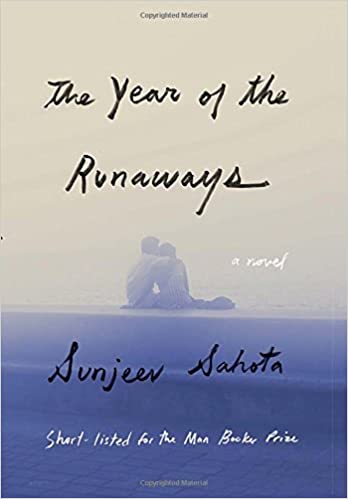
I liked The Year of the Runaways by Sunjeev Sahota a little bit better. Written as if it was 19th century social realism, it is about several young Indian men who illegally immigrate to England with unrealistic expectations of their job prospects. It’s pretty grim, though, and it gets worse before it gets better. Its social realist style leaves you detached from its characters.

Cover for A Spool of Blue Thread

Now, we get to the good stuff. I just loved A Spool of Blue Thread by Anne Tyler. About a family that gathers to decide what to do about their aging and faltering parents, I found it to be a lovely story about family stories and secrets, loving and forgiveness.

Finally, however, there is A Little Life by Hanya Yanigihara. A beautifully written novel, it centers around four young men who were roommates in college. Slowly, we learn the secrets of one mysterious character, Jude, around whom everything seems to center. This was a powerful and deeply touching novel.

So, I pick A Little Life, with strong recommendations for A Spool of Blue Thread.

Review 2034: The Year of the Runaways

The Year of the Runaways is another book I read for my Booker Prize project. It follows the fortunes of a group of young Indian men who are living illegally in England looking for work.

Tochi is a young man from a low-caste family who in India had been finally getting his head above water since he had bargained for an auto so that he could work as a taxi driver. But after an election where one party rabbled-roused on the slogan of “racial purity,” his entire family was murdered. He travels illegally to England to start again.

Alvar’s father’s shawl business isn’t doing well and his younger brother will soon have school fees to pay. He also wants to marry Lakhpreet, his friend Randeep’s sister. He is able to get a student visa for England with no intention of studying, because he has had to borrow money from a moneylender for his fare.

Randeep comes from a wealthier family, but his father, a government official, loses his job after a mental breakdown. Randeep is kicked out of college in India and attacked for sexually assaulting a girl because he is constantly misreading people’s reactions. To get to London, he enters into a visa marriage with Narinder, a devout Sikh.

All of these young men travel to England with completely unrealistic ideas of how much money they can make or how easy it will be to even find work. They end up living together in a house packed with illegal immigrants working for low wages at menial work, most often employed by their own countrymen. Those with families receive constant demands from them for more money. And things get worse.

This novel is a throw-back to the 19th century social realism genre. The story is compellingly told and illuminates the dilemma of the illegal immigrant. I didn’t feel particularly attached to any of the characters, but I felt sorry for all of them.

Related Posts

The Lives of Others

Nectar in a Sieve

The Lowland

Review 2024: The Promise

Damon Galgut is an excellent writer, but I have had varying reactions to his work. Of what I have read, I liked In a Strange Room best and his last novel, Arctic Summer, least. Despite its having won the 2021 Booker Prize, I feel only a tenuous connection to The Promise.

The novel is about the disintegration of a white South African family over 30 years. It returns to the family roughly every 10 years at the death of a family member.

Thirteen-year-old Amor Swart overhears her dying mother ask her father for a promise. Rachel wants Manie to give the house she’s living in to Salome, the servant who has cared for Rachel and brought up her children. Manie promises, but in the last few years he has fallen under the thumb of greedy Dominee Simmers, so he gives land to the church but does not fulfill his promise and gets angry when Amor asks him about it.

Amor’s brother Anton gives Amor mild support, but he is obsessed by having shot a woman recently during some civil unrest. When he returns to the army after the funeral, he decides to desert.

Nine years later, both siblings return to the family for their father’s funeral. Amor wonders whether the promise will now be kept.

This novel is narrated omnisciently, but the point of view occasionally shifts from one character to another and from one scene to another without warning. It also sometimes takes on a folksy tone, as if the narrator is a storyteller talking directly to the reader.

I felt a lot of distance from Galgut’s characters. The only really sympathetic characters are Amor and Salome, but Salome is only there on the edges—treated in this novel much like she would have been in real life—and Amor is not much of a presence in the novel. We are told she is kind and easy to talk to, but we are not privy to many of her thoughts or or actions as we are to those of some of the other (male) characters. Perhaps that’s why I felt so much distance from the novel.

Related Posts

In a Strange Room

Arctic Summer

The House Gun

Review 2023: Satin Island

I haven’t seen anyone say this when I looked at reviews to try to make sense of Satin Island, but the thought that occurred to me was that after a deadpan beginning, the novel becomes an exercise in Absurdism. If that’s not the actual intent, then I don’t see the point in it, which may be the point.

The narrator, U, is a “corporate anthropologist,” whose job at a large, influential corporation seems to be to observe and connect and deconstruct all activity. He has been tasked by the gnomic head of the corporation—who is known for his aphorisms, most of which seem meaningless, at least to me—to write a report encapsulating everything in contemporary life. This is a task that I immediately thought was impossible, but it takes U two-thirds of the book to figure that out. In the meantime, he spends his time daydreaming about oil spills and parachute deaths.

Aside from his work life, he has one friend, Petr, and an enigmatic lover, Madison. But these characters seem incidental and their parts degenerate into absurdity.

I almost stopped reading this novel several times during the first half, when it seemed to be taking seriously some of its meaningless statements, for example, about the corporation’s logo of a ruined tower, “The first move for any strategy of cultural production . . . must be to liberate things—objects, situations, systems—into uselessness.” At first, U treats such utterances with complete seriousness, but he becomes more cynical.

Later, the reading became easier and there was almost a plot, but eventually the novel just seems to peter out. Despite liking McCarthy’s novel C well enough, I read this novel with a distinct lack of excitement for my Booker Prize project.

Related Posts

C

Flights

Outline

Review 1861: Great Circle

After getting fired from a hit TV series with a cult following for damaging the brand, Hadley Baxter thinks her career might be over. However, she is approached about starring in an independent film about the life of Marian Graves, an early aviator who disappeared in 1950 while attempting to circumnavigate the earth via the poles.

Although the novel sometimes follows Hadley as she tries to figure herself out, its main focus is on Marian and her twin brother, Jamie. As babies, they are on their father’s ship when it sinks, and because he chooses to save them rather than go down with his ship, he serves time in jail. They are raised in Missoula, Montana, by their alcoholic artist uncle, who lets them run wild.

When a pair of barnstormers stop over, Marian is bit by the flying bug. She is already doing men’s work, so she begins working harder to earn enough for flying lessons. But no one will teach her until she meets Barclay Macqueen, a bootlegger.

Great Circle is a broad-ranging novel that takes us from bootlegging in the West to serving mining camps in Alaska to ferrying planes in England before the flight around the world. I found Marian’s story more compelling than Hadley’s but still found the novel fascinating. Since I read it, it has been nominated for the Booker prize, so is part of my project.

Related Posts

West with the Night

Circling the Sun

Straight on Till Morning

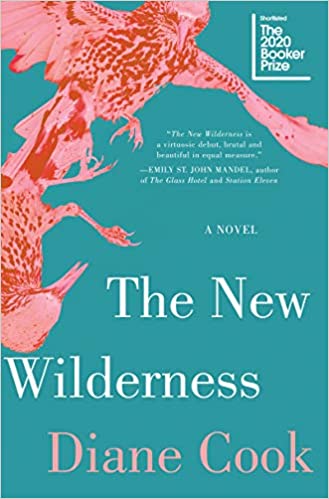
Review 1826: The New Wilderness

Dystopian novels are coming out of the woodwork these days, and they are not really my thing, but I read The New Wilderness for my Booker Prize project. That being said, I have read some excellent dystopian novels, the Maddaddam trilogy being one of them.

All of the land has been put under production to support the population of the City except the Wilderness State and possibly the rumored Private Lands. The City has become dangerous, though, with such polluted air that Bea’s little daughter Agnes was dying. So, Bea and her scientist partner Glen proposed an experiment—to go with a small group of people to live in the wilderness without making their imprint.

At the beginning of the novel, the Community has lived in the Wilderness State for several years. They started as a group of 20, but several have died. They are living under strict conditions. They’re not allowed to settle anywhere or build structures. The Rangers appear periodically to tell them to move to another Post.

The group has been making decisions by consensus, but it’s clear that Carl and his partner Val would like to be in charge. Glen seems to have little control over his own experiment.

A lot of the novel is devoted to the relationship between Bea and her daughter, who is growing up a bit feral. Eventually, Agnes becomes the main character, which was unfortunate, as I didn’t find her very interesting. In fact, the characters are mostly just used as emblems. They aren’t very dimensional.

Life in the Wilderness State is so brutal that I couldn’t imagine the City being worse. I can understand the comparisons to The Hunger Games that I saw repeatedly on Goodreads, even though no one is trying to kill anyone. I see more of a legacy of Lord of the Flies in Community politics.

I found that my interest in the novel came and went, mostly with Bea. She is not in the book, however, for large portions of it. For me, this novel was mildly interesting at times, but I wasn’t sure I believed very much in how Cook makes her characters behave. Right at the beginning, for example, a couple of characters die and the reaction of the rest is sort of, oh well, these things happen. An explanation that when you’re so close to death, you get inured to it eventually emerges, but I think Cook gets that wrong. Maybe that happens in war, but I think that a hunter-gatherer group would feel the losses as much, if not more, than anyone else, because the group is so small. This struck me as wrong from the start.

One more comment—a quote from Publishers Weekly calls the novel “darkly humorous.” On the contrary, I didn’t think that the novel showed any humor at all or even tried to.

Related Posts

Oryx and Crake

The Hunger Games

The Second Sleep