Today is another review for the Literary Wives blogging club, in which we discuss the depiction of wives in modern fiction. If you have read the book, please participate by leaving comments on any of our blogs. Be sure to read the reviews and comments of the other wives!
Ariel of One Little Library
Emily of The Bookshelf of Emily J.
Lynn of Smoke and Mirrors
Naomi of Consumed By Ink
My Review
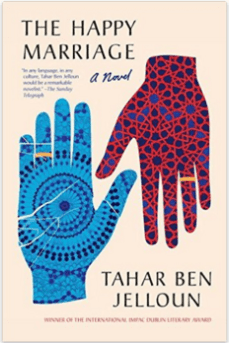 A famous painter living in Casablanca tells the story of his marriage in a “secret manuscript” as he recovers from a debilitating stroke. From all accounts, he has married a woman who is almost a lunatic. He tells how his family objected to his marrying beneath his social status but he was in love. Now that he has married this much younger woman, his relatives’ fears have been realized. She has poor taste, she is vulgar, irrationally jealous. She has fits of rage where she disturbs his work and even destroys it. She is constantly asking for money and giving it away to her relatives. She drinks too much and hangs out with unpleasant characters.
In the artist’s story, he is mild-mannered and generous, just trying to figure out a way to handle her irrational outbursts. Finally, he begins trying to get a divorce.
Amina, the artist’s wife, discovers his manuscript and we hear her version of the story—which is completely different. Amina’s story is about insults to her family, consistent unfaithfulness, miserliness and lies.
This novel reminds me very much of Fates and Furies, which has the same structure and intent. However, Fates and Furies seems both more unlikely and more nuanced. The Happy Marriage deals in problems that can trouble marriage—infidelity, money issues, dislike of a spouse’s friends, real and imagined insults—but we see nothing of the more subtle aspects of human relations.
What does this book say about wives or about the experience of being a wife?
Although I think we’re ultimately supposed to sympathize with Amina, the two characters in this novel are so angry with each other that their whole relationship seems clichéd to me. I’m not sure what this book ultimately says about wives. Its main point seems to be a larger one about how people self-justify their own bad behavior and see things from their own point of view. Both of the narrators, but certainly the husband, are untrustworthy.
Still, it seems that the husband married to have a wife that he thought he could control. He picked a much younger woman who was in love with him and would be dependent upon him financially. Many of his other choices seem to be made from vanity about his position.
 The wife’s rights are changing under Moroccan law, but even though the book blurb mentions this, it does not seem important to the story except that she can prevent their divorce. In effect, the husband is reduced to blackening her name with everyone and depicting her as unstable.
But Amina seemed to be happy in their relationship as long as she could travel with him and thought he was being faithful. That is, she seemed content with being treated as a trophy wife until she had to stay home with the kids (and of course, this coincided with the infidelity, it seems). So, I’m not sure that her idea of marriage is any more strongly developed than his. In this particular marriage, everything seems to boil down to a struggle for control.
Related Posts
Fates and Furies
The Kreutzer Sonata Variations
A Circle of Wives

 Alice Love wakes up from an accident thinking she is 29, pregnant with her first child, and madly in love with her husband Nick. But she is actually 39, the mother of three children, and separated from Nick. It takes her a while to understand she is ten years older, much thinner, and quite a bit harder and more driven than she remembers.
 A distinctive characteristic of The Disobedient Wife is its sense of place in an unusual setting, Tajikistan. The novel contrasts the lives of two women, Nargis, a nanny and maid who is struggling to support her family, and Harriet, her employer.
 What? Me Read?