Day 1181: The Zone of Interest

Cover for The Zone of InterestIn Martin Amis’s The Zone of Interest, the Zone is a Nazi factory and concentration camp in Poland. Interestingly, Amis makes this setting a source of some very black humor.

The novel is written from the points of view of several characters, mostly Nazis, but it is mainly from that of Thomsen, an officer in charge of production at the rubber factory. He is a womanizer, but he begins to have feelings for Hannah Doll, the commandant’s wife.

Doll himself is a vile human being. He has his rival for Hannah imprisoned and uses threats against inmates’ relatives to force them to do things.

In fact, most of the characters are vile. And that’s the difficulty with this novel. First, is the Holocaust fodder for humor? I’m not sure it is in general, but it isn’t for me. Also, even though Thomsen is the least criminal of the characters because he’s working subtly against the war effort, these are people busily explaining away their own terrible actions.

Amis’s goal, I think, is to give some insight into the behavior of these people. Whether you want to read a novel on this subject probably depends on whether you’re interested in that insight. It made me a little queasy. This is one of the books I read for my Walter Scott Prize project that I didn’t really enjoy.
Related Posts

Maus I

Great House

The History of Love

Day 989: Night Train

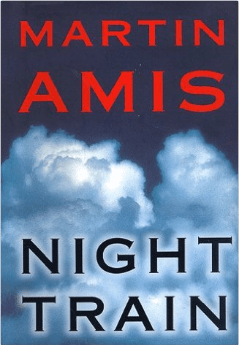
Cover for Night TrainNight Train is one of those novels that is hard to rate using numbers or stars. My husband was reading it and remarked that it was interesting but that the writing style irritated him.

I certainly found that to be true. It is a very short book, written from the point of view of Mike Hoolihan, a female detective in Chicago. It is written using a lot of slang and jargon, and my impression is that this British author has not gotten it right. For example, Hoolihan goes on for a bit at the beginning that she is “a police,” that that’s what police call themselves. Really? I’ve never heard an American cop use that term. Of course, I don’t know that I’m not wrong, but I do know that no American ever referred to something as being in a “glassine envelope.” The only place I’ve ever heard of glassine is in British fiction or television. In short, I don’t know why Amis set his novel in Chicago, but at least he should have gotten the language right.

That being said, the story itself is compelling. Mike is asked by her former commander, Colonel Tom, to find out whether his daughter Jennifer really committed suicide. Beautiful and intelligent, with a kind lover, she seemed to have everything to live for.

This novel doesn’t quite go in any of the expected directions and spends time musing on the nature of suicide, but that’s all I want to give away. I did find it a compelling book, even though I have a high degree of skepticism about the likelihood of its conclusions. I have another book by Amis to read for the Walter Scott Prize list, and now I am very curious about it.

Related Posts

Lucky Jim

The Shining Girls

206 Bones