Review 2626: Life Among the Qallunaat

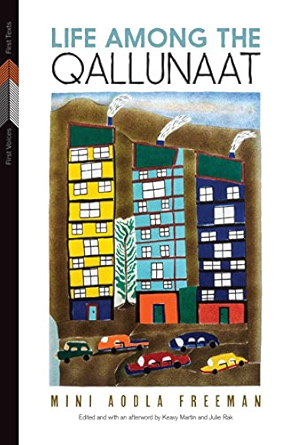
Life Among the Qallunaat is a memoir by Mini Aodla Freeman, an Inuit woman who became a translator and eventually a playwright, poet, and author, and respected elder of her people. This memoir begins when, at nineteen, she went to work as a translator in Ottawa, but then it returns to the events of her childhood and ends with her departure to Ottawa.

Mini was born on Cape Hope Island on James Bay, in what is now Nunavut. Aside from the nomadic nature of her family’s Inuit life, when she became older, she had many experiences away from her family. She was sent to school after her mother died at such a young age that she was the smallest child and was picked on by the others at the instigation of her cousin. Unlike the other children, she was not picked up by her family at the end of the year, so one of the teachers took her home. Then her father came to get her during the next term, and her family kept her home for the next year. Despite obstacles, she managed to finish eighth grade and did some schoolwork beyond that.

At 15 or 16, she helped out at the infirmary of her school and was encouraged to study nursing, so she did that for a while and later was hospitalized for tuberculosis. Yet after recovering, she stayed at the hospital doing nursing duties. During the stay in the hospital, she was called on to translate, because she spoke her dialect of Inuit as well as Cree, French, and eventually English. She lived with a family as a nanny for about a year but left after that same cousin made trouble for her. Instead, she took a job as a laundress at a school for a while, but she found it mentally unstimulating, so she switched jobs with a school house mistress who found it impossible to control her charges, a situation Mini had no trouble with.

This book is fascinating not only because of the details of Mini’s life but also for her explanations of Inuit customs and the differences between her people’s ways of thinking and behaving and our own. It is simply written, touching at times, and definitely an adventure to read. I believe I put this book on my list after last year’s Nonfiction November.

Related Posts

The White Bear

Minds of Winter

The Temptations of Big Bear

Review 2574: Girl, Interrupted

Girl, Interrupted is Susanna Kaysen’s memoir of the time she spent as a young adult in a mental hospital. These days, people are booted out of mental facilities as soon as their insurance runs out, recovered or not, but back in the late 60s, apparently some were put in and kept for a long time. The book blurb says two years, but the copy of her medical records looks like closer to a year-and-a-quarter.

What was shocking to me from the first was that she was sent to the hospital on the basis of a short visit to a strange psychiatrist who noticed she had picked a pimple (what adolescent doesn’t?) and wrote down “picking at herself,” and then asked her if she was tired. She said yes because she got up earlier than usual to go to the appointment. Next thing she knew, she was in a cab to the hospital.

Later, she shows the medical report, which says the diagnosis was based on a three-hour interview, but Kaysen devotes a chapter to the timings, including check-in times reported by the hospital and the doctor’s office, to show it was no longer than 20-30 minutes. (She originally says ten.)

Perhaps she’s not an altogether reliable narrator, because she admits in the Introduction to not telling things, and later we hear about one disturbing behavior, although it doesn’t seem to be one that requires incarceration of more than a year. She also tells of a suicide attempt but says she knew immediately it was a mistake.

Other practices of the hospital seem ridiculous, and nothing seems designed toward the girls’ recovery but rather the staff’s convenience.

Interesting stuff.

Towards the end of the book, she dismisses her diagnosis, “character disorder,” and talks about what that might mean. Her own diagnosis is that she was bored and being forced to do things she didn’t want to do. I think that’s called being a teenager.

Related Posts

The Bell Jar

Turtles All the Way Down

Owls Do Cry

Review 2564: Animal, Vegetable, Miracle: A Year of Food Life

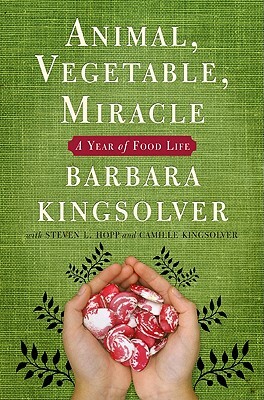
I usually enjoy Barbara Kingsolver, but even in her fiction, she can get preachy, so I have avoided her nonfiction. That is, I avoided it until I saw that this book filled a hole in my A Century of Books project. (At the book’s reading, I had seven or eight to go. Now, while I’m typing up this review, I have three. By the time it appears, I hope to have finished.)

Although Kingsolver is the primary author of the book, it also contains essays or informational sidebars written by her husband, Steve L. Hope, and her oldest daughter, Camille Kingsolver. It is about food—in particular, her family’s decision to act on its principles. To do so, they move from Arizona to her husband’s farm in Southern Appalachia (somewhere in Virginia). The idea is to try to live for a year only on food they grew or raised themselves or on local food.

Kingsolver has chapters on issues, for example, an early one is on the growth cycle—which vegetables and fruits are started when and when they are ready to be picked. (I didn’t find her concept of the vegetannual helpful at all. A timeline might have worked better.) But for the most part, she tells the story of the year, the things they plant or raise and when, the people they meet, the things they learn. These chapters were mostly interesting and sometimes entertaining. I was truly wrapped up in suspense about whether the turkey eggs would hatch.

Kingsolver talks also about issues around local food, such as how much gas is used transporting food that isn’t local to supermarkets; the takeover of Federal funds for farmers by large conglomerates (your local farmer isn’t getting the money); the negative effects genetically engineered seeds have on farmers, especially for organic farms; the growing local food movement and how to support it; and so on. The sidebars were some of the same topics, though, so I sometimes felt as if I was in church—tell them, tell them again, and tell them again. (Just as my own sidebar, I remember at about age ten asking my father after church why they did that and finishing my polite question with, “Do they think we’re idiots?”) You can see I have no patience with that kind of thing.

So, that’s a criticism, but on the other hand, lots of things in the book were interesting, and the descriptions of the meals had me licking my lips, recipes included in the book.

I personally have made steps at times to eat more locally. I belonged to a CSA for years, and I’m thinking of signing up for another one. I kept a vegetable garden here until growing trees cut off my sunlight, so now I just grow tomatoes on the back deck (in the tomato wagon). I try to stop often at a local farm store. (During the summer, I stop by every week, and I have stopped buying grocery store strawberries—I just wait for the fresh ones in late spring, because once I moved to this area and ate a real one, I realized that the ones in the store were not real.) In any case, this book has made me think of all this again.

Those of you who worry about the higher cost of local food may be very interested in the chapter about the food economics for a year. It turns out that when you forgo processed foods and do most of the cooking yourself, it’s a lot less expensive for a family to eat for a year even if paying more for some local foods. Of course, they were growing most of theirs, which everyone cannot do. However, like Michael Pollan also points out, Americans spend less money on food than people in most other countries. And even in the city, it’s possible to grow some of your food.

Related Posts

The Omnivore’s Dilemma

Cod: A Biography of a Fish That Changed the World

John Saturnall’s Feast

Review 2530: The Islandman

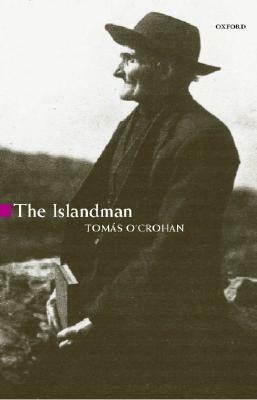
I read The Islandman to fill a hole in my Century of Books project. It is the memoir of a man who was born in the Blasket Islands in far Southwest Ireland, in 1856. The Irish edition of this book was a big seller in Ireland after it was published in 1929. The islands are now unpopulated as the government removed the last inhabitant in the 1950s.

The memoir is written as a series of anecdotes but in order of time. The existence of the inhabitants was a difficult one of mostly subsistence living. The people worked hard. Fishing was a major source of food, but scavenging shipwrecks was a source of subsistence and some income (money wasn’t much in use). Most families had a cow or two, hens, maybe pigs, and a donkey for hauling peat and seaweed. Patches of land were cultivated for potatoes and grain.

Although the people were poor, because of the fishing, they did well enough during the potato famine. However, they had many more difficult periods.

O’Crohan took to schooling but only had six years of school because there was no teacher on the island the other years. He of course spoke Irish but didn’t write it well until later in his life, when people started coming to him to learn the language.

This is an interesting account, especially as I’ve been interested in life on remote islands for some time.

Related Posts

A Stranger Came Ashore

The Unseen

This Other Eden

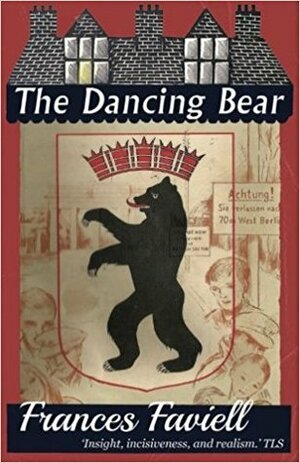
Review 2512: Dean Street December! The Dancing Bear

The rate I’m knocking out books for my A Century of Books project has been slow lately because first I was reading books for Novellas in November (some of which also qualified for ACoB), and I also wanted to read at least a few books for Dean Street December. And I don’t know what I was thinking, but I also put several books for my other projects on my library reserve list, and they have arrived. I must be crazy! Anyway, I read The Dancing Bear for Dean Street.

Although The Dancing Bear is set in time after Faviell’s A Chelsea Concerto, it is actually her first memoir. It covers her time in post-World War II Berlin, where her husband was part of the Occupation. The people in the city are freezing and starving, and even their occupiers are on strict rations of many commodities.

Much of the book is about Faviell’s relationship with the Altmann family. She is being driven in her car when she spots Frau Altmann, an older lady of fragile build, trying to move a heavy cart of furnishings through the streets. Faviell’s German driver thinks it’s hilarious when she falls, but Faviell stops to help her and shames him into helping, too. Despite the dictum not to give rides to Germans, she takes Frau Altmann home in her car.

There, she gets to know Herr and Frau Altmann, two gentle and dignified older people, their daughters Ursula and Lilli, and their sulky son Fritz, a former member of a Nazi youth group against his parents’ wishes. Ursula is the only bread-winner, making money by fraternizing with the British and American soldiers. Lilli, extremely frail, is a ballet dancer.

Aside from descriptions of the living conditions and the changing situation between the Soviet and the other occupiers, much of the story is about Faviell’s relationship with the Altmann’s and with her regular driver, Stampie, who trades on the black market to keep some German families alive.

This is a fascinating account of how some people meet and overcome difficult situations and some don’t. I also wasn’t aware of the conditions in Berlin (although I had heard of the Berlin Flyover) and all the manipulation the Soviets did to try to claim the entire city from their other allies.

Related Posts

A Chelsea Concerto

In the Garden of Beasts: Love, Terror, and an American Family in Hitler’s Berlin

The Oppermanns

Review 2272: The Other Day

The Other Day is Dorothy Whipple’s charming memoir of her childhood in Blackburn, starting when she was very young until she was about 12. She clearly has a vivid memory of such things as her inability to understand when someone was teasing her, the ways she misunderstood things, and her great ideas based on childish misconceptions.

Her experiences of school were especially unfortunate. She was hopeless at mathematics, and her math teacher at her first school ridiculed her mercilessly until she “cheated” by claiming to get two answers right on a quiz. Later, she was entered into a convent school and became confused about what she was told about religion.

Most of her stories, whether happy or not, reflect a happy childhood, especially when the family later takes a cottage. Her memories reflect a lot of humor even though she seems to have been a serious child.

Related Posts

Someone at a Distance

Young Anne

Greenbanks

Review 2156: #1940 Club! The Big Sea

I know nothing about Langston Hughes except he was a Black poet, novelist, and playwright associated with the Harlem Renaissance. For the 1940 Club, I thought it would be interesting to read The Big Sea, his autobiography.

Hughes had a pretty interesting life. Although he was in some ways from distinguished stock and his father was wealthy, his parents split up when he was young and he was very poor for much of his life.

Hughes’s parents split for good after his father took the family to Mexico, and almost immediately there was a big earthquake, so his mother took Langston and left. He was raised mostly by his grandmother in Lawrence, Kansas, while his mother traveled here and there trying to make a living. When his grandmother died, he went to some of her friends, rejoining his mother and stepfather as he got older.

Race is a major theme of Hughes’s life. Most of it was during the Great Migration, so housing for Black people was very expensive and scarce. I didn’t realize that at the time Jim Crow laws were all over the United States, not just in the South. The famous Cotton Club in Harlem, for example, was, as he put it, for white people and gangsters.

Hughes’s book opens when, after a year at Columbia University, he signs on with a freighter as a mess boy. He is excited to set foot in Africa, which he sees as a sort of spiritual home. But he is astonished to find that the Africans don’t consider him, a light-skinned man, to be Black.

Hughes seemed to have no fear and went his own way much of the time, traveling fearlessly, quitting good jobs because he didn’t like them and taking menial ones, splitting from a mentor. The book is interesting, written mostly as a series of anecdotes, but it does not tell much about his personal life. That is, it tells what he does but not much about how he feels or anything about very personal subjects. For example, late in the book, he has a break with Zora Neale Hurston that at least partially has to do with a woman he’s seeing (and partially about differences around a play they wrote together), but he does not otherwise mention this woman or any romantic life.

A few chapters about the Harlem Renaissances are a little boring, just mentioning lots of names, many of which mean nothing to us anymore. Here, he is often too general. For example, he recalls a party where amusing stories were told about the Queen of Romania. Of course, we want to know what they are, but he doesn’t tell us.

Considering when the book was written, there are lots of terms used that for our times are cringe-worthy, especially the constant use of “Negro.” He explains why “Black” (which became more socially acceptable during the 70’s) was not acceptable at the time.

I enjoyed most of this novel, but sometimes the descriptions of things that were popular then, some events, and the wording of things made me squirm. It just reads as very outdated.

Related Posts

The Warmth of Other Suns: The Epic Story of America’s Great Migration

I Know Why the Caged Bird Sings

The Yellow House

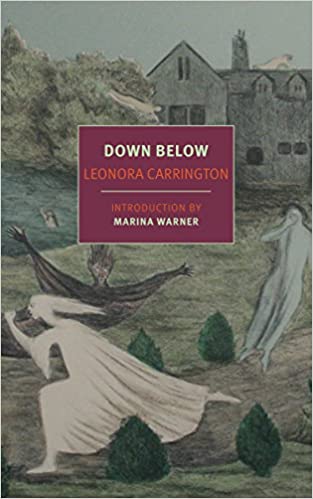
Review 2030: Down Below

Leonora Carrington was a Surrealist artist who for years had an affair with the much-older Max Ernst. During World War II, Ernst kept being imprisoned as an enemy alien in France, and the resultant tribulations broke Carrington’s mental health. As she and some friends traveled to Spain to escape the German invasion, she became disassociated from reality. Down Below is her recollection of her state of mind and thoughts during her break from reality.

Reading this very short work is an odd experience, as Carrington’s delusions seem as surrealistic as any artwork. It also feels elliptical, reticent about the events that brought on her insanity and really about anything personal except her state of mind. It would have been almost impossible to understand without the background provided in the Introduction to my NYRB edition.

It’s pretty crazy. Unfortunately, this breakdown made her a heroine of Surrealism, which must have been personally difficult for her.

Just as a coincidence, shortly after I read this book, I read Julie Orringer’s The Flight Portfolio, about Varian Fry, the man who helped many writers and artists, including Ernst, I think, escape the Nazis. Review coming in a few months.

Related Posts

Suite Française

Grand Days

Warlight

Review 1521: The Yellow House

The Yellow House is not just a memoir. It’s more an excavation of self and belonging. Sarah M. Broom centers her explorations around her childhood home in New Orleans East. She begins with what she knows of her grandparents’ lives and her parents’ before marrying. Then she tells how her mother, Ivory Mae, purchased the yellow house when she was 19, the first house owned by the family.

At the time of the purchase, 1961, New Orleans East was touted as a promising area for expansion of the city. However, this promise never unfolded. The story of the slow crumbling of the neighborhood and house, culminating in Hurricane Katrina, is a symbol of the disenfranchising of all the poor inhabitants of the city, particularly those of color.

Although Broom was living in New York at the time of the hurricane, many of her family members had to be evacuated, and two of her brothers chose to ride the storm out. The storm destroyed the house, but it also rendered the family physically and metaphorically homeless. Almost more excruciating is the catalog of incompetence and obliviousness to the needs of its citizens by the city of New Orleans after the storm.

This is an interesting and eye-opening memoir about the population of the city that is usually ignored, and of course, it has ramifications for all such populations in all such cities.

Related Posts

Educated

A Mountain of Crumbs

Mountains of the Moon

Review 1392: A Very Private Eye

I am not much for reading letters and diaries, because I like story telling, even in nonfiction, rather than glimpses of a life. So, A Very Private Eye, a collection of Barbara Pym’s diary entries and letters, was probably not the best choice for me. Still, a good friend gave me the book, so I decided to read it.

The book was both worse and better than I expected. It begins with Pym’s diary entries as she starts Oxford. In no time, she has embroiled herself with Henry Harvey, who treats her shamefully. Unfortunately, instead of telling him to bugger off like he deserves, she records her heart-rendings, which continue for years.

Next comes a series of letters to Harvey and his wife, and to other friends. I found the letters to the Harveys excruciating. She gives herself the identity of the spinster, Miss Pym, and writes about herself in the third person in a false, jokey tone with constant reminders of her single status. Very obvious. I would think the wife would have been wary.

I was just about to give up on her at around 100 pages in, when the book gets into the war and becomes much more interesting. Similarly, it gets more interesting as she ages, although she refers to a lot of people whose role in her life is not explained. (That would have been helpful, although each section begins with an explanatory introduction by the editors.)

She went through about ten years when no one would publish her books because they were no longer thought to be marketable. Then two prominent literary figures independently listed her as one of Britain’s most underrated authors. Her next books were published, and she was eventually shortlisted for the Booker Prize. I felt it was sad that this happened for her just a few years before she died.

Related Posts

I Know Why the Caged Bird Sings

West with the Night

The Talented Miss Highsmith