Day 583: I Know Why the Caged Bird Sings

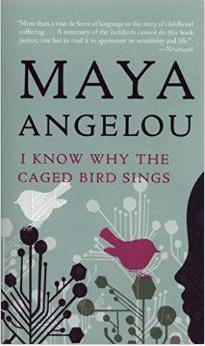
Cover for I Know Why the Caged Bird SingsThe picture on the cover of my old copy of I Know Why the Caged Bird Sings shows an angry and dignified woman, and in some ways this is an angry memoir. Although I’m sure this anger helped sustain Maya Angelou during a difficult life and pushed her to make significant advances for herself and her people, I hope she became happier later. She earned it.

This book is the powerful story of the first 16 years of Maya Angelou’s life. She and her brother Bailey were raised by their grandmother in the small town of Stamps, Arkansas, after being sent there alone on a train from California at the ages of three and four by their parents. Much of the book deals with her upbringing by a strict and religious, somewhat reserved but caring grandmother in the racially segregated South.

Although life in Stamps was no picnic, her brief visit to her mother in St. Louis when she was eight was disastrous. There she was raped by her mother’s boyfriend. That was not the only event in her life that could have proved catastrophic.

Angelou speaks with raw transparency about the feelings of insecurity that she battled through her girlhood, a combination of her treatment by whites and her own feelings of unattractiveness. In her younger years she was saved by her love of reading, later by her own dignity and will to succeed.

This book is deeply involving and at the same time sometimes disturbing reading. I was brought to tears at the description of Angelou’s nearly ruined graduation, not when the pompous white guest speaker put the class in its place, but by how the valedictorian rescued the occasion. I was thrilled when Angelou’s perseverance won her a position, at the age of 15, as the first African-American cable car employee of San Francisco.

I think this story of pride and dignity against bigotry is inspiring for anyone.

Day 555: Mastering the Art of Soviet Cooking

Cover for Mastering the Art of Soviet CookingAlthough Mastering the Art of Soviet Cooking is billed as a memoir, it is written with the help of the author’s mother and begins long before Von Bremzen was born, with the start of the Soviet Union. It is an unusual memoir, tracing as it does the history of the Soviet Union, decade by decade, through the meals cooked by one family.

In an entertainingly wry writing style, Von Bremzen relates the changes in Soviet approaches to government over time and the way these changes affected the populace. She begins by explaining how Lenin’s asceticism nearly eliminated Russian cuisine because of the idea that food was decadent (and hardly any food was available).

Von Bremzen ironically and knowingly traces the history of Soviet Russia through famine and glut, for each decade featuring a dish that seems to represent it (although one decade features ration cards). The recipes are at the end.

Von Bremzen relates her own mother’s history as the rebellious daughter of a prominent Soviet military officer, her mother totally rejecting the party line. Larisa was terrified throughout the Stalinist era and longed to leave the country. Anya, herself with a difficult start as a child not allowed to join the Young Pioneers or visit Lenin’s tomb (things she secretly yearned for), had finally found a comfortable place when her mother dragged her off to Philadelphia.

This amusing book is fascinating for people who are interested in Russia, which I have always been. Darkly funny are the countless contrasts between the official views of the country and Von Bremzen’s descriptions of the actual plight of the population. It is difficult to describe the divided viewpoint of the author, who obviously loves Russia and the 60’s vision of what it was, while at the same time being deeply skeptical of everything about it.

This book is unusual, intelligent, and well-written, about a woman’s attempts to reconcile her feelings about her country and upbringing.

Day 508: Conversations with Myself

Cover for Conversations with MyselfI was deeply disappointed with Conversations with Myself, which reads as if it was thrown together by people who don’t know much about publishing or the interests of readers. It was assembled from notes, diary extracts, letters, and interviews, probably without much interaction with the man himself. (Although it is solely credited to Mandela, it is fairly obvious from some of the notes that it was put together by committee.)

Context is one of the biggest problems with the book, that and organization. Perhaps some attempt was made to order the excerpts by subject or time. It is hard to tell. But except for short notes about where the information came from, no effort is made to explain the context of the excerpts. It is as if the editors of the book are assuming that its readers are intimately familiar with the events in Mandela’s life. He makes a journey, for example, and writes about it in his diary, but there is no introduction about the journey’s purpose.

One of the first things I encountered on beginning to read (besides three typos on the first two pages) was a note that an entry was from a letter to a particular person. The back of the book includes an alphabetical list with descriptions of some of the people mentioned. Naturally, I wanted to understand who Mandela was writing to. But the name was not listed.

Even if it had been listed, the information there is written like an abbreviated biographical dictionary or business résumé—in partial sentences, listing the person’s work positions, accomplishments, imprisonments, with lots of acronyms. When I am reading a book like this, I want to know the person’s relationship to Mandela. I want to read a blurb that gives me some sense of the person. I want to know if someone was Mandela’s friend for many years or a trusted colleague. As an extreme example, sandwiched between Winnie Mandela’s employment history and memberships in various organizations is the bald statement “Married to Nelson Mandela, 1958-96 (separated 1992).” That’s it for Winnie.

Let’s not forget the acronyms and organizations. Between my early attempts to look up names and acronyms in the back and the little information gleaned from doing so, I soon gave up referring to that list. As an example of the type of information offered, the African National Congress is explained in terms of its founding date, the dates it was banned, and its current status. But why was it formed? What are its goals? What has it achieved? Of course, I have heard of it for years, but I really don’t know much about it. Again, context.

This book could have been effective and interesting with more attempts to organize the material, write more informative introductions, and rework the appendix. Instead, it is simply confusing, with a few gems of thoughtful prose. I wish I had read The Long Walk to Freedom instead.

Day 499: Literary Wives! The Zookeeper’s Wife: A War Story

Cover for The Zookeeper's Wife

Here it is time for another Literary Wives club meeting. Please also see the reviews of my fellow “wives!”

If you have read the book and would like to participate, you can add comments to any of our pages or to the Literary Wives Facebook page.

Let’s get right to the book!

The Zookeeper’s Wife tells the true story of Jan and Antonina Zabiński, the keeper of the Warsaw zoo and his wife during World War II. After the bombardment by the Germans and their invasion, the Zabińskis struggled to keep the zoo animals alive, but they were also responsible for providing temporary shelter in the zoo grounds and in their house to hundreds of Jews. Jan, who was a member of the Polish Underground, found ways of smuggling people out of the ghetto, and he and Antonina kept them at the zoo until they could be placed elsewhere, sometimes for a few days, sometimes for longer periods.

The book is rich with details about life in their unusual household, full of animals and of hidden people who came out cautiously at night. It tells stories of lucky escapes and frightening encounters with the Nazis. It also provides information about life in the ghetto and some of its heroic leaders. I found some of these stories extremely touching, such as that of Henryk Goldzmit, a children’s author who went by Janusz Korczak. He abandoned his literary career to found an orphanage for Jewish children, and when the Nazis decided to ship all the children to Treblinka and almost certain death, went with them so they would not be frightened.

Although some of Ackerman’s many digressions from the main story add interest and color to the book, I unfortunately found others disruptive to the flow. For example, she spends more than a page on Jacques Offenbach simply because Antonina played one of his pieces on the piano to warn the hidden residents when strangers approached. Ackerman, a nature writer, spends another very long paragraph just listing the types of bugs in an insect collection entrusted to the Zabińskis. After awhile, these digressions began to feel like padding.

I also felt that Ackerman’s writing sometimes verges a little too closely on fiction. She is prone to rather florid descriptions of things she can only be imagining, often including inapt or odd metaphorical language. Although she introduces the book by saying she got the dialogue directly from Antonina’s diaries, she fictionalizes other things, such as the thoughts of sculptor Magdalena Gross, that could not have come from her sources. This style of writing for a nonfiction subject makes me uncomfortable. In fact, I read this book when it first came out and remembered it as a work of fiction.

What does the book say about wives or the experience of being a wife?

Literary Wives logoIn what way does this woman define “wife”—or in what way is she defined by “wife?”
It is interesting to me that Jan Zabiński describes Antonina at one time as “just a housewife,” because she is clearly so much more than that. She helps him administer the zoo and take care of the animals even before the war. During the war, she takes care of a household of refugees while Jan is out until late most nights and is gone for some extended periods of time. Although he is described as authoritarian and occasionally harsh, he trusts her implicitly to run things and keep everyone safe, even through scary encounters with Nazi officials and drunk soldiers. Although she would define herself as a wife and her husband as the master of the house, it is clear that the two respect each other and trust each other to handle difficult and dangerous situations. Antonina also defines herself as a mother, with the fierce determination to protect her children and her other charges.


Day 492: The Life and Times of the Thunderbolt Kid

Cover for The Life and Times of the Thunderbolt KidThe Life and Times of the Thunderbolt Kid is billed as a memoir, but it is even more a collection of information and odd facts about 1950’s America, each chapter headed by a strange newspaper clipping from the time. This book is one of nostalgia similar to the work of Jean Shepherd, the humorist whose works centered on a slightly earlier time and author of the books that spawned A Christmas Story.

The memoirs bear many similarities to Shepherd’s, possibly because of the similarities in the imaginations and predilections of young boys, although Bryson’s continue on into the 1960’s and lose a lot of their innocence as the boys become obsessed with gaining glimpses of naked women and stealing beer. I’m guessing that a lot of the humor, with its emphasis on body functions and pranks, would be more amusing to men than to women.

Still, I found the book mildly funny. It turns out that I am roughly one month older than Bill Bryson, so I can vividly remember many of the things that Bryson relates as curiosities, clambering under our desks for the absurd air raid drills, for example, or going to view model air-raid shelters. Bryson grew up in Des Moines, a much bigger town than my own, so his memories are a little more urban than mine.

One place where my memory differs from his is in his repeated assertions that the Russians would never bomb Des Moines. When I was in the seventh grade, I distinctly remember being forced to watch an “educational” film during which we were informed that our town was among the top three bombing targets in the country (which is, of course, absurd, but we believed it). My subsequent informal research (occasionally asking people) has lead me to believe that every school child in America was told the same thing.

Readers Bryson’s age can take a brief look back through time in an afternoon of light reading. Younger readers might be surprised at some of the tidbits Bryson has uncovered, but they were no surprise to me.

Day 461: My Life in Middlemarch

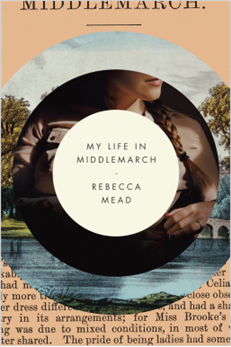
Cover for My Life in MiddlemarchMy Life in Middlemarch is a difficult book to categorize and an unusual effort. It is part memoir, part literary criticism, part literary history and biography, part thoughtful examination. Its focus is on George Eliot’s greatest novel, Middlemarch.

New Yorker writer Rebecca Mead muses about what the novel, her favorite as it is mine, has meant to her during different periods of her life, how different parts of the novel and different characters have spoken to her and how her sympathies with characters and comprehension of the novel’s themes have changed as her life was in its varying stages. She also examines events in Eliot’s own life—how they and the people she knew may have contributed to her works.

This book is about all things Middlemarch. Mead visits the towns and homes where Eliot resided and places where she may have set the novel. She reports on the ways that literary criticism of the novel changed over time—how it was immediately popular and then fell out of favor in later years to be rehabilitated, partially by the appreciation of Virginia Woolf. The book provides interesting insights into the novel and into Eliot’s life and possible thought processes as she wrote the novel.

http://www.netgalley.comFor those who have not read Middlemarch, the book still may hold some interest, but a lot will be lost. To those who have read and loved it, you will probably, like me, be compelled to pick it up again and reread it. I’ll be doing that soon.

Day 451: The Year of Magical Thinking

Cover for The Year of Magical ThinkingThe Year of Magical Thinking is Joan Didion’s candid account of the first year after the death of her husband, writer John Gregory Dunne, and the serious illness of their daughter Quintana Roo (which sadly resulted in her death after the time frame of this book).

The couple had just returned from the hospital, where their daughter’s illness had progressed from flu to pneumonia to septic shock. Dunne died in a manner that was so sudden, falling over forward on his face at the table, that Didion at first thought he was joking.

What follows is an honest description of Didion’s mental functioning and thoughts as she tries to deal with competing traumas in her life—the refusal to believe her husband might not be coming back (she won’t give away his shoes in case he needs them), the constant speculation about what she might have done differently that could have saved him (what if they stayed in Malibu? what if they moved to Hawaii?), the attempt to avoid anything that reminds her of time she spent with her husband. She makes a careful distinction between grief and mourning.

What characterizes this book is the unstinting look at the author’s experience, a willingness to document everything, without avoidance or euphemism. Didion’s intelligence shines through every passage as she contemplates our culture’s relationship with death—for one thing, the harm we have done by ridding ourselves of its ceremonies and even its trappings.

Day 367: Between the Woods and the Water: On Foot to Constantinople: From the Middle Danube to the Iron Gates

Cover for Between the Woods and the WaterBest Book of the Week!

In December 1933, 19-year-old Patrick Leigh Fermor set out to walk from Amsterdam to Constantinople. He wrote about the first leg of this journey years later in A Time of Gifts, ending the book as he crossed a bridge from Czechoslovakia into Hungary. In 1986, he finished this memoir of the second leg of the journey, which begins on that same bridge in Esztergom the evening of Easter Sunday and ends in the early autumn of 1934.

In the second part of the journey, Leigh Fermor breaks his rule of making the entire trip by foot and also spends much of the time in more luxurious surroundings than he did in the first part. As he makes his way through Hungary and the Romanian border, as it was then, into Transylvania, he is passed by his growing list of acquaintances and friends from one kastély to another, spending days with a learned professor discussing languages and history, borrowing a marvelous horse from a count for part of the journey across the Hungarian plain, staying for weeks with a new friend named István in Romania, and dallying with a young married woman on a motor trip with István to Prague.

Leigh Fermor does not spend all his time in such exalted circles, though. He happily camps out with gypsies, spends the night outside a shepherd’s cottage, is hosted by a Jewish family after an afternoon spent discussing the Hebrew language, sleeps in a cave, and camps on an island in the Danube near a village inhabited by resettled Turks. On his way, he describes the scenery in lyrical terms, explains the ancient history of each area he passes through, and tells us about the people he meets and the sights he sees. His chronicle is supported by the notebooks he kept and a nearly photographic memory of a remarkable journey. In addition, he tells us that he revisited some of the areas 20 years later.

This memoir is beautifully written. Although relatively unacquainted with formal learning, having abandoned military school at that early age, Leigh Fermor has an astonishing range of interests, and he tells us all about them. He is constantly plunging into dusty tomes in his hosts’ libraries but is just as ready to dance and drink the night away. This is a delightful series of books, still full of the youthful joy and enthusiasm Leigh Fermor must have felt when he was 19 and 20 years old.

In the Appendix to this book, Leigh Fermor reflects on how many of the sights he writes about in this book are now under water, for the Danube valley that he traversed and the torrents and currents that once rushed along it as well as the Iron Gates themselves have been subsumed by a huge concrete dam and hydro-electric power plant. And of course there have been other causes of destruction since 1934.

Unfortunately, The Broken Road, the unfinished manuscript of the final portion of the journey, is being republished but is not available from Amazon until March of next year! (It may be available used from some other site.) I am so disappointed to find the book never gets us all the way to Turkey but stops in Greece.

Day 335: A Time of Gifts: On Foot to Constantinople: From the Hook of Holland to the Middle Danube

Cover for A Time of GiftsIn December 1933, nineteen-year-old Patrick Leigh Fermor set out alone on a great adventure, a walking trip from Amsterdam to Istanbul, or as Fermor still called it, Constantinople. (It was renamed in 1930.) He had no idea when he left that he would not return until 1937. In 1977, he collected his notebooks from the trip and wrote A Time of Gifts and its sequel Between the Woods and the Water.

Although Leigh Fermor had one notebook stolen from him with all the rest of his gear, he otherwise must have kept careful account and his memories of the trip must still have been vivid, for the result is an entrancing account of scenery and architecture, tales of chance encounters, glimpses of foreign customs and celebrations, and so on. Jan Morris, who wrote the introduction, calls him “one of the great prose stylists of our time,” and Wikipedia, quoting an unnamed British journalist, “a cross between Indiana Jones, James Bond and Graham Greene,” presumably for his work with the Cretan resistance in World War II as well as his writing. (He was also a friend of Ian Fleming.)

From his drinking bouts with Dutch barge men to his extended stays in various German, Austrian, and Czech castles, Leigh Fermor plunges enthusiastically into every experience on offer. At one moment he is sleeping in a barn, in the next hanging out with fashionable youth in Vienna. Along the banks of the Danube he is mistaken for a 50-year-old smuggler. All of these adventures as well as his observations of nature are described in beautiful, evocative prose. To add interest to the modern reader, he is describing a Europe that no longer exists.

If I have any complaint, it is one of my own education, for Leigh Fermor’s writing assumes for his audience a familiarity with classical culture that is no longer common. The book often alludes to mythology and refers to obscure historical events that I do not fully understand. Finally, in the footnotes, which are Leigh Fermor’s original ones, all utterances in modern languages (some of which I could have taken a stab at) are translated, but the quotations in Latin are not. They are not integral to comprehension, but it is a little frustrating to be unable to understand them. (Of course, I could have googled them, but I was almost always reading this on the bus.) That being said, I look forward to reading the sequel.

Day 283: My Alsace

Cover for My AlsaceDuring a visit to Alsace several years ago, I was fascinated by this book, especially by the pictures, but I could only find it in French. Then, awhile back, I found it on Amazon in English.

My Alsace was written by Hansi (Jean-Jacques Waltz), a beloved Alsatian poster and children’s book artist who grew up in the late 19th century under German occupation. In the 19th and early 20th centuries, the region of Alsace, which identifies itself as French, changed hands between Germany and France four times. In the German school at Colmar as a boy, Hansi only learned about the great Prussian victories and the defeat of Alsace in his history classes. He deemed this period the worst in his life and wanted Alsatian children to know that Alsace has a prouder history.

My Alsace is a selection from the history he wrote in 1912 and some writings from after World War I. The latter section of the book goes on to tell about the trouble he got into with the German authorities during World War I because of his jokes about Germans in the earlier book. He was originally fined and later he was given a year’s prison sentence for insulting a German officer. He published the latter part of the book in 1919 to celebrate the region’s liberation from the Germans.

Hansi’s drawings are wonderful. He was well known for his pictures of Alsatian villages, people in traditional costumes, and celebrations of Alsatian life from an earlier time. The text is amusing, although it is full of anti-German satire. Written for children about eight years old, it is also entertaining for adults.