Day 785: All Aunt Hagar’s Children

Cover for All Aunt Hagar's ChildrenAs in his wonderful novel, The Known World, Edward P. Jones attempts to depict an entire community in the short stories included in All Aunt Hagar’s Children. This goal is more difficult to accomplish, because the community is a much larger one—the African-American citizens of Washington, D.C.—and the stories take place over much of the 20th century.

Several of the stories have to do with the migration of the characters from the rural South to the city. In “In the Blink of God’s Eye,” Ruth and Aubrey Patterson are a hopeful young couple from across the river in Virginia at the turn of the 20th century. Ruth, though, is homesick, and when she finds a baby boy in a tree one night, Aubrey becomes jealous. This story is first in the collection, but the last story echoes it. Anne Perry, of rural Mississippi, meets George Carter, a sleeping car porter, and moves with him to Washington. In the story “Tapestry,” Jones uses a technique he also employed in The Known World where he breaks off to tell Anne’s entire life. But he twice tells what her life might have been had she married a different man.

The emphasis on rural roots is also important in “Root Worker.” Dr. Glynnis Holloway’s mother has been treated for mental illness for years until her care worker, Maddie Williams, talks the reluctant doctor into consulting a root worker, a wise woman. In the rural North Carolina setting under the care of Dr. Imogene, her mother improves, and Dr. Holloway surprises herself by apprenticing herself to Dr. Imogene.

Another strong theme is that of moving into the middle class. It pervades many of the stories but particularly “Bad Neighbors.” When Sharon is in high school, her family has made it to the middle class, but they are disturbed when the Staggs move in across the street, for they are not considered respectable enough. Sharon’s father is responsible for encouraging the neighbors to club together to buy the Staggs’ house so they can evict the family. Years later, Sharon realizes some truths when she is saved by Terrance Stagg.

Perhaps the thread I least identified with was the presence of folk lore as if it were real, a sort of magical realism. For example, in “The Devil Swims Across the Anacostia River,” Laverne spends a lively afternoon at the grocery store fending off the devil. Years ago, her grandmother got away from him by wading into the Atlantic Ocean to go to heaven.

Although overall, the stories are not as effective as the novel The Known World, they are compassionate to even the lowest of their characters. I particularly found touching “Adam Robinson Acquires Grandparents and a Little Sister,” about Noah Robinson, whose grandson Adam was lost after his drug addict parents abandoned him. The little boy is found, illiterate and frightened, and Noah faces a future of raising his grandchildren instead of the carefree retirement he envisioned.

Related Posts

The Known World

Family Furnishings

Unaccustomed Earth

Day 700: Some Luck

Cover for Some LuckSome Luck begins in 1920, five months after the birth of Frankie, Walter and Rosanna Langdon’s first child. They have only been settled on their own farm a short while.

This novel is the first of a trilogy about the Langdons, an Iowa farm family. It covers a turbulent 33 years, during which occur the Great Depression, the long drought, and the Second World War.

Most of the novel concentrates on the Langdon children. Frankie is active and always into trouble. He teases his younger brother Joey unmercifully. Joey is gentle and good with animals, dutiful and obedient. Lilian is angelic looking and well behaved, good at taking care of the younger children but a bit prissy. Henry is self-contained and spends as much time reading as possible.

It is hard to describe this novel. It moves constantly from character to character in viewpoint and has no main character, but is more like an ensemble piece. The action that takes place is mostly that of everyday living, although there are births, deaths, and weddings. Rosanna goes through a religious phase after one child’s death and drags the family to a fundamentalist church for several years and then stops.

Smiley’s characters are very human, with faults and foibles. So far, this trilogy is developing slowly, but the family’s lives make interesting reading.

Related Posts

A Thousand Acres

The All-True Travels and Adventures of Lidie Newton

Gilead

Day 616: The Rathbones

Cover for The RathbonesBest Book of the Week!
The Rathbones is a strange and wonderful novel, part gothic mystery, part magical realism, about a whaling family in the 18th and 19th centuries. Mercy Rathbone is a girl, the last of a mysterious family. She lives in a massive house only partially built that used to house dozens of people. Now only her aloof mother lives there with her and her cousin Mordecai—who stays in the attic and acts as her tutor—and a few servants.

Mercy has vague memories of a brother that her mother and cousin tell her never existed. She has not seen her father for more than ten years, although packages from him occasionally arrive. She is curious about the family portraits in a gallery, all with the names removed. She knows the names of her mother and father but has no idea who her grandparents were, or how they related to Moses, the patriarch of the family.

One night Mercy is attracted by the sound of a boy singing and ventures into a part of the house where she is not allowed, the widow’s walk where  her mother goes every night. There she witnesses her mother being embraced by a strange man, and that man chases her through the house. She finds refuge with Mordecai, and the two decide to go to sea to find her father. They flee in a little dory, pursued by the strange man.

So begins a wonderous adventure, where they encounter an island occupied only by old ladies; an island of rich, eccentric cousins with a massive collection of furniture and art; an island of birds occupied by a woman who only speaks bird language. At each stop Mercy learns more about the odd and sometimes grotesque history of her family, many of whom have a magical affinity for the sea.

I do not usually enjoy magical realism, but with this novel I loved never knowing where the story would go. It is an odd one, certainly, and probably not for everyone, but it is imaginative and unusual.

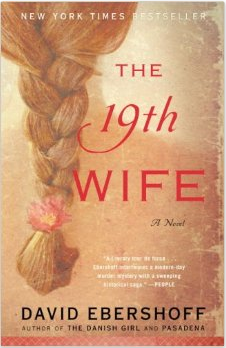
Day 612: The 19th Wife

Cover for The 19th WifeBest Book of the Week!
The 19th Wife is actually two interleaved novels, one as interesting as the other. The novel that begins the book is a modern mystery. The novel that dominates the book, however, is historical, about Ann Elizabeth Young, Brigham Young’s 19th wife, whose lectures after she left the Latter-Day Saints were partially responsible for ending the authorized practice of polygamy within the church.

In the modern story, Jordan Scott is a young man who grew up with the Firsts, a fundamentalist Mormon group that still practices polygamy. At the age of 14, Jordan was booted out on his own because he held his stepsister Queenie’s hand. Jordan’s intentions were not amorous, because he is gay, but he realizes that the young men are ejected from the group so that the old men can keep the young girls for themselves.

Jordan is living in California when he reads that his father has been murdered and his mother, Becky Lynn, arrested for it. As his mother is a complete believer who actually dumped him out on the highway herself those years ago, he does not believe she murdered his father. The evidence against her is that another wife saw her coming from their husband’s room looking upset. Jordan’s father was texting someone just before he was killed and remarked that his 19th wife was at the door. That wife is Becky Lynn.

While Jordan tries to find out what happened that night, we read the story of Ann Elizabeth Young, a woman born into the Church of Latter Day Saints but who has always been clear on the evils of the practice of polygamy. This story is told through fictional excerpts from her autobiography, newspaper clippings, statements by Brigham Young, and other documents.

Ann Elizabeth begins with the story of how her own parents, once devoted to each other, were forced into polygamy by Brigham Young, and what pain it caused her mother every time her husband took another wife. This pain was amplified by the hypocritical ruling that the first wife had to accept all future wives into the household before further marriages could take place. Ann Elizabeth’s own first marriage is also marred by threats of polygamy, which her husband uses to manipulate her despite having promised before marriage not to practice it.

Well written and convincingly characterized, this novel is absolutely engrossing. Although I found the modern mystery interesting in its insights into fundamentalist Mormonism as currently practiced, I found the story of Ann Elizabeth’s life even more compelling. Ever since reading Jon Krakauer’s Under the Banner of Heaven, I have been fascinated by this subject.

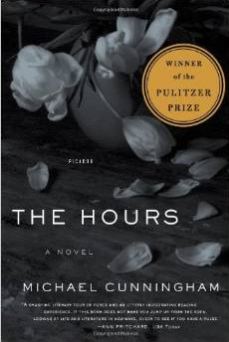
Day 539: The Hours

Cover for The HoursBest Book of the Week!
One of our Pandora channels repeatedly plays Philip Glass’s music from the movie soundtrack of The Hours. So, as soon as I began reading it, the intricate notes of the score became a mental accompaniment to the novel. That is, I got an ear worm.

I came to the novel with the slight disadvantage of being unfamiliar with Mrs. Dalloway, having been traumatized by To the Lighthouse in a college English class. But you don’t have to be familiar with it to appreciate this lovely, cleverly constructed novel, an homage to Woolf’s own.

The novel begins with Virginia Woolf’s suicide. But later it returns to 20 years before, when she is writing Mrs. Dalloway.

First, though, we meet a middle-aged woman, Clarissa Vaughn, whose best friend calls her Mrs. Dalloway. Like her namesake, Clarissa is eagerly going out into a crisp, clear morning to buy flowers for her party. This is New York, though, in the late 1990’s, and Clarissa’s party is for her dearest friend Richard, a poet who is dying of AIDS. He has recently been chosen to receive a prestigious prize for poetry, and the ceremony is that night.

Back in 1920’s Richmond, England, Virginia Woolf is trying to decide the plot of Mrs. Dalloway. Someone will die, she thinks, but will it be Mrs. Dalloway herself? Woolf also copes with her own fears about her mental state, her yearning to return to living in London, and a visit from her sister Vanessa Bell.

In 1950’s Los Angeles, Laura Brown struggles with being a suburban housewife and mother. Although she loves her husband and small son, she feels unsuited to this life.

Cunningham presents us with three stories, and a theme of threes recurs. Woolf has bouts of mental illness, Richard suffers from dementia caused by his illness, and Laura is struggling with depression. The jellyfish shapes and voices of Woolf’s migraine visions appear in Richard’s episodes of dementia. And Laura briefly sees a grayish jellyfish cloud floating over her son’s head. A forbidden kiss and the color mustard feature in more than one story. And other links that I will not name are more intrinsic to the plot. The three stories are so cleverly interwoven, we’re not sure if the events of one cause the events of the other.

This is a novel of astonishing beauty, cleverly constructed and entertaining. I’m going to find a copy of Mrs. Dalloway.

Day 482: The Map of Love

Cover for The Map of LoveBest Book of the Week!
The Map of Love is an absorbing novel to read now, just after the Arab Spring and during the troubled times that have continued on. It is a love story certainly, its title tells you that, but it also explores the roots of the political turmoil in present-day Egypt and some of the other countries that used to be a part of the Ottoman Empire.

The novel follows the course of two cross-cultural love affairs 90 years apart. In 1900 Anna Winterbourne travels to Egypt in an attempt to overcome her grief. She is the widow of a man who recently served in the Soudan, and even though their marriage was not a happy one, she is sorrowful that she could not help him overcome his despair at participating in an unjust war. Almost accidentally, she meets Sharif al-Barroudi, a Cairo lawyer and activist, and falls in love with him.

Anna’s diary and letters are discovered by her great-granddaughter, Isabel Cabot. Isabel herself has fallen in love with ‘Omar al-Ghamwari, a famous Egyptian-American orchestra conductor who is rumored to work with the Palestinians. ‘Omar feels that their age difference is too great for a relationship, but he suggests that Isabel take her find to his sister Aman in Cairo so that she might help Isabel translate some of the materials.

Aman becomes absorbed in reading Anna’s diaries and letters and realizes very soon that she and Isabel are related, for Anna’s beloved sister-in-law Layla is Aman’s own grandmother. With Layla’s diaries of the same time period, she begins to reconstruct Anna’s story and that of Egypt’s history during a turbulent period. Aman has returned from life abroad to live in Cairo in another turbulent time.

Anna’s courtship is fraught with difficulties, but once she and Sharif are married, she is caught up in his work for Egyptian independence from the Ottoman Empire and from British oversight. As the years go by, his efforts extend to attempts to keep Palestinian land, once owned by his family and by his neighbors and occupied by hundreds of thousands of Muslims, from being bought up by Zionists who would expel them.

The blurb for this novel stresses the similarities between the two love stories, and there are many points of similarity, but the focus of the story in the current time is more with Aman than with Isabel and ‘Omar. Aman is at first at loose ends in Cairo, but she becomes involved with trying to help the fellaheen who occupy her family’s land, as they are treated unjustly by a corrupt and paranoid government. I was frankly more interested in Aman and in Anna and Sharif than I was in Isabel and ‘Omar, who are much less present in the novel.

For me, not very politically aware in regard to problems in this part of the world, this was a fascinating and revealing reading experience. It points up the complex history of the area from a point of view we westerners seldom hear. It is affectingly told in the context of a great love affair between two lovingly created characters. The characters of the two sisters, Layla and Aman, are also vivid. This novel is beautifully written and evokes for us a vibrant culture.

Day 358: People of the Book

Cover for People of the BookBest Book of the Week!

I read People of the Book several years ago and remembered that it was good, but when re-reading it for my book club, I enjoyed it even more. The novel is based on the history of a Hebrew codex known as the Sarajevo Haggadah. Part of the novel is envisioned based on what is known of the book’s history, while the rest is invented.

In the immediate aftermath of the Bosnian war, Hanna Heath, an expert in the restoration of old books, is asked to restore the priceless Sarajevo Haggadah, a famous book believed twice to have been destroyed by war that was both times rescued by Moslem museum curators. The book is especially important because of its beautiful illustrations, as before it was discovered, scholars believed that old Hebrew books did not contain such illuminations.

While Hanna is working on the book, she makes observations and collects artifacts that will help trace its history. She notes that the book once had clasps that are now missing, collects an insect wing, and scrapes residue from staining.

Hanna also becomes involved with the man who rescued the book, Ozren Karaman, whose wife was killed during the war and whose baby son is in the hospital with a brain injury. As Hanna was raised by an aloof and competitive mother, though, she is poor at forming attachments.

When Hanna finishes restoring the book, she follows up with research into the clasp and the artifacts she collected. As she finds out about each item, the novel goes farther back in time, explaining what happened to the book and telling the stories of the people involved with it, until the creation of the book in 15th century Spain.

A poor Jewish girl named Lola works for the partisans in the forest outside Sarajevo during World War II after the Jews are expelled from the city by the Nazis and her family is shipped off to camps. Later she is helped to safety by the Moslem curator of the museum, who also has a book to hide. A 19th century Viennese bookbinder who is dying from syphilis steals the beautiful silver clasps from the book to exchange with his doctor for treatment. In 1609 Venice, a priest working for the Inquisition saves the book from burning but confiscates it from its owner. A young girl saves the book as the Jews are expelled from Spain in 1492.

These are just the bones of some of the absorbing stories that draw you along as Brooks imagines the history of the book. Each tale is vividly imagined and skillfully told, and they are all held together by Hanna’s experiences. People of the Book is a gracefully written and imaginative novel that emphasizes the contributions of multiple cultures and religions to the book’s creation and safety.

Day 257: Galore

Cover for GaloreA whale comes ashore at the remote coastal town of Paradise Deep, Newfoundland, in the early 19th century. The people, who have been starving all winter, come out to scavenge what they can of the meat. When Devine’s Widow, an old Irish “wise woman,” cuts open the belly of the whale, a man falls out, pale as an albino, mute, but still alive. Although he stinks like a fish, the Devine clan gives him room in a shed and calls him Judah. Nevertheless, he is treated with dread and superstition until he goes out fishing one day with Colum Devine and they take a huge load of fish in waters that have been barren that season.

The Devines have been at odds with the powerful King-Me Sellers since he proposed marriage to a young Irish bondswoman years ago and she refused him rudely, then went off to marry Devine, practically the first young man she met. Their relationship was not improved years later when King-Me’s daughter Lizzy married Colum Devine.

When King-Me’s spite turns against Judah, the only way the Devines can save him is by marrying him to Mary Trephyna Devine, Colum and Lizzy’s daughter and King-Me’s granddaughter.

Michael Crummey’s multigenerational novel captures the relationships between these two families along with the history of the town, with all its eccentric characters, ghost stories, myths, and tall tales. The novel is fascinating, unusual, and beautifully written. I don’t usually enjoy magical realism, but in this novel it is handled so well that I accepted it and was engrossed in the story. Galore is probably unlike any novel you are going to read, although in its focus on a sea-going people and its occasional feel of a sea tale, it reminds me a bit of We, the Drowned  by Carsten Jensen.

Day 249: The Physick Book of Deliverance Dane

Cover for The Physick Book of Deliverance DaneBest Book of the Week!
Connie Goodwin has just passed her orals in history at Harvard and is one thesis away from her doctorate when her advisor, Manning Chilton, challenges her to find an undiscovered primary source on which to base some subject about Colonial America. She is almost immediately side-tracked in her research by a request from her mother to sort out her grandmother’s long-abandoned house in Marblehead and sell it to pay off back taxes.

Connie finds a very old, filthy house with a gate so overgrown with vines that it’s hard to find the house. Almost immediately she has a few odd glimpses, as if she can vividly picture her grandparents and other people in the house.

While sorting through the objects and papers in the house, she finds evidence of a woman named Deliverance Dane, who was found guilty of witchcraft in the Salem trials and left behind a “recipe” book, possibly of spells. Chilton immediately begins putting pressure on Connie to find the book, as it could provide the first evidence that people were actually practicing witchcraft at that time in Massachusetts. As Connie searches for the book, she makes some astonishing discoveries about her family and herself.

Back in the 17th century, Deliverance Dane, a wise woman or healer, is called to attend a child she cannot save. When the child dies, her father accuses Deliverance of satanism.

Some small things at the beginning of the novel irritated me. In laying the foundation of some basic history, I think Howe condescends to the reader a bit too much. For example, she finds occasion to tell us what a familiar is. Although many people may assume that all familiars are cats and find out differently from this novel, I would be surprised if people didn’t know what they were, if only from remembering their grade school lessons about the Salem witch trials. But perhaps I’m wrong.

There are also a couple of instances where Connie takes awhile to figure out something that she, as a graduate history student, should already know. For example, she doesn’t immediately know that “receipt” is another word for “recipe,” and then she has to explain this term to her professor, supposedly an expert in Colonial America. I am no historian or even generally interested in this period of history, but I knew immediately what the word meant. She does the same thing with figuring out that “Deliverance Dane,” mysterious words on a piece of paper, is someone’s name, as if in all her studies of the period she never encountered such an unusual name.

It is also very easy to see where the novel is going and who will turn out to be a villain. However, I still found it interesting enough to regard it as a strong first novel, especially if you enjoy the mixture of historical fiction and the supernatural. The characters are believable, and both story lines kept my attention. The historical portion seems solidly researched.

And I won’t mention the tomatoes, because it’s just too picky.

Day 169: The Distant Hours

Cover for The Distant HoursKate Morton has been one my favorite authors ever since I read The Forgotten Garden, which is still my favorite of her books. The Distant Hours is another of Morton’s atmospheric novels about family secrets.

When a letter posted in 1941 finally reaches its destination in 1992, Edie Burchill is surprised at the emotional reaction of her usually cool mother. She finds out for the first time that her mother was an evacuee during World War II at the home of Raymond Blythe, the author of Edie’s favorite childhood book, The True History of the Mud Man.

Later, after Edie has been asked to write an introduction for a reprint of Blythe’s classic, she gets lost meeting a potential author and accidentally finds Milderhurst Castle, the once stately but now crumbling home of the Blythes. Living there are the Blythe sisters, Percy, Saffy, and the invalid Juniper. In a way, too, the house is still occupied by the memory of their overbearing father.

The novel alternates between the present time and 1941, as we discover what happened during one night in 1941 that has haunted the family ever since. Morton is deft at creating a compelling atmosphere in the moldering castle and in keeping her readers in suspense.

Morton’s latest book, The Secret Keeper, is due out in October. I can’t wait to get my copy!