Day 744: The Child Garden

Cover for The Child GardenI have long been a fan of Catriona McPherson’s light-hearted historical mysteries featuring Dandy Gilver, but I wasn’t aware that she had written some darker contemporary mysteries. For me, dark is always good.

At 40, Gloria is in a somewhat dowdy middle age, her life completely taken up by work and care for her severely handicapped son Nicky. Nicky will die soon, she knows, and her greatest fear is that her friend old Miss Drumm will die before he does, so that Gloria will lose her home in Miss Drumm’s cottage and have to move Nicky to care in a less expensive facility.

Gloria is driving home one stormy night from visiting Miss Drumm and Nicky in the care home when another car almost runs into her on the deserted roads near her remote cottage. She has just arrived home when the driver comes to the door and she finds he is an old friend from primary school, Stieg Tarrant.

Stieg  has a favor to ask. He says he has been stalked by a woman from his school days, April Cowan. Long ago, when he and April were in the school named Eden nearby in what is now the care facility, a boy died on an overnight camping trip on school grounds. Hinting that she knows something about the death, April has demanded Stieg meet her in a small building on the grounds, and Stieg wants Gloria to go with him. When they arrive there in the pouring rain, they find April’s dead body. Their first instinct is to tell the police, but Gloria panics, worried that a body in the grounds would result in the care facility being closed, just as Eden closed after Moped Best fell off the bridge years ago.

They go back to Gloria’s cottage, where Stieg admits that he had already found the body before he fetched Gloria. After some discussion of the circumstances of April’s death, Gloria thinks April for some reason tried to frame Stieg for her own suicide, so she has Stieg stay at her cottage while she goes back to the body. The body is gone.

When Gloria tracks down April’s address and goes to her house, she finds the police already there. Soon, it becomes clear that someone is trying to frame Stieg for April’s murder. Gloria can’t help but think there must be some connection to Moped’s death. Sure enough, when she begins trying to track down the other 11 people who were children on the camp-out, most of them have died.

link to NetgalleySet in the atmospheric countryside of Scotland, this novel is a real page-turner. As Gloria and Stieg investigate, the secrets start to come out, and Gloria even finds herself discovering the truth about her own marriage and ex-husband, who also attended the camp-out. I see there are some more McPherson books I haven’t read yet, and I’ll be looking for them.

Related Posts

The Map of True Places

Nightwoods

Echoes from the Dead

Day 741: Seven for a Secret

Cover for Seven for a SecretSeven for a Secret is the second fantastic Timothy Wilde historical mystery by Lyndsay Faye. The series is set in 1840’s New York City. Wilde is a member of the newly formed copper stars, the city’s first police force.

It is Valentine’s Day, and Timothy and his colleague Jakob Priest are celebrating having solved an art theft when a beautiful woman of color comes looking for him at the station house. She is Lucy Adams, and she has just returned home from her job at a flower shop to find her son and sister missing. She knows exactly what happened to them. “Blackbirders” have snatched them to sell down south as escaped slaves, even though they are free.

Timothy asks his brother Valentine to go with him to get them back. Although Valentine is a corrupt Democratic party boss and a drug addict, he’s a good man in a fight. Timothy, his African-American friend Julius, and Valentine retrieve the three from the slavers, Varker and Coles, but not without a fight. The two women and little boy need somewhere safe to stay until Lucy’s husband returns, so Valentine offers them the use of his apartment.

Something is going on that is more complex than he understands, for when Timothy goes searching for Lucy’s husband, he finds that Lucy isn’t married to Charles Adams, a white salesman, as she thinks she is. She may or may not be married, but her “husband” is a Democratic senator for New York state.

Coming to see Lucy and her family a couple of days later, Timothy finds Lucy strangled and the room disrupted. Timothy is an honest police officer but he knows a frame job when he sees one. He has just finished removing the body and cleaning up when an enemy, Sean Mulquean, another copper star, arrives to investigate a reported disturbance. Timothy also soon learns that Varker and Coles have kidnapped Julius, so he must hurry to court to try to free him before he can look for Lucy’s sister Delia and son Jonas.

Faye’s historical setting of gritty 1846 New York is absolutely convincing. We like Timothy more the more we see him, and Faye is beginning to build a solid cast of supporting characters. This is a well-written, swift-moving, suspenseful series. At almost 500 pages, the novel is long for a mystery, but it didn’t seem like it for a second. Unfortunately, I have just learned that there is only to be one more in the series, and that one is waiting in my pile to be read.

Related Posts

The Gods of Gotham

Dust and Shadow

The Pale Blue Eye


Day 737: The Hog’s Back Mystery

Cover for The Hogs Back MysteryThe Hog’s Back Mystery is another Golden Age mystery featuring Inspector French. This mystery is much more elaborate than Antidote to Venom, the other Crofts mystery I read, featuring four murders, and is set in rural Surrey.

Ursula Stone has arrived at the railroad station in Ash to visit Julia Earle and her sister Marjorie Lawes, her schoolmates from long ago. The first part of the novel is from Ursula’s point of view, and she is surprised to see how distantly Julia treats her husband James, a retired doctor. She is also a little shocked to see how casually Julia behaves with an infatuated neighbor, Reggie Slade.

Ursula is off visiting her friend Alice Campion when James Earle disappears. Both sisters testify that he was settled down in his den for the evening when they last saw him. He was dressed only in thin shoes suitable for inside and did not take his overcoat.

Inspector French is called in when James doesn’t reappear and no one can discover a trace of him. Soon afterwards, French finds that a nurse also went missing around the same time. Her name is Helen Nankivel, and French at first supposes Earle and the nurse have run off together. But the people who know Helen Nankivel insist that she wouldn’t do such a thing. However, she did meet Dr. Earle when they both attended the last illness of Mr. Frazer, a wealthy old man.

French explores many theories, but he is just about to decide that Earle ran off with Nurse Nankivel when Ursula Stone disappears, under remarkably similar circumstances. She was upstairs in her room at the Earles’ while Julia and Marjorie entertained the Campions downstairs. Later, when summoned for dinner, she was nowhere to be found. But Mr. French finds evidence that someone was standing behind a bush outside the den and finds blood in Earle’s den.

link to NetgalleyLike many Golden Age mysteries, The Hog’s Back Mystery a complicated solution. In fact, it is so complicated that it must be explained in a 20-page last chapter, which makes the novel lose quite a bit of impetus. Still, I was able to guess the broad strokes of the solution very early on by simply paying attention to what her friends said about the nurse. It took French a good hundred pages to catch up with me. So, not the best of these reprinted mysteries by Poison Pen Press, but I love the cover.

Related Posts

Antidote to Venom

The Tiger in the Smoke

Brat Farrar

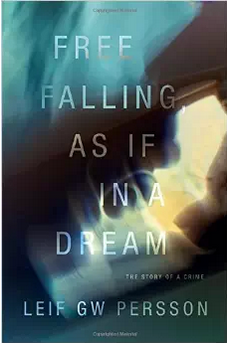
Day 735: Free Falling, As If in a Dream

Cover for Free FallingWith the last book in the series Leif GW Persson calls the Fall of the Welfare State, he finally, as promised, gets to the actual assassination of Swedish Prime Minister Olof Palme in 1986. The novel begins in 2007, when Chief of the National Bureau of Criminal Investigation Lars Martin Johansson (whom we have met in the two previous books) decides it is about time someone solved Palme’s murder.

Most Swedes believe the murderer was a madman named Christer Petersson. But Johansson doesn’t believe this, and he has brought together a team of Superintendent Anna Holt and Chief Inspectors Lisa Mattei and Jan Lewin to try to solve the crime before the statute of limitations expires.

This excellent police procedural, like the others in the series, is based on actual events and written by the man considered the foremost expert on crime in Sweden. To see if anything was missed, the detectives laboriously untangle the threads of various “tracks,” or theories of the crime, that were followed during the original investigation. Almost immediately they find evidence of a witness that may indicate the assassin took a different escape route than prevously believed. The witness’ testimony was discounted because she was a drug addict and prostitute. Although struggling with difficulties of an unofficial case and long-dead witnesses, the detectives make impressive strides.

In the meantime, Johansson explores the perilous channels of political intrigue, for Persson’s novel makes an almost perfect combination of political thriller and police procedural. In this novel, we encounter some of the people whose exploits were featured in the previous two, including the ridiculous buffoon Bäckström, who thinks every crime has to do with money or sex, and the dangerous Waltin, long dead but important to the case.

This is an excellent series. Its political ramifications are similiar to those of the works of Stieg Larsson. It is well written, sometimes funny, and also compelling.

Related Posts

Between Summer’s Longing and Winter’s End

Another Time, Another Life

The Girl with the Dragon Tattoo

Day 734: The Sun Is God

Cover for The Sun Is GodI have just become aware of the work of Adrian McKinty, said to be one of the best Irish crime novelists. The Sun Is God is set in New Guinea in 1906 and is based on an unsolved true crime.

Will Prior is a failing plantation owner in German New Guinea when his friend Lieutenant Kessler comes to request his assistance. Will is a former British military police officer who left the service after a massacre of rioting prisoners in South Africa. Kessler has come to ask him to help investigate a possible murder on a nearby island.

The island is occupied by a cult of mostly German nudists who call themselves Cocovores. They eat only coconuts and bananas and are sun worshippers. The pilot who brought Max Lutzow’s body back to Herbertshöhe, the regional capital, was told Lutzow died of malaria. But an autopsy reveals that he drowned.

Prior and Kessler are dismayed to find that they are expected to take a woman along with them on the investigation, Bessy Pullen-Burry, a travel writer. She is coming as a representative for Queen Emma.

The investigation seems to go nowhere almost immediately. Although the autopsy indicates otherwise, all the Cocovores tell the same story of malaria. The only discrepancy is whether Ann Schwab was with Lutzow right until he died. Yes, the investigators are surprised to find three women among the nudists, whom they had understood were all men.

Even though the investigation seems to stall, hampered by the islanders’ consumption of high-grade Bayer heroin, which they believe to be nonaddictive, Will grows worried about his party’s safety. They are not finding any evidence, but something is wrong, and they only have one opportunity a day to leave the island.

This novel is very well written and compelling, although it suffers from the feeling that no investigation is going on. So many men are on the island that I had difficulty keeping track of them and didn’t get much of a sense of their personalities. Still, the setting and situation are atmospheric and there’s a surprising shift of point of view at the end.

Related Posts

The Luminaries

The Bone People

Arcadia

Day 731: Antidote to Venom

Cover for Antidote to VenomIn this Golden Age mystery written in 1938, Freeman Wills Crofts had the goal of showing both the murder and the investigation. The result is a fascinating psychological mystery.

The first section of the book shows how George Surridge becomes involved in a murder. A mental degradation begins because of monetary difficulties caused by gambling and his attraction to a young woman who is not his wife. He is his elderly aunt’s heir, but when the thought occurs that it would help if she died faster, he pushes that idea out of his mind, thinking that he doesn’t wish her harm.

When his aunt, Miss Lucy Pentland, dies, he feels his troubles are over. His girlfriend loses her job as a companion around the same time, so he anticipates his legacy by buying her a cottage. By coincidence, his aunt’s affairs are being handled by David Capper, the nephew of an old gentleman doing research on snake venom at the Birmingham Zoo, where George is director. But when George visits Capper to find out about his inheritance, Capper admits to having stolen it and lost it all.

George is ready to go to the police, but Capper tells him then he won’t ever see his money if he does so. However, if George would help him with one little thing, the murder of his own uncle, he will get his money. All George has to do is steal a venomous snake from the zoo.

link to NetgalleySo, we see how George is slowly drawn into being an accomplice to murder. The rest of the novel shows how Chief Inspector French first recognizes that the crime is a murder and then solves it.

Although the murder involves a complicated device I couldn’t make hide nor hair of, for a Golden Age mystery it is fairly uncomplicated. I enjoyed this introduction to Croft’s work.

Related Posts

Behold, There’s Poison

At Bertram’s Hotel

Unnatural Death

Day 721: Death in Brittany

Cover for Death in BrittanyI selected this book just because of its setting, and it certainly makes an effort to impart the scenery and atmosphere of Brittany.

Commissaire Georges Dupin is originally Parisian, but he is enjoying his relocation to Brittany. He is sitting in a cafe with his morning coffee when he is summoned to Pont-Aven, where the 90-year-old owner of the Central Hotel was stabbed to death in the bar. It was Pierre-Louis Pennec’s habit to spend the evening there, sometimes with other people, sometimes alone. The death happened after the restaurant was closed.

No one at the hotel reports anything unusual. Pennec’s life revolved around the hotel, which had been in the family for generations. His grandmother had helped build Pont-Aven’s reputation as an artists’ haven by supporting artists, the most famous of whom was Gaugain. Copies of their paintings hang throughout the restaurant. The only unusual thing Dupin and his team can discover is that Pennec was told that week that he would not live long.

Under suspicion are Pennec’s son and daughter-in-law, but they seem to have no motive. Also under suspicion is Pennec’s estranged half-brother.

The night after the murder someone breaks into the restaurant. But to all appearances, nothing was taken or has changed.

link to NetgalleyI was reading an advance copy and was at first put off by the writing, which was not stellar, particularly overuse of the word “very.” But these problems may be resolved in the published version. One thing Bannelec attempts is to illustrate the beauties of Brittany. Most of this material was interesting, and I appreciated the effort, even though sometimes the novel reads like a travel guide. But I have criticized other novels for not providing a sense of the location, and this one certainly attempts to do so.

The characters aren’t particularly distinctive. I kept confusing two of Dupin’s inspectors and several of the suspects. So, overall, I would rate this novel as just average.

Related Posts

Murder in Pigalle

Murder on the Eiffel Tower

The Bones of Paris

Day 710: The Kept

Cover for The KeptBest Book of the Week!
The Kept is a mysterious and darkly moody novel that I found compelling from the first sentences. Elspeth Howell arrives home on a snowy winter day in upstate New York near the turn of the 19th century. She has been away for months working as a midwife. But when she reaches home, she finds that her husband and all of her children that live in the house have been murdered. Only her 12-year-old son Caleb, who has taken to living in the barn, is alive, but he has been hiding in the pantry for days, and when she opens the pantry door, he shoots her in terror.

Caleb spends the next few days alternately trying to take care of his mother and dispose of the bodies of the rest of his family. He cannot bury them in the frozen earth, but in his attempt to burn them, he accidentally burns down the house. He ends up caring for his mother in the barn.

The Howell’s home is isolated and difficult to find. As a young girl, Espeth was driven from her home for having spoken to Jorah, the man she later married, because he was Native American. But there are other reasons for the family’s isolation. In any case, Elspeth thinks the murderers must have sought for their house.

When Elspeth is barely healed, she and Caleb set forth to find the three men who murdered their family, men whom Caleb watched from the barn. They stay briefly with an old couple who have been terrorized by the same three men and who point them in the direction of a town on Lake Erie with a terrible reputation. There, with Elspeth disguised as a man, they go to search for the men.

Beginning as a straightforward revenge novel, the book goes on to explore deeper themes. One of them is that of unintended consequences, as Caleb finds that their troubles result from Elspeth’s own actions years before.

This novel is well written and packed with atmosphere. It is vivid and brutal and beautiful.

Related Topics

Seven Locks

True Grit

Neverhome

Day 699: Rustication

Cover for RusticationBest Book of the Week!
I was captured by this dark, twisty novel from the moment I started reading it. I only feared it may eventually disappoint, but it does not.

In winter 1863, Richard Shenstone, 17, appears without warning at his mother’s new home, a large dilapidated house on the southern coast of England. He has been rusticated, sent down from Cambridge for reasons not immediately explained.

Having received word of his father’s death too late for the funeral, he is surprised to find his mother and sister living in apparent poverty. Furthermore, although he doesn’t at first tell them he’s been sent down, his arrival is met by a surprising lack of welcome, indeed hostility on the part of his sister Effie.

There is some mystery about his father’s death, that is clear. His father’s pension has been denied to the family, and Richard’s mother is suing for her father’s estate as well. Effie is also up to something, for he twice sees her out accompanied only by a tall man, not proper behavior for a lady.

Richard is not a pleasant person, obsessed as he is by desire for every girl or young woman he meets and also addicted to opium. The novel is told as excerpts from his journal, interrupted by copies of a series of hateful letters that soon begin arriving at the homes of various people in the district. It is also clear from the beginning that some crime has been committed and the journal is a look back into the past. It is not clear to readers, however, how reliable a narrator Richard is or what’s going on when he roams the countryside at night in his opiated state. Soon the letter writer begins leaving corpses of mutilated sheep behind him.

This novel is atmospheric in the extreme and completely absorbing. As Richard begins trying to figure out who the letter writer is, he finds the finger pointed toward himself. He takes unwarranted leaps of logic that cause him to make many mistakes and ignores some clues that he has. Still, exasperating and unlikable as the main character is, you are urged along to the end of the novel.

Related Posts

Stone’s Fall

The Séance

The Darkest Room

Day 692: The Devil in the Marshalsea

Cover for The Devil in the MarshalseaTom Hawkins has been leading a dissolute life ever since his ordination ceremony was sabotaged by his stepbrother’s reports of his behavior at school. In a desperate attempt to save himself from debtor’s prison, he goes out gambling with his disapproving friend Charles and manages to win enough money to save himself. But on the way home, he is attacked and robbed of everything. Soon, he is on his way to the Marshalsea.

In 1727, the Marshalsea is not the place Dickens described in Little DorritAlthough Dickens’ prison was a place of lost hope, in the early 18th century, the Marshalsea is a hell-hole run by a venal and vicious governor, Mr. Acton. Hawkins is astounded to find that it costs more to live in the Marshalsea than it does outside, and if you can’t pay your lodging you will be banished to the horrors of the Common Side, from which bodies are brought out daily. Hawkins has no money at all except what he gets for pawning his mother’s cross and a bit of money from Charles.

To support himself, Hawkins takes on the job of investigating the death of another debtor, Captain Roberts. Although Roberts’ death was deemed a suicide, it was almost certainly a murder, and his ghost is reported as roaming the prison.

Hawkins has taken Roberts’ room, so his roommate is Samuel Fleet, whom all of the prison inhabitants fear. Fleet claims to have been asleep when Roberts’ body was dragged from the room that night. But Hawkins soon observes that Fleet never sleeps.

This novel is terrific. It is thoroughly researched and richly imagined so that both the setting and characters come to life. Hodgson explains at the back of the book that many of the characters are based on actual historical figures. This is Hodgson’s first book, and I’ll be looking for more.

Related Posts

Jack Maggs

Great Expectations

The Solitary House