Review 2073: Blood Floe

Blood Floe is the second book in Christoffer Petersen’s Greenland Crime Series featuring David Maratse, a former police constable who was invalided out of service. Although Maratse keeps telling people he’s retired, he seems to attract trouble.

Maratse has taken his sledge out to train a new sled dog when he comes across the Ophelia, an ice-strengthened yacht that was carrying an expedition team. He sees blood at the gangplank, so he goes on board and finds five people, all either dead or wounded. He also sees signs that they have been drugged.

When the police begin investigating, they find that a sixth expedition member, Dieter Müller, is missing. Dieter is an expert on a 1930’s explorer, Alfred Wegener, and he is searching for a journal believed to be left in a remote cabin. Dieter has found the cabin and the journal.

Soon Maratse is contacted by a wealthy businessman, Mr. Berndt. The expedition was his, but he is more interested in finding the journal than in what befell his team and wants to hire Maratse to find it. Maratse says he’s retired but soon finds Berndt’s stepdaughter in his home assuming he will help.

Meanwhile Maratse’s friend Petra, a police sergeant, has been taken aside and told why finding the journal is so important.

Blood Floe is another interesting mystery with a fair amount of action. I like it best for the glimpses of Greenland life, in this case, sledding and narwhal hunting.

Related Posts

Seven Graves One Winter

Last Rituals

Gallows Rock

Review 2068: The Secret Adversary

I decided to read all of Christie’s Tommy and Tuppence novels after learning that they were her favorites of all her sleuths. There are unfortunately only a few of these novels, and The Secret Adversary is the first.

Tommy and Tuppence are old friends who haven’t seen each other for a while when they meet again after World War I. They are both broke and have been looking for work, so they decide to band together to look for jobs, calling themselves Young Adventurers, Inc. On leaving the café where they have been lunching and discussing this plan, Tuppence is approached by a man who overheard them and says he thinks he has a job for them, but when he asks her name, she says, “Jane Finn,” a name she heard mentioned in the café. He reacts indignantly and leaves.

After placing an ad, Tommy and Tuppence are contacted for work and find that the job oddly involves Jane Finn, who was a passenger on the Lusitania when it was sunk five years before and is believed to have been the recipient of a package important to the government. Tommy and Tuppence are hired to find Jane Finn.

The search brings with it many adventures, during which their steps are dogged by a mysterious Mr. Brown, apparently a criminal mastermind. This novel has a silly Cold War plot before the Cold War, and the slang spoken by an American millionaire seems completely unlikely. I think Christie must have watched too many gangster movies. However, Tommy and Tuppence are delightful and resourceful, so this was a fun reading experience.

Related Posts

By the Pricking of My Thumbs

The Seven Dials Mystery

Destination Unknown

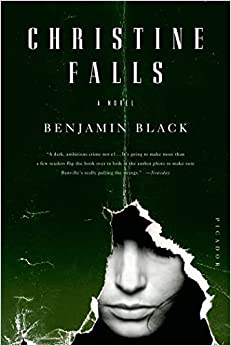
Review 2067: Christine Falls

Benjamin Black is a pen name for Irish writer John Banville. Christine Falls is the first of his Quirke mystery series, set in the 1950’s.

Quirke is returning to his office in the pathology department of a Dublin hospital when he finds Malachy Griffin working on a report at Quirke’s desk. Mal, his brother-in-law, has no business being there, and Quirke notices he is working with a file for Christine Falls, a new arrival in the morgue whose death is listed as “pulmonary embolism.” Quirke thinks about this and after he finds out that Christine was a maid in Mal’s house, he does an autopsy, finding that she died in childbirth from a hemorrhage.

So, what happened to Christine’s child? Quirke’s inquiries lead him to a laundry run by the Catholic church, where he is told the child died. But information from an inhabitant tells him that isn’t true, and in fact, in the opening of the novel, a nurse is taking a baby on a ship to Boston.

The more Quirke looks into the whereabouts of the child, the more pushback he gets, and the secret seems to involve his wife’s family, with whom he already has difficult relationships. But more is going on, he learns, when a witness is tortured to death.

Christine Falls is a dark novel that comments on the relationship between the powerful and the weak. It is eloquently written and definitely a page-turner.

Related Posts

The Sea

The Last September

Brooklyn

Review 2057: The Man in the Brown Suit

The Man in the Brown Suit is one of Agatha Christie’s early novels, and it isn’t quite like any of her others. Although it has a mystery of sorts, it’s not really one readers can figure out. Instead, it’s more of a romance/adventure story. The only thing that links it to some of her other novels is the presence of Colonel Race.

Anne Beddingfield has led a boring life, so when her father dies, the first things she wants is adventure. It seems obvious to her that she should go to London. While she is standing at the end of the train platform with another man, he looks up behind her and sees something that makes him back up quickly and fall off the platform in front of the train. When a man claiming to be a doctor checks him, Anne notices that he doesn’t check him correctly and in fact takes something from his pocket. She follows him out of the station and picks up a paper that he drops.

The man had been wearing a brown suit, and when Anne hears that a man in a brown suit is suspected of murdering a woman in a vacant house belonging to Eustace Pedler, she connects the two. She also figures out that the paper indicates an assignation to take place on a ship bound for South Africa, so she buys a passage on the ship.

The novel is written in such a jaunty style that it’s hard to take its dangerous situations seriously, and Anne has a rather primitive idea of a romantic partner (as are the ideas she expresses about men and women), but the novel is entertaining, as Anne falls into one predicament after another. She ends up with proposals from three different men, and although I think she picks the wrong one, Christie has had an exercise in fun.

Related Posts

The Seven Dials Mystery

Death on the Nile

Destination Unknown

Review 2048: The Decagon House Murders

Although a mystery should eventually make everything clear, it definitely should not belabor the obvious as if readers are numbskulls. Unfortunately, The Decagon House Murders does so several times. We’re only a few pages in when some members of a university mystery club are introduced and it’s clear that they are using the names of Golden Age mystery writers. But then the novel not only explains this but laboriously tells us who those writers are. Okay, I thought. It’s Japan. Maybe everyone wouldn’t know. But then, just a few pages later, a drawing of the floorplan of the Decagon House appears, labeled Figure 2, and then it is laboriously described—a description that adds nothing to the figure and “(See Figure 2)” is actually included. There are also several excruciating recaps of the clues, not to mention the four- or five-page explanation at the end of everything that happened.

So, here’s the setup. Some members of a university murder club are spending their spring break on an island where more than a year earlier there was a series of murders and the house was burned down, leaving only a utility building called the Decagon House (and an odd utility building it is). After the students depart for the island, some of their colleagues back on the mainland receive letters accusing them of murdering another club member, who died in a drinking party the year before. That person was the daughter of the family that was murdered on the island six months later. These two students, Kawaminami and Morisu, begin looking into the island murders by visiting the victim’s brother Nakamura Kōjirō, where they meet Shimada Kujoshi, a friend of Kōjirō.

The group on the mainland think they are pursing an intellectual mystery—a puzzle—but on the island, the murders have started with the death of Orczy, one of the two women, strangled in her sleep.

We won’t comment on the bad taste demonstrated by the selection of this venue for their meeting so soon after the death of the family. The novel had some surprises, or rather, it successfully led me up some blind alleys, pages and pages before the characters got there. It is interesting, though, that I noticed a Goodreads review claiming this is a “fair play” mystery—that it provides clues for the reader to get the solution. Actually, it hides a key relationship that would give away the motive until after the identity of the murderer is revealed.

The author’s bio claims this novel is a landmark book that revived the puzzle mystery in Japan when it was published in 1987. To me, it feels like a throwback to some of the more primitive efforts of the early 20th century. Anyway, I’m not sure the puzzle mystery needs to be revived.

Related Posts

Murder in the Crooked House

Number9Dream

IQ84

Review 2044: Crook O’Lune

Crook O’Lune is named for a crook of the Lune River in the remote fells of Lancashire. Here, Chief Inspector Robert Macdonald has chosen to take his holidays, staying with his friends Giles and Kate Hoggett. Macdonald is looking for a farm to buy for his retirement.

For his part, Gilbert Woolfall has just inherited his uncle’s farm at High Glimmerdale, called Aikengill, and is trying to decide what to do with it. His commonsense tells him to sell it, since his career is in Leeds, but he wants to keep it.

Almost as soon as he settles down to examine some old papers, he has a series of visitors. Betty Fell wants to marry Jock Shearling, but they don’t want to live with her parents. She asks if she and Jock can look after the house for him, but in Gilbert’s mind, that depends on the housekeeper, Mrs. Ramsden, who can’t decide whether to return to her family or stay. Then the Rector, Mr. Tupper, arrives indignant that Gilbert’s uncle left nothing to the church. Gilbert knows that his uncle felt there was something suspicious about an ancient grant by the family to the local school and church that was reappropriated for another community, so he is not inclined to help Mr. Tupper. Finally, his neighbor, Daniel Herdwick, wants to buy some property.

Although it seems that we’re never to learn much about Macdonald (except that he wants to own dairy cows), I enjoy Lorac’s books because they focus a little more on characters than the usual Golden Age mysteries do and because the crimes aren’t over-complicated and unlikely. This one also has a lot of descriptions of this area of England, enough to make me want to go there. In that respect, It reminds me of some of the Molly Clavering books and their setting in the Scottish borderlands.The night after Gilbert returns to the city, two things happen: there is a fire in his cellar that kills Mrs. Ramsden, who was supposed to be away for the night, and some sheep are stolen from the valley.

Macdonald begins investigating certain aspects of the case, like who the stranger seen in a wild area of the fells might be or which way the sheep could have been driven out of the area.

I received this book from the publisher in exchange for a free and fair review.

Related Posts

Fell Murder

Murder in the Mill-Race

Post after Post-Mortem

Review 2042: The Maid

Dear Nita Prose,

For a good example of a narrator who doesn’t understand social cues, read Eleanor Oliphant Is Completely Fine and try harder.

P. S. Do you think it’s likely that a person being questioned by the police would, when asked about another person, sit there and think about every conversation they had with them, taking about six pages to do so? I don’t.

P. P. S. I did not finish reading your book.

Related Posts

Eleanor Oliphant Is Completely Fine

A Man Called Ove

This Is Your Life, Harriet Chance!

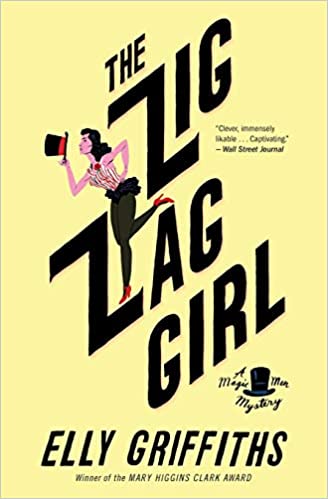
Review 2040: The Zig Zag Girl

I’ve been enjoying Elly Griffiths’ Ruth Galloway series, so I thought I’d give her Brighton series a try. This first novel takes place in 1950.

Detective Inspector Edgar Stephens has always felt a little self-conscious about part of his war work. After helping the Finnish army, he was part of a group of illusionists called the Magic Men, whose job was to fool the Germans that Scotland was well defended. After a disastrous accident in which their commanding officer, Charis, was killed, they were disbanded. Edgar had been in love with Charis.

Edgar’s best friend in the service was Max Mephisto, a well-known magician. Although Edgar hasn’t seen Max since the Magic Men were disbanded, the murder of a young woman reminds him of Max. She has been cut in three, like the illusion of the Zig Zag Girl, which Max created. Edgar consults with Max, who is still working the magic circuit, and his old army group members begin showing up. There is Diablo, an old magician who spends most of his time drinking; Bill, the carpenter who constructed the illusions; and Tony Mullholland, a magician whom no one much liked.

But before the rest of these characters reappear, Max recognizes the murder victim as Ethel, his assistant who left the act to get married. When Tony Mullholland is also killed, Edgar begins to believe that the crimes are connected somehow to the Magic Men.

Although I feel I need to get to know Edgar better and he didn’t really figure out much in this case, the series promises to provide more entertainment. Max is an interesting character, and I’m curious how he’ll be brought into the upcoming mysteries.

Related Posts

The Stranger Diaries

The Postscript Murders

The Night Hawks

Review 2036: A Slow Fire Burning

Laura Kilbride often has poor judgment, such as when she spent the night with Daniel Sutherland. That night turned ugly, and she was seen by the writer Theo Myerson leaving the area with blood on her face. She says she didn’t kill Daniel, but an accident in her youth has left her with a condition that causes her to react inappropriately, and the detectives think her behavior is odd.

Another odd witness is the woman who discovered the body, Miriam Lewis, whose narrowboat is next to Daniel’s. She hasn’t told the police that she bears a grudge against Theo Myerson, who stole significant portions of her memoir for his best-selling thriller. And Theo happens to be Daniel’s uncle.

Carla and Theo’s marriage did not survive the death of their young son when he was in the care of Angela Sutherland, Daniel’s mother. This accident happened many years ago, but Carla and Theo were never able to forgive Angela, and Angela has recently died.

There are more secrets to come out before the murder is solved. Hawkins does a good job of keeping the pace moving while keeping the readers on the edges of their seats.

Related Posts

The Girl on the Train

Into the Water

The Hunting Party

Review 2035: The Appeal

Janice Hallett, and others obviously, thought she was being original when she decided to write a murder mystery entirely in texts, emails, and documents. Maybe she was, but it seems she couldn’t have chosen a more cumbersome way to convey her story. At almost 450 pages, the novel has about 200 pages of plot, and no one is killed until 100 pages from the end.

Further, Hallett cheats by leaving out some of the correspondence until the end. But my biggest problem with the novel is the complete lack of plausibility of the situation. A professor gives two students the task of analyzing the case, but he is hiding information from them and asking them questions he already knows the answer to, not asking them to find evidence of who really is the murderer. I wonder what kind of class the author could have been envisioning.

The plot is this: an amateur theater company is putting on a play. However, the usual director, Martin Hayward, asks his son James to take over because his granddaughter Poppy has cancer, and he is involved in fund raising to pay for an experimental treatment.

Two newcomers to town, Kal and Sam Greenwood, try out for parts in the play at the urging of Isabel Beck, a clingy girl who is Sam’s coworker and new bestie. But there is something unexplained about the Greenwoods, who have just returned from working as aid workers in Africa. Sam also seems hostile to Tish Bhatoa, the doctor who is arranging Poppy’s treatment.

One side-effect of its approach is that the novel also contains about 100 pages of exposition of the murder, which bogs things down so much that, unbelievably, I finally gave up on it less then 50 pages from the end because I couldn’t take it anymore.

What is most unlikely, though, is the role of the police. There isn’t one! There are two minor events involving the police, but their reports are so amateurish as to be unbelievable. What kind of police report takes down testimony without bothering to take the name of the witness?

Then, finally, the victim is killed. Hallett withholds the victim’s name, and in fact one of the puzzles set by the professor is to figure out who is killed! What nonsense! After the murder, there is no evidence of a police investigation except the documents, and lots of questions are unanswered that the police would have to investigate.

A great deal is made of the status of the characters in terms of class. I didn’t understand things this way at all. For example, one student states that no one listens to Isabel because she is low status. No one listens to her because she’s silly!

Finally, the theory of murder is presented, as far as I could tell, with absolutely no proof. I say “as far as I could tell” because I finally stopped reading. What balderdash! I can’t believe this book was so popular.

This year I forgot about Readers Imbibing Peril for September, but I have some nice chilling books coming up!

Related Posts

The Killings on Jubilee Terrace

Found Wanting

The Witch Hunter