Nonfiction November: Week 3: Nonfiction Pairings

Here’s the description for week three:

This week, pair up a nonfiction book with a fiction title. Maybe it’s a historical novel and the real history in a nonfiction version, or a memoir and a novel, or a fiction book you’ve read and you would like recommendations for background reading. Or maybe it’s just two books you feel have a link, whatever they might be. You can be as creative as you like! Hosted by Liz at librofulltime.wordpress.com.

The first pairing I can think of is a really obvious one, and that is to pair the fictional Margaret the First by Danielle Dutton with the nonfiction Pure Wit by Frances Peacock, both about Margaret Cavendish, but I see I did a pairing with Margaret the First and another biography of Margaret Cavendish last year, so I will try to think of something else.
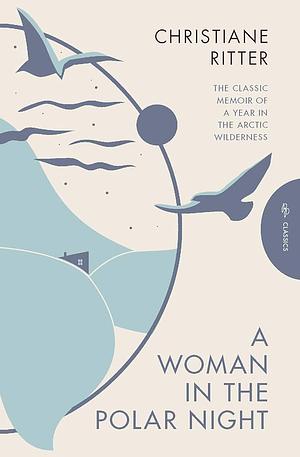
Instead, I decided to pair Woman in the Polar Night by Christianne Ritter, a memoir by a German woman who was the first European woman to spend a year in Arctic Spitzbergen (Svalbard). I am going to pair it with several fiction books set in Arctic or slightly sub-Arctic (it’s not always clear) conditions, because the conditions were a lot of what Ritter wrote about, that and her growing love for the land. I know it’s not strictly a pair when there is more than one book put with the other, but oh well.

Cover for Independent People

First up is Independent People by Halldór Laxness. It is set in Iceland before World War I, but when I was reading it, not really knowing the time setting (my uncle had given me the book, and I had no other introduction to it), I first thought that we were in the Middle Ages. That’s how primitive it was. Of course, none of Iceland lies within the Arctic Circle but hovers below it.
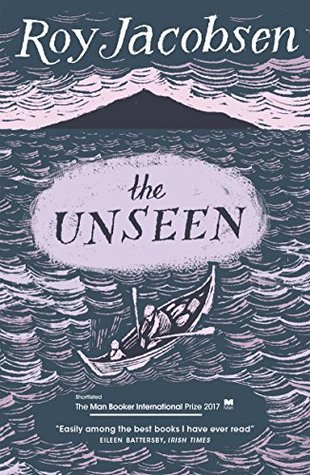
Next up is The Unseen by Roy Jacobsen, the first in so far four novels set in a Norwegian archipelago that may or may not be within the Arctic Circle. (The islands are not actually named, although I see that there is an island with a name similar to that of the family in this book that now is uninhabited and is sub-Arctic.) In this novel as well as in Independent People, the people are farmers and fishers, but in The Unseen, they move livestock from one island to another for grazing, they raise eider ducks and collect their feathers, and so on. This series begins between the world wars and has continued to after World War II. It documents a difficult and lonely life.

The next book is contemporary fiction, set in Greenland. It’s a mystery, but it involves dog sledding and other Arctic activities. It’s Seven Graves One Winter by Christopher Petersen, named after a Greenland custom in small villages of digging seven graves in the fall before the ground freezes, with the assumption that that will be about the right number to last the winter.
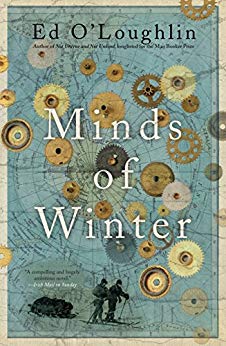
Cover for Minds of Winter

Here’s one that is both contemporary and historical, Minds of Winter by Ed O’Loughlin. It is set in Tuktoyaktuk, within the Arctic Circle, where the main character has traveled to find out about her missing grandfather, and then hearkens back to the ill-fated Franklin Expedition.

And finally, here’s a novel about a fictional 19th century voyage to the Arctic, The Voyage of the Narwhal by Andrea Barrett. It’s about an Arctic expedition led by the wrong person.

This isn’t exactly the assignment, I know, but once I started looking, I was surprised by how many novels I had read about living in or traveling in Arctic or near-Arctic conditions.
Nonfiction in November Week 2: Nonfiction Journeys

Here is the description for this week:

This week choose a book that reflects a journey for its author/protagonist or for the reader or both. This can be a physical journey, an emotional, psychological or spiritual journey or a combination of these.  Any nonfiction title that leaves its author/protagonist and/or reader in a different place at the end from the start point is good for this challenge. Hosted by Frances at volatilerune.blog.

I guess of the nonfiction books I read this year, three fit this description. I’m not going to count the biographies, which could be viewed as a journey through life. Here is the one I chose:

The most like a journey for me was in A Woman in the Polar Night by Christiane Ritter. She was the first European woman to live in Svalbard for a year. At the time, the area was inhabited pretty much only by the Inuit and hunters, mostly from Norway. Her husband had already been there for a year when he asked her to come. She was at first appalled at the bleakness and emptiness of the area and the primitive living conditions, but by the end of the year, she had been captured by its beauty and solitude. I am always interested in the empty regions of the world. I found this book really fascinating and the descriptions were wonderful.

Nonfiction November Strikes Again! My Year in Nonfiction

Here it is time for Nonfiction November again, hosted by different bloggers each week. Last year, I was determined to read more nonfiction books, especially because I read about such good ones during the month. Alas, I went from 14 last year to 8 this year! Oh dear! To be fair to myself, I have several in my pile. I just haven’t gotten to them yet. I see that I started out fairly well but things fell off in the summer and fall.

Here’s the prompt for Week 1:

Week 1 (November 2-8) – My Year in Nonfiction – Heather. What nonfiction books did you read this year?  What were your favorites?  Did you find yourself reading a particular category of nonfiction most often? Hosted by Heather at Based on a True Story.

So, let’s see what I did read. With only eight, I can certainly give each a run-down:

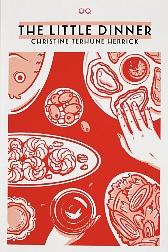
The Little Dinner by Christine Terhune: In 1892, apparently, Christine Terhune was equivalent to Martha Stewart. Her book assumes that people can no longer afford to host big, elaborate dinners, so she is helping with the details of a little one. The most fascinating thing about this book to me was what Terhune considered a little dinner. Apparently, you only need one or two maids and four or five courses. The book contains recipes and also tips about how to decorate for the event and so on.

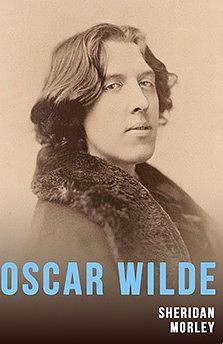
Oscar Wilde by Sheridan Morley: This biography is not an exhaustive one but one that tells just enough about Wilde’s life to be interesting and includes some quips and quotes from Wilde himself. It also is easier on Lord Alfred Douglas than other biographies I have read.

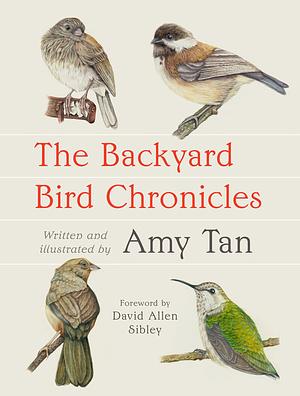
The Backyard Bird Chronicles by Amy Tan: I heard about this book over a year ago on public radio, in an interview with Amy Tan. She explained that she had a physical condition that didn’t allow her to drive anymore, so she started watching birds in her backyard. She had lots of questions about them, so she decided to draw them, figuring that might answer some of them. Her drawings are delightful, and she certainly has an inquiring mind. This book is a year of her observations.

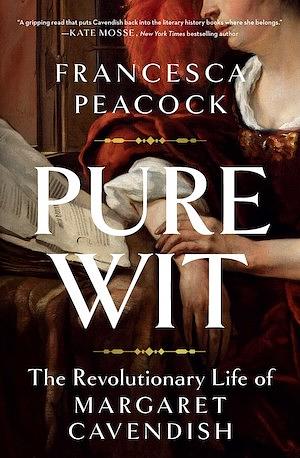
Pure Wit: The Revolutionary Life of Margaret Cavendish by Francesca Peacock

Margaret Cavendish is such a fascinating person, one of the first women to be paid for her writings. I was so fascinated by her that I read two biographies, one last year and one this year, as well as the novella Margaret the First by Danielle Dutton. Peacock’s biography is the more scholarly of the two I read, the other being Mad Madge by Katie Whitaker. Peacock also deplores the “Mad Madge” appellation, which was actually applied to her after the Victorian period (she is 17th century), and regrets that Whitaker used it for her book title.

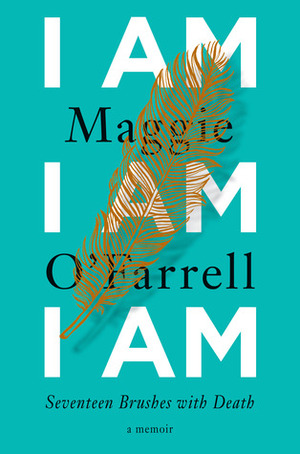
I Am, I Am, I Am: Seventeen Brushes with Death by Maggie O’Farrell

Maggie O’Farrell is talking here sometimes about brushes with actual death and sometimes about more metaphorical issues. I found this one rivetting and deeply touching.

A Woman in the Polar Night by Christiane Ritter

This is a fascinating memoir by the first European woman to spend a year in Spitsbergen (Svalbard), joining her husband there. Her outlook changes from thinking the landscape is cold and forbidding to beautiful. The descriptions are wonderful. The book is translated from German by Jane Degras.

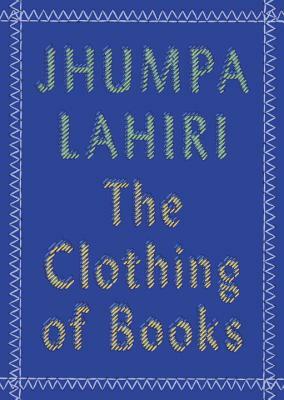
The Clothing of Books by Jhumpa Lahiri

This book is really an essay about how Lahiri regards the covers for her books. At once she says they aren’t hers anymore when they get to that stage, yet it’s clear that some of the covers chosen for her books really bother her. She would actually like her books to just have the title and her name on them. The details about publication were interesting.

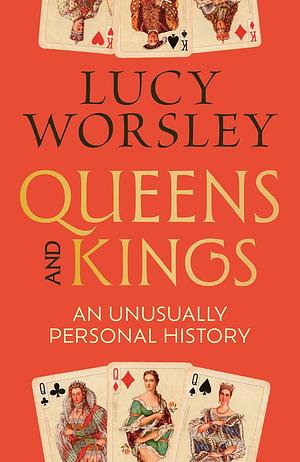
Queens and Kings: An Unusually Personal History by Lucy Worsley

Lucy Worsley is always entertaining, and this history/memoir is not meant to be comprehensive. It presents information about most of the English reigns beginning with Henry VIII and ending with Elizabeth II and refutes some myths. The information is presented in terms of the palaces most associated with the particular reign, for example, Hampton Court for Henry VIII. It also tells some stories of Worsley’s own experiences working in the different palaces as Chief Curator and encountering royalty.

Which were my favorites? I would say I Am, I Am, I Am and A Woman in the Polar Night.

So, that’s all I have done, sad to say. Most of these books were read in the spring, and then I picked back up when I realized November was approaching, but I also got caught up in reading novellas for the same month!