Day 861: The Witches: Salem, 1692

Cover for The WitchesIn The Witches, Pulitzer-winning nonfiction writer Stacy Schiff takes another look at 1692 Salem and its witch hunt. She explores the climate of New England at the time, particularly its paranoia and excessive religiosity, and why it was open to such an over-reaction. The book also explores the ramifications for the region for years to come.

Schiff quickly points out that much of what is “known” about the witch trials is apocryphal. There was no black slave, for example, but an Indian servant. Schiff reconstructs the events from what she can find, many of the official documents having been destroyed at later times, and the accounts, even of the official note takers, varying considerably from one another and interjecting opinion and descriptive wording that should not have been permitted.

The incident began with one household, where some of the children were subject to screams and contortions. This household was that of Samuel Parris, the minister of Salem Village. The girls were a niece, daughters, and a servant, all teens or pre-teens. Schiff is fairly charitable in ascribing the state of these children to a condition that was later diagnosed as hysteria (a condition itself fraught with controversy), which generally affected young women leading restricted lives with little hope of change. Later, we hear of another householder who handled a similar condition severely and eliminated it. But Parris soon established it as witchcraft, and an even larger group of girls and other people who became afraid of being accused themselves were on their way to a lot of attention. As one of them put it (whose remark was ignored), “We must have some sport.”

They had their sport all right. By the end, 19 people and 2 dogs were hanged for witchcraft. Some of the girls would have gone on from there, but the colony finally declared there would be no more prosecutions and the behavior eventually stopped.

This is a fascinating book that explores such topics as permissible evidence, assumption of guilt, the treatment of people who protested their innocence versus that of those who admitted guilt, and the behavior of certain of the principal leaders of society. It finds parallels to other events much more recently in our past.

Related Posts

Cleopatra, A Life

Véra (Mrs. Vladimir Nabokov)

Mayflower: A Story of Courage, Community, and War


Day 851: Straight On Till Morning

Cover for Straight on Till MorningWhen I read Circling the Sun a few months ago, I surmised that I wasn’t reading about the real Beryl Markham but someone who had been sanitized for popular consumption. Reading Straight on Till Morning has shown me that I was absolutely right. Markham was an unconventional woman who was difficult for others to understand. She had virtually no fear and didn’t care what people thought about her. Although she sometimes behaved without regard to others, she had some friends for life.

Straight on Till Morning is an extremely interesting biography of a fascinating woman. It follows Markham through her careers as horse trainer, flyer, and author. It also tells of her relationships with many well-known people, including Dennis Finch Hatton and Karen Blixen (Isak Dinesen), Ernest Hemingway, Prince Harry, and Lord Delamere, as well as her three husbands and some of her many lovers.

One subject it tackles brilliantly is the authorship of Beryl’s memoir West with the Night. Controversy occurred when Beryl’s third husband claimed to have written the book, and others asserted that she couldn’t have written it because she was almost illiterate. Lovell is able to show, first, that no one questioned Markham’s authorship until the book was republished in the 1980’s, second, that not only was Markham a voracious reader but she submitted hundreds of pages to her editor before she even met her husband. Her husband, Raoul Schumaker, was a writer of sorts (mostly pulp westerns), but it is Lovell’s opinion that his style is nothing like that of West with the Night but much more closely matches that of some short stories they collaborated on. Lovell states that Schumaker probably helped Markham edit West with the Night, but the remaining artifacts of that collaboration (comments and markups) indicate that his role was as editor.

If you are at all interested in this unusual woman who led such a colorful life, I think you’ll enjoy this biography. It is lively and well written and meticulous in research.

Related Posts

Circling the Sun

Hons and Rebels

The Happy Foreigner

Day 841: Night

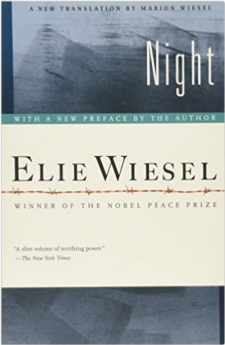
Cover for NightHere is my review of my Classics Club spin choice for Spin #11!

Night is Elie Wiesel’s spare and harrowing description of his and his father’s time spent in a series of concentration camps during World War II. He begins his story in 1944, where in the town of Sighet, Transylvania, the war did not seem to have touched the Jewish population. They had heard of problems in Budapest, but they knew nothing of the larger Nazi activities aimed at their people.

The first indications came from Moishe the Beadle, a man with whom Elie has been studying the Kabbalah. As a foreign Jew, Moishe was deported to a work camp. But he came back to tell everyone that all of the deportees were driven to Poland where they were forced to dig trenches and then shot. Moishe was wounded but managed to get away and returned to warn them. No one believed him, however. They naively refused to believe the Germans could behave that way. Elie and his family could have gotten a visa out of the country, even at that late date, but they stayed.

Next, all the Jews were rounded up into two ghettos, and not much longer after that, they were shipped out to Auschwitz. Once the women and girls were separated from the men and boys at the camp, Wiesel never saw his mother or sister again. He was 15 and probably only lived because an inmate told him to say he was 18.

At only 120 pages, this is a short but affecting description of his experiences in the camps. It does not dwell overly much on the horrific conditions, but we understand how terrible it was. The book also deals with Wiesel’s spiritual landscape, as he changed from a devout boy to a man who no longer believes.

This book is not a testament to human fortitude, for Wiesel makes it clear that humans under evil conditions behave badly. Instead, it is an important documentation of a black time in human history.

Related Posts

The Narrow Road to the Deep North

Unbroken: A World War II Story of Survival, Resilience, and Redemption

The Book Thief

Day 839: Charles Dickens: A Life

Cover for Charles DickensCharles Dickens: A Life covers some of the same material as The Invisible Woman, Claire Tomalin’s excellent book about Dickens’ affair with Nelly Ternan, but it is broader in scope and provides more information about his life. Of course, The Invisible Woman was in a way ground-breaking, because it brought out into the open a relationship that was concealed for many years. In fact, the Dickens biography by Peter Ackroyd, which came out in 1991, the same year as The Invisible Woman, dismissed the affair as an improbability.

I much preferred this biography to Ackroyd’s. While Ackroyd practically falls all over himself telling us what a genius Dickens was, Tomalin is not afraid to examine the whole person, warts and all. Certainly, Dickens was charming, energetic, lots of fun for his friends, and the possessor of a serious social conscience. He was also one who ruthlessly cut ties to some friends and family, occasionally for trivial reasons; who treated his wife shamefully when he separated from her after 22 years of marriage (insisting, for example, that his children take his side and cut off ties to her); who made a young girl from a financially struggling family his mistress when he was more than twice her age. I feel that his fame was not good for him—that it gave him an inflated sense of his own importance and made him think he was infallible. Of course, he was probably the most famous person of his time. We have no modern equivalent.

Those interested in Dickens’ life and works will enjoy this biography. Dickens’ story is unique. He certainly had a difficult early life and worked hard for his success. He also started out as a much nicer person than the man he became, so during most of the book he is very likable. In fact, it’s easy to see why he was so loved by most of his friends and family. He was one of those charming people who are loved whether they deserve it or not. And in many ways, he did deserve it.

The book is extremely well written and very well researched, with more than 100 pages of notes and bibliography. Although more than 400 pages long (not counting the back matter), it moves along nicely and is entertaining. There are three insets of pictures and photos to illustrate the discussion along with a few interspersed drawings.

Just a small comment on my recurring theme of the quality of publishing. My copy of the book was bound upside down. Yes, the cover is on upside down, which I found rather disconcerting as I was always picking it up to read upside down. Unfortunately, I had it too long before opening it to return it for another copy.

Related Posts

The Invisible Woman: The Story of Charles Dickens and Nelly Ternan

Charles Dickens

Jane Austen: A Life

Day 815: No Ordinary Time

Cover for No Ordinary TimeNo Ordinary Time tells of the contributions of Franklin and Eleanor Roosevelt to the conduct of the United States before and during its participation in World War II. The book relates how Franklin Roosevelt exercised his acute political awareness of public opinion to nudge the U.S. out of isolationism during the war, foreseeing as he did how the world would be changed if Germany succeeded and how assisting England against the Axis powers allowed the U.S. to ramp up for war. While Roosevelt was concentrating on the war, Eleanor remained his social conscience, attempting to hold on to the social advances of the New Deal, taking up the causes of women and their right to work and of African-Americans and their right to equal treatment.

The book also treats of the relationship between Franklin and Eleanor. Although they were always friends and companions, Eleanor had been devastated much earlier in their marriage to find out that Franklin had been having an affair with her own secretary, Lucy Mercer. This discovery ended certain aspects of their marital relationship. Eleanor’s relationship with her mother-in-law was difficult, too. In many ways, Eleanor was never at home in her own house. When she had to find a way to be of use as First Lady, since the traditional role of hostess didn’t suit her, she began to make a life for herself as Franklin’s eyes and ears around the country. So successful was she at this that when Franklin wanted to rekindle their relationship later in life and asked her to stay home more, she didn’t want to give up her active life.

These were two remarkable people, although they had their faults. At times, Eleanor’s zeal for a cause made her oblivious to Franklin’s need at the end of the day for relaxation. She found it difficult to unbend, always wanting to be active. Franklin, although charming and seemingly affectionate, was occasionally selfish and seemed sometimes to have no care for people who had given him unstinting care and friendship.

Reading this book made me feel as if I really knew these people, a feeling I seldom get from nonfiction. This is a fascinating story, sometimes thrilling, sometimes sad, about an important period in our history.

Related Posts

The Bully Pulpit: Theodore Roosevelt, William Howard Taft, and the Golden Age of Journalism

Team of Rivals: The Political Genius of Abraham Lincoln

Unbroken: A World War II Story of Survival, Resilience, and Redemption

Day 809: The Warmth of Other Suns: The Epic Story of America’s Great Migration

Cover for The Warmth of Other SunsBest Book of the Week!
The Warmth of Other Suns is Pulitzer Prize-winning journalist Isabel Wilkerson’s remarkable book about the migration of nearly 6 million rural African-American southerners to northern and western cities from 1915 to 1970. Wilkerson began her research because of her perceptions that the migration was largely unrecognized and that when recognized was misunderstood.

What makes this book so remarkable is how she manages to humanize it. Although she presents us with facts and figures and results of studies as well as examples of experiences taken from newspapers and the like, the bulk of the book is taken up with three representative case histories. She identified and interviewed three people who ended up in three of the cities usually targeted for migration. Their stories are both representative and extraordinarily interesting.

Ida Mae Brandon Gladney was the wife of George Gladney, a sharecropper in Mississippi. The state of sharecroppers was deplorable. After a solid year of work, the sharecropper would hand over half the crop to his landlord and then settle up accounts, the plantation owner subtracting the cost of the seed and supplies from the sharecropper’s share. The records were the landlord’s, and even if the sharecropper kept his own books, he didn’t dare oppose his landlord. Many of the plantation owners routinely added extra goods onto their tenants’ accounts and otherwise cheated them. George’s plantation owner was considered a good one simply because George ended up with a couple of bucks for the year instead of breaking even or ending up in the red.

Still, it was not because of the unrewarding grind of sharecropping that George decided to leave but because his cousin was beaten nearly to death for stealing turkeys that had just gone to roost some way away. Though George felt safe enough to tell the plantation owner he was leaving, he and Ida Mae still had to sneak away from home, taking the train to Chicago in 1937.

George Starling also had to sneak away from his job picking oranges in Florida but because he was in peril for his life. During World War II, oranges were at a premium and so many laborers had gone north already that the growers had difficulty finding pickers. Still, they wanted to pay the pre-war wage of 10 cents a basket to the pickers. George and two of his friends who had worked briefly in Detroit talked the pickers into letting him bargain for them and got their pay more than doubled. But some of the pickers were terrified and informed the growers what was going on. George heard that he and his friends were going to be lynched, so he had to smuggle himself out of his home county before he could take the train to Harlem in 1945.

Robert Foster was a surgeon from Louisiana in 1953 with a need to succeed. He had married Alice Clement, the daughter of a prominent African-American family in Atlanta. The Clements made it clear that they thought Foster was inferior and did their best to control Alice during the early years of their marriage. After serving as a surgeon in the army, Foster found he couldn’t get admitting privileges to any southern hospitals unless he accepted his father-in-law’s help and settled in Atlanta. Knowing that his family would always be under Clement’s domination, he decided to go to California, where he had always wanted to live. He set off for Los Angeles in 1953, driving in his car.

Wilkinson’s contention is that the causes and the results of the migration have been misunderstood. For example, some studies posited that mechanization in the cotton industry was a major cause. But Wilkinson shows that the industry was forced to mechanize as a result of losing the bulk of its laborers, not the other way around.

Similarly, she shows that contrary to belief, the families who migrated were in general better educated than white emigrants, less likely to divorce, and more likely to have a work ethic than African Americans born in the north, putting to shame the idea that the migrating families ruined their host cities. In fact, many of those who failed did so because of the conditions that already existed in their new home cities.

This history is an amazing book that will keep your interest from beginning until end. I became totally involved in the stories of these three people and wanted to know if they would succeed.

Related Posts

All Aunt Hagar’s Children

This Side of the Sky

The Tilted World

Day 807: Life on the Mississippi

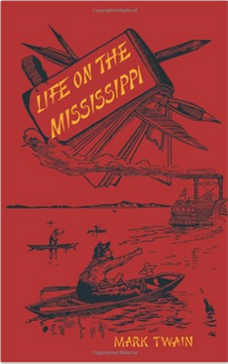
Cover for Life on the MississippiLife on the Mississippi is Mark Twain’s nonfiction book about the Mississippi River. Sort of. Although part history, part memoir, part travel account, it also includes a chapter from The Adventures of Huckleberry Finn, some folk tales, and many tall tales. So, it’s not just nonfiction. And not the best of Twain.

Twain begins with a few chapters about the history of the river’s discovery and exploration by Europeans. These first chapters are followed by reminiscences of Twain’s life as a boy along the river (including the excerpt about Huck) and his career as a riverboat pilot, including a description of what is involved in learning to navigate the river. This section takes up about half the book, by far the best half.

From there, the book loses focus, and if the kitchen sink had anything to do with the Mississippi, it would be in there. The last half of the book is supposedly centered around a trip Twain takes down the river to New Orleans and all the way back up to Minnesota. It describes the people he encounters and the towns he visits during his journey, 20 years after his time as a pilot. But it also goes off an every manner of digression and tells many anecdotes, some of which are frankly corny and a few of which are offensive these days. I don’t want to make too much of this because it is judging a book unfairly by the standards of another time, but some of the pictures especially, reprints of those that appeared in the 1883 version, are insulting to African-Americans.

Finally, my edition, a replica by Dover, was loaded with typos, especially in the last half. I can only hope that the errors weren’t really in the originally published edition.

Related Posts

The Tilted World

The All-True Travels and Adventures of Lidie Newton

Once Upon a River


Day 761: The Bird: A Natural History of Who Birds Are, Where They Came From, and How They Live

Cover for The BirdAlthough I am interested in birds, I kept thinking while reading The Bird that science writer and zoologist Colin Tudge had not thought enough about who his audience was. The book is written in an accessible style for the general reader, but the level and amount of information is sometimes more suitable for a serious student.

For example, he spends several chapters on evolution in general, the evolution of birds, and the number of bird species. This information takes up the first 200 pages of the book, ending in a chapter of nearly 100 pages that describes each of the many species of bird. Who does he think is going to read and remember this? In particular, since most people have not even seen a tenth of these species, how can they visualize them from these descriptions? Pictures would be better, but all we get is an occasional line drawing.

Furthermore, he makes some notable mistakes in these first chapters. When he is discussing the evolution of bird species, he makes a comment referring to a figure. When I looked at the figure, I could find no correspondence between what he was saying about it and what it showed. Thinking that the reference was to a different figure, I looked at all of them, but still could not figure out what he was talking about. Later, in an even worse mistake, he refers to a figure that is not even in the book.

The second half of the book covers subjects such as what birds eat, where they live, how they mate, and what their familial and community relationships are. This is more interesting material, but it is still too exhaustive. We really probably don’t want to know the habits of every species of bird.

I also felt sometimes as if he gets too far off track in his musings. For example, in the chapter about the mind of the bird, he starts with a series of questions, and one of them is whether computers can think like humans. If there is some connection between that idea and the study of birds, he didn’t explain it well enough. It feels like a total nonsequitor, and this is not the only instance.

The final chapters are the most interesting. I enjoyed the descriptions of studies meant to demonstrate the intelligence of birds even though I had seen TV programs about most of the same studies. Mind, he doesn’t use the word “intelligence.” I do.

The book ends with a strong message about conservation that is probably the most important section.

Related Posts

The Rural Life

The Signature of All Things

The Crane Wife


Day 747: Literary Wives! The Astronaut Wives Club

Cover for The Astronaut Wives ClubToday is another review for the Literary Wives blogging club. Be sure to read the reviews and comments of the other wives! If you have read the book, please participate by leaving comments on any of our blogs.

Emily of The Bookshelf of Emily J.
Lynn of Smoke and Mirrors
Naomi of Consumed By Ink

* * *

The Astronaut Wives Club just plain irritated me. I don’t know why such a potentially interesting story had to be written as if it was chick lit. If I had had to read one more description of an outfit before the end of the book, I would have screamed.

The book tells the stories of the wives of the astronauts from the beginning of the space program in the 1960’s until the manned exploration program was cancelled in the early 70’s. It keeps its focus on the wives with admirable intention but sometimes unfortunate results, as its determination not to focus on their husbands’ activities, even in moments important in history, sometimes sucks any potential drama right out of the book. For example, anyone who has seen Apollo 13 knows what a stressful bunch of hours those must have been for the families. Yet, the mission gets a bare few paragraphs in the book.

Since the wives were determined to keep their family lives private and their upper lips stiff, what are we left with? Well, basically the kinds of things Life magazine wrote about in the 60’s, the glitz, the perks, the outfits, the parades, the parties. We get so little insight into the wives’ characters that well into the book, I was still unable to connect very many wives’ first names with their last names or remember which one was the pilot. Although we learn a little more about their home lives than the public did in the 60’s, for example, whose husbands were unfaithful or the pressures the wives were under from NASA to present the front of a perfect family, we still get to know very little about the individual women. I recently saw a one-hour TV program about the Apollo wives that told more about what they were feeling than this entire book did!

I believe I was also handicapped by getting an electronic copy from Netgalley that did not have any photos in it. It may have been easier for me to keep the wives apart if I could have had photos to refer to as the other Literary Wives did. All I had was the cover of the book showing the first group of wives, in such a small size that I couldn’t see their faces.

link to NetgalleyThe level of information presented sometimes reminds me of the horrors of watching Entertainment Tonight! For example, at the beginning of Chapter 8 about the parties in Houston, Koppel tells us that a society person she mentions was played by Julia Roberts in a recent movie, a completely gratuitous comment. On the other hand, Koppel is so determined not to get technical in her approach to a general audience that she describes almost nothing of the missions. In a relatively lengthy description of Apollo 8, she twice mentions a maneuver called a trans-earth injection that Susan Gorman was worried about without once explaining what it is. I would like to see this subject handled again by someone who is willing to do more research than thumbing through old Life articles.

Literary Wives logoWhat does this book say about wives or the experience of being a wife? In what way does this woman define “wife”—or in what way is she defined by “wife”?

NASA pretty much defined what wives were in their concern that the astronauts’ families appear to be perfect representatives of America. This definition was strictly by the standards of the 1950’s. Wives were housewives who got up at 5 AM to make steak and eggs for their husbands’ breakfasts. The wives were expected to show support for their husbands no matter what was going on in their marriages, to ignore infidelities, and to do everything possible to keep stress away. They also weren’t supposed to show any stress during their husbands’ missions. NASA controlled them to the point of telling them what to wear before their first photo shoot.

Being a wife also had a lot to do with protecting your privacy and that of your family. This habit extended so far that Koppel didn’t really get much more out of them in her recent interviews than they were willing to say in the 50’s and 60’s.

Related Posts

Death by Black Hole and Other Cosmic Quandaries

The Life and Times of the Thunderbolt Kid

Nora Webster

Day 740: Richard III: England’s Black Legend

Cover for Richard IIIHistorian Desmond Seward explains in the introduction of Richard III that there are two views of Richard. He calls them the black legend—the traditional view—and the white legend—the notion that Richard’s reputation was blackened by the Tudors after Bosworth Field. This theory was first put forward by Horace Walpole in the 18th century and is famously supported by Josephine Tey’s The Daughter of Time. The Richard III Society has even claimed that Richard was not a hunchback, which claim was proved false by the recent discovery of his bones.

Seward’s view is that of the black legend, that Richard was a ruthless man who committed many dark deeds, including killing the princes in the Tower. Richard III is an interesting biography of Richard, based on what is known of his life. There are few of his own writings to base it on, unfortunately, because Richard was not much of a writer, a situation common to nobility of his time.

Of course, Richard’s entire life was lived during the turbulent period of the Wars of the Roses. England experienced little peace during this period, and what little there was occurred during the reign of Edward IV, Richard’s older brother. This peace was marred mostly by the rapacious behavior of the Woodvilles, Edward’s in-laws, and that of the Duke of Clarence, his erratic brother. However, that peace was destroyed by Edward’s early death, which plunged the country into another succession crisis because the prince was only 12 or 13 years old. The last time a young prince had become king, Henry VI, was disastrous for the country.

My own impression from reading this book is that Seward invariably looks at the darkest interpretation of events. I guess you could call me of the dark gray school. Certainly, the murders of the princes in the Tower was a shocking event, viewed with horror during its time and since, and there seems little doubt that Richard ordered the murders. Still, the situation for Richard was difficult. In doing his duty by his nephew, he faced the prospect of at least six years of an unstable regime with continual battles for power with the Woodvilles. This is not to excuse his actions, but it is possible to view them as an attempt to maintain stability in the realm, and that’s probably how he explained them to himself. Instead, the result was to almost completely exterminate the Plantagenet family.

Related Posts

The Wars of the Roses

Mary Boleyn

A Folly of Princes