Review 2537: Levels of the Game

Although John McPhee is best known for his work in the 1960s through 1990s, he is still going at 93. He is known for being a pioneer in a style of writing called “creative nonfiction” or “literary journalism.” Years ago, I read his four-volume work Annals of the Former World, about the geology of the United States, basically the formation through time of various areas of the country, which was absolutely fascinating. Later I picked up a copy of his Coming into the Country, about homesteaders in the wilds of Alaska in the 1970s. So, when I saw he had written a book that could fill a hole in my A Century of Books project, I got it.

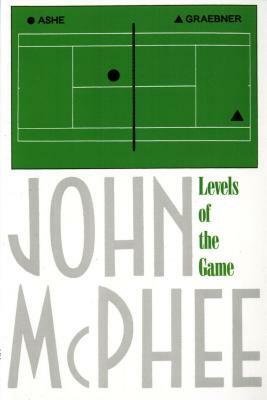
Levels of the Game is not really my subject matter. It cleverly combines a play-by-play description of a tennis game at Forest Hills in 1968 with profiles of the players. This is an amateur game between Arthur Ashe and Clark Graebner. Although I used to watch tennis a bit when Ashe was further along in his career, I couldn’t really follow the subtleties of the play-by-play that well. I’m sure for tennis lovers it might have been climactic.

Ashe at the time was the only Black player of the U. S. circuit, and there were no others following behind. A lot of what McPhee says in his profile is interesting and a lot is dated. Coming up, Ashe ran into situations where he was barred from clubs. Yes, it was still like that.

If you’re a sports fan, particularly of tennis, you’ll probably get more out of this book than I did. Still, I didn’t really understand the important place Ashe holds in the game until I read this book.

P. S. The description of Ashe, who at the time was a lieutenant at West Point, putting on love beads to go on a date, cracked me up.

Related Posts

Open: An Autobiography

Coming into the Country

Annals of the Former World: Basin and Range

Review 2526: The Inconvenient Indian

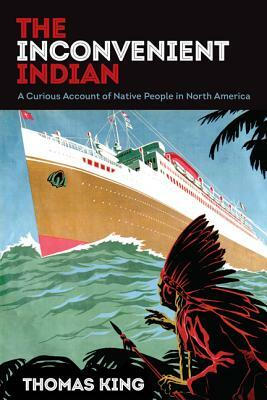
For some reason when I bought this book, I thought it was fiction. It’s not, nor is it a history of the relationship between native peoples and the various entities that have ruled Canada and the United States. (King repeatedly calls these two countries North America. He doesn’t deal with the inequities and atrocities of Mexico, which of course is also in North America and probably has committed plenty.) It is a series of chapters on such topics as residential schools, government attempts at assimilation and allotment, treaties that have been ignored, and inequities under law.

Thomas King is a writer, speaker, and activist who is part Cherokee. Born in California, he is now a citizen of Canada and has won, among other awards, the Order of Canada.

His writing style is acerbically funny and more personal than you’d expect. He reminds me of Bill Bryson with more sarcasm.

This book is an eye opener for anyone who thinks that our native populations are no longer oppressed. It didn’t make me cry like Bury My Heart at Wounded Knee did when I read it years ago, but it gave me a lot to think about. King’s main message is that all government programs for our natives amount to land grabs.

Related Posts

Killers of the Flower Moon: The Osage Murders and the Birth of the FBI

Mayflower

There, There

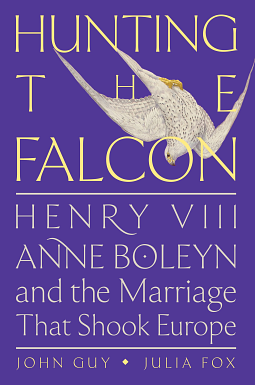
Review 2520: Hunting the Falcon

I have read quite a bit about the Tudors, fiction and nonfiction. This book deals especially with the relationship between Henry VIII and Anne Boleyn, although it starts earlier in their lives.

A strong theme in the book is Anne’s formative time spent at the court of France. There she witnessed a different kind of court than that in England, one in which powerful women discussed politics and were forces behind the throne and in which court was gay and flirtatious. As queen and as a woman who had worked in tandem with Henry on their cause for six years before marriage, she tried to create that sort of court.

In addition, her leanings toward France helped incline Henry toward an alliance with Francis of France, despite a long history of enmity between the two countries, rather than one with Charles, the Holy Roman Emperor and his first wife Katherine’s nephew. Francis had his own agenda, though, that did not always match Henry’s.

All-in-all, the book paints Anne in a more positive light than I’ve seen, emphasizing her true piety and her generosity to the poor. However, she also clearly got caught up in her own power and was sometimes rapacious and unforgiving.

Recent programs about the Tudors are notoriously inaccurate, but we are sometimes affected nonetheless. Used to thinking of Jane Parker, wife of Anne’s brother George, as someone who betrayed her, I now find she was one of the people who had the nerve to speak up for her.

Biographers and historians can err by including too much information on a subject. Although this book was written for a general audience in an entertaining style, it occasionally has that fault, for example, describing every detail of Anne’s coronation, including her outfits and the themes of the spectacles presented. However, in general, I found it interesting and illuminating.

Related Posts

The Last Wife of Henry VIII

Mary Boleyn

Wolf Hall

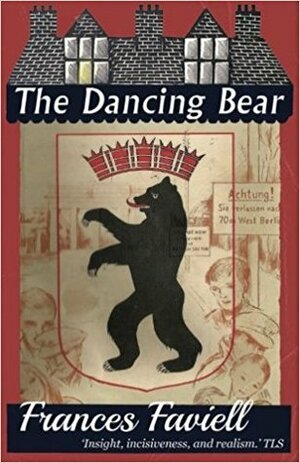
Review 2512: Dean Street December! The Dancing Bear

The rate I’m knocking out books for my A Century of Books project has been slow lately because first I was reading books for Novellas in November (some of which also qualified for ACoB), and I also wanted to read at least a few books for Dean Street December. And I don’t know what I was thinking, but I also put several books for my other projects on my library reserve list, and they have arrived. I must be crazy! Anyway, I read The Dancing Bear for Dean Street.

Although The Dancing Bear is set in time after Faviell’s A Chelsea Concerto, it is actually her first memoir. It covers her time in post-World War II Berlin, where her husband was part of the Occupation. The people in the city are freezing and starving, and even their occupiers are on strict rations of many commodities.

Much of the book is about Faviell’s relationship with the Altmann family. She is being driven in her car when she spots Frau Altmann, an older lady of fragile build, trying to move a heavy cart of furnishings through the streets. Faviell’s German driver thinks it’s hilarious when she falls, but Faviell stops to help her and shames him into helping, too. Despite the dictum not to give rides to Germans, she takes Frau Altmann home in her car.

There, she gets to know Herr and Frau Altmann, two gentle and dignified older people, their daughters Ursula and Lilli, and their sulky son Fritz, a former member of a Nazi youth group against his parents’ wishes. Ursula is the only bread-winner, making money by fraternizing with the British and American soldiers. Lilli, extremely frail, is a ballet dancer.

Aside from descriptions of the living conditions and the changing situation between the Soviet and the other occupiers, much of the story is about Faviell’s relationship with the Altmann’s and with her regular driver, Stampie, who trades on the black market to keep some German families alive.

This is a fascinating account of how some people meet and overcome difficult situations and some don’t. I also wasn’t aware of the conditions in Berlin (although I had heard of the Berlin Flyover) and all the manipulation the Soviets did to try to claim the entire city from their other allies.

Related Posts

A Chelsea Concerto

In the Garden of Beasts: Love, Terror, and an American Family in Hitler’s Berlin

The Oppermanns

Nonfiction November: Week Five

Here we are at the last week of Nonfiction November. The prompt for this week is

Week 5 (11/25-11/29) New To My TBR:  It’s been a month full of amazing nonfiction books! Which ones have made it onto your TBR? Be sure to link back to the original blogger who posted about that book! (Deb)

I have added a bunch of books to my TBR this week! Some of them were ones that I intended to put on it but forgot until reminded by a thoughtful blogger! Others are brand new to me. So, let’s go! I thought I’d divide these into books I already knew about and books I learned about this week.

Books I already knew about but forgot

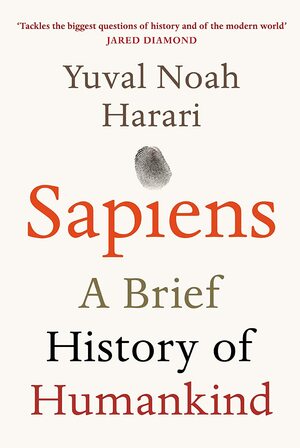
Actually, a friend of mine recommended this book to me quite some time ago, and I forgot about it. So, when I saw it on Readerbuzz this month, I immediately put it on my list. Thanks Deb! It’s Sapiens: A Brief History of Humankind by Yuval Noah Harari.

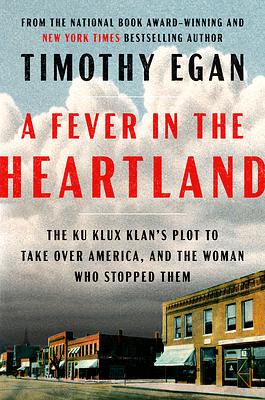
I’ve had my eye on A Fever in the Heartland by Timothy Egan since it came out. Okay, I am interested in the history of fringe organizations. I’ll never forget reading Under the Banner of Heaven by Jon Krakauer. Also, I found Egan’s book about the dust bowl to be interesting. Notice how I made no attempt to use this book’s really long and bulky subtitle. C’mon you guys! Some subtitle on a nonfiction book is expected, but you don’t have to tell everything on the cover! The blog that reminded me of this book was Joy’s Book Blog.

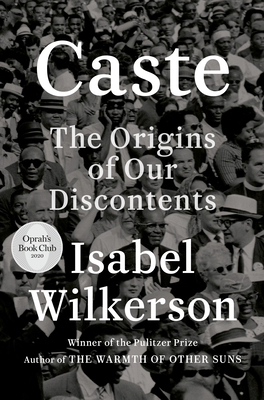
I didn’t write down which blog reminded me of Caste: The Origins of our Discontent, because it was mentioned on several. I have been meaning to read this book, especially because I thought Wilkerson’s book about the Great Migration was excellent.

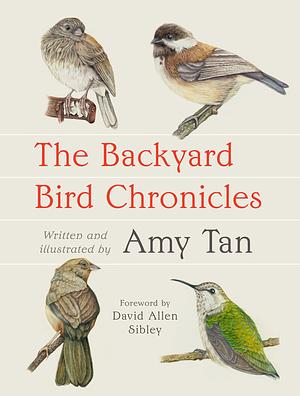
One morning as I was driving to my art class, I heard an interview with Amy Tan. I didn’t know that she had been more or less restricted to her house because of a condition that causes her to faint with no warning. She told how she got interested in looking at the birds in her backyard and how she eventually trained some of them to eat from her hand. The book is also illustrated by herself! I made a resolution to get that book right away, but I forgot all about it until Shoe’s Seeds and Stories wrote about it this week.

Those are the books I knew about before, but look what I picked up this week!

Books that piqued my interest this month

These books appear in the order that I wrote them down.

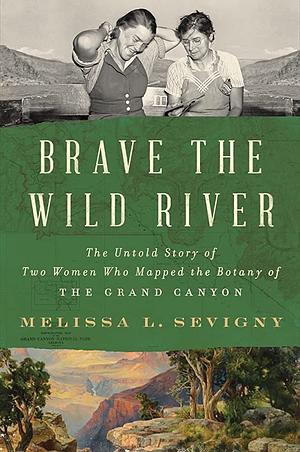
What could be more exciting than the story of women in 1938 tackling the Colorado River to see what botanical specimens they can collect? They were expected to die! I found out about Brave the Wild River by Melissa L. Sevigny on The Book Stop blog! Another unnecessarily long subtitle, guys.

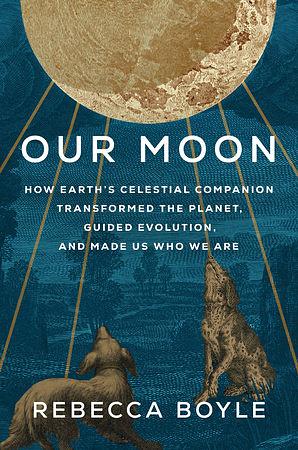
I can thank Unsolicited Feedback for listing two books that I put on my TBR this year. One of them is Our Moon (long subtitle) by Rebecca Boyle. I’ve always liked the moon, and Boyle hooks it into effects on our intellectual development, science, and other topics.

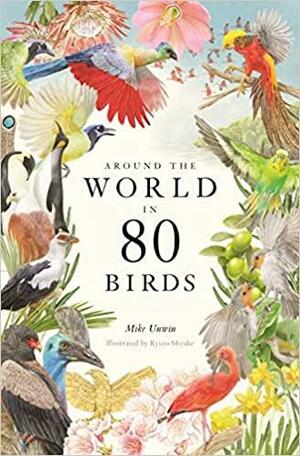
The other book is Around the World in 80 Birds by Mike Unwin, illustrated by Ryuto Miyake. OK, I like birds. In this beautiful book, Unwin picks 80 birds from around the world and tells us all about them.

Thanks so much, Unsolicited Feedback!

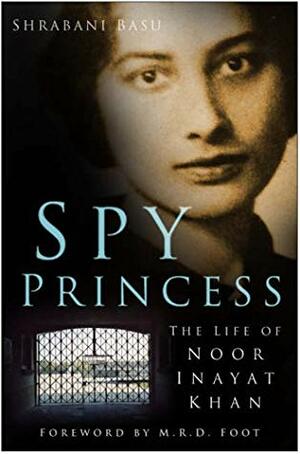
This one looks like a page-turner, Spy Princess: The Life of Noor Inayat Khan by Shrabani Basu. It’s about the first woman wireless transmitter in occupied France during World War II. She assumed a dangerous resistance post, was betrayed, and ended up dying in Dachau. I put it on my TBR thanks to Literary Potpourri!

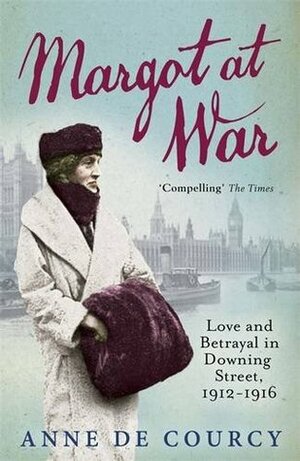
And stepping back to World War I, Margot at War by Anne de Courcy is a biography of Margot Asquith, the wife of Britain’s Prime Minister during World War I and how she affected the office. This is a staid description, but this book with its examinations of the couple’s private lives sounds quite juicy! Thanks to Hopewell’s Library of Life for this suggestion!

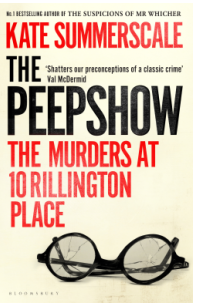
Finally, thanks to Helen of She Reads Novels for just yesterday reviewing another true crime novel by Kate Summerscale, The Peepshow: The Murders at 10 Rillington Place. I have found Summerscale to be reliably good and interesting but didn’t know she had another book out. I like me a good true crime.

Last year, I listed six or seven nonfiction books in my TBR, but only managed to read three of them (along with nine others). This year, I’ll try to make a point of doing better.

Nonfiction November: Week Four

Here we are already coming up on week four of Nonfiction November. It’s gone by really fast. This week, the prompt is as follows:

Week 4 (11/18-11/22) Mind Openers: One of the greatest things about reading nonfiction is the way it can open your eyes to the world around you–no plane ticket required. What nonfiction book or books have impacted the way you see the world in a powerful way? Is there one book that made you rethink everything? Is there a book where, if everyone read it, you think the world would be a better place? (Rebekah)

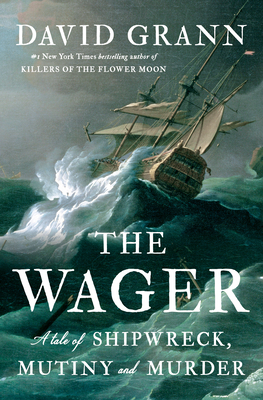
I don’t think any of my nonfiction choices this year impacted me as strongly as expressed in the prompt. Rather, some reaffirmed my interest in topics that I have neglected. I like reading books that tell me something I didn’t know about, and this year, the only one that fits in that category is David Grann’s The Wager: A Tale of Shipwreck, Mutiny, and Murder. It is about an ill-conceived venture of 1740 to capture rich Spanish ships in the Pacific Ocean. It was part of the War of Jenkin’s Ear, a conflict I also know nothing about (something to look up!). The expedition left too late for good conditions and had misestimated when the best weather for rounding Cape Horn would be. The Wager was the smallest ship in the fleet. It underwent some problems before getting to the Horn, and when it did, it was shipwrecked. What was most interesting was what happened among the crew once it was wrecked.

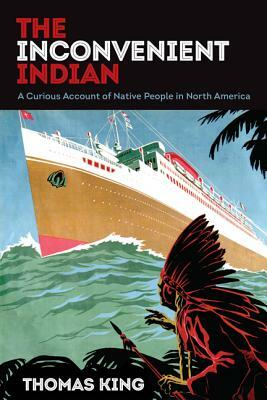
Another book that restressed some reading I had already done was The Inconvenient Indian: A Curious Account of Native People in North America by Thomas King, which I have not yet reviewed. It merely reconfirmed and built upon my reading from way back, when I read Bury My Heart at Wounded Knee by Dee Brown. Our history with dealing with native peoples is shameful, and our double-dealing hasn’t stopped. I need to get more informed on this issue and see what is going on today.

As I mentioned before, I really didn’t read much nonfiction this year despite my resolve to read more. It just didn’t happen that way, but I’ll try harder next year.

Nonfiction November: Week Three

I had to think a lot about what I could do for this week, because the most self-evident answer to the prompt was too obvious. Here’s the prompt for this week:

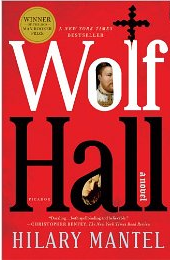
Cover for Wolf Hall

Week 3 (11/11-11/15) Book Pairings: This week, pair up a nonfiction book with a fiction title. Maybe it’s a historical novel and the real history in a nonfiction version, or a memoir and a novel, or a fiction book you’ve read and you would like recommendations for background reading. Or (because I’m doing this myself) two books on two different areas have chimed and have a link. You can be as creative as you like! (Liz)

Cover for Bring Up the Bodies

Maybe this pairing is obvious, too, but it didn’t immediately come to mind. Here it is, though. I recently finished the history/biography Hunting the Falcon: Henry VII, Anne Boleyn and the Marriage That Shook Europe by John Guy and Julia Fox. This account begins when both figures are younger, with Henry becoming king and Anne first going to the French court. But it concentrates on the years of their relationship and marriage, including the fallout from Henry’s divorce of Katherine.

I’m actually pairing this nonfiction book with three fiction books that concentrate on the same subject matter, and they, of course, are well known. I meant Hilary Mantel’s outstanding trilogy about Thomas Cromwell. The trilogy begins with Wolf Hall, in which Cromwell helps Henry with his divorce from Katherine so he can marry Anne. It continues with Bring Up the Bodies, in which Cromwell eventually helps ruin Anne after she fails to produce a son and Henry sets his eyes on Jane Seymour. Finally, it ends in The Mirror and the Light, which begins with the beheading of Anne.

Whether you’re interested in the nonfiction or the fiction books, you’ll be entertained, but the trilogy happens in my opinion to be a set of top historical fiction books.

Nonfiction November: Week Two

Here’s the prompt for Week Two of Nonfiction November:

Week 2 (11/4-11/8) Choosing Nonfiction: What are you looking for when you pick up a nonfiction book? Do you have a particular topic you’re attracted to? Do you have a particular writing style that works best? When you look at a nonfiction book, does the title or cover influence you? If so, share a title or cover which you find striking. (Frances)

What are you looking for when you pick up a nonfiction book? Do you have a particular topic you’re attracted to?

As far as the overall categories are concerned, I tend to gravitate toward history and biography, with a distinct slant toward reading about literary figures. However, there are certain periods of history that appeal to me (the Wars of the Roses and the Tudors, for example), and there are certain authors that I trend toward, usually buying any books that I come across. Here are some of those authors:

  • Bill Bryson
  • Doris Kearns Goodwin
  • David Grann
  • Erik Larson
  • Kate Summerscale
  • Claire Tomalin
  • Lucy Worsley

As you can see, several of these names are historians and biographers. I also like reading about art and true crime.

Do you have a particular writing style that works best?

Where writing style is concerned, I obviously want the book to be well written. In nonfiction, writing can get pretty academic and stuffy. If I’m not reading a book for a particular research goal, then I prefer the style to be more informal, maybe even with a touch of humor. However, Goodwin uses a more formal style, but it is eminently readable and not stodgy.

When you look at a nonfiction book, does the title or cover influence you? If so, share a title or cover which you find striking.

Yes, of course, the covers influence me to buy books. I’m not going to pretend otherwise. However, I’m more influenced by the author than the cover, usually. Titles not so much in nonfiction, because they are often stodgy or ruined by those stupid subtitles they all seem to have now. I think the cover that I liked best from my reading of the last year was the one for The Salt Path (note no subtitle).

Nonfiction November: Week One

Last year, I participated in Nonfiction November, and it was fun, even though I don’t read a lot of nonfiction. It takes a different approach than a lot of the challenges, which just have you reading books from the topic or time. Instead, each week it asks a series of questions about your nonfiction reading throughout the year.

The hosts this year are Liz of Adventures in reading, running and working from home, Frances of Volatile Rune, Heather of Based on a True Story, Rebekah of She Seeks Nonfiction, and Deb of Readerbuzz. Each week one of the hosts lists a different set of prompts for people to answer.

Here’s the prompt for this week.

Week 1 (10/28-11/1) Your Year in Nonfiction: Celebrate your year of nonfiction. What books have you read? What were your favorites? Have you had a favorite topic? Is there a topic you want to read about more?  What are you hoping to get out of participating in Nonfiction November? (Heather)

What books have I read?

I only read 12 nonfiction books this year, which I suppose by any standard is a poor showing. I don’t want to list them all, but let me categorize them by overall topic.

  • Histories: 3
  • Memoirs: 5
  • Biographies: 3
  • Graphic nonfiction (graphic as in graphic novel): 2
  • Essays: 1

You can see that these numbers add up to more than 11. That’s because the categories overlap a bit.

What were my favorites?

I read two literary biographies by Lucy Worsley and found her writing style so smooth, funny, and lively that I liked them a lot. These were Jane Austen at Home and Agatha Christie: An Elusive Woman. I also very much liked the charming graphic biography by Raymond Briggs, Ethel & Ernest.

Another book that stands out for writing style is the ironic but informative style of Thomas King in his book The Inconvenient Indian, about the history of broken treaties, evil government policies and so on toward the native peoples of Canada and the United States. I put this book in the essays category because it jumps from topic to topic, but it could also be in the history category and in current events, if I had a category like that. My review of that book hasn’t come out yet, but I compared him to Bill Bryson in writing style but with more sarcasm.

An interesting memoir for me was The Islandman by Tomás O’Crohan, translated from the Irish by Robin Flower. It is the recollections of a man born on the Blasket Islands off the coast of Southern Ireland in 1865, a very primitive existence.. Part of what I refer to as my “forced march through Ireland” 30 years ago included hiking up a hill on the Dingle Peninsula to look at the Blasket Islands, which have been unoccupied since the 1950s, when the Irish government removed the few remaining inhabitants.

It’s actually a little hard to answer this question, because I liked all of the nonfiction books I read this year. I always like David Grann, for example, and his history of The Wager in its last voyage was as compelling as usual.

Have I had a favorite topic?

I think it’s clear from my list of books that I like books about people, so I have read a preponderance of memoirs and biographies, but also histories about people more than events. For example, I put under the histories and biographies categories Hunting the Falcon by John Grey and Julia Fox, about the early lives of and relationship between Henry VIII and Anne Boleyn. I haven’t reviewed this one yet, either.

I only read one book on this topic this year, but I also like true crime and books about topics like spiritualism (not in the philosophical sense but histories about it), so what could be better than a book that combined both? It’s The Haunting of Alma Fielding by Kate Summerscale. The crime in this one isn’t a murder or anything, just ripping people off.

Is there a topic I want to read more about?

Not specifically, although perhaps I would like to read more about the Halifax explosion, and I have so far only read fiction about that. I will probably just continue to read the types of nonfiction that I usually read. I don’t usually go out looking for nonfiction, but if I hear about a new book by a favorite author or read someone’s review of one that sounds interesting, I’ll look for it. I believe I heard of Hunting the Falcon in a review by Helen of SheReadsNovels.

I could also swear that I read another book on the Blasket Islands, but looking at the available ones online does not ring a bell for me, although there are several similar memoirs to the one I read this year. It’s just that I vividly remember the part about having to leave the island. Anyway, when I tried to figure out what book I read, I saw Island by Alastair MacLeod. I’m not altogether sure it is set on the Blaskets (in fact, I think they are not), but remote Irish and Scottish island life has always appealed to me, so I have put it on my reading list.

What am I hoping to get out of Nonfiction November?

Last year I made a list of other people’s nonfiction reads with the idea of reading some of them. I didn’t think I read any of them, but I did, The Salt Path by Raynor Wynn, Ducks by Kate Beaton, and I have The Dancing Bear by Frances Faviell on my desk! And today, I am going to check that the others are on my To-Read list on The StoryGraph, so I don’t forget them. (They are!)

Otherwise, it’s kind of nice to reflect back on what I have read. In addition, the entries from last year by other people made me think about nonfiction more and add 8 nonfiction books to my To-Read list.

Review 2486: A Chelsea Concerto

A Chelsea Concerto is Frances Faviell’s memoir of the Blitz. Although I have now read several memoirs and novels set during this time, this one is remarkable for its integration of war news and its detailed descriptions of air attacks and their results. Faviell lived in Chelsea during the Blitz—an area that was very hard hit—and the book ends with a massive bombing of the area.

The book begins before the official war, with Faviell getting involved with working with Belgian refugees because of her ability to speak several languages. It continues to follow events of the war and the Blitz. It’s so detailed as to indicate that Faviell must have notes or diaries to refer to, as the memoir was not published until 1959. The descriptions of damage caused by the bombings is very vivid.

Unfortunately, Faviell often assumes knowledge on the part of readers that they may not have, either because it was common knowledge at the time or that it was so familiar to her that she didn’t think it needed explaining. This problem includes unexplained abbreviations, people identified only by name with little context, and at the end of the book, a mysterious reference to some event three years after the events of the memoir.

Also, there are lots of people mentioned in the book but characterization of only a few of them. This led me sometimes to be confused about who they were.

Related Posts

Table Two

The House Opposite

Spam Tomorrow