Day 1049: Lafayette in the Somewhat United States

Cover for Lafayette in the Somewhat United StatesIt was interesting to contrast Lafayette in the Somewhat United States with the other book about the American revolution I read recently, Nathaniel Philbrick’s Valiant Ambition. While Valiant Ambition concentrated on what made Benedict Arnold a traitor, this book focuses on the French contribution to the war, embodied particularly by the Marquis de Lafayette.

The Marquis himself
The Marquis himself

In some ways, both books cover the same ground, particularly the woeful state of the Continental army. Several times, infusions of cash from the French saved it from utter ruin. But the writing style and the intent of these books are different. Vowell’s book is written in an informal, sprightly style with many references to current popular culture. Also, Lafayette’s impetuous, affectionate character comes through strongly.

This book is a slightly quirky homage to Lafayette’s contribution to our country, featuring side-trips to various battlefields and landmarks as well as a cogent, irreverent discussion of the events. It is a fun read.

Related Posts

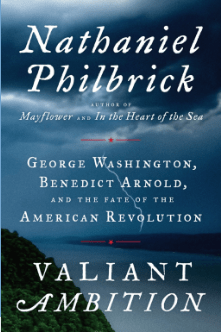
Valiant Ambition: George Washington, Benedict Arnold, and the Fate of the American Revolution

Abigail Adams

Ross Poldark

Day 1017: The Midnight Assassin: Panic, Scandal, and the Hunt for America’s First Serial Killer

Cover for Midnight AssassinI lived in Austin, Texas, for more than 20 years (not anymore, yay!), so I already know that Austin had a serial killer before Jack the Ripper. That didn’t make this book any less interesting, though.

Journalist Skip Hollandsworth was very surprised when he learned about it. In fact, he says he didn’t at first believe that, starting in 1884, Austin suffered a series of brutal attacks on women that ultimately culminated in several murders.

At that time, serving women usually lived in little shacks at the backs of their employers’ homes. Most of the victims were dragged out of these homes—other occupants either hit over the head or merely threatened—and then brutally attacked somewhere nearby. Most of the first victims were black, so of course (it being Texas and the 19th century), the authorities looked to African-American men for the perpetrator. Then they decided it was a gang of them. The idea of a serial killer seemed inconceivable to them.

Hollandsworth’s strength in this book is in bringing 1880’s Austin to life. He does a great job of setting the stage. I also enjoyed all of the photos of Austin from that time. This is an interesting story, one that many Austinites are unaware of. Of course, it doesn’t have a solution as the killer was never caught. We may never know who this murderer was or why he stopped. Hollandsworth follows up some interesting leads, though.

If you are interested in this topic, Steven Saylor has written a fictional account of it, using O. Henry as a character. His solution is a bit far-fetched and easy to predict, though.

Related Posts

The Invention of Murder: How the Victorians Revelled in Death and Detection and Created Modern Crime

Dust and Shadow

The Yard

Day 988: H Is for Hawk

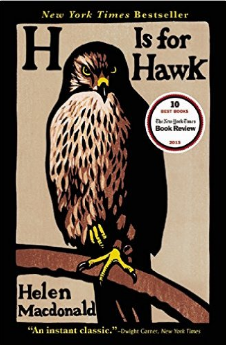
Cover for H Is for HawkBest Book of the Week!
I never gave too much thought to what is involved in falconry until I read H Is for Hawk, a memoir by Helen Macdonald, English naturalist, writer, and Affiliated Research Scholar at Cambridge University. But Macdonald’s memoir covers more ground than just that. It is also an examination of what is revealed about the writer T. H. White in his nonfiction book Goshawk and a recollection and examination of Macdonald’s grief over the death of her father.

As such, H Is for Hawk has many layers. It is a literary work, both in its examination of White’s book and in its eloquent writing style. It is an unflinching memoir. It is also deep psychologically in its examination of the forces that drove White and that drive Macdonald. Finally, it is a journal of falconry.

I was deeply interested in the story of Helen and her hawk Mabel. I was particularly surprised by some details about the personality of the hawk. This book contains some beautiful, almost poetic descriptions of the natural world. It is certainly worth reading. Highly recommended.

Related Posts

The Rural Life

My Life in Middlemarch

The Bird: A Natural History of Who Birds Are, Where They Came From, and How They Live

Day 982: 84, Charing Cross Road

Cover for 84, Charing Cross RoadIt’s taken me some time to read 84, Charing Cross Road, but I’m glad I did. This very short book, a collection of letters, has been a classic for some time.

The books spans 20 years, beginning in 1949. Helene Hanff, a freelance writer living in New York, writes a letter to Marks & Co., antiquarian booksellers at 84, Charing Cross Road. She has become weary of the shoddy books she is able to afford in New York and asks the booksellers to send her inexpensive secondhand copies of several works. She is duly answered by Frank Doel.

This correspondence moves from formal to friendly. Hanff knows that England is still under postwar austerity measures, so she sends the store employees packages of eggs and meat and other goodies. Soon the correspondence is joined by letters from Frank’s wife and other store employees.

This is a delightful book about friendship between people who have never met. Many of the letters are funny, and the book is particularly appropriate for book lovers.

Related Posts

White Heat: The Friendship of Emily Dickinson and Thomas Wentworth Higginson

History of the Rain

Dracula

Day 976: The Wicked Boy: The Mystery of a Victorian Child Murderer

Cover for The Wicked BoyDuring a scorching 1895 July in East London, Robert Coombes murdered his mother while she was sleeping. He and his younger brother Nattie continued to live in the house for ten days with their mother locked in her bedroom, decaying. They hocked items from the house for money and attended a cricket game and a play. They told neighbors and relatives their mother had gone to Liverpool to visit her sister. They invited a laborer named John Fox to live with them, and they all slept downstairs in the parlor. Their father was away at sea at the time.

When the boys’ Aunt Emily forced her way into the house and found the body, Robert told her that his mother had beaten Nattie and that Nattie had asked Robert to kill her when he gave the signal. This story later seemed to have been forgotten, and Nattie testified against Robert in trial.

This crime was shocking to the Victorians, and there were many theories about it, from the morally debilitating effects of the penny dreadfuls Robert loved to ideas about children’s innate base instincts that must be covered over by civilizing influences. No one really knows why Robert killed his mother, but journalist and writer Kate Summerscale has her ideas.

link to NetgalleySummerscale was able to follow Robert’s movements to Broadmoor Asylum after his committal and traced his career in World War I as an instrumentalist and stretcher bearer. At first I wondered where the epilogue was going but figured it was connected with the opening of the novel, about a fleeing boy.

I found this book very interesting. Although most of it focuses on the crime and trial, I found this story of a murderer’s redemption satisfying.

Related Posts

The Invention of Murder: How Victorians Reveled in Death and Detection and Created Modern Crime

The Fall of the House of Walworth: A Tale of Madness and Murder in Gilded Age America

The Secret Rooms

Day 972: The Scottish Highlands

Cover for The Scottish HighlandsI will frankly admit here that I am a massive Dorothy Dunnett fan, and as such, I am eager to read anything she wrote. In this case, it’s an homage to the Scottish Highlands that she wrote with her husband Alastair, illustrated by photographer David Paterson. Alastair Dunnett was a journalist, novelist, and man of many talents. Dorothy Dunnett was an internationally known historical novelist and portrait painter.

This book is beautifully written and has gorgeous photographs. It is oddly organized for this type of work, though. The photographs and the text are presented independently, even though some overlap occurs. First, there is a section of text by Dorothy Dunnett, divided into areas of the Highlands. After that, the rest of the book is divided into the same areas, with Alastair’s text followed by Paterson’s photos. No attempt has been made to integrate the two Dunnetts’ text with each other, and little attempt has been made to integrate Alastair’s text with the photos.

A contrast to this book’s approach is James Herriot’s Yorkshire, where Herriot’s text and photos about the same places appear together. It’s almost as if the editors of The Scottish Highlands were putting together three different books. Still, it does make me want to visit the Highlands. Of course, I already wanted to.

Related Posts

King Hereafter

The Game of Kings

The Disorderly Knights

Day 936: Valiant Ambition: George Washington, Benedict Arnold, and the Fate of the American Revolution

Cover for Valiant AmbitionAlthough he has written on other subjects, Nathaniel Philbrick has made a specialty of writing about events and industries that affected New England, including the Revolutionary War. His latest book concentrates on the forces and personality flaws that resulted in Benedict Arnold’s betrayal of his country.

I haven’t read much about Benedict Arnold, only one novel, Rabble in Arms by Kenneth Roberts. That novel painted him in surprisingly sympathetic colors, blaming his treachery largely on the rapacious demands for money of his wife Peggy. Philbrick’s view is more nuanced.

Certainly, at the beginning of the war you can sympathize with Washington and with Arnold. For his part, Washington was hamstrung by the ineffectiveness and bickering of the Continental Congress. He had very little power over such decisions as which of his officers would receive promotion, which lead to the initial difficulties with Arnold.

A key to the British strategy of cutting off New England from the rest of the country was the chain of lakes leading down from Canada to the Hudson. So, Fort Ticonderoga was an important target. Benedict Arnold and a rag-tag collection of boats prevented the British from approaching the fort in the fall of 1776, before the lakes could freeze up to keep the British out.

As the hero of this engagement and the senior Brigadier General in the Continental Army, Arnold expected a promotion. But the Congress devised an idiotic scheme that awarded the promotions not on merit but according to what state the person was from. Since Connecticut already had two Major Generals, Congress awarded the promotions to other Brigadier Generals who were junior to Arnold, some of whom were only mediocre in ability. Washington protested this decision, to no avail. Even after he got his promotion, Arnold was forced to defer to these men who were promoted before him.

link to NetgalleyIt was this kind of bickering about states’ rights and even local rights versus the rights of a national government that hampered the Congress. In addition, there were plenty of people out for what they could get. I was shocked to read that while no one was interested in supporting the Continental Army, to the point where they were starving and dressed in rags, the rest of the country was doing very well financially. Arnold joined into this self-enrichment when he was made military governor of Philadelphia after it was captured back from the British. He was actively engaged in all kinds of corruption.

Philbrick’s book is really interesting and sometimes quite exciting as it revisits key scenes from the war and leads up to Arnold’s big betrayal. His conclusions about the results of the betrayal are startling.

Related Posts

Away Off Shore: Nantucket Island and Its People, 1602-1890

Mayflower

Abigail Adams

Day 923: The Road to Little Dribbling

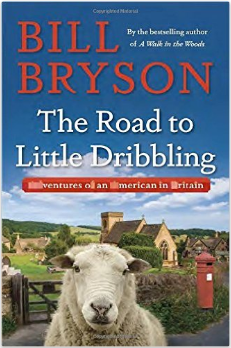
Cover for The Road to Little DribblingBest Book of the Week!
The Road to Little Dribbling is only the third book I’ve read by Bill Bryson, but it is the one I’ve most enjoyed. It is a follow-up to one of Bryson’s most popular books, Notes from a Small Island (which I have intended to read but have not), upon its 20-year anniversary. Both are about travels in Britain.

In The Road to Little Dribbling, Bryson draws an imaginary line between the two farthest points on mainland Britain and takes expeditions to some of the places on either side of the line. His line begins in a minor southern seaside town named Bognor Regis (where, oddly, I began my first visit to that country) and ends in northern Scotland at Cape Wrath.

The things that make Bryson’s books stand out are that he has many humorous observations to make and he is endlessly curious about everything. So, he has lots of stories to tell about the places he passes through, some of them personal, some historic, some scientific. He is also skillfully descriptive of beautiful scenery.

A recurring theme in the book is the impact of austerity measures on national landmarks and scenery. Also related to the economy is the growing dereliction of some of the towns he passes through. But he makes it clear that there is still much of charm and beauty to be seen and that many places are thriving.

I always enjoy Bryson’s comments about the lack of basic knowledge among some of the general public, because I have observed indications of that with dismay. I just recently viewed a video of Texas college students who were unable to answer basic history and political questions such as “Who won the Civil War?” or “Who did we get our freedom from?” but could answer every question about celebrities. I suppose this should not be surprising, since for the past couple of years my husband and I have observed that watching “NBC Nightly News” is now more like watching “Entertainment Tonight” than actually watching news.

Related Posts

A Walk in the Woods

The Life and Times of the Thunderbolt Kid

A Time of Gifts: On Foot to Constantinople

Day 898: An Adventure

Cover for An AdventureAn Adventure is the account by two English woman academics of a couple of supernatural events during a visit to Versailles, published under pseudonyms. The women had the first experience on August 10, 1901, and the second was experienced by one of the women alone the following year. The two women claimed not to have spoken together about the first event until three months later, when they agreed that the Petit Trianon, where the first event occurred, must be haunted. At that time, they decided to write down separate accounts of the incident.

The first section of the book is each woman’s account of the incident. On a visit to Paris, they went to Versailles and decided to stroll the grounds looking for the Petit Trianon, which was a favored place of Marie Antoinette. Although their accounts disagree in some respects, both women reported seeing the same landscape and layout of buildings and some of the same people dressed in antique costumes. One of the women saw a lady painting in a white dress. They also reported an oppressive atmosphere.

On a subsequent visit, “Frances Lamont” heard people speaking as if they were walking on a path nearby and music from the 18th century. Later, the women were unable to locate many of the places they had visited on the previous visits. These events led them to decide they had observed supernatural visits of Marie Antoinette and some of her servants and courtiers. They also learned that Petit Trianon was rumored to be haunted on August 10, which is the anniversary of a pivotal date in French revolutionary history.

The second section of the novel relates the discoveries that the women made. It describes the differences between the landscape of the area at the time of the event and in the 1780’s. It details the women’s research to explain the costumes of the people they saw and the events witnessed.

The final section of the book contains the women’s explanations of the events as a combination of memories in the mind of Marie Antoinette as she and her family were cooped up in a small room on the day of August 10, 1789.

The most interesting part of the book is the first section, containing the women’s accounts of the events. The section about their investigation is harder to follow and difficult to visualize. Subsequent reading I’ve done on the notorious event contained allegations that their sources validating some of the information they researched were questionable.

The final section seems much too suppositional for easy belief (if you can believe any of it) as well as repetitive, revisiting much of the information from the second section. Whether you believe something supernatural happened to these women or whether their memories were influenced in the time that elapsed after the event or even that they invented the whole (which does not seem to be a general assumption), this is a mildly interesting account that was controversial when published, even during a time that was credulous about the supernatural.

Related Posts

Giving Up the Ghost

The Séance

The Sun King

Day 884: Tales from the Queen of the Desert

Cover for Tales from the Queen of the DesertTales from the Queen of the Desert is a set of excerpts from two books by a remarkable woman, Gertrude Bell. Bell was a travel writer, diplomat, linguist, archaeologist, even a spy during World War I. She was widely regarded as an expert on the Near and Middle East and helped establish the country of Iraq.

She wrote the first book, Persian Pictures, after she visited her uncle in Persia (modern-day Iran) in 1892. She was very observant, and whether she is describing the landscape, the bazaar, or her impressions of Tehran, her descriptions are so vivid that it’s possible to imagine exactly what she saw.

In this book, she is sometimes a little snide, in a superior sort of way, although sometimes funnily so, as when she reports her impressions of the famous Peacock Throne of the Shah. At first she is astounded when she realizes that every inch of the room, including the carpet, is encrusted with jewels. But then she notices other objects among the jewels—patent medicine pills and toothbrushes, for example, which are also treated as treasures. As a final touch, she notes that the room is lined with boxes, which turn out to be music boxes. She understands that the Shah likes to turn them on all at the same time.

Some of her observations resound strongly even today. For example, at the beginning of the first chapter, she describes entering Tehran from the west gate. From that side, the city at the time was relatively unpopulated, the desert creeping in. But by the east gate, the town was vibrant and full of people. She concludes, “The East looks to itself, it knows nothing of the greater world of which you are a citizen, asks nothing of you and your civilization.”

Syria: The Desert and the Sown was published in 1907 after what was apparently Bell’s second trip to Syria, as she references a visit five years before. In this book, although she visits some of the area’s most important cities, the excerpts concentrate more on her travels in the hinterlands, where she meets many interesting people and examines archaeological sites. She also has another errand, which she does not discuss.

The excerpts from this book seem more fragmentary, for she begins chapters in different locations than she left off. Again, her descriptive powers are notable. By now, she gets by very well in Arabic and has studied the customs and courtesies of the area. Her attitude of slightly amused superiority is gone.

In both books, Bell’s writing is almost poetic at times. It’s easy to feel the romance and dangers of the East. There is nothing like some books for taking you to another place and time.

I received a copy of this book from the publisher in exchange for an honest review.

Related Posts

The Cruelest Journey: Six Hundred Miles to Timbuktu

The Great Game: On Secret Service in High Asia

Wild