Review 2186: Eyes of the Rigel

This third novel in Jacobsen’s Barrøy trilogy has Ingrid Barrøy leaving remote Barrøy Island at the end of World War II to find the father of her daughter. Alexander was a Russian prisoner of war whom she rescued after the prison ship, Rigel, sank.

Ingrid only has faint leads as she rows, walks, takes the train, and rides the bus from one place to another in Norway, bringing her infant daughter with her. She starts with the people she left Alexander with after she smuggled him off the island and follows the trail from one person or location to another. None of the people she meets seem eager to help her, and she continually feels that they are lying. Ingrid is surprised to learn that not all people are happy the war is over, and she is naïve about lingering resentments and distrust.

I have been completely entranced by these books and felt that this was a fitting ending to the series. Ingrid is brave and determined, the writing is beautifully spare, the journey difficult and unpredictable.

Related Posts

White Shadow

The Unseen

A Town Like Alice

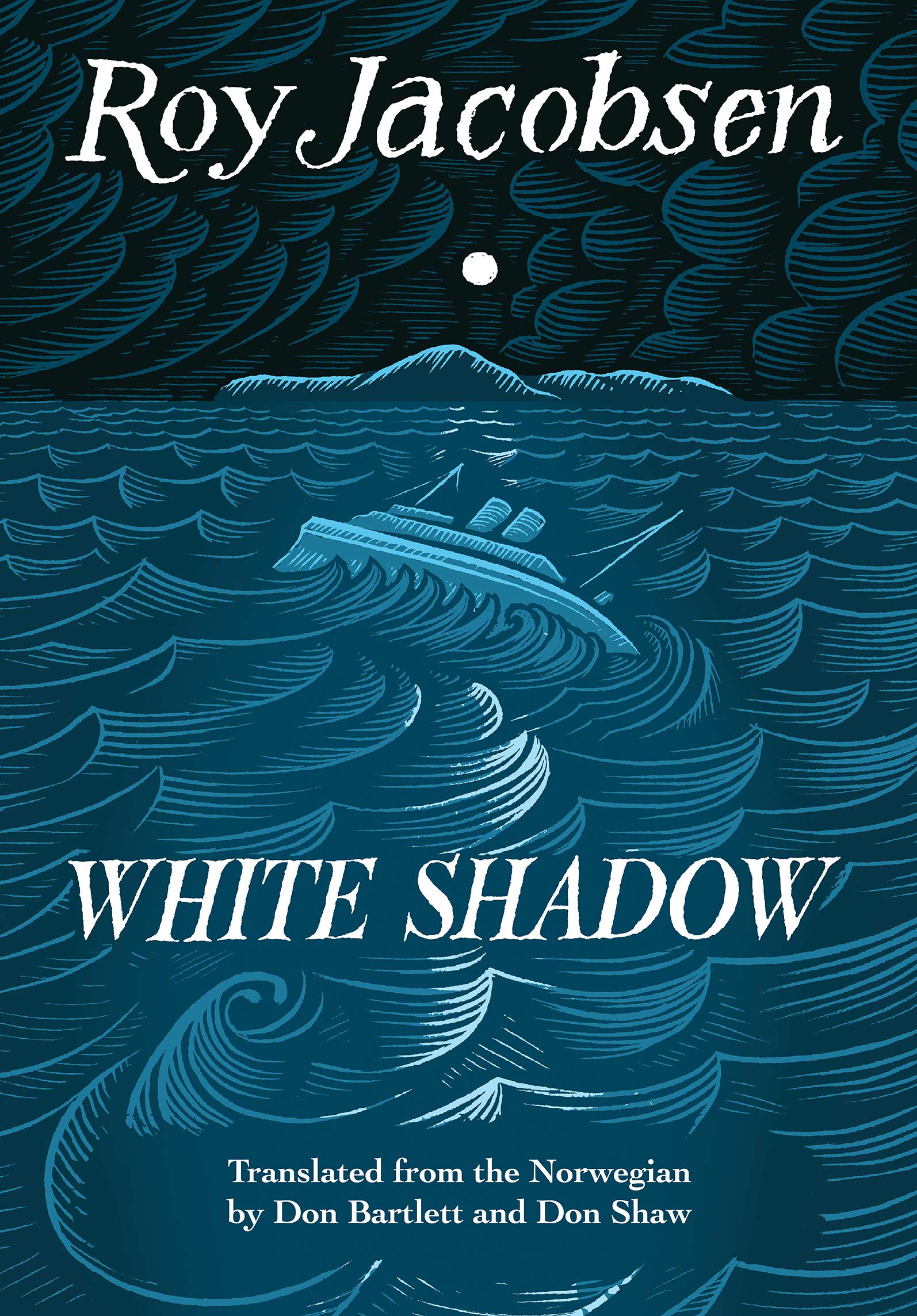
Review 2175: White Shadow

In this second book of Roy Jacobsen’s Barrøy trilogy, it is World War II and the Nazi’s have invaded Norway. The small island of Barrøy, the home of Ingrid’s family, has been evacuated. Ingrid has been living on the main island working in the canning factory, and her family is dispersed.

One day Ingrid defies the Germans and gets on a boat to row back to Barrøy. She goes into her family home without paying much attention to signs that someone has been in it, and it’s as if her brain refuses to see at first that there are dead bodies on the shore. A German ship carrying Russian prisoners has been bombed. She spends a day covering and burying bodies but eventually finds one man alive—a Russian, badly injured, up in the loft of the house.

Ingrid takes care of him but also must keep him safe from the Germans, who are observing her from the main island. She also is trying to bring the farm back into shape and fish to feed them.

The novel takes us to the end of the war, during which Ingrid has a difficult time.

Jacobsen tells this story with his usual pure, spare prose, a moving novel about human transcendence over great difficulty. I just love this series.

Related Posts

The Unseen

We, The Drowned

The Flight Portfolio

Review 2116: The Unseen

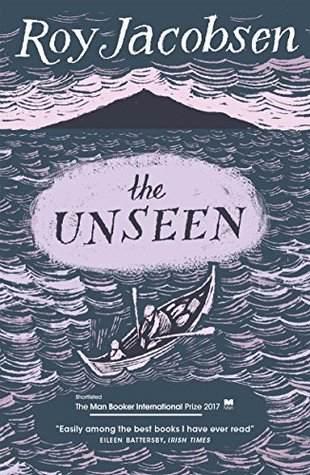
I have to admit to buying The Unseen because of its cover. I’m glad I did, because before I was halfway through, I was ordering the second book in the Barrøy trilogy. Although I’m not reading the shortlist for the Booker International prize, this novel was shortlisted for it.

After reading much of Halldor Laxson’s Independent People under the belief that it was describing Icelandic life in Medieval times, only to find out it was set in the 20th century, I don’t make assumptions about the times in which novels are set anymore. The Unseen describes a similarly primitive existence, with not many hints to its timeframe, but I finally figured out it begins a few years before World War I.

Ingrid’s family lives on Barrøy, one in an archipelago of many small islands in northern Norway. Each island is occupied by one family, and although the islands are in sight of each other, visits are rare, so the family has to be fairly self-sufficient.

Ingrid’s father, Hans, works hard and dreams of a different life for his family. His immediate dream is for a quay to make it easier for boats to land, so that when Uncle Erling arrives with his large fishing boat each January to pick up Hans for the yearly fishing, he can get off the boat. The novel relates the everyday events of the family’s life—the four-month fishing trips, the haying and fish drying in summer, milking cows, moving livestock from one small island to another for grazing, collecting and cleaning down from the eider ducks. And the big events—births, deaths, expansions and contractions of the residents of the islands.

Written in spare, crystalline prose with an occasionally very dry humor, The Unseen is fascinating. I loved this novel. And here I am reading about islands again.

Related Posts

Independent People

A Place Called Winter

The Rathbones

Review 1805: The Mercies

A freakish storm kicks up one day in 1617 and drowns all the men on the island of Vardø who are out fishing. Only young boys and old men are left. There is no one to help the women, so they have to learn to fend for themselves, including fishing, which is considered unwomanly. Maren’s fiancé and her father and brother are all gone, so she must try to take care of her mother, her brother’s Sámi wife Diina, and her little baby nephew.

In Bergen, Ursa’s father has made one poor decision after another since her mother died, leaving the family relatively poor. She is happy taking care of her invalid sister, but soon she learns her father has betrothed her to Absolom Cornet, a Scot he hardly knows, who has been appointed the Commissioner of Vardøhus, the rarely occupied fort on Vardø. Her father thinks he has done well for her, but they have no idea that Cornet is being sent to root out witchcraft.

Ursa is taken aback at the primitive conditions she finds in Vardø, in remote Finnmark, and she knows nothing about keeping house. When Maren brings her some skins the villagers have prepared to keep the cold from coming up from the floor, Ursa asks her to teach her how to take care of the house and cook. Thus begins a deep friendship.

But Ursa’s husband has already begun looking for witches. The first names that come up from a vicious bunch of pious women are Maren’s Sámi sister-in-law, an older woman whose large house is a target of envy, and Maren’s bold and unconventional friend Kirsten.

The Mercies is a deeply involving fictionalization of true events in early 17th century Norway. Seldom have I felt such a growing feeling of dread as when I read this novel. It is truly gripping. It seems well researched and has believable characters.

Widdershins

Corrag

The Witches: Salem, 1692

Review 1784: Death in Oslo

I began reading this Norwegian series after watching the Swedish TV show Modus that is based on it. I mentioned that connection before, but while reading this novel, I thought about it a lot.

Helen Bentley, the American president, disappears from her hotel room during a state visit to Norway. Adam Stubo isn’t involved in the case at first, but then FBI agent Warren Seifford requests Adam as a liaison. When Adam’s wife, Johanne Vik, hears this, she demands that he refuse to work with Warren even though she won’t explain why. Then she leaves home with her baby when Adam reports to work.

Perhaps it’s because I watched the Modus version of this book first, which made significant changes, but I found it much less plausible than I have Holt’s other books in the series. I have already noticed, though, that her character Johanne Vik tends to be a little hysterical at times, unlike the calm counterpart in the TV series.

First, I felt that Holt had little grasp of the way politics between the Norwegians and the Americans would play out. Most of the time, she just shows them spinning their wheels in power plays. She, or perhaps the translator, also gets things wrong about American speech. The mistake I can think of offhand has an American on the news call gas “petrol.” Americans don’t use that word. I would think the book was simply translated for a British audience except the word was used in a supposedly verbatim news report from the States. I also noticed a similar error when Warren’s thoughts are revealed.

The TV program has the President stashed in the closet of an abandoned building, but in the novel she is in an apartment basement and just happens to be found by the servant of the woman Johanne Vik goes to stay with. That coincidence is bad enough, but that they don’t immediately call the police is wholly unbelievable.

Finally, there’s the big climax. I don’t want to give too much away, but I have to say that since the person the president thinks is guilty isn’t, what happened to the danger that she was supposedly in? They handled this much better in Modus by having there be actual danger.

So, a bit disappointed here. I’m ahead of the series on the next book, so we’ll see if that makes a difference.

Punishment

The Final Murder

The Water’s Edge

Review 1762: The Christmas Wish

Last year, I saw pictures from The Christmas Wish on TV and thought they were so beautiful that I bought a copy of the book. This little children’s story is illustrated with photos, some of which have been doctored to create the effects. This book is written by Lori Evert, and the photography is by Per Breiehagen.

Anja is a little girl who wants to be Santa’s helper for Christmas. So, after doing her chores and helping out a neighbor, she puts on her skis and heads north. On the way, she is helped by a cardinal, a draft horse, a musk ox, a polar bear, and a reindeer, each giving way to the next as she goes farther north.

The little girl is dressed in a traditional Norwegian outfit, and the photos are just wonderful. The story is simple but sweet. This is a book that could be passed down as a family heirloom.

Snow

Premlata and the Festival of Lights

Red Knit Cap Girl

Review 1750: The Final Murder

Anne Holt’s Stubo and Vik series books are so far suspenseful, and her characters are convincing. I enjoyed The Final Murder but found it a bit far-fetched.

Johanne Vik and Adam Stubo are a couple five years after the events of the last book, and Johanne has just given birth to their daughter. She hasn’t been sleeping, and she is worried that the new baby may exhibit symptoms of the undiagnosed condition of Kristiane, her first child.

A TV personality is found dead in a bizarre murder with her tongue cut out, split, and placed in an elaborate origami bowl. Despite the efforts of Adam’s team, they cannot find anyone who bore her a grudge. Then a rising young politician is found crucified. The team begins to be afraid they have a serial murderer of celebrities.

Something about the murders seems familiar to Johanne. After the third one, she realizes that it is not just about celebrities—someone is re-creating five unrelated murders that Johanne’s FBI mentor regularly talks about in his lectures. We readers periodically check in on the murderer and know that she is a woman.

To explain my problems with this mystery, I have to reveal a spoiler, so stop reading now if you don’t want to know more. The murderer is actually targeting Johanne with these murders, trying to see if she can catch her. I found the re-creation idea a little iffy, but this plot point seems more like the old-fashioned diabolical mastermind challenging the detective—sort of Holmes/Moriarty—the kind of thing that has always seemed ridiculous and unlikely to me. I also felt frustrated by the ending, which I will not reveal.

Don’t misunderstand me, though. I still enjoyed reading the book and look forward to the next one, although I find Johanne a bit neurotic.

Punishment

The Mist

The Water’s Edge

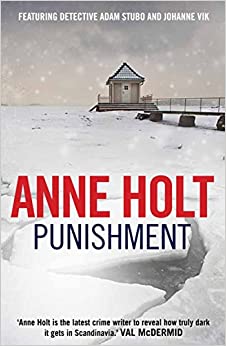
Review 1722: Punishment

Here’s another book for RIP XVI.

I thought maybe I had read an Anne Holt mystery years ago, but it appears not. In any case, I got interested in reading her Stubo/Vik series after watching Modus, a Swedish television series based on her Norwegian characters. It’s interesting, having seen the television series first, to notice the changes they’ve made.

Johanne Vik, a university researcher doing work on convicted criminals who maintain their innocence, is contacted by an old lady who has long been convinced of a miscarriage of justice. In 1988, Aksel Seier was convicted of the rape and murder of a young girl based on flimsy evidence. After he served nine years, he was mysteriously released from prison and all the case paperwork disappeared. The woman wants Johanne to find out if Seier was innocent. Although this is not the kind of work Johanne does, she becomes interested in the case and agrees to help.

At about the same time, Detective Adam Stubo sees Johanne on television and asks her to help brainstorm the case of a series of kidnapped and murdered children. At first, she refuses but is drawn in by his persistence.

All along, we follow the story of Emilie, one of the kidnapped children who has not been killed, as well as the thinking of the murderer. This lends an extra layer of suspense about whether she will be saved.

I think this is a complex and well-plotted novel with interesting characters. There are a couple of huge coincidences at the end that I’m not sure of, but I am more than willing to continue the series.

Related Posts

The Redbreast

The Water’s Edge

The Indian Bride

Review 1568: The Cross

The Cross, the final book of Kristin Lavransdatter, begins after Kristin’s husband Erlend Nikulaussön’s political intrigue has resulted in the loss of all his property to the crown. Kristin and her family have resettled on her farm, Jörundgaard, which she inherited from her father. Erlend is no farmer, however, so Kristin and Ulf Haldorssön must see to everything. Kristin despairs because her sons are not learning how to keep the estate. Instead, they go running off with Erlend to hunt and occupy themselves as knights do. The likelihood of their being able to lead a knightly life is little, though, because of Erlend’s disgrace.

Although Kristin believes that her relationship with her sister, Ramborg, and brother-in-law Simon Andressön is good—in fact, she turns to Simon when she needs help—she finds that Ramborg is jealous of her.

This novel is the last volume of the series, and I found it more touching in several places than I did the other two. Kristin has found that her headstrong insistence on marrying Erlend has brought her to a life of unending care, and she must somehow resolve this.

This is a really interesting series which endeavors to show the  whole of this medieval woman’s life.

Related Posts

The Bridal Wreath

The Mistress of Husaby

The Greenlanders

Review 1547: The Mistress of Husaby

In this second volume of Kristin Lavransdatter, Kristin has finally won through on her determination to marry Erlend Nikulaussön. The novel starts with them journeying to Erlend’s estate of Husaby to take up their residence. Kristin finds the estate poorly managed and the serving people slovenly and lazy, so she goes about setting all to rights.

To gain Erlend, though, Kristin has committed many sins, and much of the first part of the novel deals with her relationship to God. Although the preoccupations in this section certainly reflect the times, I found them to be heavy going. Later, though, the novel caught more of my imagination as it dealt with Erlend and Kristin’s marriage, her relationship to her father, and the political situation under first a regent, and then King Magnus.

This trilogy approaches its story by employing an old-time style of writing that does not seem forced and works for its subject. It is clear that Undset was an expert on 14th century Norway. Although at times I found it a little hard to follow, especially in the implications of the dialogue, the novel is very interesting.

Related Posts

The Bridal Wreath

The Greenlanders

The Last Hours