Review 2655: #NovNov25! A Pale View of the Hills

A Pale View of the Hills, Kazuo Ishiguro’s first novel, is restrained and delicate and at first seems relatively straightforward. But towards the end, ambiguity sets in, forcing the reader to think back through the events of the novel. I read it for Novellas in November.

Etsuko is a Japanese woman, a widow living in England whose eldest daughter, Keiko, has recently committed suicide. Her younger daughter, Niki, is visiting from London, and a child they see on a walk together reminds Etsuko of her life in Nagasaki just after World War II. Particularly, she is reminded of her friendship with a woman named Sachiko.

Nagasaki is recovering from the bombing. Etsuko is married to Jiro only a short time, and she is pregnant. The other women in her apartment building talk about Sachiko and say she is unfriendly. She lives with her daughter Mariko in the only house left in the area, a rundown cottage.

Etsuko meets Sachiko when she expresses worry about Sachiko’s young daughter, who seems to be left alone quite often. Sachiko talks as if her daughter is the most important thing in her life, but she doesn’t worry when she is out late, and Mariko is a very strange girl. Also, we eventually learn that Sachiko has an American lover, Frank, who keeps promising to take them to America but then abandons them and drinks up all their savings.

For her part, Etsuko behaves like a dutiful housewife and entertains Jiro’s visiting father, whom she likes very much. But in the present time we understand that she left Jiro to move to England with Niki’s father.

The plot of the novel centers on Sachiko’s choice—whether to return to live with her rich uncle and cousin, who welcome her, to live the life of a traditional widow, or to go off with Frank. The girl Mariko detests Frank, by the way, and she is also concerned about the fate of some kittens.

There is a moment late in the book that made me doubt that I fully understood what was going on, and this ambiguity is not resolved. As a narrator, Etsuko is not altogether reliable, but whether this moment is a slip of self-identification or of something more sinister, readers have to decide for themselves. Certainly, by then the story has taken on a darker tinge.

Some readers may not care for this ambiguity and others, I understand, have come up with some far-fetched theories, but along with its elegiac pure prose, it is this moment that turns the novel into one you will remember and think about.

Related Posts

The Remains of the Day

Nocturnes

The Buddha in the Attic

Review 2654: #NovNov25! Why Did I Ever

Technically, Why Did I Ever is a little longer than the page limit for Novellas in November at 210. But I found it in a list of recommended contemporary novellas and read it for this event.

Part of me doesn’t want to present a cogent plot synopsis for this book, because it isn’t presented cogently. Instead, the novella is written in fairly unconnected snippets, some of them titled but in a way that seems to have nothing to do with the snippets.

So, maybe not a synopsis, but here are some of the things that are going on. Melanie Money (we don’t learn either name for quite some time) hates her job as a Hollywood script doctor. She lives somewhere in the Deep South but occasionally flies to California for bizarre meetings about an inane script.

She has two grown children. Mev, her daughter, is methadone-dependent and has trouble keeping a job. Paulie, her son, is in New York under protective custody before testifying against a man who held him prisoner and viciously abused him.

In her home in a small Southern town, she has two very odd friends—the Deaf Lady, an old lady who is not deaf, and Hollis, a driving instructor who seems to spend most of his time in Money’s house.

Money has a boyfriend in New Orleans named Dix who calls a lot but from whom for a while she is keeping her address secret. She doesn’t regard him as very smart, but he seems to care for her.

Aside from the states of her various relationships, in which every character seems to respond to what is said with a non sequitur, the ongoing plot is about the state of the script and whether Melanie will be fired and about Paulie’s situation.

Melanie herself obsessively covers everything in her house (literally everything, even her books) with a coat of paint or alphabetizes everything, seems to drive aimlessly around the South, and worries about her missing cat and her kids.

It’s a very disjointed account, but it’s quite funny at times, especially about the movie industry.

Related Posts

Milkman

Girl, Woman, Other

A Girl Is a Half-Formed Thing

Review 2653: #NovNov25! For Thy Great Pain Have Mercy on My Little Pain

The fourth novella I chose (via eeny meeny miney mo) for Novellas in November is about two real figures in Medieval literature, Margery Kempe and the anchoress Julian of Norwich. Julian of Norwich’s book Revelations of Divine Love is the first surviving book written by an English woman, and the book Kempe dictated (as she was illiterate), The Book of Margery Kempe, is the first-known autobiography in English.

The point of view alternates between Julian and Kempe. Both have experienced revelations, although at that time to do so was considered heretical. Julian experiences losses of everyone in her family and eventually decides she wants a life of contemplation. She becomes an anchoress, a woman who lives in a small room attached to a church, cemented in, the room with three windows—one to observe the church services, one to pass things back and forth with the maid, and one looking out on the street. People can talk to her but aren’t allowed to see or touch her.

Margery reacts to her revelations differently. She has had 12 children but doesn’t seem to like them or to like sex with her husband. Her point of view sounds like she has gone into permanent post-partum depression. She goes to the streets telling about Christ and sobbing loudly. She is several times examined for heresy. She disturbs church services and pilgrimages with her crying.

This book eventually leads up to an imagined meeting between the two women. It is well written and provides insight into the Medieval religious mindset and beliefs. Religion is seldom my cup of tea, though, so don’t ask me why I chose this book. I can’t remember.

Related Posts

The Name of the Rose

To Calais, In Ordinary Time

The Mistress of Husaby

Review 2651: #NovNov25! The Buddha in the Attic

This is an unusual little book, which I read for Novellas in November. It is based on the experiences of Japanese women brought to California as brides in the early 20th century. It doesn’t have any detailed characters but instead treats the women as a disparate group and is written in first person plural.

The girls and women have never met their husbands. They have apparently been married by proxy and have letters from and photos of their husbands. But when their ship arrives, they don’t recognize them. Their husbands are twenty years older than their photos, and they are common laborers, not the bankers and professional men the women are expecting. The women have been brought there not to improve themselves but to provide sex and hard labor.

The novel follows the women in their many paths until World War II and the internment of almost all the West Coast Japanese residents. Somehow, despite its lack of distinct characters and plot, it builds. It makes you sympathize with the hard lives of these characters. It’s powerful.

Related Posts

Bread Givers

The Year of the Runaways

Silence

Review 2649: #NovNov25! Seascraper

I’m not quite sure what to make of this novella, which was longlisted for the Booker Prize but did not make the shortlist. It’s an atmospheric, closely observed story set in the 1950s that seems as if it is from an earlier time. I read it for Novellas in November.

Thomas Flatt is carrying on the difficult work followed by his grandfather, scraping the sea bottom at low tide for shrimp. He is the only man left doing this grueling job the old-fashioned way, with a horse and wagon, and the pickings are getting slimmer. He didn’t choose this path but was made to quit school to help his grandfather before he died. He lives with his demanding mother, but he has a secret desire to perform music at a local folk club.

One evening he comes home to find a stranger with his mother, an American named Edgar Acheson. He claims to be a movie director and produces as proof a cover of a movie magazine with a photo of his younger self. He wants to make a movie using the dismal fall sea as the setting, and he wants to pay Thomas, as an expert on the beach, to help him find locations. And indeed, the beach at low tide can be treacherous. He gives Thomas a check for £100, an astonishing amount, and arranges for him to take him with his horse and wagon that night.

And that’s pretty much all I want to say about the plot except that it holds surprises. Events happen that allow Thomas to explore feelings about the father he never met and to consider a new path for himself.

This novella was moody and minutely observes the details of Thomas’s exhausting job. It is the novella’s later events that leave me not knowing what to think about it.

Related Posts

The Horseman

The Unseen

The Rathbones

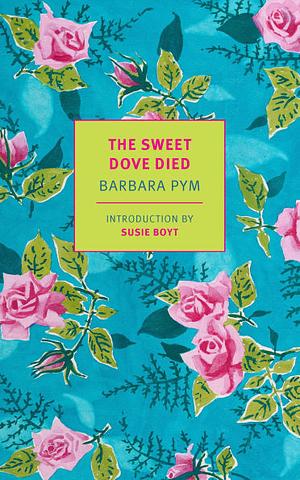
Review 2646: #NovNov25! The Sweet Dove Died

It’s November, so it’s time for another yearly event, Novellas in November. I’ll start out this post with a recap of the novella reading I did during the year and finish with my first review. Since the beginning of the year, I’ve been tagging books with the word “novella” so that I don’t have to look at the page count for each. I think that since last year’s event, I have read quite a few more novellas than usual, and at least two that I read about during the event.

Novellas Read So Far This Year

Here are the novellas I have read up to this point, not counting the ones I am reviewing for this event, 20 of them!

I know that some people are counting short nonfiction, but I am not, and anyway, that would only add one more book to this list.

My Review

I decided to include this book as the first one for Novellas in November even though it is a few pages too long at 210. It is a book that wasn’t published for some years after it was written, during a time when Pym was considered past her prime before being rediscovered, and in its subtle way, it’s a little darker than she is known for.

Humphrey Boyce and his nephew James meet Leonora Eyre at a book auction when she nearly faints after a successful bid. Leonora is an elegant woman of a certain age, the kind then considered fragile. (I don’t think we have any of those anymore.) She is single and can be cold, and she is definitely snobbish, but then so are James and Humphrey. Both James and Humphrey are attracted to her, but although she is closer in age to Humphrey, who is in his 60s, she prefers James, in his 20s. (We know Leonora is “of a certain age,” but exactly how old is hard to say. Middle age came earlier even as recently as the 1960s.)

James is comfortable with Leonora, but there is no hint that he feels romantic about her, whereas when Leonora learns he has a girlfriend in the country, Phoebe, she sets to work to drive her away. While he is on a buying trip in Europe, she boots out her old lady tenant and moves his things into the attic apartment in her house, even taking some of them to decorate her own rooms. But he returns with an even more dangerous friend, an American named Ned. In the meantime, Humphrey is competing with James.

James is sweet-tempered and naïve, so he worries about hurting Leonora’s feelings, but she seems to me like an attractive spider. It’s ironic that she disdains her friend Meg for a similar relationship with a young gay man named Colin.

This novel is insightful into human behavior and slightly biting. It contrasts the new behaviors and mores of the young with the much more formal manners of the older characters. In fact, from the first few sentences, when stodgy Humphrey remarks that a book sale is no place for a lady, I wondered if I was in 1867 instead of 1967.

I received this novel from the publisher in exchange for a free and fair review.

Related Posts

Excellent Women

A Very Private Eye

The Camomile

Novellas in November: Planning Post

In a month, Novellas in November is starting up again, hosted by Cathy of 746 Books and Beck of Bookish Beck. Last year, I think I just plunged into Novellas in November by reading a bunch of novellas, but this year, I see Beck has already launched a Linky for planning posts. (Maybe they did this last year, too, and I just didn’t notice.) So, here I am throwing together a planning post.

I tend to read well before I publish unless something unexpected comes up, so I have already started reading for this event. Aside from a general post about what novellas I’ve read through the year, I have so far read two novellas that I will review in November, and I plan to read five more.

Here are the ones I have finished with a brief description:

  • The Sweet Dove Died by Barbara Pym: a woman of a certain age becomes a little too close with a much younger man.
  • Seascraper by Benjamin Wood: a young man is the only person left carrying on a traditional way of shrimping when he meets a film maker.

The novellas I haven’t read yet but plan to review in November are

  • The Buddha in the Attic by Julie Otsuka: in the early 19th century, a group of women are brought from Japan as “picture brides.”
  • For Thy Great Pain Have Mercy on My Little Pain by Victoria Mackenzie: two women meet in 1413 Norwich, one of whom has visions considered heretical.
  • Hex by Jenni Fagan: In 1591, Geillis Duncan, a convicted witch, receives a visit from a mysterious woman.
  • A Pale View of the Hills by Kazuo Ishiguro: a Japanese woman relives the events at the end of World War II.
  • Why Did I Ever by Mary Robinson: a woman is barely keeping it under control in this dark comedy.