
There seem to be lot of novels out recently that are set in the world of ancient history or myth. I have read a few of them, but it’s not really a time of interest for me. In fact, I am so ignorant of the Peloponnesian War that I thought it only involved Athens and Sparta. But it was a lot more widespread than I thought.
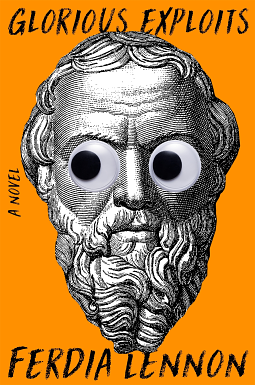
If it hadn’t been for my Walter Scott shortlist project, I wouldn’t have chosen this book to read. (For one thing, I find the cover off-putting.) And it didn’t start off very well for me. It is written completely in modern vernacular with an Irish accent, which I initially found grating. But I got used to it.
Lampo, our narrator, and Gelon are two mates, essentially layabouts. Lampo is 30 years old and still lives with his mother. They are Syracusans; it is 412 BC, a few years after the Athenians attacked Sicily. The Athenians were eventually beaten, and 7000 Athenian soldiers were imprisoned in the quarries of Syracuse, basically just left there.
Now Gelon decides to go to the quarry to feed the Athenians. He is a huge fan of the plays of Euripides, and he is afraid that with the defeat of Athens, Athenian culture will die out and Euripides’ work will be lost. So, he decides to put on a play using the Athenian soldiers for actors, paying them with food.
On the way into the quarry, Lampo and Gelon run into a grieving father, Biton, who has just beaten an Athenian to death and is working on his friend. Gelon talks Biton out of it, and this is when he announces his plan to direct Medea. They rescue the other Athenian, Paches, and Lampo decides he must be in the play. Much to Lampo’s astonishment, they manage to find funding for this project from a wealthy foreigner.
In the meantime, no-hoper Lampo has fallen in love with Lyra, a Lydian slave girl who works at his local bar. Her owner wants an exorbitant fee to sell her to Lampo so he can set her free, more money than he can hope to ever earn, but that’s what he vows to do. With these twin goals, Lampo begins to pull himself together.
“Riotously funny,” as the blurb calls it, this book is not, but I found Lennon to be a terrific storyteller. This novel is about the power of friendship, the importance of art, and personal loyalty. I would never have read it on my own, but it is rough, touching, and terrific.

 What? Me Read?