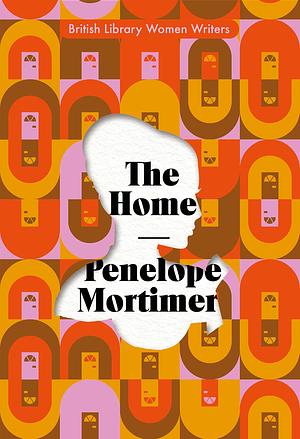
Review 2528: The Home

Eleanor is moving. She’s doing this because after 26 years of marriage, her husband is leaving her. Their marriage had been an open one, which translated to her husband Graham being serially unfaithful while she had two affairs that ended in friendship because she loved Graham. The last few years have not been happy, but still it’s hard for her to accept that he has left her—without really talking about it—for a woman who is younger than her oldest daughter.

Now she is trying to make a home for children who, all but one, are adults living on their own. Nevertheless, they return in ones and groups to stay with her.

Eleanor struggles in this novel with the idea of what home is, with loneliness, with her desire to mother children who don’t really need it anymore, with desire and love for Graham, and with the need for someone to take care of her. The novel looks unflinchingly at the situation that many middle-aged women found themselves in beginning in the 1970’s, when divorce rates began to rise. For example, Graham (who in my opinion is an unrelenting jerk) supposes Eleanor can get a job when she has been trained for nothing and has no work experience for the last 26 years except being a wife and mother.

This is sometimes a rough read but always an insightful one. Mortimer has an unfailingly observant eye.

Related Posts

The Pumpkin Eater

A Separation

The Women’s Room

Review 2253: #1962 Club! The Pumpkin Eater

I chose The Pumpkin Eater for the 1962 Club because the title seemed vaguely familiar (aside from its nursery rhyme connections) and because I don’t think I’ve read any Penelope Mortimer. I think the title is familiar because there was a reasonably popular movie of it in 1964 starring Anne Bancroft.

The unnamed narrator is a wife and mother of a large number of children, the number, names, and ages (except one) never specified. At a young age, she was already married three times, once a widow, and already had quite a few children, including three stepchildren whose father died. As the novel opens, she is recounting a discussion with her father to her psychiatrist, in which her father is trying to dissuade Jake from marrying her, basically saying she is too flaky and has too many children.

As she goes on to tell the story of her marriage, nothing improves. Her psychiatrist thinks her desire to have more children is a pathology (and also entirely her responsibility). Both her psychiatrist and her doctor are disdainful and condescending to her. Nothing seems to be thought of her husband having affairs (although she naïvely believes he is faithful for quite some time despite an early incident with a girl named Philpot).

The fact is, Jake, a screenwriter, is gone on set most of the time, most of their friends are his, the family is wealthy enough to have servants, and even the children are absorbed by nurses early and by schools later. So, she has little to occupy herself with except small children and cooking.

This book is billed as black humor. I didn’t find it funny, but I did sympathize with the narrator. Some horrendous things are done to her, and all of the men around her are manipulative. I thought the novel was bleak rather than funny.

Related Posts

The Women’s Room

The Transit of Venus

A Lady and Her Husband