
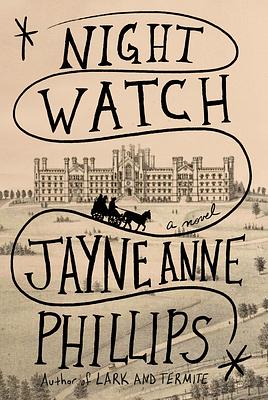
This novel begins in 1874 with ConaLee, a thirteen-year-old girl in a wagon with her mother and a man she calls Papa. Her mother had twins three months before and has not been able to care for herself since, nor does she speak. On the journey, Papa tells ConaLee that he is not her father, that he has given away his children by her mother and sold everything. He is taking her mother to an asylum, where she is to say her mother is called Miss Janet and she is her servant. He drops them off at the gate and goes on, and they do what he tells them, only her mother soon begins to speak and care for herself.
Returning to 1864, we follow ConaLee’s father, a Union sharpshooter in the Civil War. He has hidden his family, his pregnant wife Eliza and the woman he considers his mother, Dearhbla, as high up on the West Virginia ridges as he can, hoping to keep them out of the war. He has been gone three years, but in the Wilderness battle, he is injured so badly by an explosion that he loses an eye and part of his brain—and his memory. Thus, when the war ends, he does not return home. And his family is left prey to Papa.
This novel contains quite a few mighty coincidences. One that gives nothing away is that Dearhbla, an Irish wise woman with second sight, travels to the hospital in Alexandria because she knows her son is there. They will not let her in because of an epidemic, so she gives the name he took when he went to war—for all of them are fugitives. But no one of that name is there, so she leaves. All the while, he is watching her from the window, with no idea that he knows her.
Despite the coincidences, I found this novel absolutely enthralling. It captures the chaos during and after war, the fear that doesn’t stop just because the war does. It is altogether a compelling story. I read it for my Pulitzer Prize project.
 What? Me Read?