
 Best Book of the Week!
The distinctive voice of its narrator is what stands out to me about History of the Rain. But again, I feel as if I may not be able to convey just how wonderful I found this lovely novel.
Ruthie Swain is a young girl bedridden from an illness. In her attic bedroom under a watery skylight she is trying to read her father’s thousands of books. She is also writing a novel to try to understand him. During this effort, she writes about Ireland, her village, and the history of her family, especially about the Impossible Standard. Her story incorporates the mythological heritage of Ireland as well as references to countless literary authors and characters and the eccentric residents of her village.
Ruthie’s mother’s family, she says, evolved from salmon, and her mother first meets her father salmon fishing, and is hooked. But that gets way ahead of the story, which in unchronological order recites the history of her father’s family, the story of the Impossible Standard and his evolution into a poet.
To give a flavor of the novel, here is how Ruthie imagines the first time Ruthie’s father Virgil is invited to dinner at her mother’s house:
“So, how do you like it here?”
“Very much.”
“Good.”
That exhausts the dialog. She realizes she hasn’t folded the napkins and takes hers and begins to press it in halves. Virgil does the same. Both of them are useless at it. Maybe evenness is a thing intolerable to love. Maybe there’s some law, I don’t know. She lines up the halves of hers, runs her forefinger down the crease. When she picks it up the thing is crooked. So is his. She undoes the fold and goes at it again, but the napkin wants to fall into that same line again and does so to spite her, and does so to spite him, or to occupy both with conundrums or to say in the whimsical language of love that the way ahead will not be a straight line.She doesn’t give up, and he doesn’t give up. And in that is the whole story, for those who read Napkin.
This novel is funny, heartbreaking, and lovely. It is about the loves of reading and poetry and Ireland and life. I loved this book.
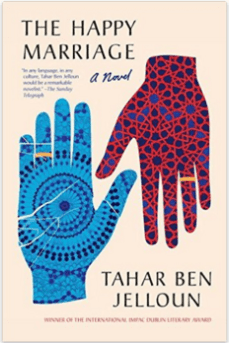 A famous painter living in Casablanca tells the story of his marriage in a “secret manuscript” as he recovers from a debilitating stroke. From all accounts, he has married a woman who is almost a lunatic. He tells how his family objected to his marrying beneath his social status but he was in love. Now that he has married this much younger woman, his relatives’ fears have been realized. She has poor taste, she is vulgar, irrationally jealous. She has fits of rage where she disturbs his work and even destroys it. She is constantly asking for money and giving it away to her relatives. She drinks too much and hangs out with unpleasant characters.
 The wife’s rights are changing under Moroccan law, but even though the book blurb mentions this, it does not seem important to the story except that she can prevent their divorce. In effect, the husband is reduced to blackening her name with everyone and depicting her as unstable.





 What? Me Read?