
I didn’t think a press for a large library would be considered independent, but I guess it is, so I have another book that qualifies for Reading Independent Publishers Month.
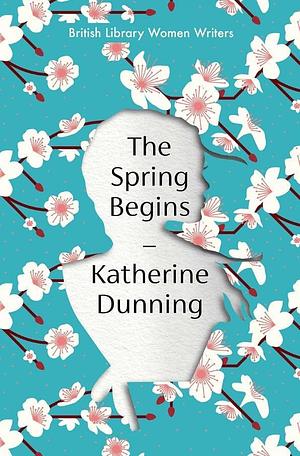
The focus of The Spring Begins is unusual, especially for when it was published in 1934. It is about the awakening, the possibility of romance, for three women. But they are the women usually behind the scenes—a young housemaid, a young nursemaid, and a middle-aged day governess.
Lottie, the nursemaid, is 19 years old and straight out of an orphanage. She loves the two little girls she’s in charge of as well as their baby brother, but she is afraid of Nurse. She knows nothing of men, but Nurse has been horrifying her with stories about how nasty they are and what horrible things they do, so that she can barely bring herself to look at them. But there is a nice young man who works around the grounds named George.
Maggie, the kitchen maid and scrubber, has even less status in the house than Lottie. But she is a fierce, strong girl who hates Cook but is confident of her own attractions. She feels a strong pull toward Maxwell, the gardener, even though she knows he is not the marrying kind.
Hessie is the daughter of a deceased clergyman who helps out the vicar’s wife and acts as governess to her children. She is obsessed by her own gentility and her hopes for Mr. Saul, the curate. But she behaves artificially with him, and it’s clear that he’s not interested. Hessie finds herself adrift when she learns that her younger sister, Hilda, is engaged to her long-time boss. Hilda is fulfilling their mother’s only ambition, and Hessie notices how their mother begins to spoil Hilda and ignore Hessie. She is eaten up with a combination of jealousy and sadness that her relationship with Hilda will never be as close. Also, she is being disturbed by her own unruly thoughts about relations between men and women.
Of the three women, I liked Hessie least because she is constantly judging other people and thinking about her own behavior as a lady. I liked her better, though, after a crucial event toward the end of the novel.
I found this novel interesting, but sometimes my attention wandered from it. It is vividly written, though, and its characters are believable.

 What? Me Read?