Review 2093: #ThirkellBar! County Chronicle

In introducing County Chronicle, I find it impossible to avoid spoilers for those who have not read the previous book, The Old Bank House. So, beware.

The novel begins where the previous one left off, if not slightly before that, with Lucy Marling wondering how her parents are going to take her engagement to Sam Adams, the wealthy older ironmonger who is not from her class. They take it comparatively well. It is her beloved brother Oliver who tries to flatten her excitement with his disapproval, so that Lucy realizes for the first time how selfish he is.

Speaking of selfish men, Francis Brandon is now happily married, but he’s been taking his mother for granted and is even rude to her. His mild-mannered wife Peggy is distressed by it but doesn’t have the courage to say anything. Others are beginning to notice, and Mrs. Brandon realizes it was a mistake for them all to live together.

Isabel Dale, a cousin of Robin Dale, takes a job with Mrs. Marling to help her with Lucy’s wedding and stays on to help her with her correspondence. She also sometimes helps Oliver with his book.

Although the Barsetshire set have tended to stay away from the Omnium Castle crowd, Francis and Peggy Brandon have been spending time there doing amateur theatrics with Lady Cora and Lord Silverbridge, the Duke’s heir. We find the ducal family impoverished but very nice. Eventually, Isabel and Oliver are introduced to the family by Roddy Wickham.

Although I didn’t like this one quite so much as The Old Bank House, it was still good. Several characters’ problems are resolved in a satisfying way, and the two romances are as sweet as they are understated.
Related Posts

The Old Bank House

Love Among the Ruins

Private Enterprise

Reading Thirkell’s Barsetshire Series in Order: #19 County Chronicle + #18 The Old Bank House Wrap-Up

I think I have lost all my other readers from one reason or another, but I persist. If you happened to read any of the books coming up, don’t hesitate to make comments. I hope to have some steadfast commenters. I am still enjoying these books—in fact, The Old Bank House was one of my favorites—and don’t quite understand yet why her post-war ones aren’t considered as good (although I have recollections of one coming up about an election that wasn’t as interesting). As of now, there are only 11 more books in the series.

Thanks to the people who continue to participate:

  • Liz Dexter
  • Historical Fiction Is Fiction
  • Yvonne of A Darn Good Read

Our next book is County Chronicle. I will be reviewing it Friday, December 30, so if you have read it, or want to read along, please join me.

And here’s our little badge.

Review 2074: #ThirkellBar! The Old Bank House

Although I keep hearing that Thirkell’s post-war Barsetshire novels are not considered her best, I am still enjoying them and look forward to seeing what happens to the characters. In particular, The Old Bank House brought me to tears over one event, although I won’t say what it was.

The novel begins with wealthy industrialist Sam Adams’ purchase of the Old Bank House, but it deals mostly with the Grantlys, a family referred to in the series (and, of course, a major family in Trollope’s Barsetshire series) but not before met. The Grantlys are Adams’ new neighbors at the rectory. The oldest son, Tom, has just come down from Oxford where he has been studying Greats but feeling out-of-place because his war years make him older than the others (although that must have been common, as it was here in the States). In any case, he has decided he wants to work on the land, but he doesn’t want to return to college, even agricultural college, to do so. (Ironically, in his chafing, Tom seems younger than he is, not older.) The youngest son, Henry, has applied for the army and goes down to the post office at least once a day to see if his orders have arrived.

The novel is more concerned with the daughter, Eleanor, who has taken Susan Belton’s job at the Red Cross library. She yearns to live in London and has attracted the attention of Colin Keith, now a successful barrister. However, on a visit to Pomfret Towers, she gets a romantic crush on tired Lord Pomfret.

After Tom Grantly applies at a few places, he is taken on by Lucy Marling as an ordinary laborer in the market garden she runs for Sam Adams, but Martin and Emmy Leslie are also evaluating his capabilities for Rushwater. Lucy Marling is making the garden a success and has seriously impressed Mr. Adams.

Again, I found this novel deeply touching at times. It also serves as a record for the difficult living conditions that still prevailed in England four years after the end of the war and for everyday life at that time. Unfortunately for me, I got this book mixed up with the next one and read enough of the succeeding one that I knew from the start how a few of the surprises would work out, but I still enjoyed this one. In fact, it’s one of my favorites.

Related Posts

Love Among the Ruins

Private Enterprise

Peace Breaks Out

Reading Thirkell’s Barsetshire Series in Order: #18 The Old Bank House + #17 Love Among the Ruins Wrap-up

Thanks to my stalwarts who participated by commenting, even though one was unable to get a copy of Love Among the Ruins this month. They are

  • Liz Dexter
  • Penelope Gough

Our next book is The Old Bank House. Yes, I’m going to the bitter end, even if no one can follow. So far, it has not been painful. I am posting my review on Wednesday, November 30. I hope a few of you will pop in and join me in reading it or some of the others coming up.

And here’s our badge.

Review 2055: #ThirkellBar! Love Among the Ruins

We meet many of the characters we’ve come to love in Love Among the Ruins, but principally the Marlings, the Beltons, the Deans, and the Leslies.

With a short stop-off to the Warings, where Mr. and Mrs. Waring have given over most of their mansion to their son-in-law, Philip Winter, for a boys’ school, the novel begins with the Leslie/Marling family, who are planning a birthday party for their beloved Lady Emily. Lady Emily tires easily and is sometimes confused, but still presents her overwhelming and charming personality. She is being capably cared for by her daughter, Agnes Graham, and Miss Merriman.

Lucy Marling has been manfully trying to keep her father’s estate running as neither of her brothers seem interested. They have no money, but she thinks if she can convince her father to sell some land, she can keep the rest going. But he is unwilling. Desperate to cultivate some wasteland, she looks to Mr. Adams for advice.

Oliver Marling is worried about Lucy, as she doesn’t seem to be marrying anyone and is depressed about her struggles with the estate. But Lucy is in love with Captain Freddie Belton and knows he doesn’t return her feelings. Oliver himself is spending a lot of time with Jessica Dean, the actress.

Jessica’s older sister Sue, a Red Cross librarian, has earned everyone’s respect with her quiet capability, and she has earned more than that from Freddie Belton. But a misunderstanding is keeping them apart. In the meantime, young Clarissa Graham is determined to land Freddie. And lest we forget Charles Belton, he has fallen, as do many younger men, for Agnes Graham.

This novel dwells a good deal on the difficult situation the British were in after the war, with limits on food, clothing, and gas, while apparently, I didn’t quite understand it, trying to prevent farmers from raising pigs. There are lots of snarky comments about the government, referred to as They, but I’m happy to say, far less snobbishness than in some of the previous novels. There is in some characters, though, an awareness of who is county and who is not, and it looks like the Deans may shortly be accepted as county.

The activities of this novel are centered around the fates of several characters, the Conservative Party Convention, and the Barsetshire Pig Show, so there’s a lot going on. I know Thirkell’s post-war novels were not considered her best, but I enjoyed this one about the same as the others, so so far, for me at least, they are not decreasing in enjoyment.

Related Posts

Private Enterprise

Peace Breaks Out

Miss Bunting

Reading Thirkell’s Barsetshire Series in Order: #17 Love Among the Ruins + #16 Private Enterprise Wrap-Up

I know I’m losing participants, but thanks to those who are keeping up or made comments about Private Enterprise, the first post-war book in the series. Those who participated were

Our book for October is Love Among the Ruins. I will be posting my review on Monday, October 31. I hope that one or two people will read along with me, as I am getting into completely uncharted waters.

And here’s our little emblem.

Review 2037: #ThirkellBar! Private Enterprise

Private Enterprise is Thirkell’s first wholly post-war Barsetshire novel. It reflects the confusion and discomfort caused by government measures that make things seem more difficult even than during the war.

The novel begins with Noel and Lydia Merton. Noel is back at his law firm, and they are now parents of two small children. To them for part of the summer holidays comes Colin Keith, Lydia’s brother, whom we first met in Summer Half. It is immediately apparent that he has fallen in love, with Mrs. Arbuthnot, a young widow. He is trying to find a house for her and her sister-in-law, Miss Arbuthnot, near Barsetshire.

Colin makes a fool of himself over Mrs. Arbuthnot but manages to find the two women a house. They move in and are quickly welcomed into the community. Again, we meet or hear about quite a few of the characters from previous books, including Mrs. Brandon and Francis Brandon, her son. Mrs. Brandon has gotten older, but we remember how young men used to fall in love with her and Noel Merton enjoyed flirting with her. We’re told several times that Mrs. Arbuthnot resembles her.

Unfortunately, Colin is not the only person who makes a fool of himself over Mrs. Arbuthnot. In the meantime, Miss Arbuthnot, older and less expectant, has her own quiet romance.

I noticed Thirkell’s snobbishness more in this novel than the previous ones, maybe because the others were more fun. It is clear that things are changing for the entitled classes and they don’t like it. Still, this novel seems an accurate record of life for these families (and to some extent of those of the less privileged) in post-World War II England, and I am still enjoying hearing about my favorite characters.

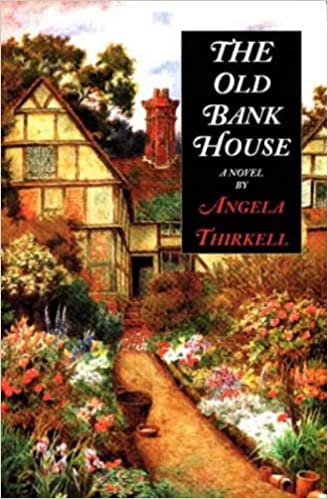
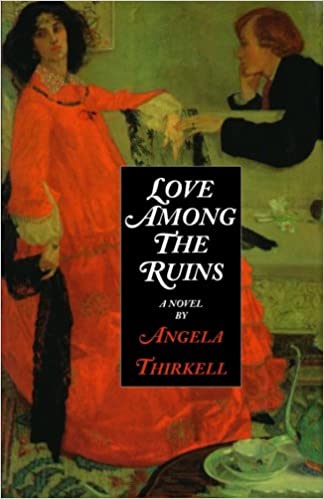
A comment about my edition. In the series up to this book, I have been reading the Virago editions, but Virago chose not to issue the post-war books, so I will have to finish the series reading Moyer Bell editions. As always with Moyer Bell, I am spotting lots of typos that seem to result from machine-reading a word wrong and substituting one that doesn’t make sense. Those are trivial, though, compared to the odd selection of the cover design and pictures at the beginning of each chapter. They are all by John Everett Millais, a Pre-Raphaelite artist. I have nothing against the Pre-Raphaelites, but they were a Victorian movement, and Millais was dead by the beginning of the 20th century. The women depicted in his paintings are dressed completely wrong for post-World War II England, of course, which makes me wonder why these paintings were selected for this novel. It’s a very odd choice. Perhaps the editors thought the novel took place after the Boer War?

Related Posts

Summer Half

Peace Breaks Out

The Headmistress

Reading Thirkell’s Barsetshire Series in Order: #16 Private Enterprise + #15 Peace Breaks Out Wrap-up

Thanks to everyone who participated in reading Peace Breaks Out, the last of this series set during World War II. Those who participated were

The next book is Private Enterprise. I’ll be posting my review on Friday, September 30. Now, we’re getting into new waters, because I think that of the rest of the novels, I have only read one or two. I hope some of you will read along occasionally.

And here’s our badge.

Review 2020: #ThirkellBar! Peace Breaks Out

Although Peace Breaks Out begins by returning to Anne Fielding, now almost 19, who was Miss Bunting’s student in the last book, it spends a lot of time with the Leslie family, whom we have encountered in several of the books. Anne has just met Sylvia Halliday, a beautiful, golden girl a few years older, and shortly thereafter, both girls come to the attention of David Leslie.

At 37, David should have toned down his tricks, but he hasn’t, so Anne is smitten while the older Sylvia’s reaction is a bit harder to ascertain. Anne’s being smitten puts her friend Robin Dale in a funk, which is good because he was tending to take her for granted. And David seems to be almost seriously considering her as a wife.

For the first time, we get a true sense of how tired the British are with the living conditions of the war. This is expressed by being upset about the peace, which makes conditions even worse.

In this novel, readers meet or hear of almost all of the main characters from the previous novels. Rose Fairweather, in all her beautiful idiocy, reappears from America, and more importantly, Rose Bingham, a Leslie cousin who we saw a bit of on the occasion of the other Rose’s wedding, returns from the continent.

It’s really been useful for me to have begun reading these novels in order. I only wish I had started out making charts of characters’ relationships, what books they appeared in, and some notes about each one.

Related Posts

Miss Bunting

The Headmistress

Growing Up