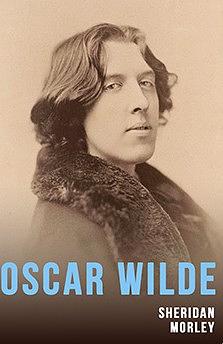
Review 2707: #ReadingIrelandMonth26! Oscar Wilde

This book isn’t written by an Irishman, but since it is about an Irish writer, I think it qualifies for Reading Ireland Month. Thanks to Dean Street Press for providing this interesting biography of Oscar Wilde, originally published in 1976.

Oscar Wilde has always seemed to me a fascinating and tragic figure. He was well known for his wit and perfect sentences. I have often considered whether his remarks were studied, but contemporaries seemed to believe that they were all extemporaneous, which is amazing.

Sheridan Morley’s biography of Wilde is not the exhaustive kind that ends up submerged in trivial details. Instead, it is short, appears to be aimed at the general public, and provides just enough information along with a few quotes from his work or writings about him. It’s well written and moves along nicely.

I have read details of his disgrace before, but this novel deals a lot less harshly with Lord Alfred Douglas’s part in it. It makes a point that Wilde had been behaving recklessly, apparently under the impression that he was so popular he was untouchable.

Of course, Wilde’s trial and imprisonment are great travesties of British justice and losses to British literature. As he wrote in the years before the event four major comedies (the point made that they were the only major English comic plays written in the 100 years before), who knows how many other works—and what kind—he could have produced?

This is an enjoyable and interesting book about a man who was determined from a very young age to be either famous or infamous, so he said, and achieved both.
Related Posts

Victorian Fairy Tales

The Children’s Book

The New Life

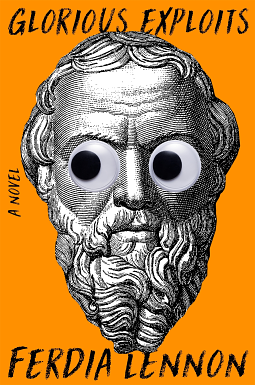
Review 2704: #ReadingIrelandMonth26! Glorious Exploits

There seem to be lot of novels out recently that are set in the world of ancient history or myth. I have read a few of them, but it’s not really a time of interest for me. In fact, I am so ignorant of the Peloponnesian War that I thought it only involved Athens and Sparta. But it was a lot more widespread than I thought.

If it hadn’t been for my Walter Scott shortlist project, I wouldn’t have chosen this book to read. (For one thing, I find the cover off-putting.) And it didn’t start off very well for me. It is written completely in modern vernacular with an Irish accent, which I initially found grating. But I got used to it.

Lampo, our narrator, and Gelon are two mates, essentially layabouts. Lampo is 30 years old and still lives with his mother. They are Syracusans; it is 412 BC, a few years after the Athenians attacked Sicily. The Athenians were eventually beaten, and 7000 Athenian soldiers were imprisoned in the quarries of Syracuse, basically just left there.

Now Gelon decides to go to the quarry to feed the Athenians. He is a huge fan of the plays of Euripides, and he is afraid that with the defeat of Athens, Athenian culture will die out and Euripides’ work will be lost. So, he decides to put on a play using the Athenian soldiers for actors, paying them with food.

On the way into the quarry, Lampo and Gelon run into a grieving father, Biton, who has just beaten an Athenian to death and is working on his friend. Gelon talks Biton out of it, and this is when he announces his plan to direct Medea. They rescue the other Athenian, Paches, and Lampo decides he must be in the play. Much to Lampo’s astonishment, they manage to find funding for this project from a wealthy foreigner.

In the meantime, no-hoper Lampo has fallen in love with Lyra, a Lydian slave girl who works at his local bar. Her owner wants an exorbitant fee to sell her to Lampo so he can set her free, more money than he can hope to ever earn, but that’s what he vows to do. With these twin goals, Lampo begins to pull himself together.

“Riotously funny,” as the blurb calls it, this book is not, but I found Lennon to be a terrific storyteller. This novel is about the power of friendship, the importance of art, and personal loyalty. I would never have read it on my own, but it is rough, touching, and terrific.

Related Posts

The Last of the Wine

House of Names

The Silence of the Girls

#ReadingIrelandMonth26: An Update to My Irish Writers Read in 2025 Post

Well, I was really silly when I listed the books I read by Irish writers, because I searched by Ireland! But all my reading of Irish writers wasn’t set in Ireland. So, here is my original post, revised. The two additional books are listed with both the title and writer’s names in bold!

__________________

Cathy of 746 Books is hosting the 12th year of Reading Ireland Month, and although I usually participate just a bit by reviewing a book or two by an Irish author, I thought I’d take her suggestion this time and make a post about books by Irish authors I’ve read or reviewed during the last year. So here goes, I think in order of the reading! These are all books read in 2025, so there’s some overlap with last year’s event.

#ReadingIrelandMonth26! Irish Writers Read in 2025

Cathy of 746 Books is hosting the 12th year of Reading Ireland Month, and although I usually participate just a bit by reviewing a book or two by an Irish author, I thought I’d take her suggestion this time and make a post about books by Irish authors I’ve read or reviewed during the last year. So here goes, I think in order of the reading! These are all books read in 2025, so there’s some overlap with last year’s event.