Review 2494: #RIPXIX! The Raging Storm

Another book for RIP XIX!

On a terrible stormy night, the Greystone lifeboat crew is called out to rescue a fishing boat in danger. When they reach the boat, it is not a fishing vessel but a tender with a naked body in it. The body is that of Jem Rosco, a former local boy turned famous adventurer who has been staying in the village for a few weeks, saying he was awaiting a visitor.

Although no one knows who the visitor may be, Alan Ford, the father of lifeboat helm Mary, reports seeing a blond woman walking towards Rosco’s rented house in the early hours. However, Matthew Venn’s team can find no leads about the woman or the car that dropped her off.

Rosco’s past is proving hard to track. His apartment hasn’t been occupied for months, and no one seems to know if he has any surviving relatives.

One possible expected visitor, they find, is Eleanor Lawson, Rosco’s ex-flame who married someone else, Barty Lawson, a local magistrate and commodore of the yacht club. Eleanor claims Rosco was her true love, but Barty clearly despised Rosco from the time they were both boys. Barty doesn’t seem to be a likely murderer, though, as he is regularly driven home drunk from the yacht club.

Screenshot

Venn’s team is having difficulty penetrating the secrets of the village, which contains lots of families belonging to the Barum Bretheren, the cult Matthew grew up in but left. Then Barty Lawson is found dead, apparently having fallen off a cliff. Not only does Matthew think it’s unlikely that Barty was out strolling the cliff trail, but Barty’s body is found at Scully Head, near where the tender containing Rosco’s body was anchored.

I still don’t know what I think about the character Matthew Venn, who seems unknowable. Maybe I prefer Vera or Jimmy Perez because I first encountered them on television, where they immediately assumed distinct personalities. However, Cleeves knows how to keep her readers rivetted as far as plot is concerned.

That said, the motive for the crime in this one seemed absurd and the murders overly complicated. Still, the journey was enthralling.
Related Posts

The Long Call

The Heron’s Cry

The Rising Tide

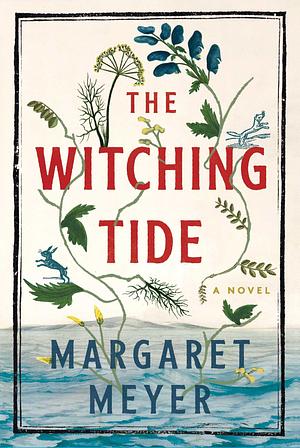
Review 2492: #RIPXIX! The Witching Tide

In 1645, Martha is a mute middle-aged serving woman who has worked for the Crozier family since her master Kit was a baby. She is also a midwife and healer, who at the beginning of the novel is called out to help with a difficult birth. She takes along the young housemaid, Prissy, who is learning to be a midwife.

The birth doesn’t go well. The baby is born with a deformed nose and mouth that wouldn’t allow him to live, and the mother is bleeding too much. The baby soon dies.

Martha and Prissy return to taking care of their own difficult mistress, Agnes, Kit’s upper-class wife, who is heavily pregnant. However, everyone soon hears that a witch master has come to their town, and Prissy is one of the first to be taken.

It is Martha who actually has a poppet, given to her by her mother. Martha doesn’t really know how to use it, but she feels she should have been taken instead of Prissy, as Prissy is of course being blamed for the deformed baby.

In his attempts to free Prissy, Kit arranges for Martha to be one of the women who examines the accused for witch marks, hoping Martha can help her. But marks are found on Prissy, and Martha can do nothing. Prissy is one of the first to be hanged.

Others have doubted whether Martha isn’t a witch herself, and Martha is torn between fear and guilt. Soon, many of the women are accused, along with the community’s innocent, naïve young minister.

This novel evokes a constant feeling of dread. In addition, it is unsparing in its descriptions of the conditions of the time. It is also fully aware of the underlying misogyny of the witch trials. I think it qualifies for RIPXIX!

Related Posts

The Witches: Salem, 1692

The Mercies

Corrag

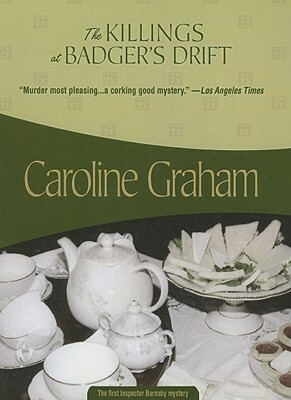
Review 2475: The Killings at Badgers Drift

Here’s another book that qualifies for RIP XIX!

As such a longtime fan of Midsomer Murders, I decided it was time to have another go at reading the books. I tried reading this one long ago, but I was so disappointed in the character of Sergeant Troy that I didn’t continue.

While Miss Simpson, an elderly ex-schoolteacher, is out in the woods looking for an orchid, she sees something she wishes she hadn’t. Later, she is found dead of an apparent heart attack. However, her friend Miss Bellringer goes to Inspector Barnaby because she thinks there are suspicious circumstances.

In investigating, Barnaby encounters a slew of colorful characters, all with secrets. There is Doctor Lessiter, who mishandled the death diagnosis, and his sexy wife Barbara as well as the doctor’s sulky teenage daughter Judy. There are the creepy Dennis Rainbird, an undertaker, and his mother. At the big house, Henry Trace, a wheelchair-bound middle-aged man, is preparing for his wedding to beautiful Katherine Lacey, 19 years old. This is a wedding not celebrated by either Trace’s sister-in-law, Phyllis Cadell, or Katherine’s artist brother Michael.

Barnaby begins turning up all kinds of secrets, and soon there’s another murder.

I’m so familiar with the TV show that it was hard to judge how difficult it would be to guess the solution. Sergeant Troy is hateful, but he didn’t bother me as much this time around. Warning that the text contains some homophobic comments, mostly from Troy.

I think Graham is a deft plotter and constructor of interesting characters. I note that the TV show chose to have the murder victims die in more spectacular ways than in the original novel.

Related Posts

Magpie Murders

As She Left It

The Killings on Jubilee Terrace

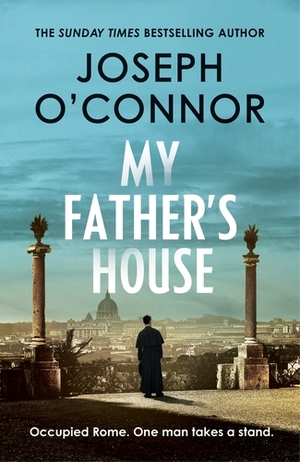
Review 2473: My Father’s House

Helen of She Read Novels has posted a note about Readers Imbibing Peril (RIP XIX), which I always forget about but usually participate in. As somewhat of a suspense novel, My Father’s House qualifies, so let this be the start of my participation this year. Most of the action is on Instagram at @PerilReaders, but I am not a great user of that.

My Father’s House is a book I read for my Walter Scott project, and it is also the first in O’Connor’s Roman Escape Line trilogy. It is based on the true story of the Escape Line, a group of people who helped captured soldiers and others escape from the Nazi occupation of Rome. In particular, it focuses on Monsignor Hugh O’Flaherty, one of the group’s founders.

After Rome is overrun by the Nazis, the Vatican gives Monsignor O’Flaherty a duty of ministering to British soldiers in Nazi captivity. Being an Irishman, he isn’t eager to do this duty. However, when he sees the condition of the men and the ease with which the Nazis break the Geneva Conventions, his manner to the Germans is such that he is removed from the duty. In this way, he comes to the attention of Obersturmbannführer Paul Hauptmann.

O’Flaherty then decides to form a group to help soldiers escape from the Nazis. The group becomes successful enough that Hauptmann begins receiving threatening communications from Himmler.

Much of the novel centers around a Rendimento, as the Choir, the central group that runs the Escape Line, calls their missions. The group has planned its mission for Christmas Eve (1943), thinking that Hauptmann won’t expect it, but in the last few days, Sam Derry, an escaped British major who would normally run it, is incapacitated. They begin training Enzo Angelucci instead.

The main focus of the novel is whether the mission will be successful, but the narration travels around in time and person via transcripts of interviews of several of the participants. In some respects, this structure is interesting, helping you get to know the other characters, but they didn’t all have distinct voices, and you didn’t get to know them well. There is also the disadvantage that the approach tends to interrupt the building suspense.

I thought the novel was very interesting in its subject matter. I’d never heard of the Escape Line. However, as the first of a trilogy, I’m not sure how much more there is to say, even though no doubt there are many adventures to recount. I didn’t feel as if I got to know most of the characters in the novel, not even the Monsignor.

Related Posts

Ghost Light

Shadowplay

Munich