Review 2773: #RIPXXI! Benbecula

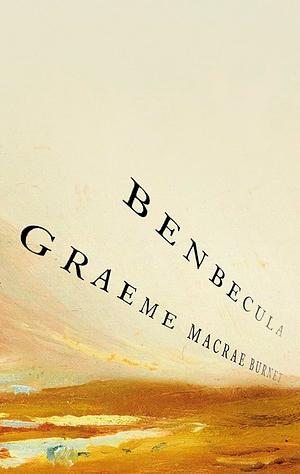
I accidentally started reading the Darkland Tales in order. These are books by prominent Scottish authors about various episodes in Scottish history. This time, I read #6, so I’ve skipped a few, but I also read this for my Walter Scott prize project and it fits for RIPXXI!

Benbecula is about an 1857 series of murders on Benbecula, a small Scottish island. It is narrated by Malcolm McPhee, the oldest brother of the murderer.

The McPhee family gets by earning a small amount harvesting seaweed. The mother spends all day tending the fire while the father is weak and can only do easy work but prefers life to be clash-free. The adult children are all unmarried. Marion is a hard worker but grim. John seems to be mentally challenged. Angus can manipulate people but can’t be controlled and is left to do what he wants. Malcolm is a bit of a bully.

Angus goes off to work for a while for a farmer, but after he returns, he’s subject to fits of uncontrollable rage and has to be restrained. After he disturbs everyone by wildly ringing the church bells, authorities recommend he be committed, but the McPhees can’t afford the fees. When a doctor examines him for involuntary committal, he seems perfectly rational.

We read this with dread, because we get plenty of warning about what’s coming, as Malcolm tells the story from some years later, living alone in the family house drinking and wallowing in his own filth. There are more mysteries ahead, though.

This novel is atmospheric despite being sparely written. It definitely left me with questions. There is an Afterword that accounts some of the facts of the case.

Related Posts

His Bloody Project

Hex

Rizzio

Review 2770: #RIPXXI! Written in Blood

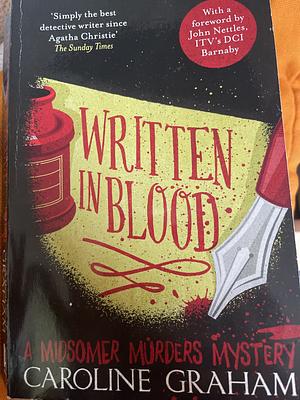
Here’s another book for RIPXXI! It’s hard to tell whether I would have found this fourth entry in Graham’s Barnaby series even more effective than I did, being so familiar with the TV version that I knew practically everything that was going to happen. I could even picture the actors in some of the parts. Still, I enjoyed this one a lot.

The Midsomer Worthy writing club is trying to decide who to invite as a speaker, knowing full well that no one ever accepts. They finally decide on the blockbuster fiction author Max Jennings. But Gerald Hadleigh seems upset by the decision, although he agrees as club secretary to write the invitation.

Everyone is surprised when Jennings actually agrees to come. The club members are strictly amateurs. Senior citizen Rex St. John is writing about the adventures of a hit man but gets hung up on describing his weapons. Intimidating Honoria Lyddiard is writing a history of her distinguished family. Her quashed sister-in-law Amy Liddiard is writing an adventure novel. Brian Clayton sees himself as an intellectual and is writing an avant-garde play. Sue Clayton, his beleaguered wife, is writing a children’s book about a delightful dragon. And Laura Hutton is pretending to write something to be in the club because she’s in love with Gerald. And what is Gerald writing? I don’t think it ever says.

The afternoon of the meeting, Gerald visits Rex and asks him not to leave him alone with Max. The evening seems to go well except that Gerald doesn’t say much. Rex tries to perform his assigned task when everyone has left except himself and Max, but Max pretends to leave with him and once he’s gone through the door, shuts and locks it. Rex waits outside for a while wondering what to do but feels as if someone is watching him and eventually leaves.

The next morning Gerald is found dead upstairs in his bedroom, his head brutally smashed. Oddly, although most things seem to be in place, the police find that several drawers are empty and a suitcase missing.

Although Detective Chief Inspector Barnaby has been told that Gerald is a retired civil servant and widower from Kent, he can find no trace in records of his marriage or of him, for that matter. And he also can’t track down the location of Max Jennings, who reportedly left around midnight.

As usual, Graham takes her time developing her characters, some of whom have fates they richly deserve. In fact, one of the differences of the book from the episode is that she spends some time at the end on some fitting endings, in particular for two loathsome characters.

Graham is wickedly funny as she skewers writing clubs and a high school drama teacher’s pretentions.

Related Posts

Death in Disguise

Death of a Hollow Man

The Killings at Badgers Drift

Review 2768: #RIPXXI! The Methods of Lady Walderhurst

It took me a while to find information on R.eaders I.mbibing P.eril (RIPXXI) for this year, since they are now only active on Instagram and Threads, where I am barely active or not at all, respectively. But here is my first book for this challenge, which runs from September 1 until the end of October.

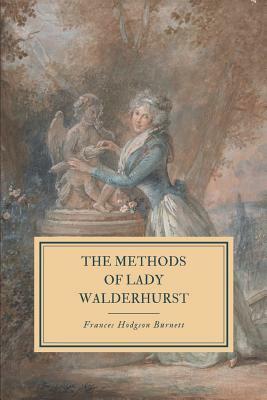
When I was looking for an adult book by Frances Hodgson Burnett for my Classics Club list, I read that The Methods of Lady Walderhurst was a sequel to The Making of a Marchioness, which I enjoyed very much. When I finally began reading it, though, I became confused because it begins before Emily Fox-Seton’s marriage, and The Making of a Marchioness ends quite some time after it. Furthermore, it had been years since read TMofaM, but the book seemed very familiar.

As it turns out, this book was written as a sequel to the original Marchioness, which apparently ended with the betrothal. Later, the books were combined, and the Persephone copy that I read years ago must have been a combined edition. That explained to me why when I originally read the first book, it felt as if I was reading two—one a romance and one a dramatic suspense novel.

The Methods of Lady Walderhurst begins shortly before the wedding of the naïve, open Emily Seton-Fox, a well-born but poor errand runner for rich women, to Lord Walderhurst, a middle-aged marquis. Almost immediately, the subject of Alec Osborne comes up. Osborne is a distant relative who has considered himself Walderhurst’s heir. He has a disgraceful past, and Walderhurst dislikes him. He has married a Eurasian girl named Hester, and eventually they come to England on a visit from India.

Emily, now installed as Lady Walderhurst, is a friendly, guileless creature, and as she knows they are not well off, she talks her husband into letting them live in a vacant house on the estate. She does not realize how much Alec Osborne hates her.

Then Walderhurst has to travel to India on business, and Emily invites the Osbornes to move into the big house. She finds she is pregnant, and from that point Osborne begins plotting to kill her, working with Hester’s Indian maid. Hester herself is aware of his feelings but feels more ambiguous because of Emily’s kindness, which alternaturely infuriates her and softens her.

Where will it end?

From a romance novel in the first book, this story moves right into sensation novel territory. Although it describes Emily as childish and almost stupid, it really invokes the reader’s sympathy toward her. I enjoyed it just as much the second time. Warning: it does not portray its Asian characters in a positive light, but then again, there’s Alec.

Related Posts

The Making of a Marchioness

The Shuttle

Dolly: A Love Story