
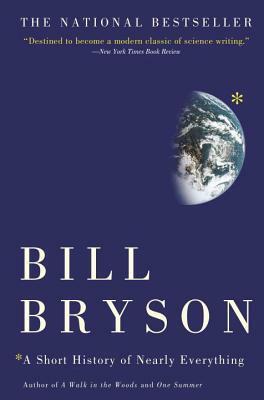
I picked out A Short History of Neary Everything because it filled one of the last holes in my A Century of Books project and I generally enjoy Bill Bryson. I don’t know what I thought it was about—I think I expected it would be something like At Home, which told the histories of objects and rooms in an ordinary house. But silly me, it’s all science.
It’s not that I never read about science, but I have a limited tolerance for it.
When I first began reading it—actually for the first few chapters—I wondered who the audience for it was. It seemed to be telling about things I supposed most people know, so I wondered if it was for middle grade readers. But it certainly was never marketed that way.
It took a while before Bryson got to subjects that I wasn’t as familiar with, but in any case one of his strengths is finding out strange facts or biographical details of the scientists who made discoveries, so that he makes the material more interesting. And he writes with a lively style. However, he also really likes numbers, which are in general fairly meaningless to me (although he does make good comparisons to make them at least imaginable).
But this is a very long book, nearly 600 pages, and after a while I found myself skipping material. The first thing I skipped was the end of a chapter after it started getting too far into particle physics. Later, I skipped the entire chapter on cells. The geology chapter was interesting, but I was less than 100 pages from the end of the book when I finally pooped out. It didn’t even work to take a break and read a different book. It also didn’t help that such a book becomes rapidly out of date.
As a side note, I found the format of the library’s fancy version a little annoying. It used magazine-style callouts. That is, they didn’t provide additional information but just included quotes from the text. The purpose of such callouts in a magazine is to attract attention to the article, but in a book that you’re already reading?
Related Posts
At Home: A Short History of Private Life
The Body: A Guide for Occupants
Annals of the Former World: Assembling California, Basin and Range, Crossing the Craton, In Suspect Terrain, Rising from the Plains

 What? Me Read?