Review 2240: Deception

Since I discovered recently that I had missed one of Denise Mina’s books, I looked again and found I had also missed Deception (also published as Sanctum), from 2002.

Lachlan Harriot is on his way to his wife Susie’s trial at the beginning of Deception. She is a psychiatrist accused of having had an affair with a convicted serial killer, Andrew Gow, and then murdering him and his wife after he was released from prison on appeal. Lachlan is sure she is innocent and will get off. He is certain she never had an affair with Gow.

But Susie is convicted after the prosecution spins a lurid story. Lachlan begins spending his insomnia-filled nights in Susie’s office—previously off-limits—looking for evidence that can be used for an appeal. Slowly, he begins turning up indications that nothing is what he thought it was, starting with proof that Susie has lied. Months before the murder, she was fired from her job at the prison after being accused of stealing Gow’s files. She always said she was fired because of sexism and did not take the files. But Lachlan finds them in the office.

This is a slow-building novel that takes a little patience. The facts Lachlan turns up aren’t as shocking as promised by the cover blurbs, but Mina is a superb plotter. The book doesn’t disappoint.

Related Posts

Confidence

Conviction

The End of the Wasp Season

Review 2239: Love Comes Home

Jane Cranstoun is enjoying her stay in London with friends George and Kitty Mariner when she is summoned home by her mother because of the return from finishing school of her sister, Love. Jane is not really looking forward to going home, where she is expected to take charge of numerous commitments made by her mother, but also because she has begun to hope for a proposal of marriage from John Marsh, a young naval officer.

At her farewell party, Jane gets her proposal and accepts it but asks John to keep it a secret until her parents get to know him better. He has recently accepted a post that is nearer to her parents’ house in Scotland, so he agrees.

On the train north Jane meets Peregrine Gilbert, whom she takes to be shy and uninteresting, not realize he has become her neighbor. Then she meets him again the next morning and tries to send him off for trespassing.

When John appears, Love begins monopolizing him and throwing Jane together with Peregrine. In fact, there was a scene before he appears when I was certain Love already knew John. But that turns out not to be the case, even though it’s clear Love means to marry him before she even meets him. Silly misunderstandings lead to a broken engagement, and this situation was clumsily handled, I thought. In fact, although Love explains later that she thinks Jane and John are not well suited, she has decided this before she ever meets John.

I have enjoyed reading Clavering, but this one, I think, is the closest to a standard pattern romance than the others. I didn’t like Love, who takes over the story gradually until it is more about her. I also didn’t like John or later Kitty when she reappears. The only characters I liked were Jane and Peregrine and the girls’ brother, Meggie. Love is supposed to be 19, but she acts more like 14. I was a little disappointed in this one.

Related Posts

Susan Settles Down

Touch Not the Nettle

Yoked with a Lamb

Review 2235: News of the Dead

One of the things I like about my shortlist projects is that they bring me into contact with books and authors I probably wouldn’t encounter otherwise. Certainly, I would never have run into News of the Dead if not for my Walter Scott Historical Fiction Prize project.

News of the Dead tells the story of one remote, secluded place—fictional Glen Conach—over the ages, mostly through a set of documents. The oldest is a book written in the middle ages about a Christian hermit the locals call St. Conach even though he’s not recognized as such by any authority. The Book of Conach tells the stories of lessons and miracles performed by the man, who died around 770 AD.

Another narrative is set in 1809 from the diary of Charles Gibb. Gibb is an antiquarian who has wangled himself an invitation to Glen Conach House ostensibly to study and translate The Book of Conach. His real goal, however, is to sponge off the Milnes, the current owners of Glen Conach House, for the summer. He rather cynically observes Glen Conach and his lady and daughter as they do him, at first. But slowly the situation changes.

The third narrative begins slightly pre-Covid and mostly concerns an elderly woman named Maja and her eight-year-old neighbor, Lachie, who likes to visit her. When Covid sets in, she decides to write him a letter telling the story of a girl who came to the glen as a child after World War II.

I did not have much patience for the stories about St. Conach, although it was clever how Robertson used variations of the stories to show how they change. It also, frankly, doesn’t reveal much about daily life except for superstition and wildness.

The other two narratives were a lot more interesting. Gibbs’s began at a fairly cynical level yet what we learn after it stops is surprisingly touching. And Maja’s story had me on the edge of my seat.

There were times when I wondered where this novel was going, but ultimately I found it a lovely examination of refuge. I also want to point out that all three narratives sound like they were written by different people, which they should in good fiction, and which is too often not the case.

Related Posts

Rose Nicolson

Luckenbooth

Ulverton

Review 2229: The Field of Blood

Ever since I read my first Denise Mina book, back in the Garnethill days, I thought I kept up with her. But it seems I might have missed The Field of Blood, which is the first Paddy Meehan book.

Two boys, 11 and 10 years old, take Brian Wilson, a three-year-old, out into a field and murder him. They are quickly found and thought to have committed the crime by themselves.

Paddy Meehan is an 18-year-old copy “boy” for the Scottish Daily News who wants to be an investigative reporter. When she reads about the story the police have put together of the crime, it doesn’t make sense to her. Why would the boys, who are from poor families, have taken a train out to a relatively posh area to kill Baby Brian when there are many desolate areas in their own neighborhood? She begins investigating and decides the boys were driven out to the scene.

Since she is not a reporter and is told to stop saying she is one, she uses the name of Heather Graham, the only woman reporter on staff. She is at outs with Heather, whom she previously considered a friend, because when the boys’ photo appeared in the paper, she recognized one as the cousin of her fiancé Sean and confided in Heather. Ambitious Heather suggested she break that story; however, she refused, saying her family would never forgive her. When Heather broke it instead, Paddy, who knew her family would think she did it, had a fight with Heather.

Heather is murdered, and Paddy doesn’t realize that because she was using Heather’s name, Paddy’s investigations have unwittingly caused her death.

Mina’s early mysteries are gritty. This one, set in 1980s Glasgow, is no exception—gritty and thrilling. Paralleling Paddy’s story is a real one about another Paddy Meehan, a thief who was framed by the police for murder.

Related Posts

The End of the Wasp Season

Still Midnight

The Red Road

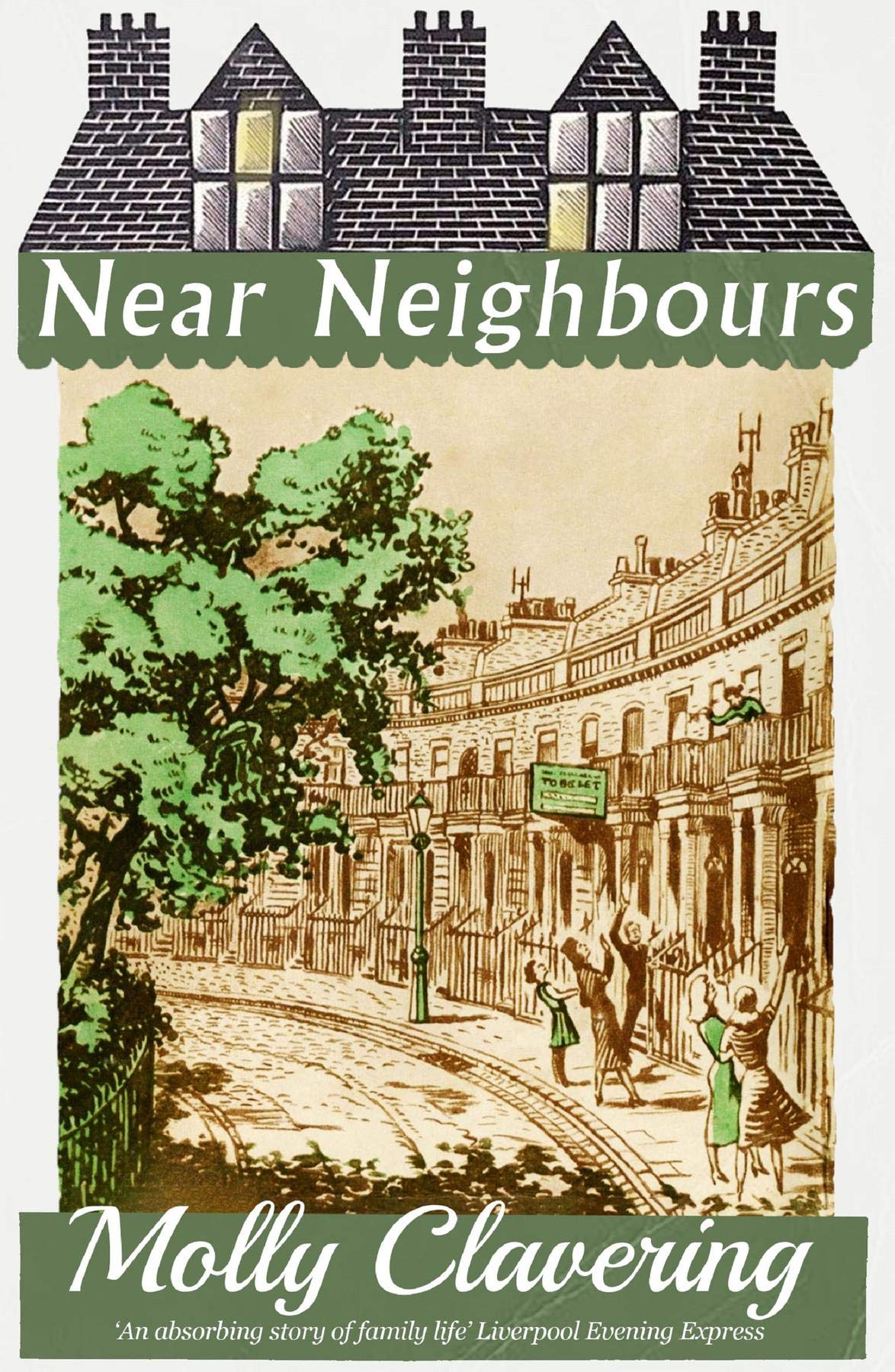
Review 2200: Near Neighbours

The last book I read before this one was This Mournable Body, and after reading that, I felt in need of something light. So I skipped through my queue until I found this book, and it answered the purpose very well.

Unlike the other Clavering works I’ve read, which were set in small towns or villages in the Scottish borderlands, Near Neighbours is set in Edinburgh, in a once-exclusive neighborhood where stately homes are being split up into flats. The two surviving single-family homes are next to each other.

In one, elderly Miss Dorothea Balfour has been dominated all her life, first by her father and then by her older sister. But now her sister is dead, and Miss Balfour has just begun to realize that her life is her own. Still, she is lonely, as her sister considered them to be socially above their neighbors. However, she has always been interested in the activities next door, where the Lenox family, a widow with five grown or nearly grow children, live.

Young Rowan Lenox notices Miss Balfour at the window one day and decides to call on her to offer condolences. She finds the house gloomy but gets along with Miss Balfour well and invites her to tea. Everyone likes her and soon there are friendly visits back and forth.

The three oldest Lenox girls have a romantic concern. Willow is married, but because her husband is in the navy and is often away, she still lives at home. Her mother wishes they would get their own place, and Rowan is disturbed to notice Willow spending a lot of time with Mickey Grant while Archie is away.

Hazel Lenox is a level-headed nurse who is surprised to learn that the hospital heartthrob, Adam Ferrier, approves of her. He even asks her out a few times but then informs her he needs to concentrate on his career as a surgeon. Hazel hadn’t realized until then that she cares for him.

Rowan’s new Highland Dance partner is a brooding Byronic type but the best dancer in the class, Angus Todd. He is sensitive about his lack of background, being adopted, but shows an alarming tendency to be possessive of her, while she thinks of him as a friend.

Miss Balfour is surprised to receive a call from a strange man, who turns out to be the brother-in-law her sister split from six months after she married him. Mr. Milner seems not quite reputable, and Charles Frasier, Miss Balfour’s solicitor, is alarmed because the sister left her entire estate in such a way that Mr. Milner could lay claim to all of it. Through Miss Balfour, Charles meets the Lenoxes and is struck by Rowan.

The novel is a pleasant story about nice people with few real surprises, but the characters are interesting and you want to know what happens to them.

Related Posts

Mrs. Lorimer’s Quiet Summer

Dear Hugo

Yoked with a Lamb

Review 2195: Catriona

I was unaware until recently that there is a sequel to Robert Louis Stevenson’s Kidnapped, but there is, Catriona, and it begins right where the previous novel left off. (Note that apparently this novel is sometimes called David Balfour.) David Balfour has been confirmed in his estate and is ready to learn to be a gentleman, but first, he has some old business to take care of. He must arrange a ship to take his friend Alan Breck Stewart to France, and he must appear as a witness in the Appin murder case, for which he himself is wanted, to free James More, who is innocent.

The problem with this second plan, he finds when he visits the Lord Advocate’s office in Edinburgh, is that no one wants James More, who may not be guilty of Appin’s murder but is guilty of a lot else, to go free. David’s challenges are further complicated when, in the approach to the Lord Advocate’s house, he meets Catriona Macgregor, James More’s daughter, and falls instantly in love with her.

Conscientious David will not agree to any of the compromises proposed by the various lawyers as alternatives to his testimony, so David finds himself kidnapped again in an attempt to prevent him from testifying. So begins another set of adventures for our hero as well as for the innocent but feisty Catriona.

Kidnapped has long been my favorite Stevenson adventure but I liked Catriona very much.

Related Posts

Kidnapped

Treasure Island

Waverly

Review 2168: The Deadman’s Pedal

I had a few thoughts when I began reading this novel that weren’t necessarily connected with how well I liked it. One was how much male writers and critics love coming of age stories, at least if they’re about boys. If they’re about boys, they’re literary fiction (hence the James Tait Black prize win). If they’re about girls, they’re women’s fiction. Take Philip Roth, for example. He’s written the same novel over and over, and back at the turn of the century, he was the only writer who appeared twice in Time magazine’s list of the 100 Best Books of the 20th century. This coming of age novel was one I read for my James Tait Black prize project.

My second observation was more personal. In the beginning of the novel there is some joking around between 15-year-old Simon Crimmons and his friends. Now, I know that at this age a lot of things are said between boys to impress each other, but I found the way they talked about girls disturbing. I actually asked my husband if when he was this age, boys talked this way, and he said no. But he would have been about ten years older than these boys at the time these scenes are set in 1973. Everything they said was so objectifying, it’s no wonder young girls have image problems.

Anyway, Simon is nearly 16 at the beginning of the novel and wants to quit school and get a job. His father owns a fleet of trucks, but Simon can’t work for him until he is 18, so he ends up accidentally applying for a railroad job. His parents are very much against his quitting school, but he is headstrong. Another title for this book might be “Adolescents Making Poor Decisions.”

Simon seems to be a grounded individual who knows who he is, but even as he is getting sexually involved with his girlfriend, Nikki, he meets Alexander and Varie Bultitude and is fascinated by them. They are the teenage children of the area aristocrats, and they seem much more fluid in nature, trying on the hippie look of the times. Simon and Alexander have books and music in common, but we get the sense that to Alexander, Simon is just a way to spend time while he’s home from school. Simon and Varie, on the other hand, have little in common. She’s interested in horses, geology, and the occult. But she is beautiful and he’s fascinated by her.

Much of the novel is about class. Simon complains once that he is too middle class for his fellow railroad workers and too working class for the Bultitudes. Varie is surprised to find he lives in the largest house in his village, and she mistakes his mother for the gardener. His parents have worked their way up from the working class and are dismayed to see him going back down.

Warner seems to have captured the banter of the railway men and the dynamics of small-town Scotland, remote Scotland, too, where they are nearly at the end of the railway line.

I became more interested in this novel when it moved away from Simon’s school friends, especially the frightful Galbraith, to the working world of the railroad. However, I wasn’t much interested in the adolescent obsession with sex.

Related Posts

The Rehearsal

Young Mungo

The Bass Rock

Review 2167: Weir of Hermiston. Some Unfinished Stories

I wasn’t aware when I picked up Weir of Hermiston that it was Robert Louis Stevenson’s last and unfinished novel. But unlike The Mystery of Edwin Drood, only nine chapters of it exist. It has been packaged in the slim volume I found, dated 1925, with several other unfinished novels or stories, but of the others only one or two chapters or partial chapters exist. Between most of the fragments is a note from the editor containing what is known about the fragment and Stevenson’s intentions.

Weir of Hermiston tells the story of Archie Weir, whose mother brought him up to fear and distrust his father, the Lord Justice-Clerk. As a young man, Archie reacts in a disgraceful way, possibly treasonous, to a hanging, so his father sends him to his estate in Hermiston to learn to run it. Archie is ashamed and is not socially adept, so he becomes a bit of a recluse. However, he meets Christina, a cousin, and begins to fall in love with her. He is joined by Frank, a financially embarrassed friend, who decides to give him some competition for Christina. Things aren’t looking good when the fragment ends.

The next fragment is Heathercat, about a young boy whose mother keeps disobeying the law in regard to religion—I didn’t really understand the details—to the point where his father is being ruined by fines. She is using her son, whose nickname is Heathercat, to run illegal errands and keep guard on illegal services of worship. The notes explain that this novel was going to be based on a true story about a young boy who was married to an older girl to prevent her being forced to marry someone else.

Other stories are about a beautiful wife of a wine seller who falls in love with an aristocratic customer, a prince, presumably Prince Charlie, who tires of waiting around and decides to act; a man who takes over the household of a friend who has fled the country; and so on. The fragments are set in Scotland, England, or France during the 15th to 17th centuries, except Weir of Hermiston, which is set in the 19th.

I forgot to add that my copy begins with a description of Stevenson’s death and funeral, written by his stepson, Lloyd Osbourne, who was apparently very fond of him.

I found a book composed of fragments to be frustrating, but it made me want to read more of Stevenson’s adult novels.

Related Posts

Kidnapped

Treasure Island

Travels with a Donkey in Cévennes

Review 2166: In Place of Fear

It’s 1948 Edinburgh, and it’s Helen Downie’s first day in her job as almoner for the brand new National Health Service. Her bosses are young Dr. Strasser and Dr. Deuchar—previously the partner of Dr. Strasser’s father—who share a house and a practice. Although Dr. Deuchar is friendly and humorous, Dr. Strasser is abrupt and sometimes rude. However, Dr. Strasser unexpectedly gives Helen and her husband Sandy a place to live—a flat in a house that was used as a fever hospital during the war. That’s good, because just that morning Helen’s quarrelsome mother threw them out.

Helen completes her first busy day and is delighted with the upstairs flat, which is clean, bright, and has an inside bathroom. When she and Sandy are trying to pull together a few odds and ends to make the flat minimally habitable, Helen finds the body of a young woman out back in the Anderson shelter. She thinks the woman is Fiona Sinclair, the daughter of her benefactor, Mrs. Sinclair.

After she alerts the police, Dr. Deuchar says the woman died from poisoning herself. He and Helen go to notify Mrs. Sinclair, but Fiona is okay. Then Helen thinks the body might be her other daughter, Caroline. She and Dr. Deuchar try to find the misidentified body but are told it was sent to Glasgow because it was the body of a notorious Glasgow criminal. However, on a second visit to the morgue, Helen learns that the girl was hanged, not poisoned, and a famous criminal by the name she was given is unknown in Glasgow.

Persistent Helen begins to uncover widespread corruption involving leading citizens in the city. Something is going on very close to home.

It wasn’t clear to me whether this book marks the start to another series by McPherson, but it has hallmarks of it. Helen is a feisty and likable heroine, and although I thought she was blind to the identity of the killer, what was actually going on in the city was harder to figure out. If this is a series, I’m looking forward to seeing more of Helen.

Related Posts

The Turning Tide

Strangers at the Gate

The Mirror Dance

Review 2147: Confidence

Confidence revisits Anna and Fin, the two protagonists of Conviction, now working together on a crime podcast. Anna, who lived under an assumed name for years after her accusations of gang rape against members of a popular football team were met with disbelief and threats of violence, has had her new identity revealed and faces questions from her daughter about it. Fin, an ex-rock star with eating issues, is dating Sofia, a bitchy Italian woman who came out with the story in front of the girls during a horrible vacation together.

Anna and Fin get interested in a podcast by Lisa Lee, a Scottish girl who explores abandoned places. She breaks into a chateau in France that is decrepit and falling apart but full of dusty, beautiful things. In a secret room that she accidentally discovers, she finds a silver box, Roman, with an inscription that indicates that Pontius Pilate converted to Christianity. It is sealed shut.

Lisa belongs to a group whose motto is “Take nothing and leave nothing,” but it gets about that the box is missing from the room. Soon, Lisa goes missing too, having gone to the door when a pizza arrived and then vanished. Fin decides their next project will be to find Lisa.

When they look into the history of the box, they find it was discovered in a plot in Cold War Hungary that a girl was clearing to plant a garden. After she and her mother consulted with their priest, Eugene Lamberg, she apparently sold it but then was murdered, presumably by the Hungarian secret police. Since then, every person who had the box was murdered until the box disappeared.

Anna and Fin’s search for Lisa is co-opted when they meet Bram VanWyk, a South African antiques dealer and confidence man. He needs to find the box to trade it for a small Monet painting that he stole, apparently from someone he is scared of. He is traveling around with his eleven-year-old son Marcos, whom he just met.

This novel is like a fast-paced confidence shuffle where you never quite know what’s going on. Fin and Anna are likable protagonists and their investigation leads them in quite a dance.

Related Posts

Conviction

The Less Dead

The Red Road