Review 1897: The Metal Heart

On the Orkney Islands in 1942, a German U-boat attack on Scapa Flow leads the British to fortify the seaway’s defenses using Italian prisoners of war as labor. The Italians are located on the small island of Selkie Holm, one avoided by the islanders because of its evil reputation. However, twin young women, Con and Dot, also live there, having moved to a ruined bothy after events on Kirkwell that are not at first explained. Con is afraid, though, of Angus MacLeod.

When the Italians arrive, one falls overboard, and Dot dives in to save him. His name is Cesare, and he begins working in the camp commander’s office and trying to find ways to help the girls. However, he is stopped by the brutality of guard Angus MacLeod.

I liked Lea’s The Glass Woman, and I also like her apparent preference for placing novels in remote northern locations. However, I just wasn’t feeling it here. I felt as if the characters were being put through their paces, not as if the story evolved naturally. I also felt a certain sense of manipulation. Although I was interested to find out why the girls’ parents had vanished, I wasn’t very interested in the love story. I read about half the book, then stopped.

Related Posts

The Glass Woman

The Tolstoy Estate

The Girl from the Channel Islands

Review 1892: Rizzio

The Scots mystery writer Denise Mina is still concerned with crime, but with this novel, she has turned to historical true crimes. Rizzio is a novella that deals with the 1566 murder of David Rizzio, a musician and favorite of Mary, Queen of Scots.

The murder has been engineered by Lord Lennox and Lord Ruthven, with the aid of Henry Darnley, Mary’s worthless husband. Darnley thinks the shock will cause his hugely pregnant wife to miscarry, most likely causing her to die. Then, he can be king. This is what came of their love match of the year before. To Lennox, Darnley’s father, this outcome would put him in power over his weak son. Lord Ruthven, almost dead already, is the tool of a group of aristocrats about to be dispossessed by parliament.

The novella is mostly description with little dialogue, but it has deep insight into the thoughts and personalities of its characters. It is mostly concerned with the activities of one night, March 9, 1566, in Edinburgh.

It is fast-paced and interesting. Mina has made no attempt to reflect the language of the time, and in fact wrote using modern idioms. Hence, perhaps, the lack of dialogue.

Note: At the time I reviewed this novel, I was unaware that it is one of the Darkland Tales, a series of re-imagined tales from Scotland’s history, written by well-regarded contemporary Scottish authors.

Related Posts

Conviction

The Less Dead

Queen’s Play

Review 1889: Apricot Sky

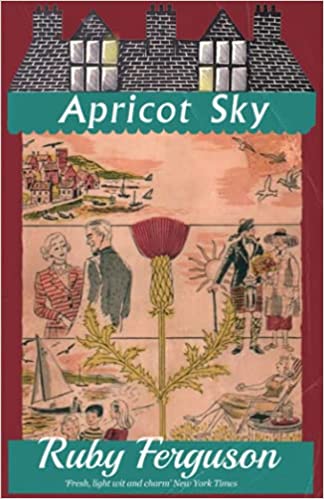
Mrs. MacAlvey is looking forward to a happy summer in her home in the Scottish Highlands. Her three grandchildren who live there are home from school. Her daughter Raine is getting married to Ian Garvine, the younger brother of the local laird, and her daughter Cleo is returning from eight years in the United States. Mrs. MacAlvey also expects guests, and she loves entertaining.

Primrose, one of the grandchildren, thinks Scotland is heaven. She is ready to run wild with her brothers all summer.

Cleo seems to have left home because she was hopelessly in love with Larrich, Neil Garvine, and at first sight of him she realizes she’s not over it. However, she was too homesick to remain in the States. Neil seems more interested, though, in Inga, a young widow whom everyone but Cleo seems to love.

I really loved this novel, and its descriptions made me want to visit the Highlands even more than I already did. It’s about an eventful summer in the life of an attractive, easy-going family in 1948. The characters are likable, it is funny and has a romance, and it’s a lot of fun.

Related Posts

Lady Rose and Mrs. Memmary

Beneath the Visiting Moon

Music in the Hills

Review 1872: The Bass Rock

Told in three compelling narratives that take place over centuries, The Bass Rock is a novel about the history of violence toward women. The novel is located on the banks of the Firth of Forth, an area of Scotland dominated by the Bass Rock.

Early in the 18th century, the local priest comes upon some young men raping a very young girl, Sarah. The priest rescues her, but the young men claim she must be a witch because she enchanted them and forced them to do it. Soon, the men have burned down the priest’s house, and the entire household must flee toward the beach.

Post-World War II, Ruth and her husband Peter have recently moved into the big house in North Berwick. Ruth doesn’t quite understand the reason for the move, since Peter works in London. He says it is for the benefit of his sons by his previous marriage, Christopher and Michael, but they are being sent off to school. Soon, newly wed Ruth finds herself left very much on her own with only the housekeeper Betty for company. She begins to discover some secrets in the family.

After Ruth’s death as an old lady, Michael’s daughter Viv is hired by the family to sort through the things left in the house so it can be sold. She has recently had some mental issues and feels like she is the family failure. Almost despite herself, she befriends Maggie, a homeless occasional sex worker who has an interesting take on things. Maggie tells her there is a ghost in the house.

This is a powerful novel. Although its theme is grim, its main characters are relatable and sometimes likable. I loved All the Birds, Singing, and this is another winner from Wyld.

Related Posts

All the Birds, Singing

The House Between Tides

The Vanishing Act of Esme Lennox

Review 1860: Luckenbooth

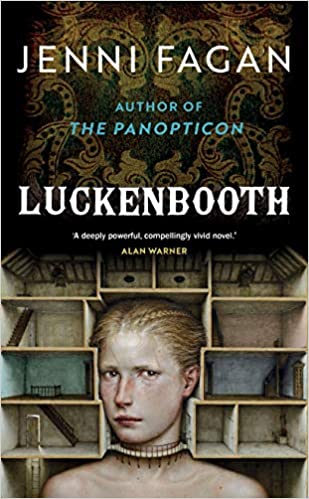
I just loved Jenni Fagan’s other books, so I was expecting a lot from Luckenbooth. Unfortunately, it didn’t quite deliver.

The devil’s daughter launches herself off the island where she was born, using her own coffin for a boat. She arrives at a tenement in Edinburgh to take on the function her father has sold her for, to be the surrogate mother for Mr. Uldam’s child with his fiancée Elise.

This is the first of nine story threads that proceed up the nine floors of 10 Luckenbooth Close, a building of secrets and horrors. The novel has a specific structure. It is split into thirds, with each third featuring the tales of residents on three floors of the building, and each thread advancing a decade in time, beginning in 1910. On the second floor, a transgender woman attends a transgressive party in 1928. On the third floor, a black Southern American works in the bone library of a veterinary school in 1939, and so on. The building hides some horrors that are finally revealed in 1999, when Dot, who is squatting in the derelict building, rips out the walls of the lower floors. But these secrets are no big surprise.

The stories are written in modern vernacular, which I suppose is a stylistic choice, but found it grating, especially for Levi’s letters to his brother. He’s the black American from Louisiana, and besides not sounding 1939ish, he doesn’t sound American, he doesn’t sound black, and he definitely doesn’t sound Southern. In fact, the more I think about it, I feel this choice to use modern vernacular indicates a general attitude of laziness. As an example, Levi chooses to explain things to his brother that his brother would know—like the building being called tenement, as if the U. S. hasn’t had tenements for hundreds of years. In fact, Levi is unbelievably naïve for a black man from the American South. The rich get everything while the poor get nothing? What a surprise!

Another example is that for a gothic novel that is supposed to convey the dark history of Edinburgh, there is an amazing lack of a sense of place (except for in the building) until 1999. Does this suggest that the author thus evaded any research into the appearance of Edinburgh in the past?

I can go on about this, but I just want to bring up a few more things. One is the polemic passages in the novel. There are long passages of ranting about such subjects as the treatment of the poor or women. I would have thought these ideas could have been worked in differently.

Next, I don’t know anything about William S. Burroughs, for example, whether he believed what Fagan has him say. All I know is, after the first few paragraphs when he started talking, I started flipping pages.

Finally, there is a gangster standoff in 1977 where what is said is so unlikely that I could barely stand it. It seems like it might have been a juvenile idea of a “cool” scene.

Related Posts

The Panopticon

The Sunlight Pilgrims

Wylding Hall

Review 1859: Music in the Hills

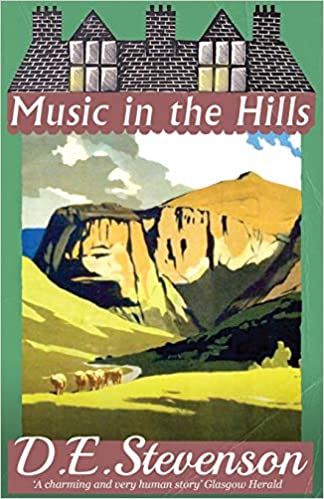
Music in the Hills is the second book in Stevenson’s Dering family series. The first book, Vittoria Cottage, is about Caroline Dering. This book has as its main characters Caroline’s sister, Mamie Johnstone, and Caroline’s son, James. The last book, which I read second, is Winter and Rough Weather.

James has returned from service in Malaysia and wants to become a farmer, so Mamie and her husband Jock have invited him to their farm in the borderlands of Scotland, Mureth, to learn farming. Although James settles in well and loves Mureth, he is unhappy, because he is in love with an art student named Rhoda. He proposed to her, but she has been clear that she’s picking her career over marriage.

This novel is mostly about the everyday events and people on the farm and in the nearby village, nearby in terms of straight distance but a bit remote along a hilly, twisty road. In the novel, as in the next, the landscape is an important character. There are two major subplots, however. One is about sheep being stolen from Mureth. The other is about Holly, the niece of Lady Shaw. She’s making a dead set at James, but there’s something about her that Mamie distrusts.

Another lovely book from Stevenson. I haven’t read Vittoria Cottage for a long time, but it makes me want to revisit it.

Related Posts

Vittoria Cottage

Winter and Rough Weather

Five Windows

Review 1835: Kidnapped

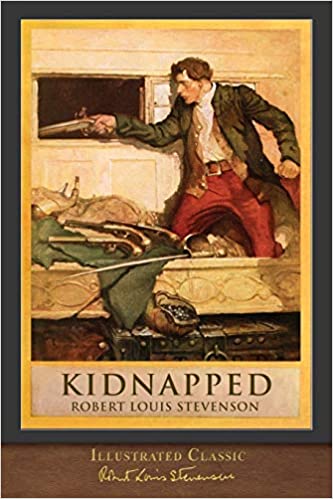
His mother long dead and his father recently having passed away, young David Balfour is ready to set out to seek his fortune. But family friend Reverend Campbell gives him a letter from his father to take to an Ebenezer Balfour of Shaws near Edinburgh. David hopes that if he has a wealthy relative, the man will help him to a career.

When David arrives at Shaws, he finds it incomplete, almost a ruin, and Ebenezer Balfour to be unwelcoming. He is David’s uncle, but right away he sends David up a ruined staircase almost to his death. Then, once his uncle has agreed to go with David to a lawyer, Mr. Rankiller, to discuss David’s inheritance, he has David kidnapped by an unscrupulous sea captain, who is supposed to take him to work as a white slave on a plantation.

North of Scotland, the ship David is on runs over a small boat in a storm, and the only survivor of the boat is Alan Breck Stewart, a Highland Jacobite who has been collecting money for his exiled chief. He has saved his belt full of gold, but David overhears the ship’s officers planning to kill the man for his money. David alerts Stewart, and the two hold off the crew in the roundhouse, ending with a much-depleted crew. Ultimately, this results in a shipwreck.

Beached in the far northwestern Highlands, David and Alan must avoid capture by the English army while they journey to Edinburgh to reclaim David’s inheritance and find Alan another ship for France.

This novel was my favorite Stevenson book as a child, so I was curious how I would view it now. I enjoyed it very much. David and Alan are interesting contrasting characters, and the novel gives a good idea of living in the Highlands in 1751. It’s full of adventure, too, a fun read.

Related Posts

Treasure Island

The Black Arrow

Travels with a Donkey in the Cévennes

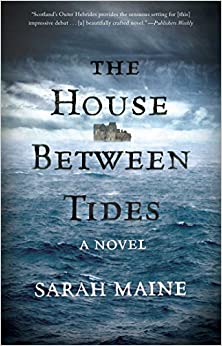
Review 1827: The House Between Tides

A house on an island separated from the main island by a causeway only open at low tide is the focus of this novel set in the Outer Hebrides. It’s a dual timeframe novel, which format I have to admit I am tiring of.

In 1910, Beatrice Blake arrives with her new husband, the famous artist Theo Blake, to his home on the island for the summer. In 2010, Hetty Devereaux has inherited the house and is considering turning it into a hotel.

Neither woman has made a good choice of partner. Theo thought Beatrice would drive away his thoughts of his first love Mailí but realizes very soon that she cannot compete and begins to neglect her. Hetty’s fiancé Simon has forced his way into her plans and has hired people to do surveys and look into such issues as financing before Hetty has even seen the property.

Both of these stories deal with how the property should be handled and how much claim the crofters have to the island, but in 2010, bones have been discovered under the foundation of the house. The 1910 story eventually reveals whose bones they are.

I found this novel interesting, and the descriptions of the island are lovely. However, even though I saw complaints about Hetty’s lack of backbone, I was more interested in the modern story than the older one. Possibly it’s because it was obvious to me why Theo is so interested in his factor’s son, Cameron, and also because I wasn’t interested in Beatrice’s romance. The final twist was obvious to me, although I didn’t figure out who the bones belonged to.

This novel is atmospheric but a little hackneyed, I think.

Related Posts

The Forgotten Garden

The Sea House

When They Lay Bare

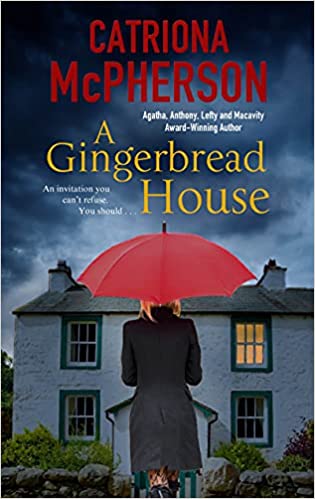
Review 1825: A Gingerbread House

Catriona McPherson, in her standalone novels anyway, is a master at creating creepy situations that eventually resolve into the making of warm communities. I guess that makes her the queen of gothic cozies. In A Gingerbread House, she’s hit it with another one.

Tash Dodd has discovered that her family’s transport business is involved in trafficking. She wants to take over the business and put things right, so instead of informing the police, she lodges her proof and presents her father with an ultimatum—retire or else. Then she goes into hiding to give him a week to think it over.

While she’s been away training to turn her business to greater good, she’s caught glimpses of some women just before their lives completely change. Someone is creating elaborate hoaxes to lure one lonely woman after another into a Victorian gingerbread-style house. The first is Ivy, an older woman who would like a friend but would settle for a cat. Instead, she meets Kate, who claims her twin sister looks just like Ivy. Please come to the house to meet her. Kate has a surprise in store for Ivy.

As usual, McPherson creates likable heroines—this time four of them—and there are friendly neighbors and a hint of a love interest. I enjoyed myself very much.

Related Posts

Strangers at the Gate

Go to My Grave

House. Tree. Person.

Review 1824: The Big Music

This high-concept novel is admittedly a bit demanding to read. Although it is the story of difficult family relationships, a distinguished heritage, a dying man, it is written to convey a sense of the piobaireachd, the classical form of bagpipe music, a type of music dependent upon repetition and embellishment.

John Callum Sutherland, an old man nearing his death, is trying to complete a piobaireachd called “Lament for Himself.” Because of his fears of his father, a famous piper, John Callum as a young man left behind his long, distinguished family history and vowed never to return. Only once he returned after his father’s death and met Margaret MacKay, the housekeeper, did he realize what he missed by leaving, the music and the great love.

Now, dying and off his meds, John Callum needs a new note for his piobaireachd. He decides he can find it by taking Katherine Anna, Margaret’s infant granddaughter as well as his own, to his small hidden hut where he works on his music. As he goes, he imagines the melodies made by Helen, Margaret’s daughter, when she finds her baby is missing.

Margaret has summoned Callum Innes, John Callum’s son, from the south because she knows John Callum doesn’t have long to live. Callum has never lived in the remote family home in Sutherland. He has only spent his boyhood summers there and has never felt part of it. He too fears his father.

This novel is about a family home, a family legacy, music, and the relationships between fathers and sons. It is at times touching, but it appeals more to the cerebral than to the emotional. Not only is the novel written in the form of the piobaireachd and attempts to convey the music, but it is heavily annotated and makes the novel itself, and the writing of it, the center of the story in the postmodern fashion. Finally, it provides nearly 100 pages of appendixes for those interested in the history of the family, the piobaireachd form, the geography of the area, and many other topics.

I found this novel, which I read for my James Tait Black project, more intellectually interesting than involving. I have to admit to tiring of some of its repetitions, most often of the footnotes in continually referring readers to the appendixes.

Every Note Played

Fair Helen

Dirty Birds