Review 2442: Killing Me Softly

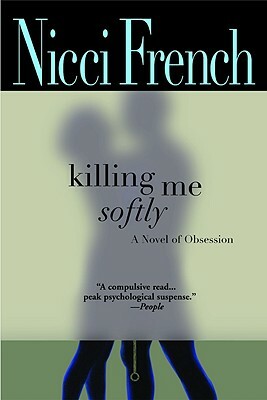
Although I have lost track of it, I followed Nicci French’s series featuring psychoanalyst Frieda Klein for some time. So, when I was looking through my To Read list for books published in the missing years for my A Century of Books project, I picked out Killing Me Softly, which is a stand-alone.

Alice Loudon is bored with her job, but she is happily involved in a relationship when she locks eyes with a startlingly attractive man while crossing the street. When she comes out of her workplace later, he is waiting for her, and they begin a torrid affair. His name is Adam Tallis, and he is a well-known mountaineer. He is intent and possessive, but it’s as if Alice is possessed by him. At one point, she tries to break it off, but she ends up instead breaking up with her boyfriend.

Sex is an important part of their life, and Alice finds herself agreeing to practices that are farther and farther from the norm. She drops most of her friends and can’t concentrate at work. In addition, she and Adam are receiving threatening messages.

Alice finds that Adam is the hero of an incident he has refused to talk about, in which several people died on a mountaineering trip when a storm came up. But there’s a lot Adam won’t talk about, and Alice begins to believe that he has secrets.

Nicci French is a master at building suspense, and this novel is no exception. Although Alice is not an entirely likable character—she pulls several deceptions over people to get at the truth—we can’t help but be on her side.

Related Posts

Thursday’s Children

Friday on My Mind

Dark Saturday

Review 2121: Young Mungo

Twice recently I’ve had the same unusual experience with my reading. I was looking forward to reading a second novel by an author who wrote a book that I loved, only to find the second novel seemed to be very much the same as the first, as if the writer was stuck somehow. This happened with Young Mungo.

Mungo is a caring 14-year-old Glaswegian gay boy with an alcoholic mother, a sister planning her escape, and a violent brother. Sound familiar, those of you who have read Shuggie Bain? The novel begins with Mungo being packed off on a camping trip with two men his mother barely knows from her AA meetings. He is poorly clad and equipped, the men are drunk, and a feeling of dread is the immediate effect. In between chapters that continue this story, the novel returns to scenes from Mungo’s past.

Set in the 1990’s, the novel is similar to Shuggie Bain except that Mungo is older and the novel is even more grim and violent at times. Still, it is compelling and becomes less like the other novel as it goes along. I ended up liking it but not so sure I want to visit that world a third time.

Related Posts

Shuggie Bain

A Little Life

Edinburgh

Review 1878: Edinburgh

Fee is a 12-year-old mixed race boy (Korean-American) who feels out of place in his home in small-town Maine. Not only does he not look like his peers, but he likes boys. He is deeply in love with Peter, his best friend.

When Fee joins an elite boys’ choir, he thinks he recognizes in the choir director, Big Eric, a person like himself. But he soon realizes that Big Eric is a predator, who systematically abuses the soloists and keeps them from telling by threatening to cut them from the choir.

Fee conflates his homosexuality with Big Eric’s abuse and is so ashamed that he tells no one even when Peter is given a solo part. Eventually, Big Eric approaches the wrong boy, and the truth comes out. But this also has disastrous consequences for his victims, two of whom commit suicide.

Moving forward in life, Fee continues to be haunted by these events during his teen years and early adulthood. He is finally managing a happier adulthood as a swimming teacher in his home town with a loving partner when he meets a young student who reminds him of Peter and is involved in the early events in a way neither of them understand.

I had mixed feelings about this novel, which I won from Adam of Roof Beam Reader. It is beautifully written and incorporates lore from the Korean side of his character’s background. But it also feels removed from its characters, which is probably necessary as it feels at least somewhat autobiographical. There are some times when the lyrical language doesn’t seem to mean anything and is written more for its sound and images. But mostly, I am disappointed in the ending of the book.

Read no further if you want to avoid spoilers. I don’t usually include them, but I felt I had to in order to express my opinion of the book. It seemed to me that his succumbing to the boy, even though it was mutual and the boy was much older than he had been, is still a predatory act because of the teacher-student relationship. Also, I could not believe that he could teach a student without knowing his last name. There are rosters, reports to be filled out. That was just unbelievable.

Related Posts

Shuggie Bain

A Little Life

A Place Called Winter

Review 1507: Catch and Kill

Catch and Kill is Ronan Farrow’s book detailing the NBC News investigation into claims of sexual harassment, abuse, and rape by Harvey Weinstein against numerous female actors and employees. This investigation resulted in Farrow’s New Yorker article that precipitated the Me Too movement. The book also details the obstruction of Farrow’s efforts to pursue the investigation by his own management at NBC, which turned out to have its own culture of sexual abuse and harassment and a system of cover-ups for this behavior.

Less well known is his story of surveillance by the Weinstein organization and of threats against witnesses and potential witnesses. Interestingly enough, he also mentions instances of similar claims against Donald Trump before his election, which, along with those against Weinstein were “caught and killed” by the National Enquirer and its affiliates.

Farrow is very open about his own not very helpful responses to his sister Dylan’s claims against their father, Woody Allen, and about his feelings of being spied upon as well as a certain amount of naiveté when NBC first began obstructing his investigations. This is an interesting account of a landmark moment in recent history.

Related Posts

In Pieces

Giving Up the Ghost

The Headmaster’s Wife