Review 2617: James

I read James for both my Booker Prize project and my Pulitzer Prize project, which it won. As most people know by now, it is a retelling of Twain’s Huckleberry Finn from the point of view of the slave Jim.

Aside from generally following the plot of the original novel about halfway, James lives in a world that is much more violent than Huck Finn ever had a clue about. Everett has taken a liberty and placed the novel in the 1860s instead of the 1830s or 40s, when the original is set. He also uses a striking conceit: when among themselves the black characters speak more correctly—and sometimes with erudition—than most of the white characters.

Jim—or James, as he prefers to be called—hears that Judge Thatcher is going to sell him away from his wife and daughter, so he escapes and hides on a small island on the Mississippi. Unfortunately for him, Huck Finn has heard that his dreaded father is in town, so he fakes his own death and runs away, ending up on the same island. James realizes right away that he will be blamed for Huck’s “death.”

The two stick together and encounter what Huck thinks of as adventures and James knows to be deadly peril. After all, a slave is lynched later in the book for being suspected of stealing the nub of a pencil from his master. That he did steal it to give to James is beside the point.

The book follows the same basic outlines as Huckleberry Finn until James gets away from the Duke and the Dauphin, but all of the situations are much more deadly. Eventually, James’s inner anger is set aflame.

Everett’s books are witty, but they are also very angry. And he has some surprises for us.

This novel is fast moving and really interesting. It shows facets of the “institution” of slavery in all its ugliness.
Related Posts

The Trees

Erasure

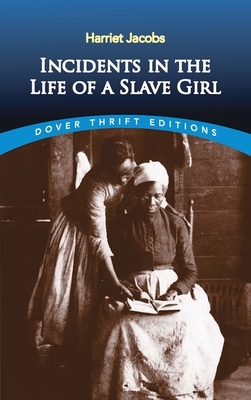
Incidents in the Life of a Slave Girl

Review 2565: Classics Club Spin Result! Incidents in the Life of a Slave Girl

I pulled this book for the Classics Club spin, and I’m very happy to have done so. Because of the state of my reading right now, I was hoping for a short one, and this book is only 144 pages (albeit of very small type). It’s one of the few short works left on my Classics Club list.

The autobiography was written in the 1850s about events earlier than that and published in 1861. Although by then Jacobs was free, she wrote it under the pseudonym of Linda Brent, probably to protect others.

Linda had a fairly cheerful childhood, because she was owned by a kind woman who had promised to set her grandmother free. However, on the woman’s death, her slaves were seized as assets because she owed money, and Linda and her brother William ended up in the home of Dr. Flint, a relative. Linda’s grandmother was not freed and was also owed $300 by her mistress but never got it.

Jacobs recounts many instances of brutality on the part of slave owners, but her own troubles began when she reached puberty and Dr. Flint began relentlessly pressing her, trying to get her to have sex. Essentially out of desperation, she succumbed to another white man who she liked better and had two children by him. He, Mr. Sands, tried to buy her and her children several times, but Dr. Flint refused to sell them.

Eventually, Jacobs tried to escape, and the events of her escape, which took years, are the most harrowing in the book. Even after she escaped, she was in danger of being snatched back because of the Fugitive Slave Act, and Dr. Flint didn’t stop trying to find her until he died.

I thought this book was interesting, although at times it had very religious overtones, applied to events that she thought would make her look bad. But, after all, part of her purpose was to educate people against slavery, and she didn’t want her audience to turn against her. Frankly, she does little to deserve that (mostly, she feels she sinned by sleeping with Mr. Sands), but I can see why in that time she would worry about it.

For some reason, although I had sympathy for Linda’s really horrible troubles, I didn’t get as involved with this book as I might have expected. I’m not sure why.

Related Posts

The Underground Railroad

Booth

Beloved

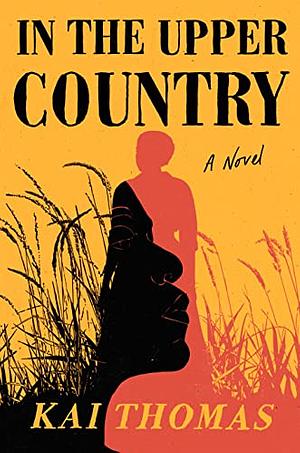
Review 2483: In the Upper Country

In 1850, Lensinda Marten lives in an all-Black town in Canada north of Lake Erie. She is a healer, but she is puzzled when she is summoned to the side of a slave catcher who has come after a group of escaped slaves that are hiding on Simion’s farm. Puzzled because the man is dead. When she hears that an old woman, one of the escapees, has been arrested, she realizes she is wanted to write a story about the woman for the Abolitionist paper.

She goes to visit the old woman in jail and finds that she isn’t ready to tell her story. Instead, she wants to swap stories with Lensinda. In doing so, a history of cruelty is reveealed, and the two women find connections between each other.

Thomas says in the Afterword that he heard and read many stories about Canada’s history of slavery, its treatment of First Nations people, and the War of 1812, but he could find no story that did everything he wanted. So, he chose this method of telling several stories that interface.

Although I found the information interesting and the settings and historical details to be convincing, I’m afraid his approach didn’t work that well for me. Just as I was getting interesting in Lensinda’s story, the novel appeared to move away from her. There were quite a few characters whose connections aren’t immediately clear, and I kept getting them confused as we jumped from story to story. Eventually, the stories connect, but that wasn’t clear for quite a while.

I read this novel for my Walter Scott prize project.

Related Posts

Washington Black

Beloved

This Godforsaken Place

Review 2211: Horse

This novel tells the story of a famous racehorse and the people connected to him evoked through some objects—his own skeleton and three portraits of him. Although the main characters in the novel are fictional, many of the historical characters are not. The horse, Darnley, who is renamed Lexington, is still considered one of the best racehorses of all time, and many of his offspring have been champions.

In 2019 Theo is a Nigerian graduate student of art history at Georgetown. He plucks a painting out of the trash of his neighbor. It is of a horse, and he recognizes that it is well painted, so he decides to write an article about having it cleaned and valued.

Jess is the head of a lab at the Smithsonian that cleans and articulates animal skeletons for display and study. She has recently located the skeleton of the famous race horse Lexington for a scholar studying equine bone structure when Theo brings in his cleaned painting. Jess recognizes it immediately as one of Lexington painted by Thomas J. Scott, a 19th century horse painter.

In 1850, 13-year-old Jarrett is a slave working with horses for Dr. Warfield in Lexington, Kentucky. Jarrett’s father, Harry Lewis, is a well-known horse trainer who has bought his own freedom and is saving to buy Jarrett’s. Jarrett is with Alice Carneal when she gives birth to Darnley, the horse that will be renamed Lexington. After a promise from Warfield to give Darnley to Harry instead of his yearly wage, Jarrett develops a close relationship with the horse.

Thomas J. Scott is a young artist who specializes in painting horses and is hired by Warfield to paint some of his horses. While he is there, he paints a copy of his picture of Darnley and gives it to Jarrett. Later, he returns to paint an older Lexington.

These are the characters whose points of view are used to tell the story of Lexington. Brooks’s story is based on what is known of the real horse and characters with some inventions. It’s an interesting story with vivid descriptions of the races, of 19th century New Orleans, and of the racing industry of the time. It also has strong themes of the effects of slavery, racism, and cruelty to animals.

Related Posts

Horse Heaven

The Sport of Kings

People of the Book

Review 2144: The Underground Railroad

Cora is a slave on a brutal Georgia plantation. When a new slave on the plantation, Caesar, tells her he is going to escape and invites her to come, she at first refuses. But later her master’s brother inherits the plantation and sets his eye on her, so she and Caesar escape using a branch of the underground railroad.

Up to this point the book is grim and realistic, but Whitehead makes his underground railroad an actual train, destination unknown, and here the novel departs from reality so that Whitehead can make points about the evils of slavery and racism in all its incarnations.

Caesar and Cora arrive in what seems to be a utopian South Carolina, where the state has decided to educate and train slaves who have been freed. But there’s a deeper, darker subtext to the plan.

Determined to capture Cora is Ridgeway, an infamous slave-catcher. Cora’s mother Mabel disappeared when Cora was a girl, never to be seen again, and he took it as a personal failing. So, he’s determined to catch Cora, and he eventually turns up in South Carolina.

I have to admit I have problems sometimes with magical realism, and the combination of a real train and a South Carolina that never existed ground me to a halt. However, as Cora’s adventures continued, eventually I was charmed again and found the novel a powerful work of imagination.

Related Posts

Washington Black

The Nickel Boys

Harlem Shuffle

Review 1607: Classic Club Spin Result! Oroonoko

Oroonoko was the book I read for the most recent Classics Club Spin.

There are a few issues with Oroonoko, written in 1688, that might make it difficult for modern audiences. One is its acceptance of slavery (although the novel is viewed as an anti-slavery work), which in the 17th century was common. The other is its graphic violence, albeit off-stage, that has caused it to vary in popularity over time. (Apparently, even the publishers of the edition I read disagree about that, because the introduction says it was Behn’s most popular work, while the cover says it was not popular because of its violence.)

Oroonoko has been considered a novella rather than a biography, because there is no proof that such a man as Oroonoko existed. However, Behn writes the story in first person as herself, and she is known to have traveled to Suriname, where it is set, shortly before the country was ceded to the Dutch. So, you have to wonder.

Oroonoko is the prince of Coramantien, an area of present-day Ghana, the grandson of the king and a great warrior. He falls in love with a beautiful girl named Imoinda, and she becomes his betrothed. However, his grandfather sends her the veil, which means she is to join his harem, even though because of her betrothal that is a break in custom. Oroonoko must accept this or die, so he accepts it with the thought that the king cannot live long. However, the king regrets his actions and sees no way to recover the situation except if Imoinda was dead. He is unable to have her killed, though, so he sells her into slavery and tells Oroonoko she is dead.

Next, an English slave trader whom Oroonoko has sold slaves to invites him for a party. When he and his men have passed out from drink, the trader enslaves them and puts them on a ship for Suriname. It is when Oroonoko arrives there that he meets Behn and her traveling companions and they learn his tale and witness the rest of the action.

Oroonoko might be the first anti-slavery novel, although it is subtle about it, showing some of its abuses while not really commenting on the institution. Behn reveals the dastardly behavior of a series of Europeans, either slavers or owners, and contrasts it with the image she builds up of a handsome, brave, forthright black hero and his beautiful and virtuous lady. The novel was interesting, but I found what happened to Imoinda through Oroonoko’s hands distressing and the reflection of a type of thinking I did not find admirable—and the ending was just plain gruesome.

Related Posts

Merivel: A Man of His Time

Washington Black

Sugar Money

Review 1489: The Water Dancer

Hiram Walker is a slave on a Virginia plantation with a photographic memory and a talent for mimicry. As a boy, he attracts the attention of the master, who is also his father. His father has Hiram educated for a year, and the naïve boy imagines he might take an important place on the plantation, but the master’s intention is simply to have Hiram keep his heir, Maynard, out of trouble.

One day on the way back from town, the carriage, being driven recklessly by Maynard, goes into the river. Maynard is drowned, and Hiram wakes up in a field far away from the river. Hiram begins to fear he’ll be sold off to Maynard’s fiancée, Corinne. So, he plots an escape for himself and his master’s brother’s concubine, Sophia.

The Water Dancer has aspirations to literature, and that was one of my problems with it. Occasionally high-flown prose runs from the lyrical to the clichéd. Some of the conversations are absurdly unlikely. One of Coates’s affectations was for the slaves to call themselves the Tasked, which seems to be hardly authentic; in any case, I could find no other such use of the word.

Sometimes, the action slows almost to a halt. For example, Hiram falls into the water on page one and doesn’t come out until about page 100, during which Coates provides background. I’ve run into approaches like this before lately, and all I can say is that something like this that works in a movie doesn’t translate well to fiction, where you are reading for hours over a time that is supposed to be a few minutes.

Coates’s goal here isn’t to tell about the cruelties of slavery so much as to put his tale on a higher plane. He also introduces an element of speculative fiction.

I struggled with this book for about a week and decided to quit halfway through. At that point it was becoming clear that Sophia would have a bigger role, but her character was so little defined that I felt she was almost a MacGuffin. I just couldn’t get on the same wavelength with Coates.

Related Posts

A Most Extraordinary Pursuit

Homegoing

Washington Black

Review 1471: Homegoing

Writers seem to be experimenting with the form of the novel these days, not always successfully. Yaa Gyasi uses the form of linked short stories to good effect, however.

In paired stories, the novel follows two half sisters and their descendants through 300 years of history. In 18th century Gold Coast, Effia is being courted by the son of a king, but her mother, Baaba, tells her to hide the fact that she has reached womanhood. Her suitor eventually marries someone else, and Effia is married to a white man, James Collins, the governor of Cape Coast Castle. The Castle is where slaves are kept before being shipped to the colonies.

Esi is the daughter of Big Man and Maame, a former slave to Effia’s family. In her attempts to befriend Abronoma, her family’s slave, she sends a message to Abronoma’s family to tell them where she is. Thus, she herself becomes a slave when her slave’s family attacks and captures her village.

The novel checks in with each of eight characters of the girls’ descendants, sometimes telling the entire stories of characters’ lives, other times dealing with significant moments. Both families are affected by this great evil in their lives, slavery and its aftereffects. This structure allows Gyasi to explore some of the key events in the histories of Ghana and the United States.

At first, I thought I might get frustrated with the format, because I often want more from short stories. But because the stories are about two families, some of the characters are present in more than one, and you can at least find out what happened to them. Many of the stories are grim, but the novel ends hopefully. Gyasi’s voice is a fresh one, and I found this novel captivating.

Related Posts

Sugar Money

Washington Black

Beloved

Review 1465: Sugar Money

Best of Ten!
In 1765 Martinique, Father Cléophas sends two of the monks’ slaves, Emile and Lucien, on an astoundingly ill-advised mission to Grenada. The two brothers are to gather the monks’ hospital and field slaves from the island, which has been taken by the British, and bring them to Martinique. Cléophas presents them with a notarized document and tries to convince them that the British have agreed to this, but in the next breath, he tells them to do it secretly, on Christmas Day, when the British will be drunk.

Emile, who is 28, tries to convince Cléophas to leave Lucien, who is 13, home, but Cléophas insists that Lucien go, because he can speak English. Then he gives them a package of medicinal herbs to convey to a doctor, their excuse for going to the island.

The slaves have no choice but to do as they are bidden. Lucien relates this story in his quirky mix of English, French, and patois. In the guise of an adventure, with humor and a likable, inimitable narrator, Jane Harris tells us the horrifying details of life in the 18th century Caribbean.

This is an excellent novel that I read for my Walter Scott Prize project. I have recently read more than one novel set on a Caribbean sugar plantation, but this one seems the most authentic.

Related Posts

Washington Black

The Quality of Mercy

The Long Song

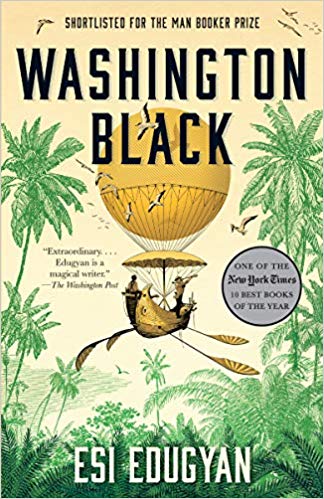
Review 1403: Washington Black

Best of Ten!
Washington Black is a twelve-year-old field slave on the Barbados plantation of Faith in 1830 when a new master arrives. Masters are to be feared, but it soon becomes clear that the new master is cruel and thinks nothing of the death of a slave.

Washington and his protector, the old woman named Kit, are alarmed when one evening they are summoned to the master’s house. They are expected to wait table while the master entertains his brother, Christopher, although they have no training. After the dinner, the brother asks for Washington to wait on him personally.

Christopher, or Titch, as he asks to be called, is a man with a scientific mind. He is working on an airship he calls Cloud Cutter, which he plans to launch from a mountain at the top of the plantation. Once Titch sees how exactly Washington draws, he begins to involve him in his experiments.

The master is away when Titch’s cousin Philip arrives. He brings some news that disturbs the plans of both Titch and the master. Then a terrible event occurs. Because Washington is present for it, he knows it means his death. Titch knows it, too, and the two flee the plantation in the Cloud Cutter.

Washington’s life becomes one of adventure overshadowed by fear. Although during the novel he travels to the Arctic, Upper Canada, England, and eventually Morocco, for years he fears being recaptured.

This novel is part adventure story, but it has the more serious aim of exploring the bonds between the exploiter and the exploited. Titch is a mystery to Wash, a seemingly compassionate man who yet abandons him in the Arctic. For years, Wash believes him to be dead, but then he hears he is alive. This sends him on more journeys to try to find and understand his mentor.

I thought this novel was fascinating, especially the descriptions of sea creatures when Wash begins studying them in Upper Canada. Later on, he begins to build the world’s first public aquarium.

I liked Edugyan’s Half-Blood Blues, but I was really caught up in the story of Wash’s life. This novel applies to my Man Booker Prize project, but I would have read it anyway.

Related Posts

Half-Blood Blues

The Known World

The Good Lord Bird