Review 2624: #RIPXX: The Investigator

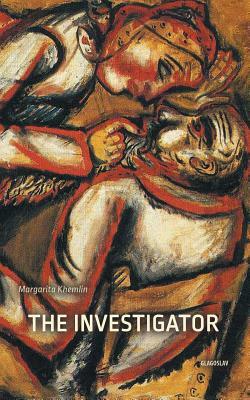
Contemporary writer Margarita Khemlin has set this story in 1950s Soviet Ukraine, when reverberations from World War II were still going on.

Police Captain Mikhael Ivanovich Tsupkoy unusually gets the case of the murder of a Jewish woman, Lilia Vorobeichik, who has been stabbed with a knife. The situation is unusual because the protocol for a serious crime is to call in a criminal investigator. However, Tsupkoy is able to wrap the case up immediately because Lilia’s boyfriend, Roman Nikoleyeivich Moiseenko, confesses immediately. When he commits suicide in jail, the case is closed.

Later, Tsupkoy catches a glimpse of someone who he thinks is the dead woman. He returns to her house to find her twin sister, Eva, living there. She and another woman are making matzo, which apparently was illegal at the time, but they claim it’s for feeding the chickens. When he does a recheck the next day, he meets a dressmaker, Polina Lvovna Laevskaya. Tsupkoy becomes interested in what’s going on and seems to be still investigating the case.

Because his friend, Jewish veteran Evsey Gutin, knows everyone in the Jewish community in town, Tsupkoy goes to visit him and his wife Belka to ask Evsey about a name he’s come across. Shortly thereafter, when Tsupkoy is on vacation, he learns that Evsey committed suicide.

I found Tsupkoy’s investigation to be confusing, because he keeps returning to the same large group of people to eke out one more fact. In retrospect, it’s hard to reconstruct the order of things. One important point, though, is that after Polina Laevskaya makes allegations that the investigation into Lilia’s death was perfunctory, she begins spreading rumors designed to ruin Tsupkoy’s reputation. People who previously trusted him begin to avoid him.

This novel seemed rather messy structurally. For one thing, I would have loved to see a list of characters like used to be included at the beginning of many Russian novels, because there are lots of them, and they are referred to inconsistently, sometimes by last name, sometimes by first, but more often by a nickname, and hardly ever by their patronymics, as used to be the case. Also, the later investigation, admittedly not official, seems haphazard. Fairly early on, I had an idea who the murderer might be, and although I doubted myself and didn’t come up with an alternative, I was right.
There often seemed to be something going on in the conversation that was unspoken and that I didn’t understand. Maybe that was because of the times and location. Certainly, there is a lot of tension between the Communist ideals and the realities of the Jewish comrades, as what Tsupkov calls Jewish nationalism (which just refers to their traditions, apparently) is illegal. Ethnic groups are supposed to assimilate—and this fact is important to the plot.

Finally, the motive only comes out in the last few pages, and it’s ambiguous and seems weak. If it had been developed a little more, it might have been stronger, but that may have been difficult to do without revealing the killer.

Related Posts

Punishment of a Hunter

The Ukrainian and Russian Notebooks

Drive Your Plow over the Bones of the Dead

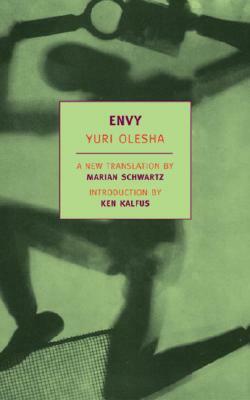
Review 2498: Novellas in November! Envy

It wasn’t until I was getting ready to post this review that I realized that at 152 pages it qualifies for Novellas in November!

I read Envy right after Dostoevsky’s The Gambler, and perhaps that was too much for me. The two short Russian novels have a lot in common even though they were written more than 60 years apart. They both feature young male narrators in a frenzy and easily offended. They both have long philosophical speeches that doesn’t seem to mean much. Olesha leans more into Absurdism, but Dostoevsky can be pretty absurdist himself.

Andrei Petrovich Babichev is a model Soviet citizen, a trust director in charge of food. He has literally picked our narrator, Nikolai Kavalerov, up from the gutter and given him a bed on his sofa. Andrei Petrovich is fat and self-satisfied, true, but Nikolai hates everything about him.

Then he meets Andrei’s brother, Ivan, a sort of buffoon who makes up ridiculous stories and also hates Andrei.

Andrei’s claim to fame is a huge communal dining hall he’s building, where food is supposed to be good and cheap. He has also produced a good, inexpensive sausage that he’s proud of. Olesha is clearly making fun of these accomplishments, and I don’t know how he got away with it in 1927 Soviet Union.

There is lots of talk about the New Man that Communism is going to produce but no sign of one. (Coincidentally, I am reading The Possessed by Dostoevsky right now, and there’s lots of talk about the New Man in it, too; only apparently he’s supposed to be produced by Nihilism.)

Thanks to the publisher for sending me this book in exchange for a free and fair review.

Related Posts

Life and Fate

The Gambler

Memories: From Moscow to the Black Sea

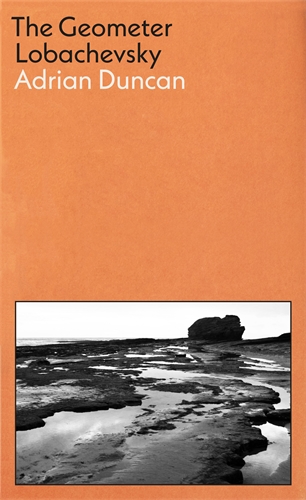
Review 2307: The Geometer Lobachevsky

In 1950 Ireland, Soviet citizen Nikolai Lobachevsky has been working in the western bogs, trying to help a team survey the bog lands. He receives a letter from the Soviet government summoning him home to take up a “special assignment.” He knows that probably means execution, so he hides on a remote estuarial island.

Readers who look for a rousing plot aren’t going to find one here. Nothing much happens except for work and exact observations. First, Nikolai is helping with the surveying. Later, he helps farm seaweed. But he is homesick, and once he hears of Stalin’s death, he decides to return to Russia, taking a gamble that Malinkov, for whom he used to work, will pardon him for whatever sins he’s supposed to have committed.

I just felt meh about this novel, which I read for my Walter Scott project. It excels at descriptive passages, but it was hard to know Lobachevsky. Also, I am not that into strictly contemplative novels.

Related Posts

The Fawn

The Bogman

The Secret Guests

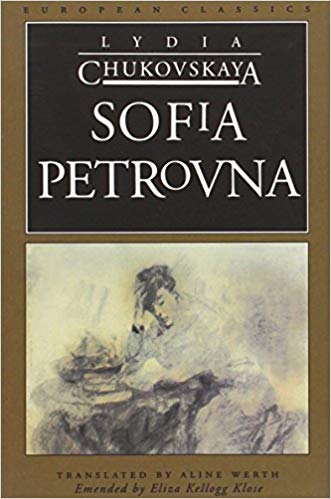
Review 1500: Sofia Petrovna

The heroine of Sofia Petrovna is an ordinary Soviet woman, not political but a happy worker at a publishing house. She has a son, Kolya, a promising engineering student who is a dedicated party member.

Then things begin to go wrong. She hears of the arrest of some doctors, one of whom she knows. They have been accused of sabotage. She can hardly believe it. He seemed like such a nice man. But if they say it is true, it must be. Then Kolya is arrested.

Lydia Chukovskaya’s novella about the Great Purge under Stalin was written in 1939-40, and she kept it hidden for years. A Soviet publishing company accepted it for publication in 1962, but when it was almost ready, backed out. It was finally published in Europe in 1965 after having been smuggled out of the country.

This is a deeply interesting and harrowing novella about what happens to an individual when the world seems to have gone crazy.

Related Posts

Memories: From Moscow to the Black Sea

The Ukrainian and Russian Notebooks

A Gentleman in Moscow