Day 603: Stone Mattress

Cover for Stone MattressMargaret Atwood describes Stone Mattress as a collection of tales, and several of them are characteristic of wonder tales or amazing tales of decades ago. In the title story, for example, a woman meets a man on a cruise to the Antarctic who years ago ruined her life. When he does not recognize her much older self, she begins plotting his murder.

All of the stories are about characters in their older years. The first three are linked. In “Alphinland,” Constance, the author of a popular fantasy series, copes with the aftermath of an ice storm and listens to advice from her dead husband as she considers her earlier life, particularly Gavin, an old lover who was cruel to her. In “Revenant,” Gavin’s wife Reynolds tries to cope with her difficult poet husband. She has a bit of revenge by setting him up with an interview with a graduate student who only wants to know about his relationship with Constance. In “Dark Lady,” Jorrie, the woman who long ago was the cause of Constance and Gavin’s break-up, asks her twin brother to go along with her to Gavin’s funeral.

http://www.netgalley.comSome of the stories are more fantastic, such as “Lusus Naturae,” about a woman whose family has hidden her away for years because of her appearance and a thirst for blood. Many of them reflect a concern for the environment and a dark sense of humor. All are well written. This collection is a perfect one for people who want to experience a light and entertaining dose of Atwood.

Day 596: Aurorarama

Cover for AuroraramaThe city of New Venice floats on the ice in the Arctic Circle in this steampunkish work of fantasy fiction. The city is a supposed near-utopia, not a utopia because it is ruled by the corrupt Council of Seven and their sinister police force, the Gentlemen of the Night. The residents of the city dress in Victorian clothing and go on about their business, which is most often the pursuit of pleasure (and their idea of pleasure, basically sex and drugs, also doesn’t fit into my idea of a utopia). A black airship hangs over the city, but no one seems concerned about it.

The novel has two main characters, friends. Brentford Orsini is an aristocrat, an administrator of the city gardens, and a friend to the frightening Scavengers. He is concerned about the behavior of the Council of Seven, particularly in its mistreatment of the Inuit, and has anonymously published a subversive pamphlet called “A Blast on a Barren Land.” Gabriel d’Allier is more of a bohemian, concerned with his own pleasure. He is a reluctant professor at the city college who is being pushed out by the machinations of a colleague and his accusations of impropriety with students. He also soon finds himself receiving the unwelcome attentions of the Gentlemen of the Night, who think he knows who wrote the pamphlet.

Brentford receives a visit from a ghost in his dreams, Helen, a former lover, who tells him to make a trip to the North Pole. He heads out the morning after his disappointing wedding. Gabriel, who has ruined Brentford’s wedding and is in despair about his own love affair, sets out on his own intending to freeze to death outside the city’s controlled Air Architecture.

At this point, the novel, which is imaginative and well written in a style that is faintly Victorian (and has, as you can see, a beautiful cover—yes, I got it for its cover), becomes one of the silliest books I have ever read. It is almost hallucinogenic at times, like a combination of watching a side show and taking too many drugs. I can imagine it developing some kind of cult following, but I found it exceedingly ridiculous.

At one point when the book describes Snowdrift and Reliance, a book being read by one of the characters, I felt the description could have been self-referential, just substituting Victorian for Elizabethan:

Part melodrama, part Elizabethan tragedy, Snowdrift and Reliance has little to recommend it to the reader’s benevolence, the bewildering intricacies of its plot being further shrouded by unfathomable esoteric symbolism, not to mention an amphigoric style whose only coherent trait is its consistent lack of taste.

Day 593: Maddaddam

Cover for MaddaddamBest Book of the Week!
Maddaddam is the final book in Margaret Atwood’s funny, cruel, and profound Maddaddam trilogy. At the beginning of the novel, all of the remnants of the Gardeners cult and the Maddaddam hackers have teamed up to try to survive the horrendous conditions post-Waterless Flood together. Ren and Toby, the main characters of The Year of the Flood, have managed to rescue Amanda from the vicious Painballers. They have also found Jimmy and the Crakers, from Oryx and Crake. The two groups of survivors are worried about the two remaining Painballers and incursions from the pigoons on their garden. They are also searching for Adam One, the leader of the Gardeners.

This novel again returns to the time of the other two, providing a look at events from the point of view of Zeb. Zeb has been a mysterious presence in both books, returning periodically to the Gardeners and going off again. Toby is so happy to see him after the long isolation following the Waterless Flood that she uncharacteristically bursts into tears. The story moves forward as Zeb, now Toby’s lover, tells her about his life with his brother Adam.

The novel is humorously punctuated with the stories Toby is telling to the Crakers. As Snowman-the-Jimmy is sick for the first part of the novel, Toby reluctantly takes up his role as the interpreter of the Crakers’ origins. She also befriends a young Craker boy named Blackbeard.

Maddaddam is touching and exciting, building to a battle between the surviving decent humans and the Painballers, with one side making an unlikely alliance with the clever pigoons, pigs with human DNA that were created during the manic gene-splicing days of the large drug companies. The aftermath of the battle is touchingly related by Blackbeard.

This trilogy is a profound one, about the evils of greed and rampant corruption, the perils of climate change, and the madness of one man who felt that the only solution was to wipe humans from the face of the earth and replace them with a gentler species. The third book is also about a group who understood where everything was going and did their best to save some of the people.

This series is great.

Day 589: Broken Monsters

Cover for Broken MonstersIn the wreck of the city of Detroit, Detective Gabi Versado is investigating the bizarre murder of a young African-American boy. His torso is found glued to the body of a deer. Gabi is so involved in the case that she doesn’t realize her teenage daughter Layla and Layla’s best friend Cas are attempting to entrap a child molester.

Jonno is a failed writer who moves to Detroit and is soon posting video blogs about the wild art scene. He just happens to be on the scene to videotape the discovery of another weird murder.

Clayton is an artist whose work has recently shifted. A few people have been stunned by the strange beauty of his animal fusion statues. An art promoter wants him to exhibit at a massive art party where the artists are assembling themed shows in a group of abandoned houses.

Beukes steadily builds tension in a novel that juxtaposes the ruins of the city with themes about abuse of the Internet. Those who are fans of her stunning debut, The Shining Girls, will not be surprised by the additional twist the plot takes.

http://www.netgalley.comIf I have any criticism, and it is a very small one, it is that the South African author, who has set both of her novels in the urban ruins of large cities in the U.S., occasionally gets her American idioms wrong.

Day 584: The Shining Girls

Cover for The Shining GirlsBest Book of the Week!
The Shining Girls is a clever, clever novel, a hybrid of a fantasy novel and a crime thriller. I read rave reviews of it, and it deserves them.

Harper has just killed a man in a Chicago Hooverville in 1931. He is being pursued in the freezing cold when he murders a blind woman for her coat. Inside the pocket he finds a house key, and somehow he knows the way to the house. It is a boarded up old wreck on the outside, but inside it is warm and comfortable, even prosperous looking. When Harper goes into an upstairs room, he finds souvenirs and girls’ names written on the wall. He understands that the house wants him to kill these girls. When he goes back outside, he finds himself in another time.

In 1993, Kirby Mazrachi interviews for an internship at the Chicago Sun-Times. She has asked to work with Dan Velasquez, a former crime writer who now covers sports. Her goal is to find the man who attacked her and nearly killed her in 1989. She believes he is a serial killer, and she is planning to use the paper’s resources to find more of his murders.

As Kirby continues her investigation, finding evidence that doesn’t make sense, Harper tracks down his shining girls one by one, visiting them when they are young and then going back for them as adults, over a time period of 60 years. He takes something from each one and gives it to the next.

This novel is completely absorbing, well written, and suspenseful. It is also haunting and unusual, with everything cleverly linked up. In the larger context, it explores the issues of fate and free will, but as entertainment, it keeps you pinned to your seat.


Day 557: The Year of the Flood

Cover for The Year of the FloodThe Year of the Flood covers much the same time period as does the first novel of the Maddaddam trilogy, Oryx and Crake, only from the points of view of different characters. What the two main characters of this novel have in common is the Gardeners, an ecological religious cult.

Years ago, Toby was a pleeblander attending a mediocre college until one of the Corporations wanted her father’s land. After her father’s questionable suicide, Toby destroyed her identity and got along as best she could in the margins of society. When she found herself captive in an abusive relationship with a thug named Blanco, her friend Rebecca and the Gardeners came to her rescue. At the beginning of the novel, though, Toby is living alone in the Anoo Yoo spa after the Waterless Flood, long predicted by the Gardeners.

Ren lived in the elite Compounds where her father was a drug industry worker until her mother ran off with Zeb, a Gardener, taking Ren with her. She spent most of her childhood with the Gardeners until her mother split from Zeb and moved back to the Compounds, claiming to be a kidnapping victim. Ren is in isolation at the sex club where she works when the Waterless Flood occurs. Being locked away from others saves her from the plague.

Both women find they must leave their sanctuaries and venture out into a deadly world, the unintended consequence of the madness of Crake.

The Year of the Flood provides more insight about the events leading up to the Flood and the identities of the group calling themselves Maddaddam. The novel is ironically punctuated by the homilies of Adam One, leader of the Gardeners, and by Gardener hymns.

This novel is fascinating, full of sly humor and an incredible inventiveness. I can’t wait to read Maddaddam.

Day 549: Classics Club Spin #6! Herland

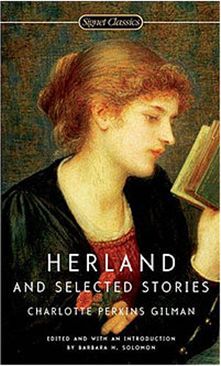
Cover for HerlandHerland is the novel chosen for me from my Classics List by the Classics Club Spin #6!

******

I guess most of my reaction to Herland is based on a dislike of utopian fiction, which seems to be more than ordinarily didactic. I like the occasional dystopian novel, but in my experience the dystopian writers are a bit more subtle about their lessons. Or in the case of Margaret Atwood’s Maddaddam trilogy, if not subtler, funnier. I chose this novel for my list just because I thought I had never read it and I was trying to make sure I selected quite a few notable works by women.

Vandyck Jennings, Jeff Margrave, and Terry Nicholson are traveling when they hear of a land of only women and female children. They hear that men are not welcomed, so of course, they decide to go there. The land is isolated at the top of an unclimbable mountain, but the three fly up in Terry’s plane. There they are taken prisoner by the women, who educate them in their customs before allowing them to mix freely with the inhabitants. It is this education and subsequent discussions that make up the bulk of the novel.

These women have been isolated for thousands of years and began to reproduce asexually through parthenogenesis. Their world is a garden, perfectly peaceful, with no disease or strife. Although two of the men are sympathetic characters (the third is a first-class chauvinist), the implicit message is somewhat misandrist—that women can get along perfectly well, better really, without men.

The book is funny at times, as these bewildered males take in the lessons of Herland. The funniest scene is after the men marry, and Van is trying to get his wife Ellador to understand the pleasures of having sex more often than when she’s scheduled to reproduce. But most of the charm the novel has is overridden for me by its didacticism, even while I believe Gilman brings up some important issues.

Development of character is not something Gilman is very interested in for this novel. The men all have distinct but pretty much one-dimensional personalities, and the women are virtually indistinguishable except for older versus younger. Science and psychology must have been hot topics at the time (1912), because terms from both are thrown around quite a bit. Unfortunately, there is also an implicit advocacy for some of the theories of eugenics.

What I was most interested in was what happened to Ellador after she and Van escort the exiled Terry out of the country. But Gilman doesn’t say.

In Gilman’s time, many of the ideas that don’t seem so revolutionary now—like the need of all people to have a sense of purpose and the idea that subordination results in stunted humans—were probably revelatory and maybe even shocking. Some of them still are. Gilman certainly deserves to be read, but I prefer some of her other works, notably The Yellow Wallpaper.

Day 532: The Daylight Gate

Cover for The Daylight GatePurely by accident, I recently read two books based on historical fact that feature witches. In Corrag, women are falsely accused of witchcraft, and the only thing even approaching the paranormal is a woman with second sight. The Daylight Gate is about the Lancashire witch trials. It supposes that witchcraft exists and that some of the women were witches.

As in Corrag, some of the characters are based on actual people. The novel hinges on the inexplicable condemnation of one woman, Alice Nutter, who was a completely different type of person from the other accused. She is the novel’s principal character. While the Device family and the others are poor, degraded beings who practice witchcraft as well as incest and other abominations, Alice Nutter is a wealthy and apparently blameless older woman who lets them stay in a tower in the wilds of her property.

We soon find that most of the authorities’ attention toward Alice is politically motivated. Alice is known to be linked to Christopher Southworth, a Catholic priest who is implicated in the Gunpowder Plot and has fled to France. In the mind of King James, the Catholic mass and the Black Mass are indistinguishable. So too believes the repellent Thomas Potts, a lawyer who is driving the attempt to build a case against Alice. He is also writing a book about witchcraft in Lancashire. It behooves him, then, to find some actual witches.

Potts has Southworth’s sister Jane, a completely innocent Protestant, arrested with the Devices and their cohorts in an attempt to lure her brother back to England. It works, and Alice is at least guilty of harboring Southworth. As Alice skates closer and closer to danger, we learn that she will not turn back because of love, for two very different people.

This is an interesting novel rather than an affecting one. I sympathized with Alice, and even with the magistrate, Roger Nowell, who does not believe in witchcraft. Other characters, though, are despicable and some events distasteful. Details of the Devices’ lives are picaresque. Not all of the novel was to my taste.

Day 516: Oryx and Crake

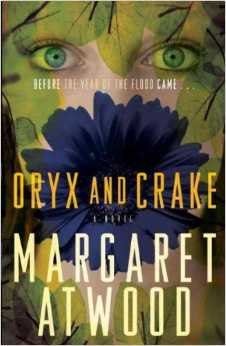
Cover for Oryx and CrakeBest Book of the Week!
Snowman may be the last human left on earth after the plague. He is not alone, though, because nearby is a race of human-like beings that his friend Crake bioengineered. Snowman himself lives like a vagrant—wearing nothing but a sheet in the unbearable heat from global warming, scrounging through the detritus of a lost civilization for food.

Snowman soon realizes that he will starve if he doesn’t return to the compounds for food. Not long before, he lived in a world where the privileged workers for the biochemical industry and their families lived apart in their own secure compounds. The other people, called pleeblanders, could fend for themselves. Gene splicing to create new species was rampant without regard for any consequences, and greed and consumerism all-important.

As Snowman makes his journey, he recalls his childhood with an embittered mother and oblivious father and his long friendship with Crake. Most fondly he remembers Oryx, the love of his life. Through these memories we learn how the world got into this dire situation.

This novel is both inventive and absorbing. Although Atwood’s descriptions of the pre-plague world with its abominations of nature seem comic at times, they are still horribly believable. This is dark humor with a knife edge about a world that has lost its sanity.

Oryx and Crake is the first of a trilogy, and I am looking forward to reading the other two volumes.

Day 491: The Here and Now

Cover for The Here and NowI know that Ann Brashares is a popular author of books for teens and young adults, although I have not read her before. The Here and Now is a departure for her, though, because, although set in the present, it is in the science fiction genre.

Prenna and her people are from the future. They migrated back, fleeing from horrible conditions in our future, including a starving planet and a virulent disease called the blood plague that kills virtually everyone who is exposed to it. Prenna and her mother live with the others who came with them, and although they interact with “time natives,” they must obey stringent rules about staying uninvolved with them. Prenna finds this irksome and is aware of people being sent away for innocent mistakes.

Although she flies below the radar at school, Prenna has one friend, Ethan, who behaves sometimes as if he knows something about her. He does. She does not remember, but he witnessed her arrival a few years before. Prenna likes Ethan, but she is forced to keep their friendship on a superficial level.

Prenna’s contact with a homeless man sets up an unexpected chain of events. While trying to discover the cause of the man’s death, she and Ethan begin to believe they can change the course of the future by preventing one act.

I have written before about some characteristics of much young adult/teen fiction that I find annoying. One is a certain style of first-person narration that sounds too much like an adult trying to sound like a teen. It is used in this novel, only it is made worse by the preponderance of choppy sentences, especially in the dialogue. If Brashares believes teens can’t think and talk in complex sentences, she should read the dialogue in The Fault in Our Stars (which admittedly may be too sophisticated but strikes me as authentic). This tendency is worsened by the use of the present tense, almost always a poor choice for fiction.

But let’s look at the plot and characters, since those are what teens will think about. The only characters who are more than moderately developed are Prenna and Ethan. Brashares makes the mistake of believing we will automatically care about Prenna before we really get to know her. As for the other characters, Prenna’s mother is a total enigma who won’t even eat dinner with her daughter, although that is never explained. The other adults in Prenna’s group are basically cartoon villains.

http://www.netgalley.comWhether you can enjoy the plot depends on how much you can suspend your disbelief. I will just point out two things, as vaguely as possible. The first is the unlikelihood of Patient #1 of the blood plague being the same person whose totally separate act causes potential massive efforts to stop the horrible effects of global warming to be stillborn. (And by the way, I didn’t really appreciate the lecture about global warming that suddenly pops into the dialogue.) The second is the completely unbelievable results of Prenna and Ethan’s adventure.

I frankly had a very difficult time getting through this short novel. Teens may enjoy it, but I did not.