Review 2591: Lady Living Alone

For quite some time in reading this novel, there is no indication of what it will become. It seems to be a domestic novel about a modest woman in her 30s, Penelope Shadow, disorganized, scatterbrained, unconventional, undomesticated, and of little means until she has a hit with her fourth novel. Soon enough, she is doing well and is able to move out of her sister’s house and buy her own. She has trouble keeping servants, however, and that is mostly an issue because of her phobia of being in the house alone at night.

On her way home from visiting friends, Penelope is forced to stop in a hotel at night because of the weather, but more because there is no one at home, the servants having quit while she was gone. The hotel is pretty dreadful, but a very handsome young man who is working there brings her tea when she wants it. He later confides to her that he’s leaving in a few days because he was hired as a waiter but is made to do all kinds of other work—cooking breakfast, cleaning, and so on.

He is so efficient and seems so kind that Penelope decides to ask him to work for her. His reaction when she’s not looking is the first indication that the novel is going somewhere other than expected.

Everything goes so well at home with Terry working for her that she is in seventh heaven. This state lasts for months until Terry comes home angry because, he says, people are spreading nasty rumors about their relationship. Instead of hiring another woman to live in the house, Penelope says they should get married.

Maybe, like me, you don’t think this is a great decision. Slowly, the novel shifts from a domestic drama to suspense.

This novel is a little different from anything I’ve read. It takes its time getting to where it is going without being a long book, and even after the reader is fully aware that things are going badly, Penelope is basically the only person who doesn’t know that.

I liked this novel a lot. I liked Penelope and sympathized with her problems, even though she is so impractical and looks too hard for people’s better nature. My dread grew toward the end of the book, and the ending was quite suspenseful.

Lofts wrote this book under the name of Peter Curtis so as not to confuse her usual readers, who expected historical novels. I’m going to look for more by Peter and also for those under her own name, as she is a writer I haven’t read before.

Related Posts

Touch Not the Cat

The Circular Staircase

Before I Go to Sleep

Review 2543: The Feast

At the beginning of The Feast, we’re informed that a cliff came down near a resort town in Cornwall, obliterating a bay and a hotel beneath the cliff. Some of the people from the hotel survived.

With that information in hand, Kennedy begins the novel a week before the cataclysm. So, she cleverly sets out a source for some suspense while the readers form an opinion about which people they hope will survive.

The small hotel is owned by the Siddal family, run somewhat incompetently by Mrs. Siddal. Mr. Siddal is an educated man who has done nothing for years. They have three grown sons, the oldest of whom, Gerry, is the most helpful and least appreciated.

Other characters do almost nothing, too. Miss Ellis is supposed to be the housekeeper, but she does nothing but spread vicious gossip and order the maid around. A character who acts like an invalid is Lady Gifford. The Giffords have adopted three children, but Lord Gifford works all the time and Lady Gifford spends all her time in bed. She seems to dislike her mischievous daughter Hebe.

Mrs. Cove has three young daughters who yearn to give a feast like one they’ve read about in books. In reality, they have very little. Their mother is so stingy that she sells any candy they’re given, saying it is to buy children’s books. But they have no books. Blanche, the oldest, has problems with back pain but has never seen a doctor.

Two women are abused by their male relatives. Evangeline is at first so shy that she can barely utter a sentence. But her father, a Canon, accuses her of chasing after men and berates everyone else. At the beginning of the novel, they have been tossed out of another hotel because he is so obnoxious.

For his part, Mr. Paley seems to be holding something against his wife, but she doesn’t know what it is. Instead of talking to her about it, he bullies her.

These are a few of the characters, which also include a lady author who likes to take on younger male writers as protégés, her chauffeur being one. And there is Nancibel, the housemaid who does most of the work in the hotel . . . and others.

Despite pending fate, I enjoyed this novel very much. It shows a lot of insight into human nature. I have only read one other book by Kennedy, but I enjoyed it as well.

Related Posts

Troy Chimneys

A Wreath of Roses

Grand Hotel

Review 2449: The House Next Door

Colquitt and Walter Kennedy are dismayed when they hear that the lot next door in their wealthy Atlanta neighborhood is being built on. They have relished it as a green buffer and have been assured that no one can built on it. However, the new owners have apparently found someone who can, Kim Dougherty, a young architect. Colquitt is the first to admit that the house he builds is strikingly unusual and beautiful. In fact, she understands its beauty much better than do the owners, Pie and Buddy Harrelson. As the house goes up, Colquitt and Walter develop a friendship with Kim.

I read this novel because I heard it was a good ghost story, but it’s not a ghost story as such—rather a haunting. As the house goes up, the bodies of small animals, ripped apart, appear, including that of Pie’s puppy. Pie falls down some unprotected stairs and has a miscarriage. When Kim finishes the house and moves on to other projects, he reports being unable to work. The Kennedys think he’s just burnt out and needs a rest, but he says it’s the house, that it takes whatever you value most. Then, on the night of the Harrelsons’ house-warming party, a dreadful event occurs.

When the next family moves in. Buck and Anita Sheehan, Colquitt feels that Anita looks haunted. The neighborhood soon finds out that Anita spent time in a mental hospital after the couple’s son died in the Vietnam War. (The novel was written in the 1970s.) Soon enough, Colquitt and eventually Walter start to believe that Kim may be right about the house. The problem is what to do about it.

I am not familiar with Siddons, so I don’t know if she generally writes about the privileged. The Kennedys are not wealthy according to themselves, but they both have generous salaries and they live among the rich. There are times when the novel reflects a sort of exclusiveness and self-satisfaction that is not flagrant but is there. The Kennedys run into a class wall when they try to warn people about the house, but all this surfaces at the end in an unusual way.

The ending of this novel takes a startling turn that opens up the reader’s interpretations of the actions of the novel and makes you rethink. I think this put it higher in my regard than it would have if it had gone where I expected it to. It made me reconsider the whole story.

Related Posts

A Haunting on the Hill

This House Is Haunted

Wylding Hall

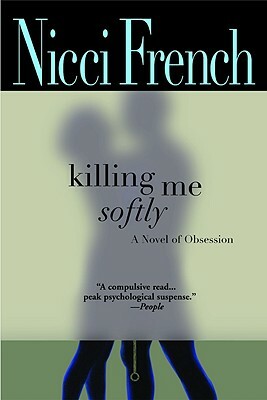
Review 2442: Killing Me Softly

Although I have lost track of it, I followed Nicci French’s series featuring psychoanalyst Frieda Klein for some time. So, when I was looking through my To Read list for books published in the missing years for my A Century of Books project, I picked out Killing Me Softly, which is a stand-alone.

Alice Loudon is bored with her job, but she is happily involved in a relationship when she locks eyes with a startlingly attractive man while crossing the street. When she comes out of her workplace later, he is waiting for her, and they begin a torrid affair. His name is Adam Tallis, and he is a well-known mountaineer. He is intent and possessive, but it’s as if Alice is possessed by him. At one point, she tries to break it off, but she ends up instead breaking up with her boyfriend.

Sex is an important part of their life, and Alice finds herself agreeing to practices that are farther and farther from the norm. She drops most of her friends and can’t concentrate at work. In addition, she and Adam are receiving threatening messages.

Alice finds that Adam is the hero of an incident he has refused to talk about, in which several people died on a mountaineering trip when a storm came up. But there’s a lot Adam won’t talk about, and Alice begins to believe that he has secrets.

Nicci French is a master at building suspense, and this novel is no exception. Although Alice is not an entirely likable character—she pulls several deceptions over people to get at the truth—we can’t help but be on her side.

Related Posts

Thursday’s Children

Friday on My Mind

Dark Saturday

Review 2437: The Guest Room

Tess’s grief over her sister Rosie’s murder four months ago is taking obsessive forms. First, she wanders all over London late at night hoping someone will try to attack her, as Rosie was found beaten to death on Hampstead Heath. She has moved into Rosie’s flat and is harassing Rosie’s ex-boyfriend. In addition, she constantly calls the police detective on the case offering obscure clues.

Unable to face Rosie’s bedroom, Tess offers it as a B&B, letting it out short-term to help make the mortgage. She has also taken a job at the Barbican, where Rosie used to work.

Tess leases the bedroom for a longer term than usual to a potter named Arran. As she does with all her tenants, when they are away, she looks through their stuff. In Arran’s things, she finds a diary about his infatuation with a woman. At times, it sounds like he is stalking her.

Tess doesn’t know it, but someone is stalking her. Is it her annoying downstairs neighbor, Luke? Her geeky across-street neighbor, Elliott? Or someone else?

This novel moved along pretty well and kept me interested, but Tess isn’t exactly a likable heroine. I was less bothered by that than my feeling that it was fairly easy to guess who Arran is writing about and although I wasn’t absolutely sure, the possibility of one character being the murderer occurred to me, and I was right.

Related Posts

Dark Side

The Girl on the Train

Accidents Happen

Review 2425: Murder Road

If you like a good ghost story, there’s no one to beat Simone St. James. Her last two books were especially excellent.

It’s July 1995. April and her new husband Eddie are on their honeymoon on the way to a motel on Lake Michigan when they get lost. Something about the road they are on, Atticus Line, feels wrong. April sees a light blinking in the woods and then they see a figure in the road, a girl who seems to have something wrong with her. Her name is Rhonda Jean, and once they realize she’s bleeding, they rush her to the hospital in Coldlake Falls.

Rhonda Jean has been stabbed, and she dies in the hospital. April and Eddie are covered with blood, as is their car, and they suddenly realize they look like murderers. And that’s how the cops see them.

April and Eddie soon realize that they need to try to solve the murder themselves. They learn that there had been a series of murders on the Atticus Line, mostly of hitchhikers on the way to a beach, starting in 1976 with an unidentified woman. There is also a story of a ghost who haunts the road. Once you see her, you die. April sees her when they return to the road, and the ghost tries to pull Eddie from the car, but they don’t die. What does the ghost want?

As far as the plot goes, and sympathy for the main characters, this one is right up there with St. James’s best. Unfortunately for me, Michigan native, it turned into What It Gets Wrong about Michigan, especially Midland, one of the novel’s settings and my home town.

Never mind me. If you like ghost stories, you’re going to love this one. No need to continue reading. However, if you like accuracy . . .

First, it was the weather. This is minor, but the characters experience a series of really hot days. Sure, it can be hot in Michigan, but in the northern lower peninsula, which is where the book is set, it’s usually not that hot in July. Mornings are usually cool and nights cold. There’s a bit about a flannel shirt that Eddie brought along in case it was cold. He would know it would be cold. Of course, weather in 2024 could be different, but I looked up the weather in that area in July 1995. They had one day in the 90s and a low in the 80s. Most days were in the 60s or 70s. But again, this is minor.

Then she shocked me by saying Midland was in the south, almost to the Indiana border, proving she never even looked at a map. Midland, as its name suggests, is smack dab in the middle of the lower peninsula, maybe a bit east of the middle. It’s a five-hour drive from Ohio. Indiana is further away. The main characters are from Ann Arbor, which is almost two hours further south than Midland, so they wouldn’t make that mistake.

I’m no Midland booster—I got out of there as soon as I could—but St. James depicts it as a sad little town. It’s actually quite prosperous as the home of Dow Chemical, which has pumped a lot of money into it, and it has a large percentage of people with PhDs. The characters think they are in a sad downtown area when they go to the library, but they are not, and in fact never get there. The downtown of MIdland was quite vibrant in the 90s, much more so than when I left in the 80s. The library is actually on a long main street that is commercial at both ends but middle- to upper-class residential in the middle where the library is, with the botanical gardens behind it and the performing arts center next to it. April is surprised that the library is surrounded by greenery, but most of Midland is quite green, although it gets a little seedy a few long blocks away, closer to downtown. Finally, there is no bank across the street from the library.

Just a little more research, even if she couldn’t make a visit, would have got these facts right. It’s kind of interesting that she didn’t do it or make up a different town, as she did with the setting farther north.

Related Posts

The Book of Cold Cases

The Sun Down Motel

The Broken Girls

Review 2339: The Quiet Tenant

For five years, the woman in the shed has been captive, padlocked in, handcuffed to a table, subject to repeated rape. Her captor lives in the house with his wife and child. But his wife has recently died, and his in-laws, who own the house, want to sell it. When he tells her he has to move, she knows it means her death. She knows when he has been out killing, but she has managed so far to talk him out of killing her, and now she convinces him to move her.

Emily is the owner of a restaurant and serves as its bartender. She is in love with handsome Adrian Thomas, who comes in regularly for a nonalcoholic drink. His wife has recently died, and she thinks he is showing interest in her.

In between short chapters from the women’s points of view are even shorter ones from the points of view of his victims.

This novel is certainly readable and suspenseful, but I had a few problems with it. First, the tone of the chapters by the victims is all wrong. These chapters make up a very small portion of the novel, however.

I had a bigger problem with the unlikelihood of the captive woman not taking several opportunities to escape. The first time, when Adrian absentmindedly doesn’t lock the handcuffs properly, is explained by her belief that the house has hidden cameras and Adrian’s omission may have even been a test. But I don’t know. I think most people would try. It’s less believable when she decides not to leave without the 13-year-old daughter, Cecilia, especially since as soon as she got to police, Cecilia would not be in danger. I found this really unlikely after Adrian leaves her free in the house during Christmas break while he is at work. She would have had all day to get away. She knows by the end that he has tricked her about the cameras, so she should be able to guess he’s tricking her about the so-called GPS tracker he put on her wrist.

Still, if you want to ignore such details, the novel is certainly a page-turner.

Related Posts

Room

Dark Places

Before I Go to Sleep

Review 2207: Birnam Wood

Well, this is quite a novel. Unfortunately, I don’t know how to explain what it is like without giving too much away. But I’ll try. Let me say that I don’t know whether I liked it, but it certainly is effective.

First of all, you’re not going to find a character in this novel to outright like. Catton has fully realized her characters as flawed people, and she keeps turning back to them and showing another side. There is definitely a villain, though.

Mira is the founder of Birnam Wood, a gardening collective that plants vegetables in unused spaces. Mira is not picky about whether they do this with permission from owners or even steal water or tools to do their work. However, most of the members believe their activities are legal.

Shelley is Mira’s roommate and best friend but also the person in Birnam Wood who does most of the management and publicity work. She is tired of not being listened to or having her contributions unacknowledged.

Mira reads that a landslide near Korowai National Park has cut off one of the accesses to the park, leaving only one road to a nearby town. A prominent businessman, Owen Darvish, who has property in the area that he had been planning to subdivide, took the property off the market because after the landslide it will not sell. Mira decides that this large, unoccupied property in a remote area would be perfect for a major planting operation, so she drives there to check it out.

On the property, though, she is apprehended by Robert Lemoine, an American billionaire who has been in the news because of a deal with Darvish. Eventually, he explains that he is buying the property from Darvish and is interested in donating a large sum of money to Birnam Wood to help ramp up their organization.

Tony, a radical Birnam Wood member who has been away teaching in Mexico, comes back to a meeting. When Mira presents Robert Lemoine’s proposition, he is very much against it but is outvoted. He walks out but decides to go to the area, thinking an article on what Lemoine is doing there would help his attempts to become a journalist.

Lemoine has a secret agenda that none of these characters know about. The novel moves from seeming to be a combination of a study of characters and somewhat of a sendup to a plot full of suspense.

Related Posts

The Rehearsal

The Luminaries

The Bone People

Review 2136: The Secret Guests

A while back, I tried reading a mystery by Benjamin Black, a pen name for the writer John Banville. It made me interested enough to try another book by him.

During the Blitz, the British government decides to send the two princesses, Elizabeth and Margaret, away for safe-keeping. Ireland is selected, presumably because it is neutral. Garda Detective Strafford, who is assigned to security, thinks the choice of Ireland is crazy, because there are still many people in the newly independent Ireland who hate the British, but the British involved don’t seem to know that. Celia Nashe, the MI5 agent assigned, just wants to break through the old boys club and get a decent mission.

So, Celia and the princesses are sent, otherwise unaccompanied, to join the household of the Duke of Edenmore with only Strafford for company, surrounded by a hidden detachment of incompetent Irish army men. Clonmillis Hall proves to be a castle—ramshackle, comfortless, cold, and poorly run.

No, this isn’t Cold Comfort Farm but a pretty good thriller, as the local IRA agent finds out who the girls are and notifies his contacts in Belfast. But first we see the discomfort of Nashe and Strafford, the homesickness and boredom of the girls.

Nothing much about this semi-literary thriller is predictable. The girls are lightly characterized—Elizabeth as reserved and priggish, Margaret as sly and mischievous, but still with sympathy. Although the novel changes point of view, it sticks mostly with Strafford. An interesting, engrossing read.

Related Posts

Christine Falls

Last September

The Fall of Light

Review 2123: The Murder Rule

Hannah has left her alcoholic, dependent mother in Maine for the University of Virginia. There she uses deceit and some dirty tricks to get onto the Innocence Project. In particular, she gets herself onto the case of Michael Dandridge.

Dandridge has been in jail for 11 years, found guilty of rape and murder. However, his sentence has recently been vacated. The original prosecutor is determined to retry him.

Hannah’s goal is to interfere with the project’s defense of Dandridge. We learn why slowly as passages from her mother’s diary are revealed, dated 25 years before.

I wasn’t sure what I thought about McTiernan’s change of locale, her other novels being set in Ireland, but her storytelling took over, and I found myself reading another page-turner. Although I was not sure that things could turn out the way they did, I found the novel thrilling.

Related Posts

The Ruin

The Scholar

The Good Turn