 Best Book of the Week!
Since Rebecca is a book that qualifies for The 1938 Club and is also on my Classics Club list, I thought this was a good time to reread it. I must say that during this reread, I noticed things I’d never noticed before.
Some years after the time of the novel’s action, the narrator recollects the events at Manderley from a life of exile. As a young, naive woman working as a companion for the vulgar Mrs. Van Hopper, the narrator meets the older, sophisticated Maxim de Winter one spring on the Riviera. When Mrs. Van Hopper becomes ill, the narrator spends some time each day with him, driving through the countryside. Mrs. Van Hopper recovers and decides abruptly to return to the States. When the narrator tells Maxim, he proposes.
 The narrator, whose first name we never learn, is an immature girl who is prone to imagining what people are saying about her or what may happen, usually in exaggerated terms. The wedding is not the romantic event that she imagined, but she goes along with whatever Maxim suggests.
Finally, they come home to Maxim’s family home of Manderley, and that’s where the novel really gets going. For the narrator is already haunted by the thought of Rebecca, Maxim’s first wife. Rebecca was beautiful, assured, accomplished—everything the narrator believes she is not. Everyone assures her that Maxim adored Rebecca and was shattered when she died in a sailing accident. Everyone tells her she isn’t at all like Rebecca. The decor of the house reflects Rebecca’s taste, her name is scrawled inside books, her monogrammed handkerchiefs are in the pockets of coats, and the servants tell her, when she timidly makes a request, “Mrs. de Winter used this vase,” or “Mrs. de Winter sat in this room in the morning.”
Further, there is the terrifying Mrs. Danvers, the housekeeper, from whom the new Mrs. de Winter senses actual hostility. Mrs. Danvers was devoted to Rebecca and resents a new wife taking her place, especially one so much Rebecca’s inferior.
The narrator was not brought up to a life with servants, running a big house, and she has no idea how to behave. Maxim gives her little help in this regard, just expecting her to adapt. She makes mistakes, and his moods become more erratic until she thinks he regrets their marriage. As she becomes more unhappy, events build to a climax on the night of a big costume ball.
This is an extremely powerful novel that, I think, hits you differently depending upon the age you are when you read it. When I was young, I thought it was romantic and scary. Now, I think it’s more of a study of some very maladjusted characters. But this is the first reading where it made me think of Mr. Rochester.
Even though I love Jane Eyre, I’ve never been much of a fan of Mr. Rochester. But what does he do? He yearns for a young, innocent girl and is prepared to commit a crime to get her. We can say this for Jane, though, she has a strong sense of herself.
I don’t want to say much more about Rebecca in case you haven’t read it. But let’s keep it at this. Maxim de Winter also yearns for a young innocent girl, but his choice has such a weak sense of self that we don’t even learn her name. He takes her to a life for which she is completely unsuited and untrained, with a servant he might predict would be hostile, and just leaves her to make the best of things. And this comment doesn’t even touch on the darker secrets of the novel.
Do these observations make me love the novel less? No, this is a great novel. Rebecca is one of Daphne du Maurier’s most atmospheric novels, in a career with many atmospheric novels. I believe she modeled Manderley after the house where she lived in Cornwall, and its description is detailed and loving. Du Maurier was interested in aberrant personalities, in which she probably counted her own. This is a dark novel that fully draws you in. It is very well written, an excellent character study and a masterful suspense novel.
Related Posts
Castle Dor
The Poison Tree
Daphne du Maurier: The Secret Life of a Renowned Storyteller

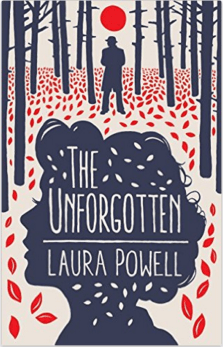 A novel set in two time periods, The Unforgotten is a thriller and a mystery. But it is more than that—a story with deep-running themes offering its characters difficult choices.

 What? Me Read?