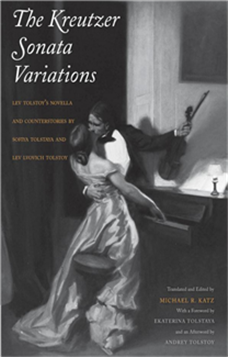
Day 829: The Kreutzer Sonata Variations

The Kreutzer Sonata Variations“The Kreutzer Sonata” is a controversial novella by Leo (Lev Nikolaevich) Tolstoy. It was banned in several countries because of its provocative message and because of what was considered at the time prurient content. If your nature contains an ounce of feminism, it will enrage you. Yet its origins are in eccentric ideas that Tolstoy almost certainly considered to be for the benefit of women.

The Kreutzer Sonata Variations brings together this work with others by the family on the same subject. Tolstoy’s wife Sofiya Andreevna (I’m using the spelling from the book) disliked the novella intensely and wrote two stories in answer to it, “Whose Fault?” and “Song Without Words.” These stories were suppressed by the family. Tolstoy’s son, Lev Lvovich, also wrote a story, “Chopin’s Prelude.” These stories are followed by a section including review comments by several contemporaries, excerpts from diaries, and other writings of all three Tolstoys.

So, what was “The Kreutzer Sonata” about and why did it evoke all this controversy? It is a virtually plotless story about a man who meets another man on a train journey and tells him the story of why he murdered his own wife. Throughout the story, the main character, Pozdnyshev, expresses abhorrent opinions about women, sex, and marriage, and shows no understanding of women at all. Although this character is not completely describing Tolstoy’s own marriage, he is giving voice to Tolstoy’s ideas about marriage. This story is harsh, disturbing, and reflects ideas that show no understanding of human nature, or for that matter, many other things. Tolstoy posits that marriage is simply legal prostitution, that sex is disgusting, and that people should just strive to be celibate (something he notoriously had a problem with). Because Tolstoy saw his role in later years as one to instruct and had too high an opinion of his own ideas, this information is presented didactically, in a polemic.

Sofiya Andreevna disliked the novella intensely and was embarrassed by it, because she believed that others thought it reflected her own marriage. She insisted it did not but mostly, I think, because she didn’t want people to think she became attached to another man while married to Tolstoy (and who would blame her?). She also felt that the story showed no understanding of the wife, and so she wrote her own story. In both, the story is basically the same, a madly jealous husband comes to believe his wife is unfaithful when she is not and kills her in a fit of anger. It was Sofiya herself who convinced Tolstoy that his story would be more effective if the wife was innocent.

It is in the context of the responding stories and other writings that “The Kreutzer Sonata” is most involving. The story itself is ridiculous to modern sensibilities. Two pages of quotations by contemporaries provide some interest, particularly the two (not surprisingly) that I most agree with.

No wonder the Countess was often near the end of her patience.—George Bernard Shaw

“The Kreutzer Sonata” is a nightmare, born of a diseased imagination. Since reading it I have not the slightest doubt that its author is cracked.—Émile Zola

For an enlightening look at the Tolstoy’s marriage, I recommend the novel The Last Station by Jay Parini.

Related Posts

The Possessed: Adventures with Russian Books and the People Who Read Them

The Prague Cemetery

The House of Special Purpose

Day 779: The Quickening Maze

Cover for The Quickening MazeThe Quickening Maze is the first book I read purposefully because it’s one of the finalists for the Walter Scott Prize for Historical Fiction. By coincidence, I had already read half a dozen finalists and winners, and when I learned that Helen of She Reads Novels was trying to read them all, I decided to join her.

This novel is based on events in the life of the poet John Clare, known as the “peasant poet,” a man of rural background who was steeped in his natural surroundings. Unfortunately, Clare is having some mental problems and is staying in an asylum in Epping Forest. Nearby is Alfred Tennyson, whose brother Septimus also resides there.

John Clare seems to be doing well under the treatment of Dr. Matthew Allen. When we first meet him, his movements are relatively unrestrained and except for some confusion about a girl he knew named Mary, he seems sane enough. He is soon given a key to the gate so that he can walk in the forest.

Another patient important to the novel is Margaret, who is regularly transfixed by visions of angels and messages from god. At one point as Clare’s mental state deteriorates, he mistakes Margaret for his Mary.

Dr. Allen seems to have a gift for dealing with his patients during a time when mental health practices were deplorable. However, he also has a fascination with risk, and soon he is trying to talk his friends and the Tennysons into investing in his new invention, a machine for following the shape of furniture and carving additional pieces.

Hannah Allen at 17 has decided that Alfred Tennyson is the man she’d like to marry. She boldly begins seeking him out, not realizing that he is preoccupied with his brother and with grief over the death of a good friend.

Although this novel is more about the internal workings of some of the characters’ minds than its historical setting, it is beautifully written and atmospheric. I was interested in this narrow slice of history and curious to look at some of Clare’s poetry.

Related Posts

Under the Wide and Starry Sky

Parrot and Olivier in America

A Good Hard Look

Day 768: The Asylum

Cover for The AsylumJohan Theorin takes a step away from the island of Öland, the setting of his previous novels, to present this even darker thriller. Its main character is Jan Hauger, a young man whose version of events isn’t always to be trusted.

Jan is  a child care worker who takes a job at a preschool attached to a mental asylum. The preschool is for the children of the inmates, to allow the children to see their parents regularly. Although Jon cares about the welfare of the children, it is clear early on that he has other reasons for being there.

One thing we soon find out about Jan is that as a young man he kept a little boy captive for several hours. We don’t learn why for some time.

Jan has an interest in getting into the asylum, for he believes a woman he once knew as a girl is inside. He has been captivated by thoughts of her for years. Soon, he finds there are ways into the asylum from the preschool.

The asylum has some famous inmates, the most renowned of whom is the serial killer Ivan Rössell. When Jan accepts an unauthorized but seemingly harmless task of secretly delivering mail into the asylum so that the guards can distribute it to the inmates, he finds that Rössell gets the bulk of this mail. But Jan also sees a way to get a message to his friend.

As Jan’s story emerges in three different time streams, we begin to feel his judgment may be impaired. There is something dangerous going on that he is unaware of. As usual, Theorin’s book is atmospheric and compelling.

Related Posts

Echoes from the Dead

The Quarry

The Sleep Room

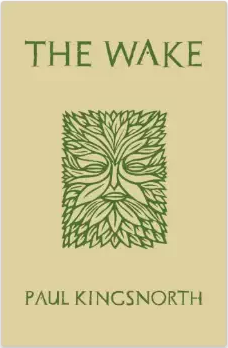
Day 728: The Wake

Cover for The WakeBest Book of the Week!
The Wake was one of the most unusual reading experiences I have ever had. The closest I can come to it is the revelation of reading Benjy’s sections of The Sound and the Fury. What Paul Kingsnorth has done is write a novel about the aftermath of the Norman Conquest entirely in a “shadow language” that approximates and gives the flavor of Old English while being understandable to the modern reader.

Buccmaster is a socman of Holland in the Lincolnshire fens. A socman, Kingsnorth’s glossary explains, owns his land and owes allegiance only to the king under Danelaw. At the beginning of the novel, Buccmaster is a well-off man who has a large house and about 90 acres of land, servants, and a seat on the Wapentec, the local court of justice. Buccmaster is a proud and angry man, and we find, not always a reliable narrator.

Soon word comes that King Harald is calling up the army against the invasion of Harald Hardrada, the King of Norway. Buccmaster owes King Harald six weeks’ service a year, but he refuses to go. His sons do, however. Of course, while Harald and his army are repelling Hardrada, William the Bastard (William the Conqueror) attacks.

Buccmaster soon finds his world destroyed. His sons never return from Hastings. The Normans arrive claiming all of the hamlet’s land. Buccmaster’s home is burned to the ground and his wife murdered one day while he is out eeling.

Buccmaster was raised by his grandfather to believe in the old ways, not the newer ones of the White Christ. He decides to take his great sword, which his grandfather told him was given to him by Welland the Smith, and raise a troop of Green Men, essentially guerilla fighters, to ambush the Normans.

This novel is as much about the conflict between the old Germanic-Norse ways of the English and Christianity as it is about the little-known war of resistance against the Normans after the conquest. Buccmaster makes a complex and troubled main character.

Kingsnorth has said that he chose his approach for the novel because he doesn’t like historical novels written in modern language. I am torn about that, because I would rather see modern language than clunky fake archaic language. But Kingsnorth has done a fantastic job of steeping himself in the time, and his goal of conveying the alienness of the 11th century English through language is certainly achieved.

The Wake is an enormously powerful novel. It is probably not for everyone. You have to be willing to invest yourself in it enough to tolerate some early slow going. There is a glossary, but it doesn’t include all the words. You can figure most of them out by sound or context. Still, I strongly believe it is worth the effort, and after awhile, I think I was reading almost as quickly as usual.

It may be hard to find this book. I had to order it from England. But if you are interested, you’ll find it very much worth the effort. I read it because it was long-listed for the Booker Prize. Frankly, I think it was better than the winner.

I’ll end with this quote, which begins the book:

I have persecuted the natives of England beyond all reason.
Whether gentle or simple I have cruelly oppressed them.
Many I unjustly disinherited, innumerable multitudes perished through me by famine or the sword.

Having gained the throne of that kingdom by so many crimes,
I dare not leave it to anyone but God.

Deathbed confession of Guillaume le Bâtard, 1087

Related Posts

King Hereafter

The Long Ships

The Adventure of English: The Biography of a Language

Day 724: & Sons

Cover for & Sons& Sons is a novel about fathers and sons, but it is really most about sons and the effect on them of their father’s actions. It is also about the fate of a lifelong friendship.

The friendship seems to be the catalyst for events. Charles Topping has died, and his funeral is packed with people waiting to see his best friend, the reclusive novelist A. N. Dyer, give the eulogy. Dyer is noted for several excellent books, but Ampersand has become a classic about prep school life.

At the funeral, though, it becomes clear that Andrew Dyer himself isn’t quite all there. During the eulogy, he becomes upset about the whereabouts of his young son Andy and has to be removed from the podium.

The story is told by a narrator who is not at all trustworthy, Charles Toppings’ son Philip. When Andrew Dyer meets him at the funeral and finds he has split from his wife, he kindly invites him to stay.

This suits Philip, who grows more malevolent as we get to know him. He is on hand a few weeks later when the Dyers reunite at their father’s request to discuss something important. He can be there to eavesdrop and look through old papers, but generally he cannot possibly be privy to all the details of the story he tells.

Andrew Dyer has been estranged from his ex-wife and two sons since the family learned about the existence of his third son, Andy. Andy is now seventeen. Andrew has tried to avoid neglecting him, as he did his two other sons, and do a better job of bringing him up. But Andrew knows he is nearing the end and is afraid Andy will be alone. He fears Andy is just as messed up as the other sons, only in a different way. Andrew has formed another preoccupation about Andy that shows how divorced he is from reality.

Andrew’s oldest son Richard is an ex-drug addict who has stabilized his life with great difficulty. He is now a drug counselor and has a wife and two teen children. The other son Jamie is a documentary filmmaker whose films for years have dwelt on the darkest of subjects. Philip Topping has a grudge against both of them for the teasing he received as a child.

The novel is told using letters between Andrew and Charlie, passages from Ampersand, and other artifacts from Andrew’s life, as well as Philip’s testimony. We find Andrew feverishly manufacturing an “original draft” of Ampersand because he burned up the original manuscript in disgust at what he did to his old friend Charles in fiction. Now he needs one to leave with his papers.

I waited to write my review for a few days after I finished the book, and I’m still not sure how much I enjoyed the novel. It is well written and absorbing, and it provides a lot to think about.

Related Posts

The Art of Fielding

The Sense of an Ending

The Child in Time

Day 699: Rustication

Cover for RusticationBest Book of the Week!
I was captured by this dark, twisty novel from the moment I started reading it. I only feared it may eventually disappoint, but it does not.

In winter 1863, Richard Shenstone, 17, appears without warning at his mother’s new home, a large dilapidated house on the southern coast of England. He has been rusticated, sent down from Cambridge for reasons not immediately explained.

Having received word of his father’s death too late for the funeral, he is surprised to find his mother and sister living in apparent poverty. Furthermore, although he doesn’t at first tell them he’s been sent down, his arrival is met by a surprising lack of welcome, indeed hostility on the part of his sister Effie.

There is some mystery about his father’s death, that is clear. His father’s pension has been denied to the family, and Richard’s mother is suing for her father’s estate as well. Effie is also up to something, for he twice sees her out accompanied only by a tall man, not proper behavior for a lady.

Richard is not a pleasant person, obsessed as he is by desire for every girl or young woman he meets and also addicted to opium. The novel is told as excerpts from his journal, interrupted by copies of a series of hateful letters that soon begin arriving at the homes of various people in the district. It is also clear from the beginning that some crime has been committed and the journal is a look back into the past. It is not clear to readers, however, how reliable a narrator Richard is or what’s going on when he roams the countryside at night in his opiated state. Soon the letter writer begins leaving corpses of mutilated sheep behind him.

This novel is atmospheric in the extreme and completely absorbing. As Richard begins trying to figure out who the letter writer is, he finds the finger pointed toward himself. He takes unwarranted leaps of logic that cause him to make many mistakes and ignores some clues that he has. Still, exasperating and unlikable as the main character is, you are urged along to the end of the novel.

Related Posts

Stone’s Fall

The Séance

The Darkest Room

Day 686: Everything I Never Told You

Cover for Everything I Never Told YouI just applied a new look to my site! Let me know how you like it.

* * *

From the beginning of Everything I Never Told You, we know that Lydia Lee is dead, but her family doesn’t, and it is awhile before we understand what happened. Lydia’s story has its roots in her family history.

In 1970’s small-town Ohio, the Lees are outsiders, the only mixed race family in town. James Lee is of Chinese heritage, a history professor at the local college. Marilyn Lee is white, a former Harvard medical student who gave up her dreams of becoming a doctor when she became pregnant with Nath, their son.

Once the police begin looking into Lydia’s disappearance, it soon becomes clear that she was leading a double life. Her parents believe her to be a popular girl and a good student with a brilliant future. But when police begin questioning her supposed friends after she is reported missing, the teens claim to hardly know her. She is close to failing some of her classes, and Nath is aware that she has been spending time with their neighbor, Jack, a boy with a bad reputation.

This novel is extremely sad, about the effect on young people of their parents’ insecurities and expectations, about misunderstandings and lack of communication, and about how an event in the family’s past affected Lydia’s behavior.

The novel is moving and well written, exploring the tensions between maintaining individuality and fitting in and the stresses caused by parents only wanting the best for their child. After being almost unremittingly sad for the entire novel, it ends on a more hopeful note, perhaps unrealistically.

Related Posts

We Are All Completely Beside Ourselves

Tell the Wolves I’m Home

The Possibilities

Day 665: The Sleep Room

The Sleep Room In this atmospheric novel set in the 50’s, Dr. James Richardson is a young psychiatrist when he accepts what appears to be an exciting opportunity to work with the world-famous Dr. Hugh Maitland. Maitland has just opened a clinic in rural Suffolk where he will be employing some experimental therapies and hires Richardson as a doctor for the facility. Richards is surprised to find he’ll be the only doctor on staff with just weekend relief.

When Richardson begins work at the clinic, he is surprised that Maitland will not let him examine the patient records. One of Maitland’s beliefs is that mental problems are chemical and need chemical solutions, not psychotherapy. In the Sleep Room,  one of his experimental therapies is keeping six women asleep for months.

Although Richardson has some twinges of doubt about Maitland’s ideas, he defers to him as the expert. Soon he has other things to think about. He becomes very busy with his work and is also romantically involved with a nurse, Jane Taylor.

Small odd things happen beginning almost with his arrival, though. He thinks someone is behind him when no one is. He hears sounds when no one else is in the room. Things disappear and reappear in places where they shouldn’t be. Richardson begins thinking that the stately home housing the clinic has a poltergeist.

The Sleep Room is a difficult book to review because it slowly builds up quite a bit of suspense, but then I found the explanation for the events absurd. Yet, there is a reason for that and I can’t really get into it without giving away too much. Let’s just say that after an apparent climax there is a long, boring explanation followed by a short, apparently aimless follow-up, and then everything gets turned upside down.

One problem is that the final twist isn’t signaled well enough by the rest of the novel and actually doesn’t make sense in terms of the total of the novel’s narrative style. I can think of another book that employed a very similar trick but much more successfully. So, although I was captured by this book, I find that it ultimately doesn’t work.

Finally, the novel is only adequately written and poorly edited. In particular, I noticed loads of unnecessary passive voice and several instances of confused homophones: “knave” instead of “nave” and “taught” instead of “taut,” for example. These problems were with the published book. I was not reading an advance reading copy.

Related Posts

The Solitary House

Your Presence Is Requested at Suvanto

Andrew’s Brain


Day 597: Neverhome

Cover for NeverhomeBest Book of the Week!
After some personal tragedies, Ash Thompson leaves the farm in Indiana to join the Union army and fight in the Civil War. Although the truth about Ash is not immediately apparent, I feel little hesitation in revealing that Ash is a woman, because the publicity for this novel makes that clear. Why she has chosen to leave her husband Bartholomew and go off to war is another matter.

Ash, who is tall and strong, shows herself to be a brave and obedient soldier, resourceful and a good shot. No one knows her for what she really is except a few women she sees in passing and her colonel.

This story is told by Ash herself in a very understated way. In fact, it is the voice of this novel, so distinctive, that makes it stand out. It is not until the end of the novel that we learn that Ash is not always a reliable narrator.

http://www.netgalley.comThis novel is beautifully spare and compelling, a wonderful portrait of a person who is more disturbed by violence and her personal tragedies than she appears to be.

Day 455: Andrew’s Brain

Cover for Andrew's BrainI’m not sure what I think of this short novel—perhaps that it’s a conceit.

Andrew is a cognitive scientist speaking to an unknown person, perhaps his psychiatrist, about his life. Andrew is an unreliable narrator, for at the end of the novel we find he cannot have been where he reports himself as having been (that is, if we believe the end of the novel). Further, he asserts several times that he has no emotions, when that is plainly untrue.

The novel begins with his story of abandoning his infant daughter after his second wife’s tragic death by giving her to his first wife Martha. Many of his reminiscences have to do with his actions being inadvertently destructive, but he also concentrates on his relationship with his much younger second wife, Briony.

In the midst of his stories he provides us with information about the workings of the brain and seems fascinated by the idea that scientists could one day manufacture a brain with consciousness. The novel poses questions about such subjects as whether free will exists, what composes consciousness, whether memory is reliable, but little nuggets about the workings of the brain are from relatively basic neuroscience, which does not leave me convinced that the observations are actually those of a scientist.

The turn the novel takes at the end is suddenly political and absurdist, and it has almost nothing to do with the rest of the book. Are we to believe Andrew’s story, or is he delusional (perhaps even a manufactured consciousness)? As I mentioned before, in one part of the novel he apparently phones his interlocutor to tell him he is living in a farmhouse with some people about whom he had at one time dreamed. At another point he is apparently writing a letter from a cabin high above a Norwegian fjord. When we finally learn what are supposed to be his actual circumstances, those reported two places of residence are plainly impossible.

In any case, although this novel is interesting enough, it is ultimately unsatisfying and feels almost like a joke the author is playing on us.

Full disclosure: I received this novel free as a giveaway from Goodreads.