Day 713: Salem Chapel

Cover for Salem ChapelBest Book of the Week!
Because of the order the books were listed in on Wikipedia, I thought that Salem Chapel was the first of Margaret Oliphant’s Chronicles of Carlingford. However, the introduction to the book says it is the second. When I started to read it, I thought it was going to be, like Miss Marjoribanks, a light satire on society, only a different level of society. But it is much more dramatic than that.

Arthur Vincent proudly takes up his first clergy position as the Dissenting vicar of Salem Chapel at Carlingford. He is an educated gentleman of some ability, and he is certain he will soon be an accepted member of the best Carlingford society. But he receives a shock when he meets his congregation of buttermen, poulterers, and greengrocers and their wives. He soon finds, too, that he is expected to bend to their wishes, as they pay his salary.

Arthur is a proud young man of good family, and this doesn’t sit well with him. Still, he makes an impression with his first sermon and dutifully goes about his business until he is struck by the sight of the beautiful, young Dowager Lady Western. Although a mutual acquaintance tries to warn him not to make anything of her warm manner to him, as she is like that with everyone, he doesn’t pay attention. Soon, he is informed that his parishioners are displeased. He has been seen paying a call in Grange Lane, the home of the upper-class residents of Carlingford (and setting of Miss Marjoribanks), who all attend St. Roque’s.

Arthur has also made the acquaintance of a less prosperous woman, Mrs. Hilyard, an impoverished gentlewoman who takes in sewing. Mrs. Hilyard is an odd and unfortunate woman, and it is a favor she asks of Arthur and his family that drives the larger actions of the plot.

Up until the major events are set in motion, I found the book amusing, as when Arthur, moonstruck by the sight of Lady Western, spends an entire week daydreaming about her. His congregation interprets this lack of activity as a scholarly application to his sermon and is impressed.

This novel contains wonderful characters who can be a bit Dickensian, like the well-meaning butterman Deacon Tozer or the disturbing Mrs. Hilyard, who reminds me a bit of Rose Dartle in David Copperfield. From humor, the novel soon takes a more serious turn.

The introduction to this novel says that once Mrs. Oliphant was one of the most well-regarded of the Victorian novelists, but she is now nearly forgotten. I have found the two of her novels I’ve read to be very entertaining. I think she reminds me, with a delicate touch, more of Jane Austen than any other writer I’ve encountered, and some of the events of Salem Chapel are remindful of Pride and Prejudice. I can only hope that more people will decide to read the works of Margaret Oliphant.
Related Posts

Miss Marjoribanks

Persuasion

David Copperfield

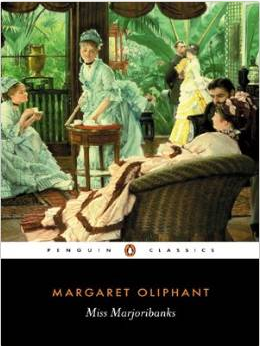
Day 664: Miss Marjoribanks

Cover for Miss MarjoribanksBest Book of the Week!
It’s not often that I discover a delightful novel by a classic author whose works I am unfamiliar with. But that’s the case with Miss Marjoribanks. It is a wonderfully ironic comic novel about middle class mores with an exasperating and ultimately lovable heroine.

We first meet Lucilla Marjoribanks at the age of 15. Her long-ailing mother has died, and Lucilla rushes home vowing to be a comfort to her father. Dr. Marjoribanks, who has been looking forward to a comfortable bachelor existence, wastes no time in sending her back to school.

Four years pass, and Miss Marjoribanks returns from her tour on the continent determined to devote herself to her father for the next ten years, suggesting that by then she may have “gone off” a little and will start looking for a husband. Lucilla is a young woman of energy and complete self-confidence who is determined to be a force in Carlingford society. But first she must deal with a proposal from her cousin, Tom Marjoribanks. She loses no time in dispatching him to India.

Dr. Marjoribanks watches in amusement as Lucilla calmly removes the reins of his household from his redoubtable cook Nancy and begins to take control of Carlingford society. Her first project is to begin a series of “evenings” every Thursday.

As Lucilla deftly and with dauntless good humor manages the affairs of her friends, somehow none of a series of eligible men ever come up to scratch with a marriage proposal when her friends expect them to. But Lucilla insists she will dedicate herself to her father’s happiness at least until she is 29.

Although Lucilla, with her managing ways, could easily be a figure of satire, I grew to admire her and like her friends and neighbors, who are fully realized even though  this book is the fifth in a series and I have not read the others. We even feel sympathy for Barbara Lake, the contralto whose voice goes so well with Lucilla’s that Lucilla invites her to her evenings. Barbara, from a lower strata of society, sees Lucilla’s actions as condescension and rewards Lucilla’s impulse with spite.

I was hugely entertained by Lucilla’s career and have already started looking for more books by Oliphant. Margaret Oliphant, I find, was once one of the most popular authors of the mid-19th century, and she deserves to be remembered.

Related Posts

Anderby Wold

Good Behaviour

Mrs. Dalloway


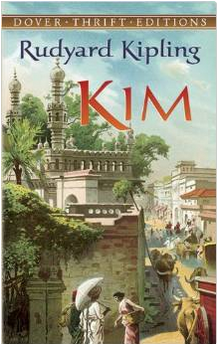
Day 633: Kim

Cover for KimBest Book of the Week!
Up until now, the only book I read by Rudyard Kipling was Puck of Pook’s Hill, which is definitely a children’s book. I always assumed that Kim was a children’s book, too, or at most a boy’s adventure story, but I don’t think I would describe it that way.

Kim is the son of an Irish soldier in India, but both of his parents died impoverished when he was young. He has been brought up by a Eurasian woman who leaves him to himself most of the time, only insisting that he wear European clothing. But he keeps some native clothing hidden away, and when he is wearing it, he cannot be discerned from any other street urchin. He knows everyone in Lahore, and they call him Friend of All the World.

One day he is playing outside the Lahore museum when a holy old lama comes to look at the wonders inside. Kim sees that he is a truly guileless man with no one to help him in a foreign country. The lama explains that he is searching for a holy river that will wash clean all his sins. Kim decides that he will go with the lama as his chela, his disciple who begs for him and takes care of him. Before leaving Lahore, though, Kim goes to see Mahbub Ali, an Afghani horse dealer for whom he has run some errands. Mahbub gives him a dispatch to take to a British Colonel Creighton.

The description of the journey of Kim and the lama is very colorful and interesting, reflecting Kim’s joy in the bustle of the road and a love of the country on the part of the author. But Kim’s father told him long ago that he would be saved by a red bull on a green field, so when he sees a regimental flag flying the device, he goes nearer to look and is suspected of being a thief.

He has always carried his papers in an amulet, and when he is captured, his identity as Kimball O’Hara is established. The priests in the regiment, of which Kim’s father was a member, plan to send him away to a Masonic orphanage. Kept a watch on and forbidden to see his lama, Kim writes to Mahbub for help. Mahbub makes sure that Colonel Creighton understands how valuable a boy like Kim would be as part of the Great Game, of spies and explorers in the far regions of the area.

So, Kim’s fate is taken out of his own hands and he is sent to school to learn to take his part in the Raj. But the lama pays for his schooling and makes sure he goes to a better school than originally intended.

This is really a great novel. I came to it prepared for perhaps some outmoded racism or hints of British superiority but found a novel that reflects a deep love of India and of all its peoples. Of course, there is an implicit assumption that the Raj is a good thing, but the British characters in the novel are as varied as any, and there are comments about mismanagement and misplaced airs of superiority on the part of the British. Kim is rich in colors and smells, in the flavors of language and the stories of the orient, and in this complex tale of a boy with loyalties both to the soldiers who raised him and to his beloved lama.


Day 631: Two Christmas Novels by Dickens

Cover for A Christmas CarolIn the spirit of the season, I thought I’d take a look at a collection I have of Charles Dickens Christmas books. As you may know, Dickens wrote a short Christmas book every year for years. A Christmas Carol was the first one, and it did much to revive Dickens’ career, which was flagging after Martin Chuzzlewit. My book contains the Christmas stories in order, and this Christmas I have read the first two.

Dickens is closely associated with Christmas. He didn’t invent our current traditions, but through his glimpses of how happy families celebrated it, some traditions were probably set and promulgated.

The introduction to this collection admits that A Christmas Carol is the best of the Christmas books, which is probably why it is most well known and adapted. Still, it has been a long time since I read it, and I found it interesting to compare it with the screen renditions, with which I am more familiar. (In my opinion, the best one because of its atmosphere is the 1951 version with Alistair Sim—but only in black and white, mind.) What stood out the most is that in one of the movies, Scrooge actually fires Bob Cratchit, a cruel joke even if only momentary, but he does not in the book. The movies also seem to put more or less of Scrooge’s nephew Fred in them, depending.

Of course, A Christmas Carol is the story of the miserly Ebenezer Scrooge, who has grown so obsessed with the accumulation of wealth that he has given up all pleasure and human companionship, and even worse, from Dickens’ point of view, all charity. Through the intercession of his dead partner Jacob Marley and the visits of three ghosts, he gets a second chance to be a better person.

chimesI haven’t read any of the others before, but I found The Chimes to be a similar story. Trotty Veck is a poor porter. He lives nearby a church that has a set of bells considered to be haunted. But Trotty likes the bells and in his simple way is always praising them.

One day an overbearing alderman makes some comments to Richard, who is the fiancé of Trotty’s beloved daughter Margaret, about how foolish he is as a young man to be getting married. Richard and Margaret are to be married New Years’ Day, and when Trotty sees Margaret in tears later, he thinks the alderman’s comments have caused Richard to break it off. This and other encounters cause Trotty to have doubts about the goodness of humankind. Later, the bells lure Trotty up to the bell tower and teach him a lesson.

The lesson of this story is much more garbled than that of A Christmas Carol. Since Trotty’s thinking processes are a bit murky at times, I wasn’t even sure exactly how Trotty supposedly transgressed the bells. Still, Dickens always manages to bring a tear to your eyes when he tries.


Day 623: The Goblin Market and Selected Poems

Cover for The Goblin MarketI don’t know much about the life of Christina Rosetti. I know a little more about her brother, the artist Dante Gabriel Rosetti. The introduction to this book of her poems says that something happened to her when she was 15 that changed her from a mercurial child into a controlled, careful young woman. Certainly, her poetry shows a preoccupation with religion and death. It is also brimming with life, full of nature and love.

In “The Goblin Market,” for example, her descriptions of the goblin’s fruit are luscious. But though I understand the introductory comments about the poems being too sexually explicit for Victorian tastes, I see this poem as more about the pleasures and temptations of life versus spiritual values.

Some of the poetry in this collection dwells on themes I am not that fond of, but there is no doubt that the language is vivid and gorgeous. I don’t know if the poems are arranged sequentially, but some of the earlier ones remind me somewhat of traditional folk songs. Her sonnets employ an unusual rhyme scheme, close to Petrarchian, but with the last six lines using a different scheme.

One of my favorite poems was “In an Artist’s Studio,” about how the artist paints and repaints his model:

Lizzie Siddal
Dante Gabriel Rosetti portrait of Lizzie Siddal

He feeds upon her face by day and night,
And she with true kind eyes looks back on him
Fair as the moon and joyfull as the light:
Not wan with waiting, not with sorrow dim;
Not as she is, but was when hope shone bright;
Not as she is, but as she fills his dream.

I know that Dante Gabriel occasionally painted Christina when she was young, but this poem made me think of how he obsessively painted his mistress, Lizzie Siddal.

Day 617: Charles Dickens

Cover for Charles DickensReading this biography of Charles Dickens was very interesting to me after reading The Invisible Woman, about Dickens’ long illicit affair with Nelly Ternan. I have read biographies of Dickens before, but these two were the first I read that were forthright about some of Dickens’ inconsistencies and hypocrisies.

Renowned British actor Simon Callow puts a different spin on this book by examining Dickens’ love of and relationship to the theatre and his audience. Dickens adored the theatre and made quite a few forays into amateur theatrical productions, some of them quite large in scope, before settling on dramatic readings of his novels that were hugely successful.

It was of course during one of these productions, performances of a play he wrote with Wilkie Collins, where Dickens met Ellen Ternan, the young actress who became the focus of his mid-life crisis, which eventually ruined his marriage. She was brought in to replace Dickens’ daughter when a public performance made it improper for a young lady to appear.

This book is written in vivid and humorous style. It is entertaining and provides a view of Dickens’ career from the point of view of a theatrical background. Callow has himself played Charles Dickens more than once, most notably in a one-man performance, and is the author of nine books on theatre.

P. S. This book is sometimes titled Charles Dickens and the Great Theatre of the World.

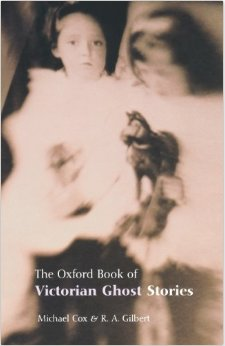
Day 604: The Oxford Book of Victorian Ghost Stories

Cover for The Oxford Book of Victorian Ghost StoriesIn honor of Halloween, I decided to read this collection of 35 ghost stories from Victorian times, when they were very popular. This collection contains stories by well-known writers of the time, such as Charles Dickens, Mary Elizabeth Braddon, Wilkie Collins, and Rudyard Kipling, as well as those by other less-known writers.

First, I’ll comment that modern audiences probably won’t find them very scary. But I’m not so sure this has anything to do with the period or the ability of the writers. I think it’s very difficult to handle genre fiction successfully in a short story. Short stories seem to me to be more suited for literary fiction somehow. A few years ago, for example, I read a collection of mystery short stories but felt that the form didn’t allow much space to really develop an interesting atmosphere or characters. It merely allowed the author to pose a puzzle and a solution.

The Victorian ghost stories seem to observe a few conventions. Unlike the gothic stories from the preceding years, Victorian ghost stories are more homey and less likely to include oddities, fantastic events, or exotic settings. Many of them are presented as a person telling a story to one or more other people, often as an evening entertainment before the fire. Almost all of them involve haunted houses, which often seem to be leased to unwary renters at a suspiciously low price. (But I shouldn’t mock. I actually have a friend who found himself in precisely this situation.) Another common theme is a haunted object. In most of the stories, the worst thing that happens is that someone sees a ghost, although there are a couple that are a little more gruesome.

I found the story-telling approach a little tiresome after awhile and was refreshed by the ebulliant characters writing the letters in the epistolary story “The Truth, the Whole Truth, and Nothing but the Truth,” by Rhoda Broughton. “The Romance of Old Clothes” by Henry James and a few others also stood out. The collection even includes one vampire tale.

If you are looking for some chilling reading, you’re not really going to find it here. (Although I’ll suggest that any of these stories may be more successful if read out loud, preferably on a dark and stormy Halloween night.) However, if you are interested in the genre or the time period, you’ll probably find the collection worth dipping into.

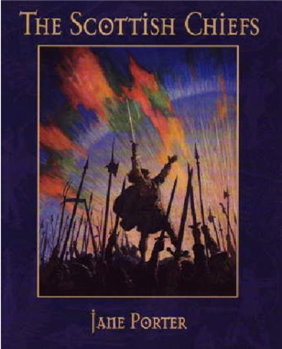
Day 563: The Scottish Chiefs

Cover for The Scottish ChiefsWritten in 1810, The Scottish Chiefs tells the romanticized story of William Wallace, the Scots hero we know today as Braveheart. Jane Porter was a contemporary and acquaintance of Sir Walter Scott, who deemed her the first author of historical fiction, then went on to write some himself.

The novel begins in 1296 and covers roughly eight years. After the untimely death of Alexander III, Scotland could not decide between two claimants to the throne—Robert Bruce or John Baliol—and called upon its neighbor, Edward of England, to adjudicate. He chose the weakest candidate, Baliol, and shortly afterwards seized the country for England. At the start of the novel, his governors have been mistreating Scotland for two years by imprisoning its leaders and taking their property for themselves.

William Wallace has been minding his own business and trying to stay out of trouble when he is summoned to meet with Sir John Monteith. Monteith passes him a metal box given to him by Lord Douglas before Douglas was kidnapped by the English. Monteith’s home is overrun by English soldiers, and he is afraid someone will discover the box, so he asks Wallace to remove it. However, the soldiers glimpse it under his plaid, and assuming it is treasure, they soon arrive at his home to take it. Wallace escapes, but his wife Marion is murdered by the dastardly Heselrigge, English governor of Lanark.

After his wife’s murder, Wallace vows to devote his life to freeing Scotland from the English. The novel follows his adventures and his defeats of the English in battle. Wallace’s victories are muddied by the jealousy and treachery of many of the Scottish chiefs, who refuse to believe the purity of his motives and fear his growing power over the populace.

The novel is written in the overblown style of Romanticism. It features a godlike Wallace, heroic figures like beautiful and saintly Helen Mar and faithful Edwin Ruthven and villains such as the perfidious Lady Mar and vicious Heselrigge. The dialogue is florid. However, the deeds described are truly exciting, and Porter manages at times to build quite a lot of suspense. The introduction by Kate Douglas Wiggan, educator and author of Rebecca of Sunnybrook Farm, relates how her copy of the novel was in tatters from re-reading when she was a child and how she would beg for ten more minutes of reading time when called to supper.

While reading this novel, I was trying to decide whether a modern youngster would love it or be bogged down by its style and length. I am not sure, but children read for plot, and there is much in this tale to make it a page-turner. That it is about a man who was truly a hero should make it even more exciting to them. In any case, if the writing style of early 19th century Romanticism doesn’t bother you, I think anyone might enjoy reading this novel.

Day 552: Dracula

Cover for DraculaHaving experienced other gothic classics of the 18th and 19th century, I was delighted to find Dracula unexpectedly readable. I was also surprised to find how little it resembles its many theatrical and movie productions, even those that attempt to stay closer to the original work.

All versions begin the same, however, with poor Jonathan Harker sent out by his office to Transylvania to complete a property deal with his client, Count Dracula. While staying at Dracula’s castle, he begins to suspect something is badly amiss and eventually fears for his life.

Back in England, his fiancée Mina Murray corresponds with and later stays with her good friend Lucy Westerna at a seaside town. In one day, Lucy has received proposals from three different young men, who all feature strongly in the novel. Dr. Jack Seward is in charge of a local insane asylum. Quincy Morris is a manly, amiable Texan, whom I feared all along was designed for a ghastly death. Lucy’s chosen is Arthur Holmwood, another manly young man who is soon promoted to a lordship by the convenient death of a benefactor. (I don’t think these things work this way, since Arthur is not his benefactor’s relative, but never mind.)

After a freakish storm, a Russian ship arrives unmanned at the port where Mina and Lucy are staying with Mrs. Westerna, who is gravely ill. As it arrives, a large dog jumps off it and runs ashore. Aboard is not a single live human. We horror aficianados know that Dracula has arrived.

While Mina waits for news of Jonathan, Lucy begins sleepwalking and behaving oddly. Dr. Seward makes notes about a patient who eats bugs and babbles about his master. Soon Van Helsing will be needed.

Unlike in most of the spin-offs, except for Jonathan Harker’s experiences at the beginning, Dracula is mostly an unseen menace for much of the novel. I’m guessing that the original readers did not necessarily realize the identity of that bat fluttering outside Lucy’s window.

In any case, the novel covers a lot more ground than does the standard remake. It is epistolary, written entirely as letters and journal entries. It is well written and moves along nicely except for the occasionally long-winded expulsion of pseudo-scientific mumbo-jumbo by Van Helsing or Seward. In the true gothic fashion, it is a classic battle of good versus evil, with the prize the soul of our heroine Mina.

Modern readers may be bothered by the depiction of the two women. Lucy is supposed to be a modern woman—who else would have three suitors at a time? She is both innocent and pure in herself and quite the seductive vamp when under the spell of Count Dracula. The men do a lot of harm to both her and Mina by trying to protect the “little women” from knowledge of what is going on. Again, try to judge the novel’s attitudes by the standards of its own time, when it was simply considered a whomping good tale.

Day 550: The Invisible Woman: The Story of Charles Dickens and Nelly Ternan

Cover for The Invisible WomanThe Invisible Woman is the interesting story of the relationship between Charles Dickens and Ellen Ternan, the true nature of which is still being debated. Although Dickens’ reputation was jealously guarded by himself during his life and by his friends and family after his death, Claire Tomalin shows convincing evidence that the two had an affair during the last 13 years of his life.

They met when Nelly was just 18 and he was at the height of his fame at 45. She and her mother and two sisters were struggling, hard working but respectable actresses, or as respectable as actresses could be during the Victorian era. It is possible that Dickens at first thought he had latched onto a bird of a different feather as he befriended the family.

Although Nelly was excited by the attention of such a famous man, it seems clear that she succumbed to him only reluctantly. He offered her a chance at a life free from the worries of poverty but one in which she could not be a member of society.

This is a fascinating story, particularly because of the lengths Dickens went to protect his own image even while shedding his wife Catherine in a cruelly public way and telling lies about it. The actions of his sister-in-law at this time toward her own sister seem almost inexplicable. Also interesting is how Nelly managed to reinvent herself after Dickens’ death.

This book is an engrossing, well written, carefully researched account of events in Dickens’ life that were hidden for years. Only a few years ago I read another biography of Dickens that glossed over this friendship, alternately suggesting that it was perfectly innocent and that Nelly was a gold digger while never actually committing itself about the nature of the relationship. Although there were rumors even at the time of the affair, the cover-up was so pervasive that details are still being uncovered.