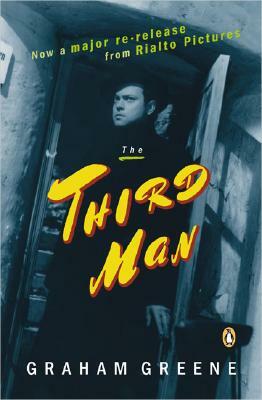
Review 2782: #RIPXX! #1949 Club! The Third Man

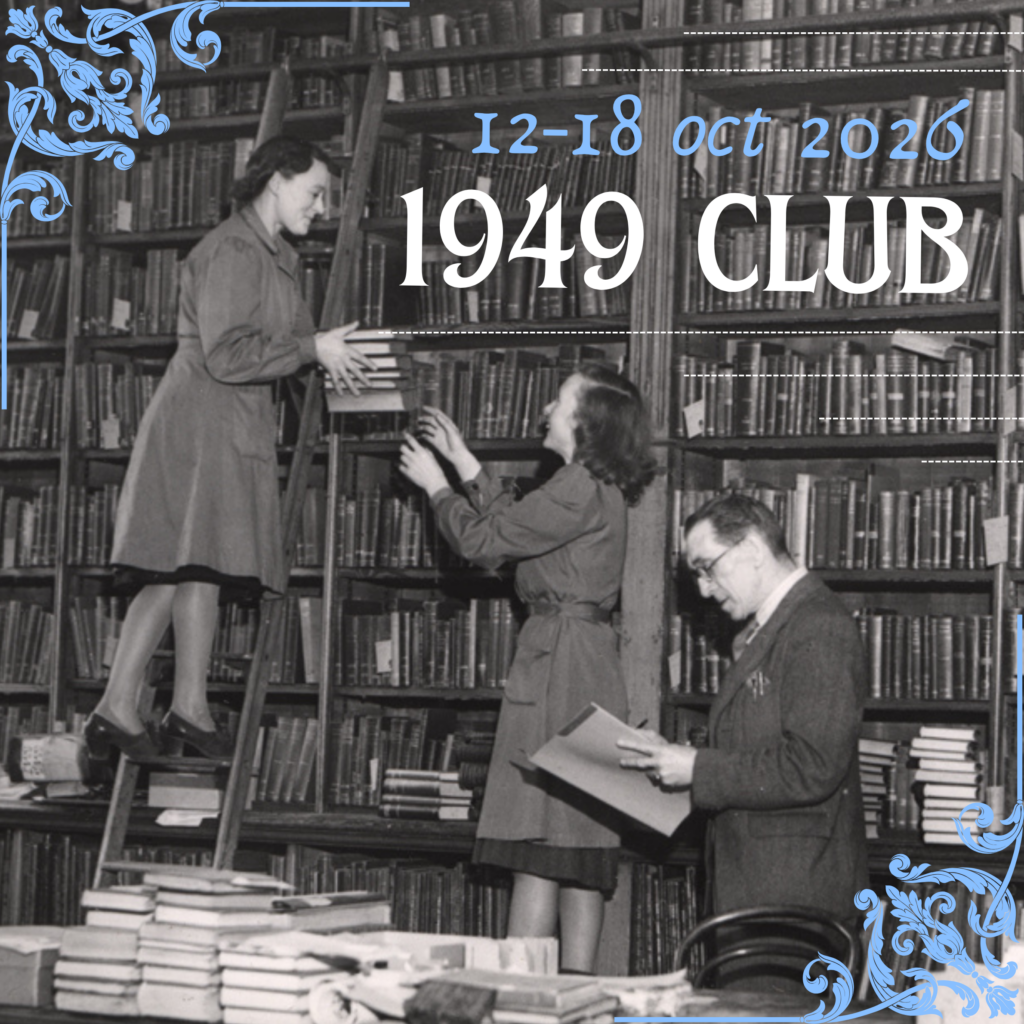
The Third Man is my first choice for the 1949 Club and also applies to RIPXXI. As usual for the club, I’ll start out by listing books written in 1949 that I have reviewed previously:

I think I’ve read some of the children’s horse books (Black Stallion, Chincoteague), too, but it’s too long ago for me to remember back when I was a child.

And now for my review.

For those like me who are more familiar with the movie, there are quite a few differences. However, Greene explains in the Preface to my Penguin edition that the book was written as a preliminary to the screenplay, because he found it almost impossible to write a screenplay without a book.

The narrator is British Detective Calloway, who sometimes speaks firsthand and other times secondhand from information received from the main character, Rollo Martins. Rollo is the author of several pulp Westerns who has been summoned by his friend Harry Lime to Vienna. But he arrives just in time for Harry’s funeral after he was hit by a car.
Martins is at a loss, because at the time, shortly after World War II, British citizens were only allowed to take £5 out of the country, so he’s broke. Furthermore, Calloway meets with him to discuss Harry’s illegal activities, which are serious. Rollo, who has been friends with Harry since school and hero-worships him, doesn’t believe him. At the same time, Calloway wants to try to determine how involved Rollo is in Harry’s activities. Rollo is so incensed at Calloway’s imputations that he tells him he’s going to prove him wrong.
Rollo starts with interviewing the witnesses to the accident, who apparently were both acquaintances of Harry. This seems odd, and what is odder is that another witness, Dr. Koch, who saw the accident from the window but didn’t talk to the police, tells him he saw three men at the scene of the accident rather than the two who were reported. Who was the third man? And doesn’t it seem sinister when Dr. Koch is killed shortly thereafter?

Another complication is Anna Schmidt, Harry’s girlfriend, a Hungarian actress who is hiding under a false name and papers from the Soviets. She also doesn’t believe Harry is guilty. Unfortunately, Rollo falls in love with her.

This novel is not as suspenseful as the movie, but it excels in its bleak descriptions of post-war Vienna and the complications of its subdivided governance. It’s really moody.

Related Posts

The Quiet American

The Spy Who Came in from the Cold

The Quiet Twin

Day 358: People of the Book

Cover for People of the BookBest Book of the Week!

I read People of the Book several years ago and remembered that it was good, but when re-reading it for my book club, I enjoyed it even more. The novel is based on the history of a Hebrew codex known as the Sarajevo Haggadah. Part of the novel is envisioned based on what is known of the book’s history, while the rest is invented.

In the immediate aftermath of the Bosnian war, Hanna Heath, an expert in the restoration of old books, is asked to restore the priceless Sarajevo Haggadah, a famous book believed twice to have been destroyed by war that was both times rescued by Moslem museum curators. The book is especially important because of its beautiful illustrations, as before it was discovered, scholars believed that old Hebrew books did not contain such illuminations.

While Hanna is working on the book, she makes observations and collects artifacts that will help trace its history. She notes that the book once had clasps that are now missing, collects an insect wing, and scrapes residue from staining.

Hanna also becomes involved with the man who rescued the book, Ozren Karaman, whose wife was killed during the war and whose baby son is in the hospital with a brain injury. As Hanna was raised by an aloof and competitive mother, though, she is poor at forming attachments.

When Hanna finishes restoring the book, she follows up with research into the clasp and the artifacts she collected. As she finds out about each item, the novel goes farther back in time, explaining what happened to the book and telling the stories of the people involved with it, until the creation of the book in 15th century Spain.

A poor Jewish girl named Lola works for the partisans in the forest outside Sarajevo during World War II after the Jews are expelled from the city by the Nazis and her family is shipped off to camps. Later she is helped to safety by the Moslem curator of the museum, who also has a book to hide. A 19th century Viennese bookbinder who is dying from syphilis steals the beautiful silver clasps from the book to exchange with his doctor for treatment. In 1609 Venice, a priest working for the Inquisition saves the book from burning but confiscates it from its owner. A young girl saves the book as the Jews are expelled from Spain in 1492.

These are just the bones of some of the absorbing stories that draw you along as Brooks imagines the history of the book. Each tale is vividly imagined and skillfully told, and they are all held together by Hanna’s experiences. People of the Book is a gracefully written and imaginative novel that emphasizes the contributions of multiple cultures and religions to the book’s creation and safety.

Day 208: The Quiet Twin

Cover for The Quiet TwinThe Quiet Twin by Dan Vyleta seems to start out as a standard mystery, but it turns out to be something else entirely. I was attracted to it because in reviews it was compared to Rear Window, one of my favorite movies.

In a 1939 Viennese neighborhood, there is a rumor of a serial killer. A man was murdered not far away, and someone has killed Professor Speckstein’s old dog in a similar manner.

The courtyard behind Dr. Beer’s more respectable apartment building is shared by some tenements occupied by poverty-stricken tenants. The view that some apartments have into others sets up the situation reminiscent of Rear Window.

Dr. Beer is called to treat Professor Speckstein’s niece Zuzka, a college student who suffers from periodic paralysis. Speckstein is a disgraced former college professor who was once accused of child molestation but has hung onto his social position by becoming a Nazi party informant. Dr. Beer, a student of Freud, diagnoses Zuzka with hysteria.

Zuzka is bored and sleepless, so she watches the courtyard from the window in the middle of the night. She has seen a man across the way washing off makeup and what appears to be blood, so she decides to investigate whether he is the killer.

Also living in the courtyard is a drunken man and his little girl Lieschen, whose body is badly deformed from an accident. Zuzka befriends Lieschen while Dr. Beer worries what may happen to her under the Nazis, having heard about some of their ideas.

A brutish police detective named Teuben appears to investigate the murders, but his actual plan is to pin them on some hapless person.

Although Vyleta has tried to depict the atmosphere among the common people of Vienna under the Nazis, I am not so sure he succeeds. Dr. Beer seems to be one of the few characters who is aware of any threat. An aura of dread persists, but it seems more dependent upon my knowledge of coming events than on any feeling from the novel, although the novel is certainly bleak. Perhaps because I read In the Garden of the Beasts only a few weeks before, I expected an atmosphere that was much more fraught with peril.