Today is another review for the Literary Wives blogging club, in which we discuss the depiction of wives in fiction. If you have read the book, please participate by leaving comments on any of our blogs.
Be sure to read the reviews and comments of the other wives!
This month we welcome a new member, Kate of booksaremyfavoriteandbest! She will join in for the next review in June.
My Review
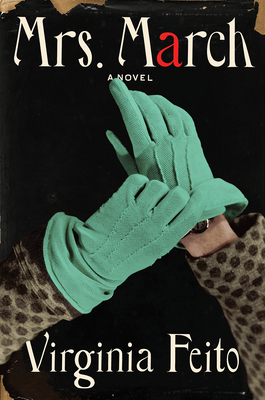
Set in an undefined time that is probably the 1950s or 60s, Mrs. March is a character study of a woman disintegrating. This all begins at her favorite pastry shop. Mrs. March is a woman highly concerned with appearances. She is married to George March, a writer whose most recent novel is a hit. She is figuratively torn asunder when the shop owner asks her if she minds being depicted in George’s book as the main character, Johanna. Mrs. March hasn’t exactly read the book, but she knows that Johana is an ugly whore whose clients don’t even want to be with her.
Mrs. March immediately becomes obsessed by the idea that he has portrayed her and that everyone is talking about it. She doesn’t read the book, which might be a reasonable reaction, but she destroys a few copies and roots through George’s desk trying to discover his secrets. There she finds an article about a missing teenager in Maine and immediately begins to believe that George, who periodically visits a cabin in the same town, has had something to do with it.
This novel takes a deep look at the psychological behavior of a woman who is unraveling. At times it is darkly funny, sometimes tipping nearly to absurdism. Mrs. March is not likable, her behavior is often outrageous, yet it’s hard to turn away from the page.
What does this book say about wives or about the experience of being a wife?
It’s hard to answer this question, actually, because we don’t see much of George. You have to wonder in the first place what would make George give such an unpleasant character as Johanna all of his wife’s rather distinct mannerisms, especially since most of the time he seems affectionate and soothing to her. Artists can be clueless, but it also seems clear that Mrs. March is so self-obsessed that she is detached from everyone, even her son.
What does the poor woman have to do all day except clean up things she doesn’t want her maid to see and prance around town in her fur coat shopping? It’s enough to drive anyone mad. Yet is seems that no one is stopping her from doing whatever she wants to except, possibly, the notion of how it would look if she, say, got a job.
And how things look seems to be the dominating force in her life. We get a few glimpses into her childhood where her cold mother taught her this priority.
George has his secrets, but he is really not at all important in this novel. Mrs. March is able to adjust her notion of George instantly, thinking he’s a murderer while preparing his birthday party. What a book!
Related Books
The Wife
The Tortoise and the Hare
The Bird’s Nest